
 Carrier
 AC repair
 Furnace & heating
 Heat pumps
 Ductless mini splits
 Trane
 Goodman
Seasonal tune-up and full diagnostic on your Carrier, Trane, or Goodman system - readings shown to you before any repair is proposed
Diagnosis first, numbers second - you approve the repair price before a single part goes in.
Get your free estimateCarrier Capacitor Replacement: The Enterprise Owner’s Guide
We replace Carrier-compatible run and start capacitors for Enterprise homeowners, and most installed replacements land between $180 and $340 in parts and labor depending on the capacitor type your Carrier unit uses. Around 40% of the “AC won’t start” calls we run in Enterprise turn out to be a failed capacitor, and in most cases we can confirm it and swap it the same day.
Owners usually find out the hard way: the thermostat still shows a call for cool, the indoor blower hums or runs, and the outdoor unit sits silent. Sometimes the condenser fan spins but the compressor never kicks in. Other times you hear a clicking every minute or two as the unit tries and fails to start. A capacitor is a small, inexpensive part that stores and releases the jolt of energy a compressor or fan motor needs to get moving. When it drifts out of spec, the motor can’t get that boost. Our technicians have up to 23 years of experience, and for a part this common in Enterprise, they can usually read the symptoms before they even open the service panel.
Which Carrier Models This Applies To
Carrier’s residential line covers a lot of ground, and the capacitors change with the model family. Condensing units in the Carrier Comfort series, the Performance series, and the Infinity series all use dual-run capacitors that feed the compressor and the condenser fan from one can. The exact microfarad (µF) rating and voltage rating depend on the motor the factory paired with that outdoor unit, not on the series name. A Performance 16 SEER condenser and an Infinity 18 SEER condenser might take the same 45/5 µF cap, or they might not. That’s the compatibility gotcha: you can’t pick a capacitor by model family alone. You match the part to what’s printed on the capacitor you’re removing.
Here’s how we identify the right part. The capacitor itself carries its rating printed on the side (something like “45/5 µF ±6% 440VAC”), and the Carrier unit’s data plate gives the model and serial so we can cross-check the factory spec. We don’t guess by horsepower or by what the last tech left in the unit. On a Carrier that’s been serviced before, we’ve pulled caps someone installed with the wrong µF rating, which stresses the motor and shortens its life.
On the OEM-versus-aftermarket question: Carrier-branded capacitors are fine, but so are quality aftermarket equivalents from manufacturers like AmRad or Titan Pro, provided the µF tolerance and voltage rating match. A 440V-rated cap in a 370V application gives you headroom. We install a correctly specified part, not whatever’s cheapest on a shelf.
Styles & brands we work with
- AC repair
- Furnace & heating
- Heat pumps
- Ductless mini splits
- Carrier
- Trane
- Goodman
Signs Your Carrier Capacitor Replacement Is Failing
Capacitors don’t usually announce themselves. They drift, bulge, or leak, and the motor’s behavior changes before the part fails outright. Here’s what Enterprise homeowners tend to notice:
- The compressor won’t start but the fan runs. The dual-run cap has two sections (one for the compressor, one for the fan motor). If the compressor half fails, the fan can still spin while the compressor trips on overload and shuts down. A hard-starting, humming outdoor unit is a classic sign.
- Both the fan and compressor won’t start. The whole capacitor has failed or is too far out of spec to deliver the starting torque. The unit calls, cycles, and does nothing.
- The top of the capacitor is domed or bulging. Pressure builds inside a dying electrolytic cap as the internal element breaks down. A bulged top is a failed part, even if the motor still runs intermittently.
- Brown or oily residue around the capacitor. That’s electrolyte leaking from the casing. The part is past its useful life and will fail soon.
- The unit runs hot, trips the breaker, or shorts the motor. A shorted capacitor can overheat the winding or trip the outdoor disconnect. If you’ve reset the breaker more than once, stop and call.
One detail specific to Enterprise: our inland desert summer heat pushes capacitors hard. Ambient temps over 110°F on the outdoor unit, combined with a condenser that’s dirty or low on airflow, raise the internal temperature of the cap. We see caps fail earlier here than in cooler climates. A five-year-old unit with a failed cap in Enterprise is not unusual.
See the difference
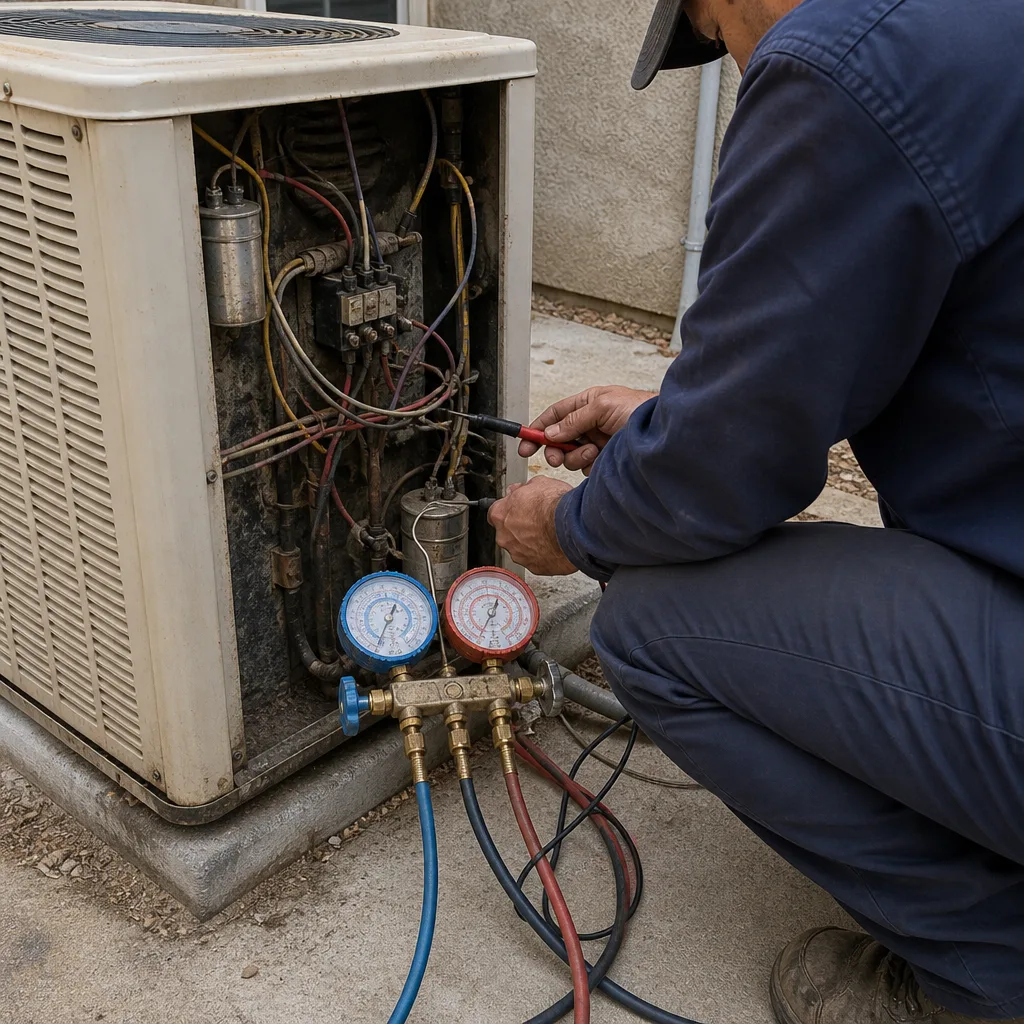 Before
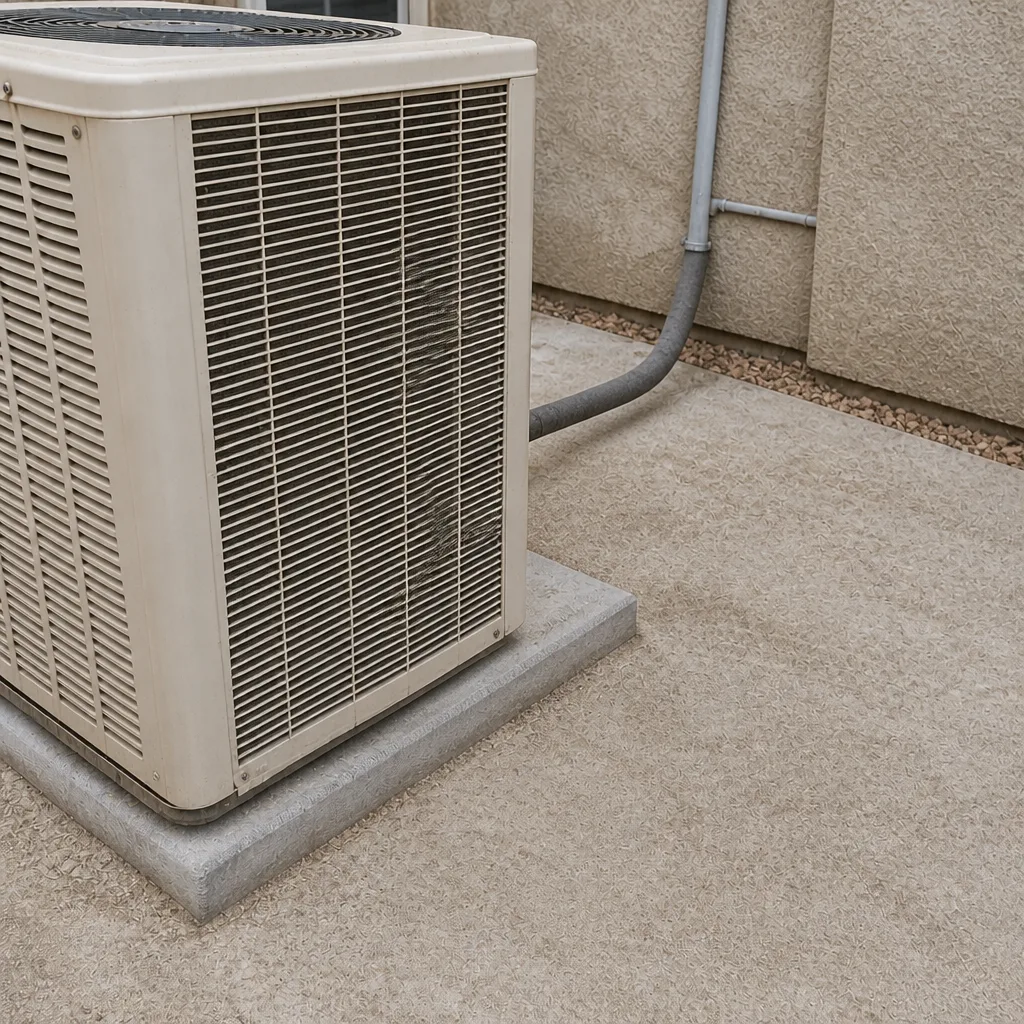 After
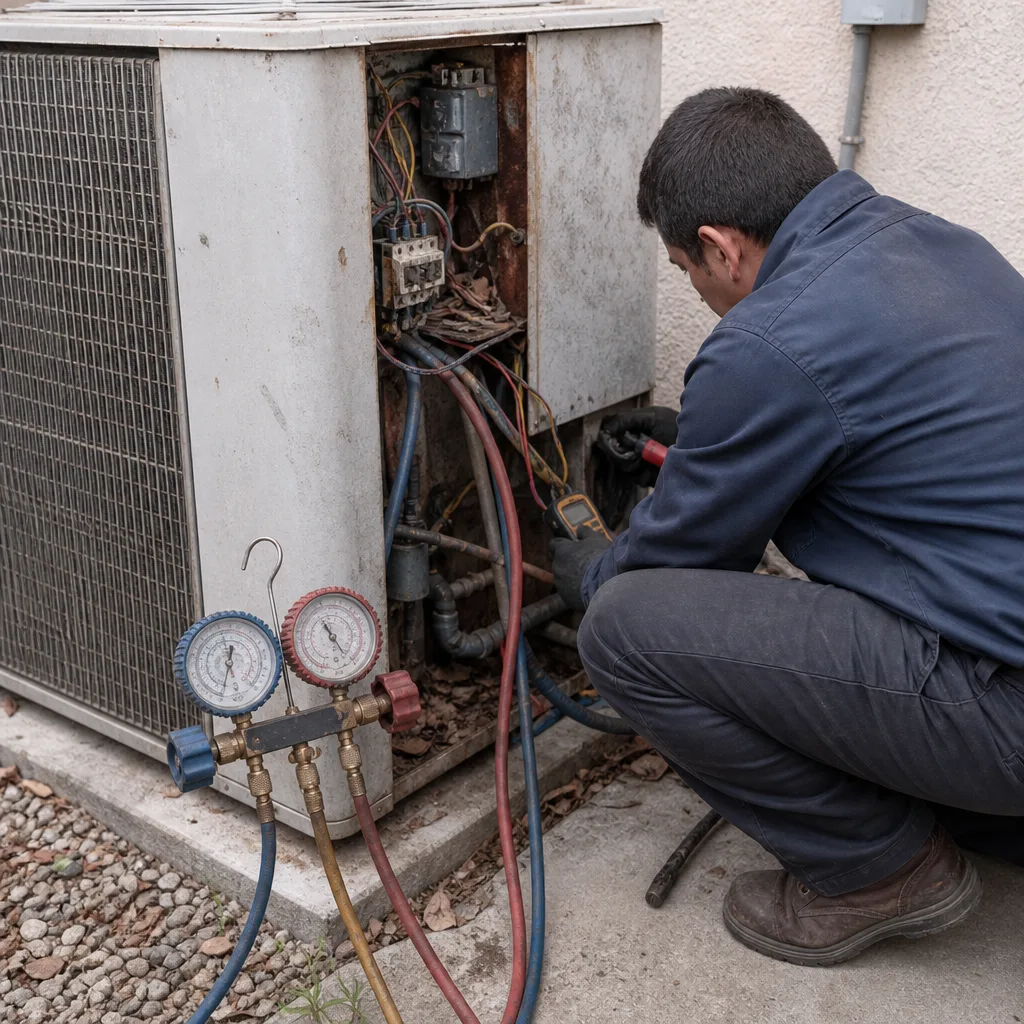 Before
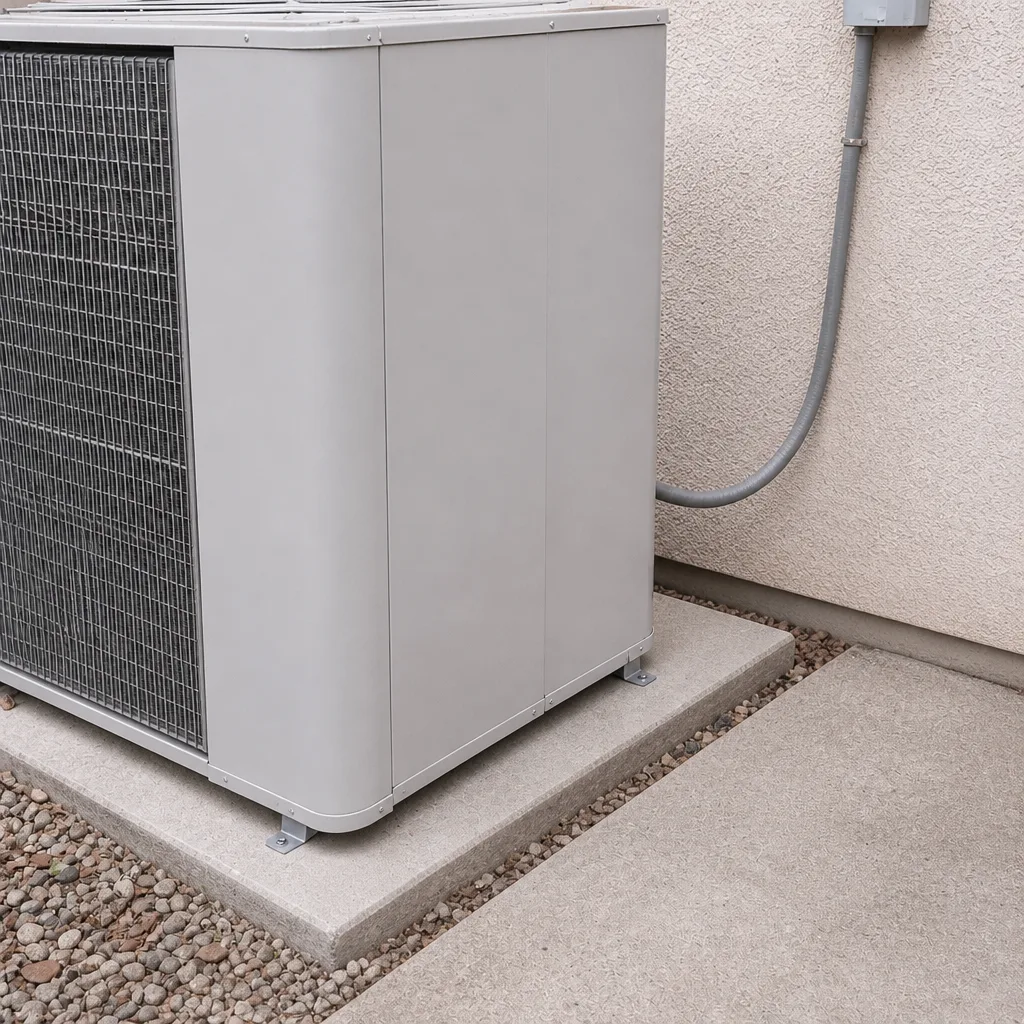 After
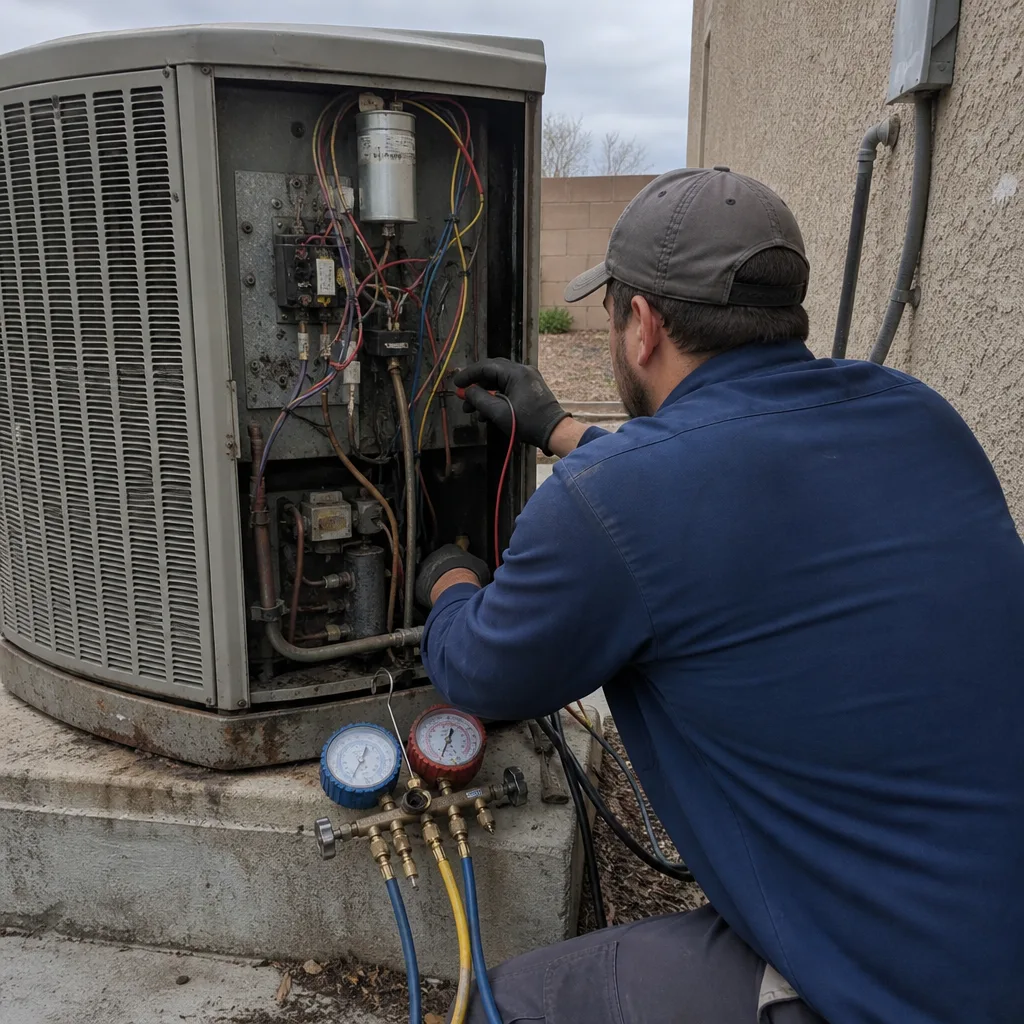 Before
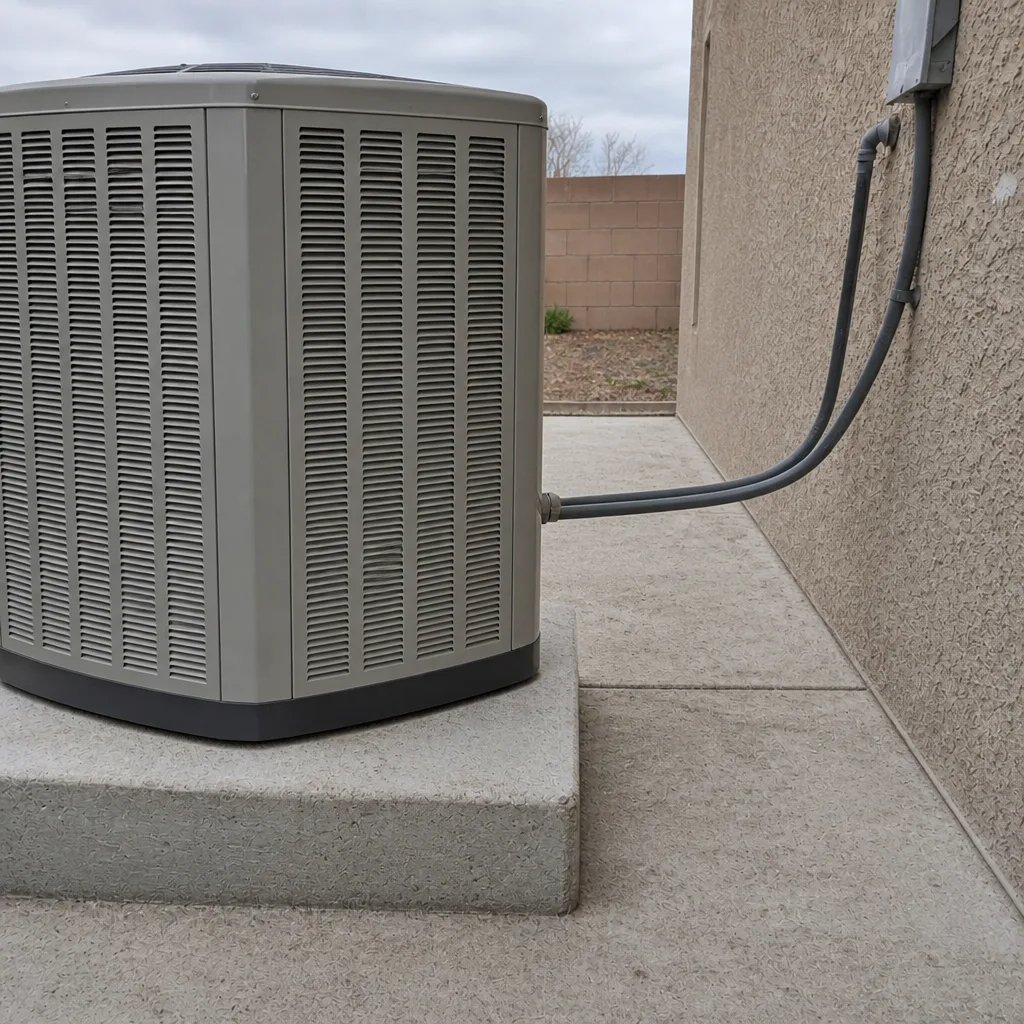 After
Replacement Cost & What’s Included
Most Carrier capacitor replacements in Enterprise run $180 to $340, parts and labor included. Here’s what drives the range:
- Capacitor type and rating. A standard dual-run capacitor for a single-stage Carrier condenser is at the lower end. A start capacitor, or a setup where the cap is difficult to reach (some Carrier packaged units and tight closets), moves toward the high end.
- Access and labor. A side-access panel on a slab-mounted condenser is quick. A rooftop packaged unit, a hard-to-reach disconnect, or a rotted terminal block that needs cleanup adds time.
- Conditional diagnosis. Our AC Repair range for the broader call is $150 – $650, but a straightforward capacitor swap sits well inside the lower portion of that. If diagnosis turns up a second problem (a bad contactor, a seized fan motor, or a refrigerant issue), we tell you the full picture before we touch anything, in writing.
Every job starts with a written price before we begin, and every repair includes a written guarantee. If the same capacitor fails during the guarantee period, we come back at no additional charge under the 365-Day Done Right Promise. You’ll know what’s covered and for how long before you say go.
DIY or Call Us?
We’re honest about the split. What you can safely do: note the symptoms, check the thermostat is actually calling for cool, look at the outdoor unit from outside for a tripped breaker or a visibly bulged cap (only with the power off at the breaker and disconnect, and no panel removed), and read the model number off the data plate. That’s the safe zone.
Where DIY goes wrong. A capacitor holds a lethal charge even after the power is off. You can’t see it and you can’t tell by looking at the part. The compressor and condenser fan circuits are 240-volt. Discharging a cap incorrectly, or pulling one while it’s charged, has hurt experienced techs, not just first-timers. The second failure point is matching the part. Put in the wrong µF and the motor overheats, or the cap blows the instant the unit tries to start. The third is that a failed capacitor is sometimes a symptom, not the cause; a bad motor or a shorted winding can kill a fresh cap. We do it right the first time, with the right part, correctly installed. Call (844) 797-9490 and a live person will book you in. No voicemail, no callback queue.
FAQs
Most Carrier capacitors last 5 to 10 years, but in Enterprise’s desert heat we often see them fail sooner, especially on units with dirty condensers or poor airflow. Heat is the enemy of these parts, so regular coil cleaning and a seasonal tune-up help stretch the life of a cap. If your unit is older and you’re unsure, call (844) 797-9490 and we’ll test it.
No. A capacitor with a bulged top, leaking electrolyte, or drifted capacitance can’t be repaired and should be replaced. It’s a service part, not a repairable one. Replacement with a correctly rated part is the fix, and that’s what we do.
A straightforward Carrier capacitor swap usually takes 30 to 60 minutes on site, including diagnosis and testing. Hard-to-reach units or those needing terminal cleanup can run longer. We give you the written price before we start, so there are no surprises.
We match the part to the rating printed on the capacitor being replaced (µF and voltage) and cross-check against your Carrier unit’s data plate. Quality aftermarket equivalents from known makers are fine when they meet spec. We don’t carry stock on a truck or hold inventory for a job; we confirm the correct part for your model before the visit.
Our Enterprise team is part of the Threshold Group family, established in 2003, and each location is independently owned and operated. Brandt HVAC is an independent service provider and is not affiliated with Carrier. We also service Trane and Lennox equipment.
Ready to get your Carrier cooling again? Call (844) 797-9490 for a free estimate. You’ll get a written price before any work begins, a name and photo of the technician headed your way, a photo ID badge at the door, and a live person on the line 24 hours a day, seven days a week. We’ll take care of the part and the paperwork, and leave you with a home that’s cool and a repair you understand.
Written by the team at Brandt HVAC Enterprise, serving Enterprise and nearby areas.