

 AC repair
 Furnace & heating
 Heat pumps
 Ductless mini splits
 Carrier
 Trane
 Goodman
Seasonal tune-up and full diagnostic on your Carrier, Trane, or Goodman system - readings shown to you before any repair is proposed
Diagnosis first, numbers second - you approve the repair price before a single part goes in.
Get your free estimateLennox Capacitor Replacement: The Enterprise Owner’s Guide
Lennox-compatible capacitor replacement in Enterprise typically runs $180 – $340 installed, parts and labor together, and most of these jobs are handled the same day you call. We match the exact microfarad rating and voltage for your Lennox model before anything is ordered, so you’re not paying for a guess. Most Enterprise owners find us the same way: the outdoor unit hums but won’t start, the fan spins slowly, or the system clicks, tries to kick on, and gives up a few seconds later. That pattern points at the start or run capacitor almost every time.
Give us a call at (844) 797-9490 and a live person answers, day or night. We’ll give you a written price before any work begins.
Key Takeaways
- Installed cost in Enterprise: $180 – $340 for most Lennox residential units.
- A weak capacitor is often the whole reason an AC won’t start – the compressor and motor are frequently fine.
- Capacitors hold a stored charge even after power is off. This is a job for a trained technician.
- Every repair we do carries a written guarantee, backed by our 365-Day Done Right Promise.
Which Lennox Models This Applies To
Every Lennox condenser and air handler built in the last several decades has at least one capacitor in it – usually a dual-run capacitor serving both the compressor and the condenser fan motor, sometimes a separate start capacitor on top of that. That covers the Merit series, the Elite series, the Signature Collection, and the long run of older builders like the XC and 10ACB lines that are common on Enterprise rooftops and side yards. The part number on the label rarely tells you what you need. What matters is the printed microfarad (µF) rating, the voltage rating (370V or 440V on most residential Lennox equipment), and whether it’s a round or oval can. A 35/5 µF dual-run at 440V is a very different part from a 45/5 µF, and getting that wrong is how a compressor gets damaged.
We pull the model and serial plate off your unit and cross-reference the original spec, then decide between a Lennox OEM capacitor and a quality aftermarket equivalent from a maker like Titan Pro or AmRad. OEM guarantees an exact match. A good aftermarket part often outlasts the original at a lower price, and we’ll tell you which way we’d go on your specific unit. We’re an independent service provider, not affiliated with Lennox, so our recommendation is based on what fits and lasts – not on a brand agreement.
Styles & brands we work with
- AC repair
- Furnace & heating
- Heat pumps
- Ductless mini splits
- Carrier
- Trane
- Goodman
Signs Your Lennox Capacitor Replacement Is Failing
Enterprise summers are brutal on capacitors. Sustained heat above 100°F, plus the dust that blows in off the desert and settles in condenser cabinets, cooks these parts faster than in milder climates. A capacitor that would last 12 years in a cooler market often gives out here in 5 to 8. Here’s what failure looks like:
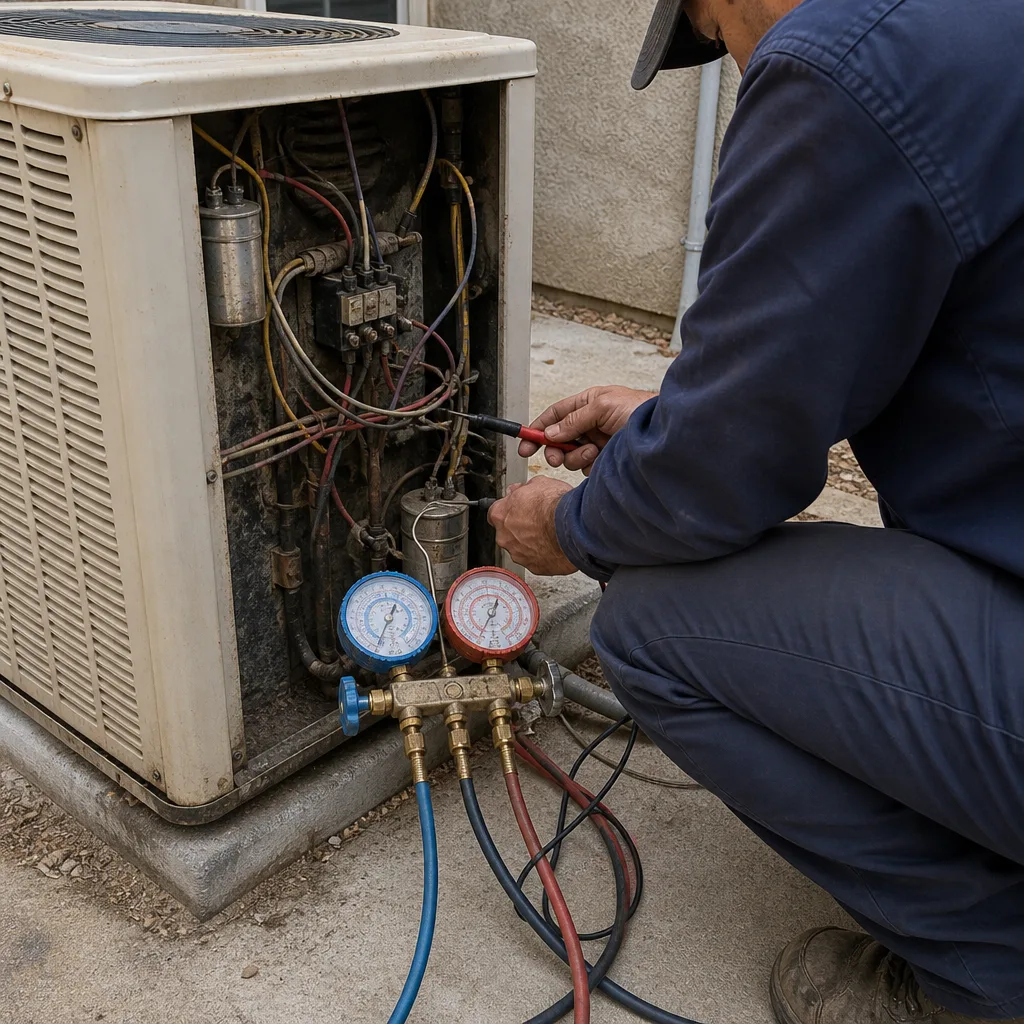
- The outdoor fan won’t spin, but the compressor hums. The fan side of a dual-run capacitor has died, so the motor gets no starting push and just sits there buzzing. Left alone, that motor overheats.
- The system clicks and shuts off within seconds. A start capacitor that’s lost its capacity can’t give the compressor the jolt it needs. The unit tries, trips its internal overload, and resets – over and over.
- The top of the capacitor can is bulging or leaking. That’s a physically failed part, not a weak one. Brown residue or a domed top means it’s done and needs replacing before it damages the compressor.
- Lights dim or flicker when the AC kicks on. A failing capacitor draws a hard surge at startup. If you notice the lights in the kitchen dip every time the condenser starts, that’s worth a look.
- The unit runs but cools poorly. A weak fan capacitor lets the condenser fan turn too slowly, so heat doesn’t get pushed out of the coil. The system runs constantly and never gets the house comfortable.
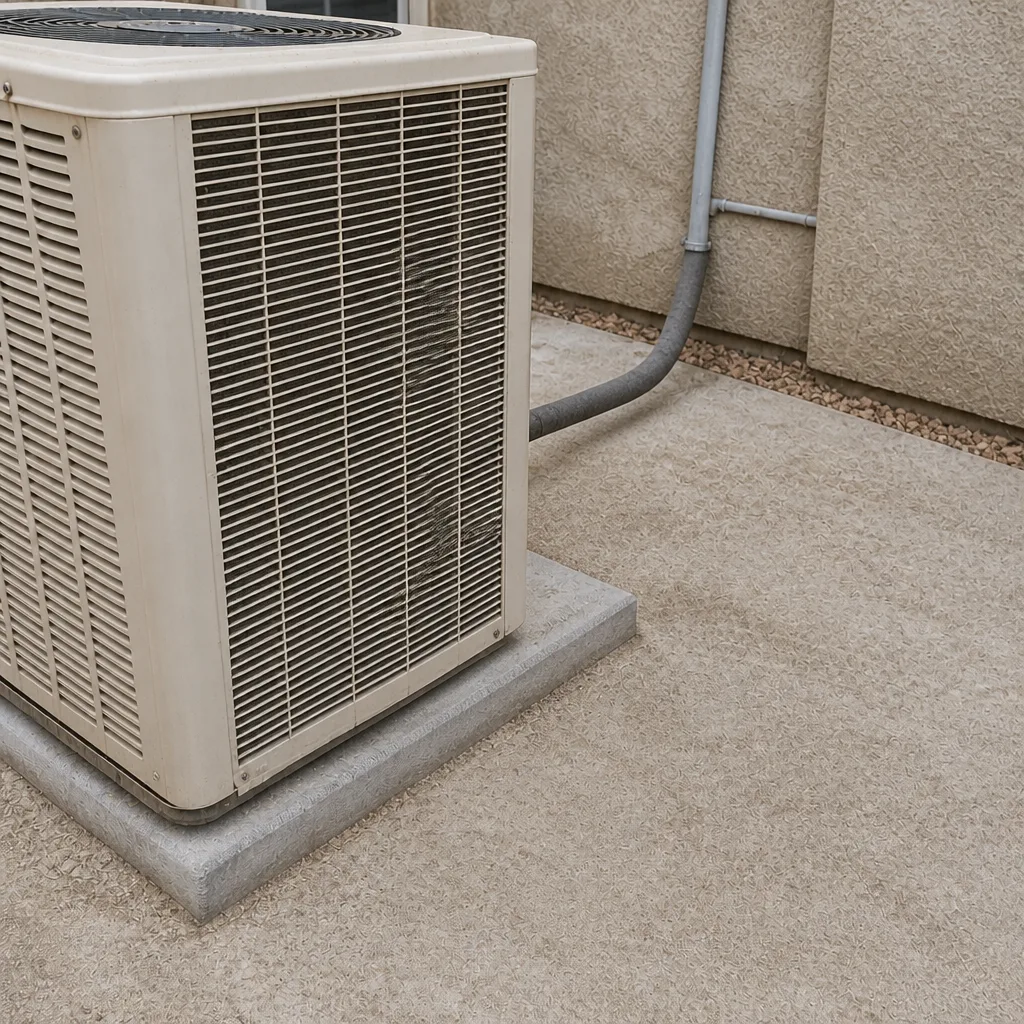
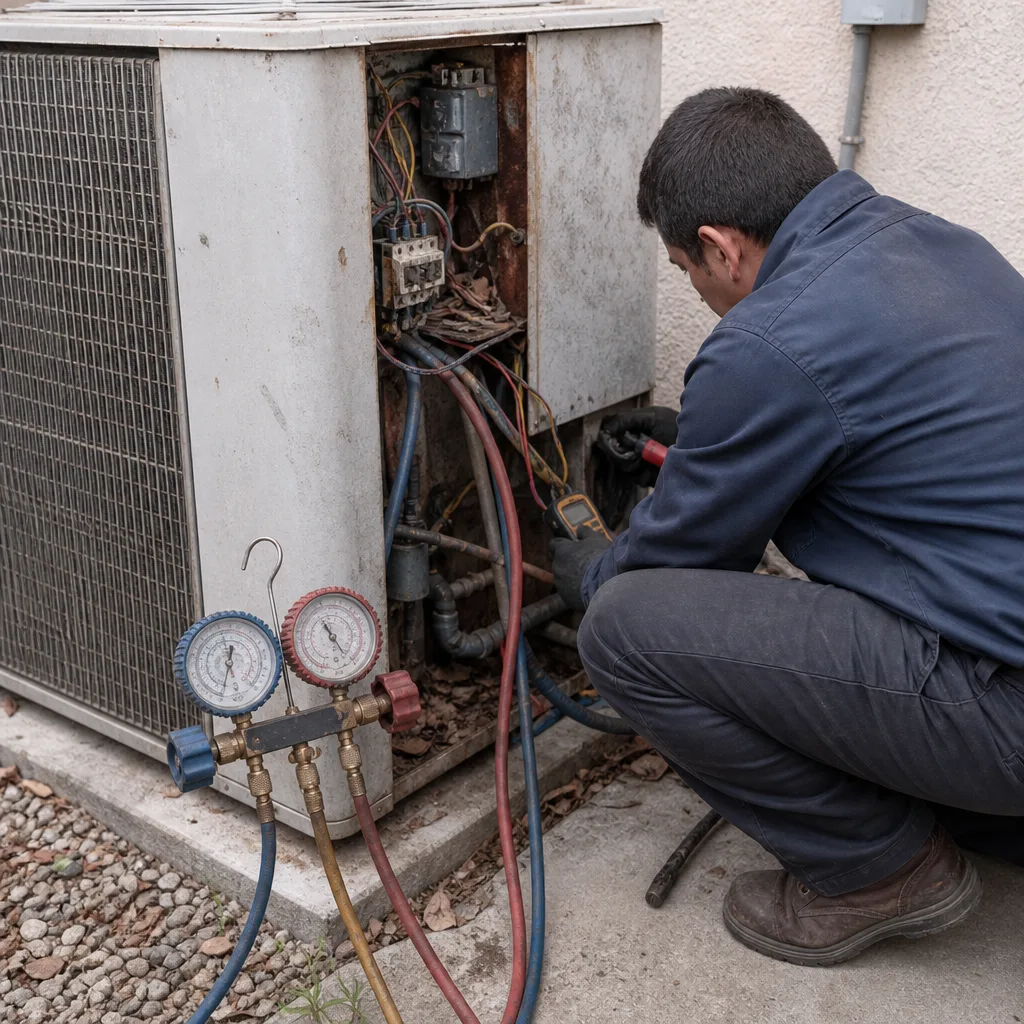
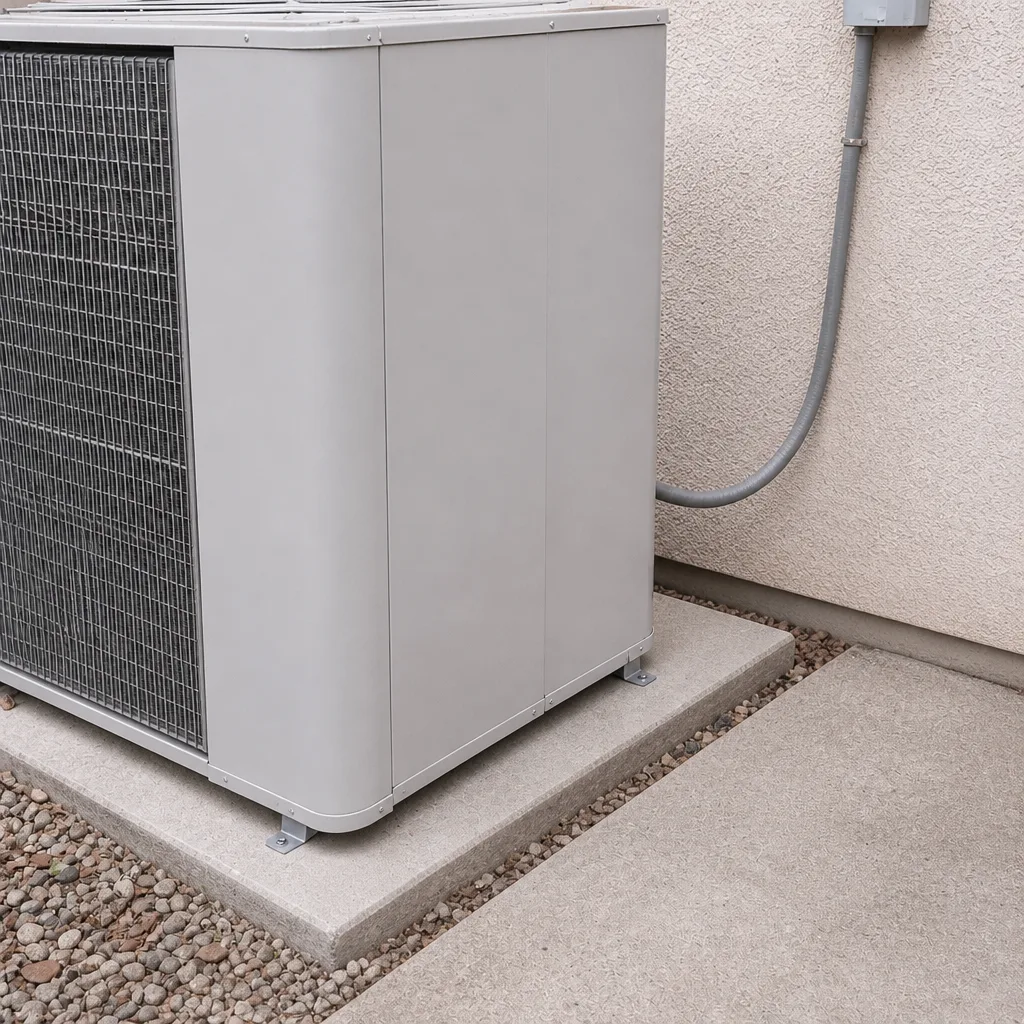
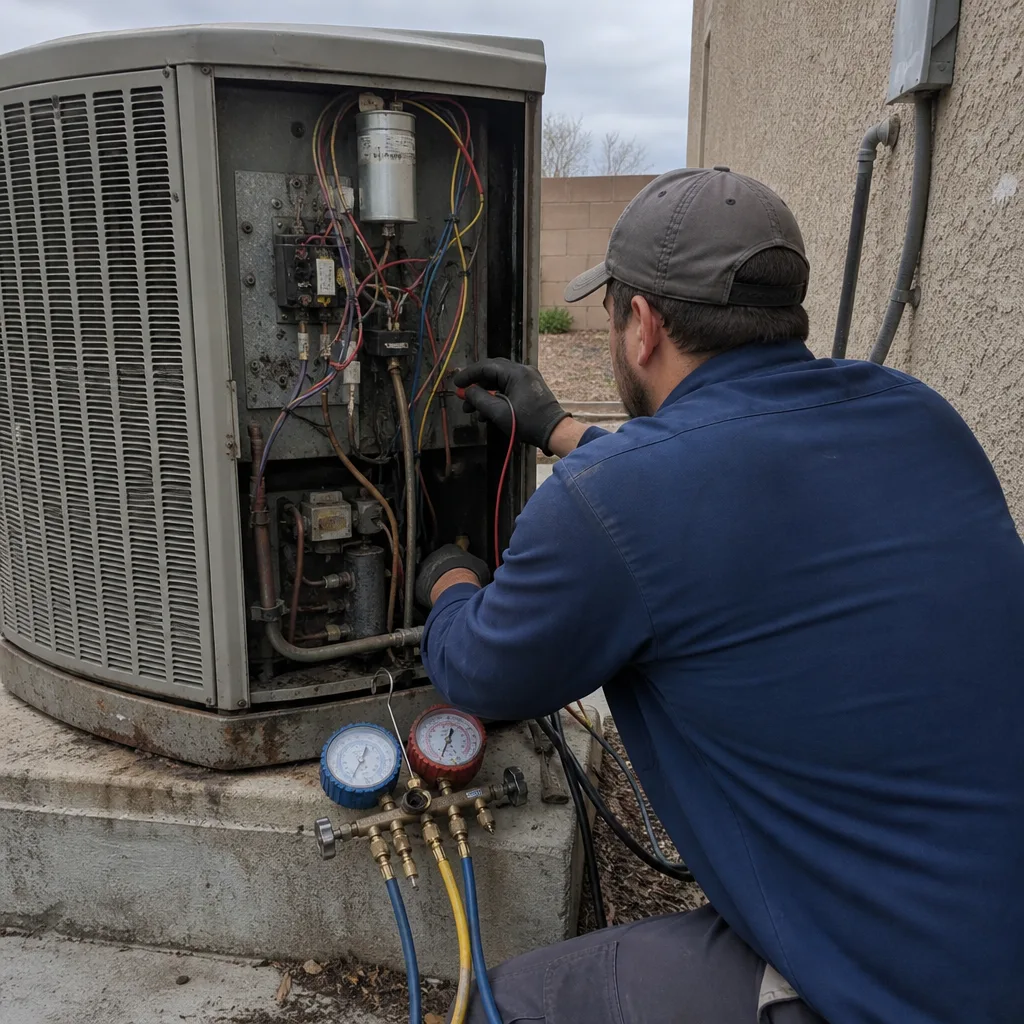
See the difference
 Before
 After
 Before
 After
 Before
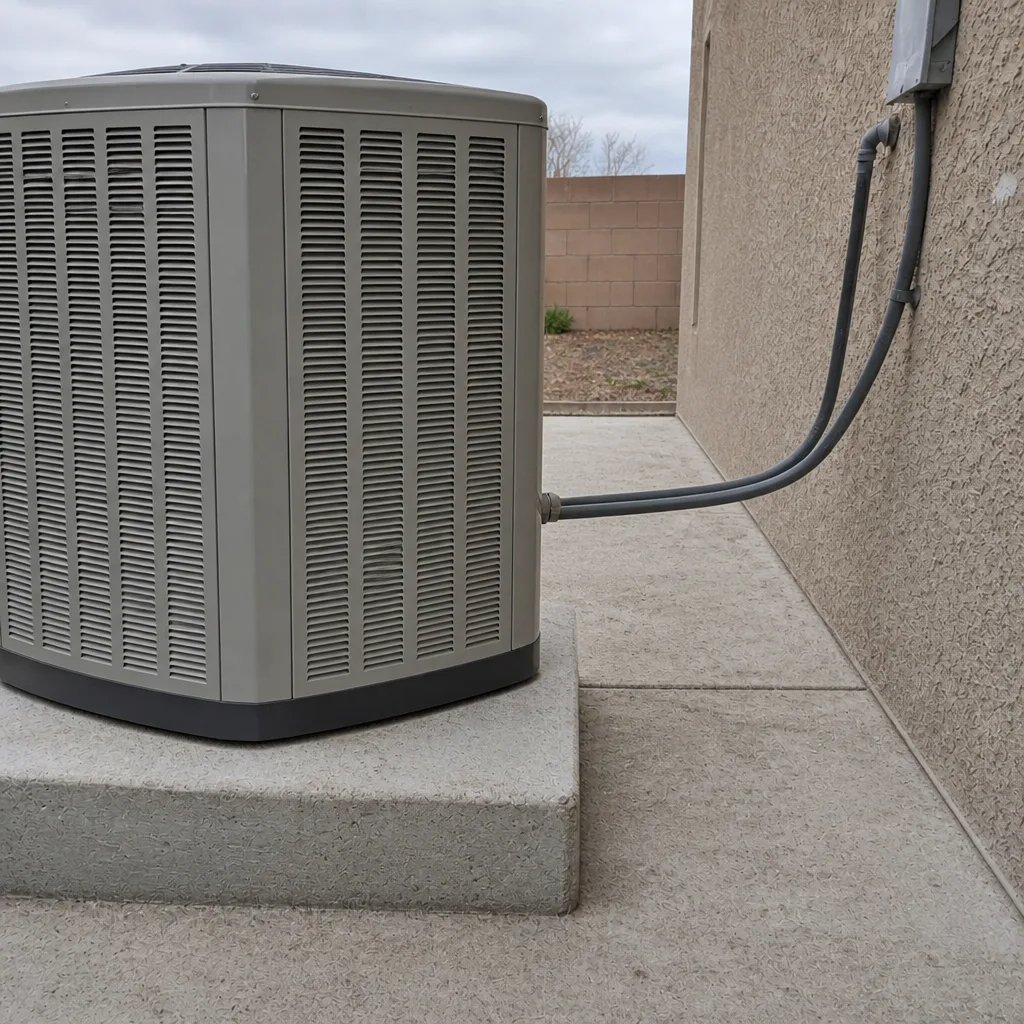 After
Replacement Cost & What’s Included
For a standard Lennox residential capacitor swap in Enterprise, expect $180 – $340 installed. That range covers the dual-run capacitors most homes need, and it includes the part, the labor, the electrical testing before and after, and a written guarantee on the repair. A few things move the number:
- Part spec. A common 35/5 or 45/5 µF dual-run sits at the low end. A hard-start kit or a separate start capacitor adds to it.
- Access. A condenser tucked behind a fence or up on a roof takes more time than one sitting open on a pad.
- What else failed. If the motor or compressor was damaged by the bad capacitor, that’s a bigger repair, and we’ll show you exactly what we found before quoting it.
You get the price in writing before we touch anything – no surprises on the invoice. And if the new capacitor fails within 365 days, we come back and make it right at no charge under our Done Right Promise. Compare that to the $150 – $650 range for general AC repair in Enterprise; a capacitor swap usually lands at the lower end of it.
DIY or Call Us?
Here’s the honest split. You can safely check the obvious things: confirm the breaker is on, look at the capacitor can for bulging or leaking, and note whether the fan spins freely by hand when the power is completely off at the disconnect. What you shouldn’t do is pull the capacitor yourself. These parts store a charge that can deliver a serious shock even after the unit is switched off, and the correct discharge procedure isn’t something to learn from a video while standing on a ladder in July heat. Beyond the shock risk, the wrong µF rating or a reversed wiring order can take out your compressor – a repair that runs into the thousands instead of a couple hundred.
Call (844) 797-9490 and a live person will pick up, walk through the symptoms with you, and give you a written price before anyone comes out. Every technician who shows up is background-checked and identity-verified under our Threshold Verified standard, and you’ll get their name and photo before they ring your doorbell. They show a photo ID badge at the door. If anyone arrives you weren’t told to expect, that visit is on us.
FAQs
Usually 5 to 8 years here, versus 10 to 15 in cooler climates. The combination of 100°F-plus summers and desert dust in the condenser cabinet accelerates wear, so it’s the most common part failure we see on Enterprise units – and one of the cheaper ones to fix.
No – a failed capacitor is replaced, never repaired. Once the can bulges, leaks, or loses its rated microfarad capacity, there’s nothing to fix inside it. The good news is the replacement itself is inexpensive compared to most HVAC repairs, and it’s a part we keep on the shelf at the shop for common Lennox specs.
Most Lennox capacitor replacements take 30 to 60 minutes once the technician is on site. That includes testing the old part, matching the new one, installing it, and confirming the unit starts and runs correctly before we leave.
We read the model and serial plate on your outdoor unit and cross-reference the factory spec for the microfarad and voltage rating, then match it against our stock or order the exact part. We service all major residential HVAC brands including Carrier, Trane, Lennox, Goodman, Rheem, York, Daikin, Bryant, and American Standard, so we know these nameplates well. You’ll see the part spec and price in writing before we install it.
If your Lennox is humming, clicking, or just not starting, call Brandt HVAC Enterprise at (844) 797-9490 for a free estimate. A live person answers 24 hours a day, seven days a week, and you’ll know the price in writing before any work starts. That’s the whole promise – certain price, certain identity, certain outcome. Brandt takes its name from an old word for a firebrand, and it’s a fitting one for the work of keeping your home comfortable.
Written by the team at Brandt HVAC Enterprise, serving Enterprise and nearby areas.