
Last updated November 17, 2026
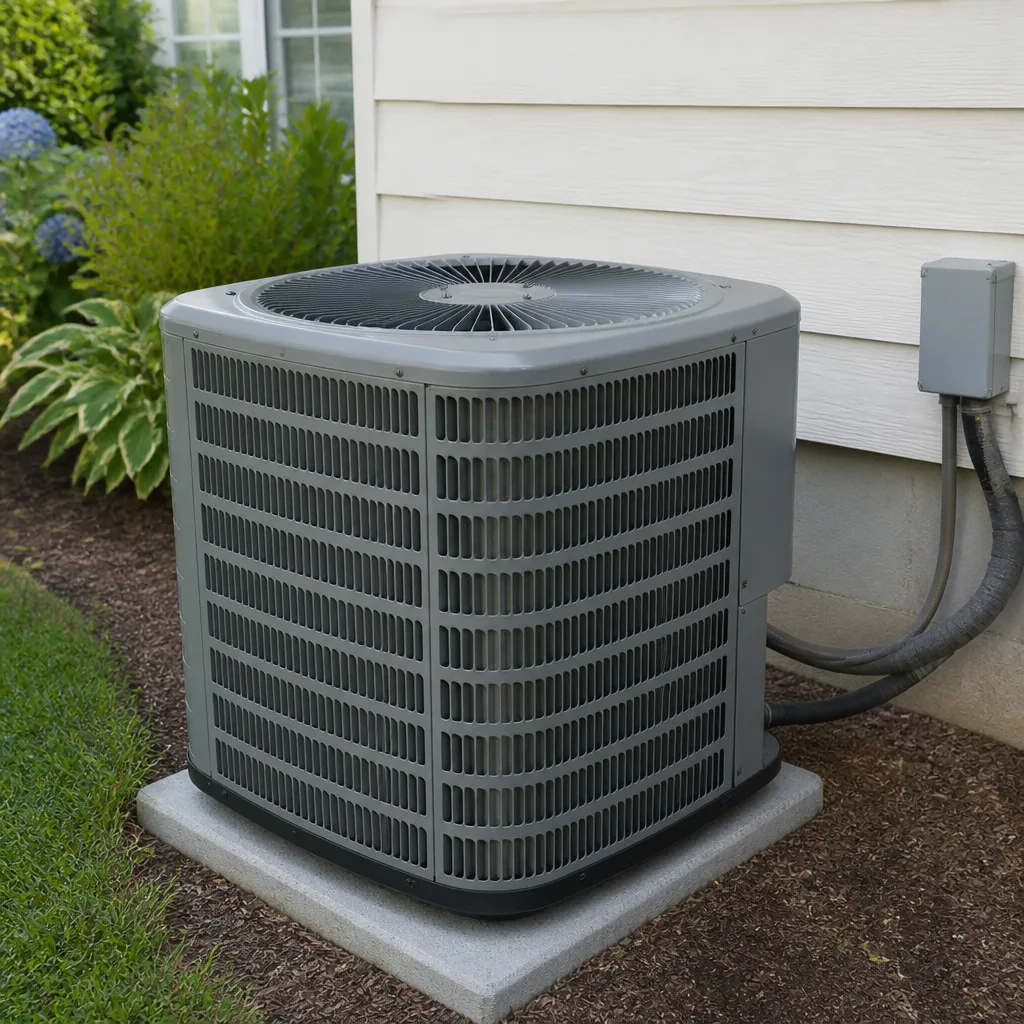 AC repair
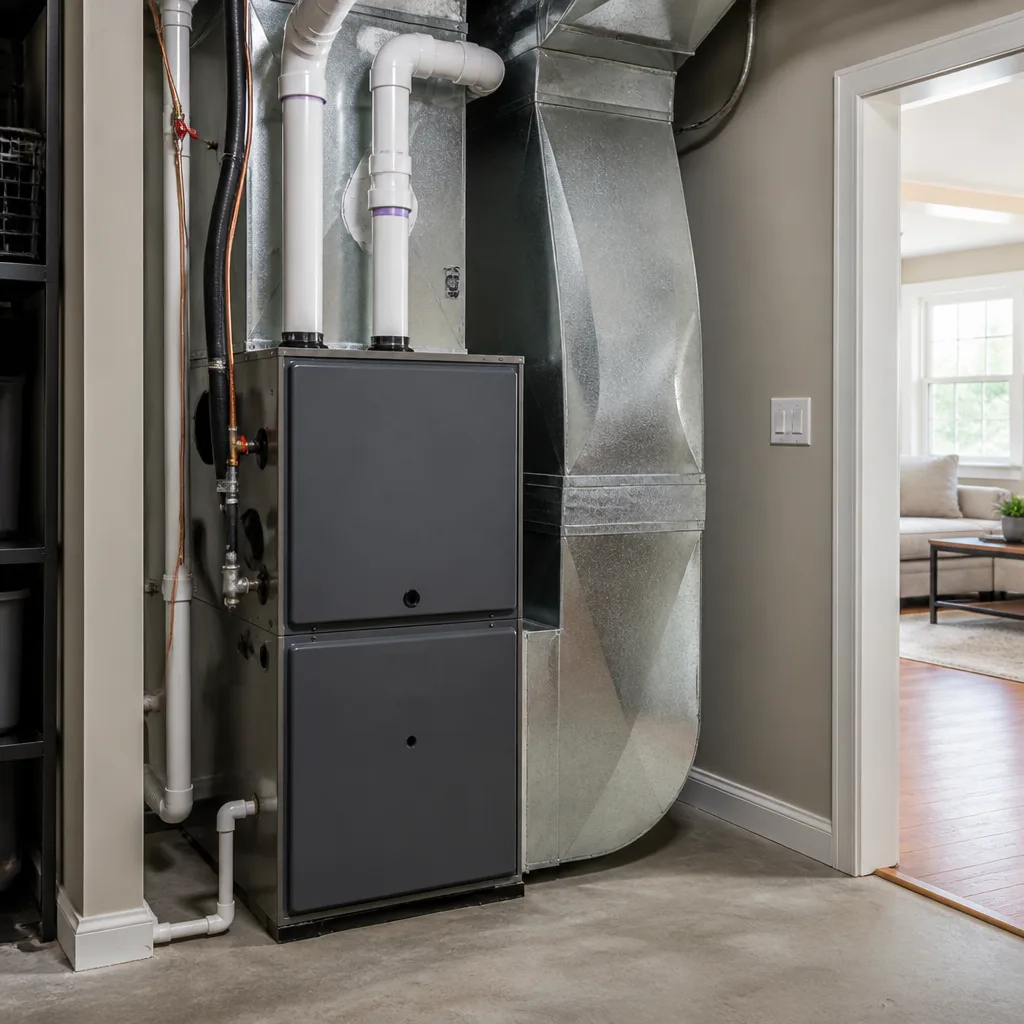 Furnace & heating
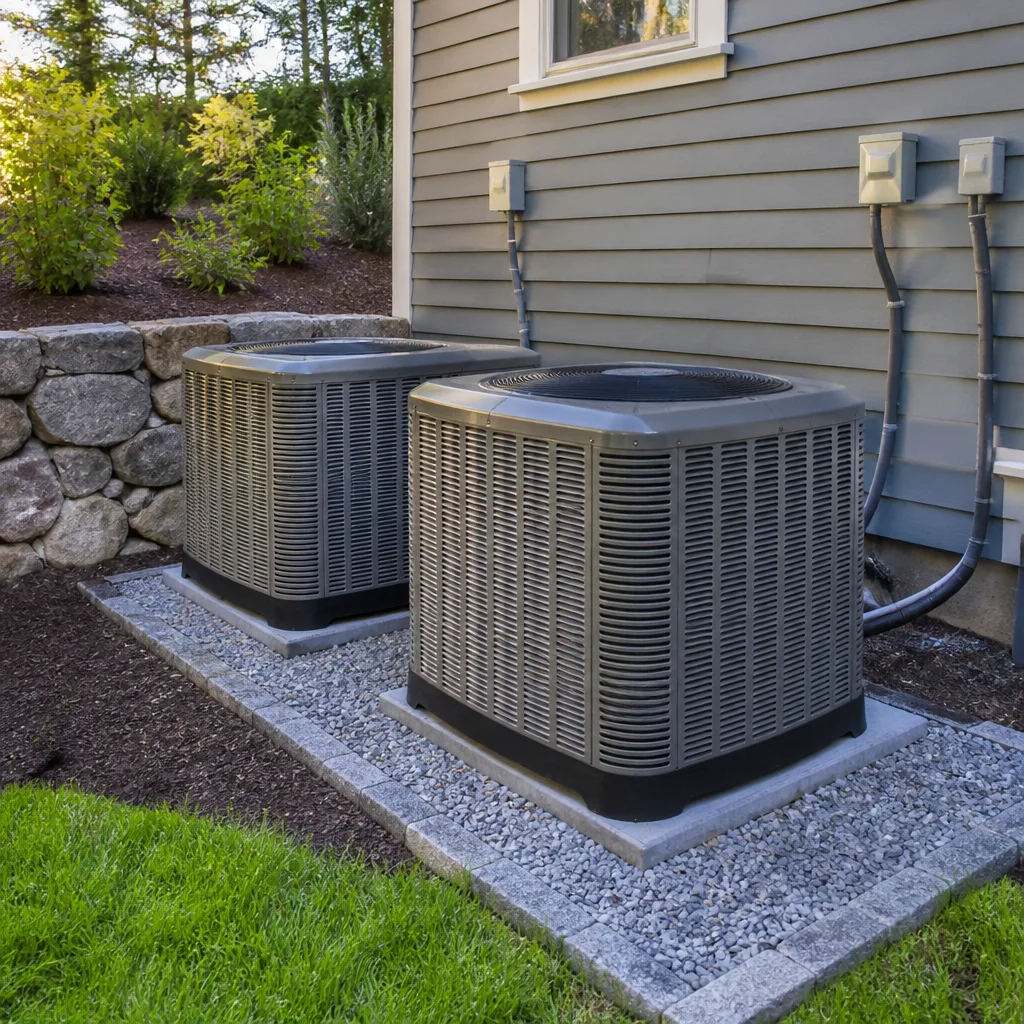 Heat pumps
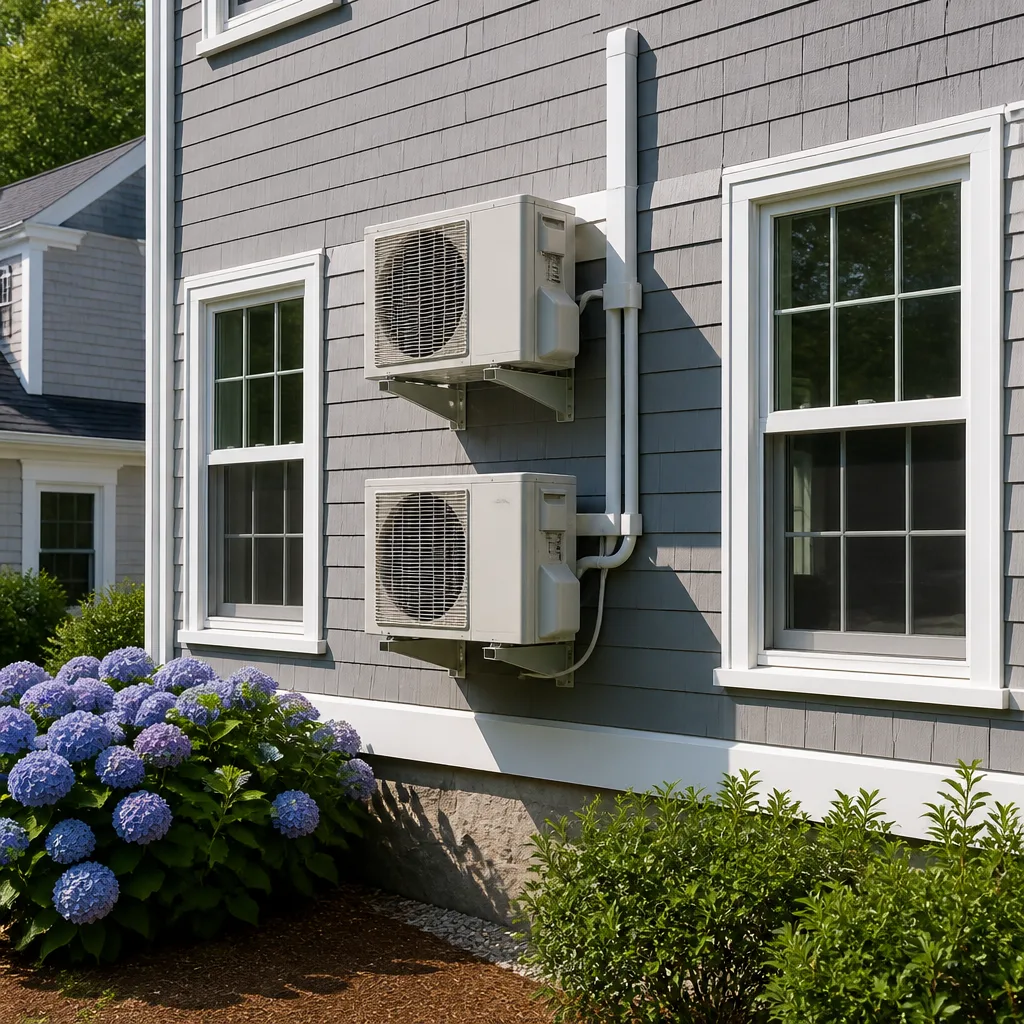 Ductless mini splits
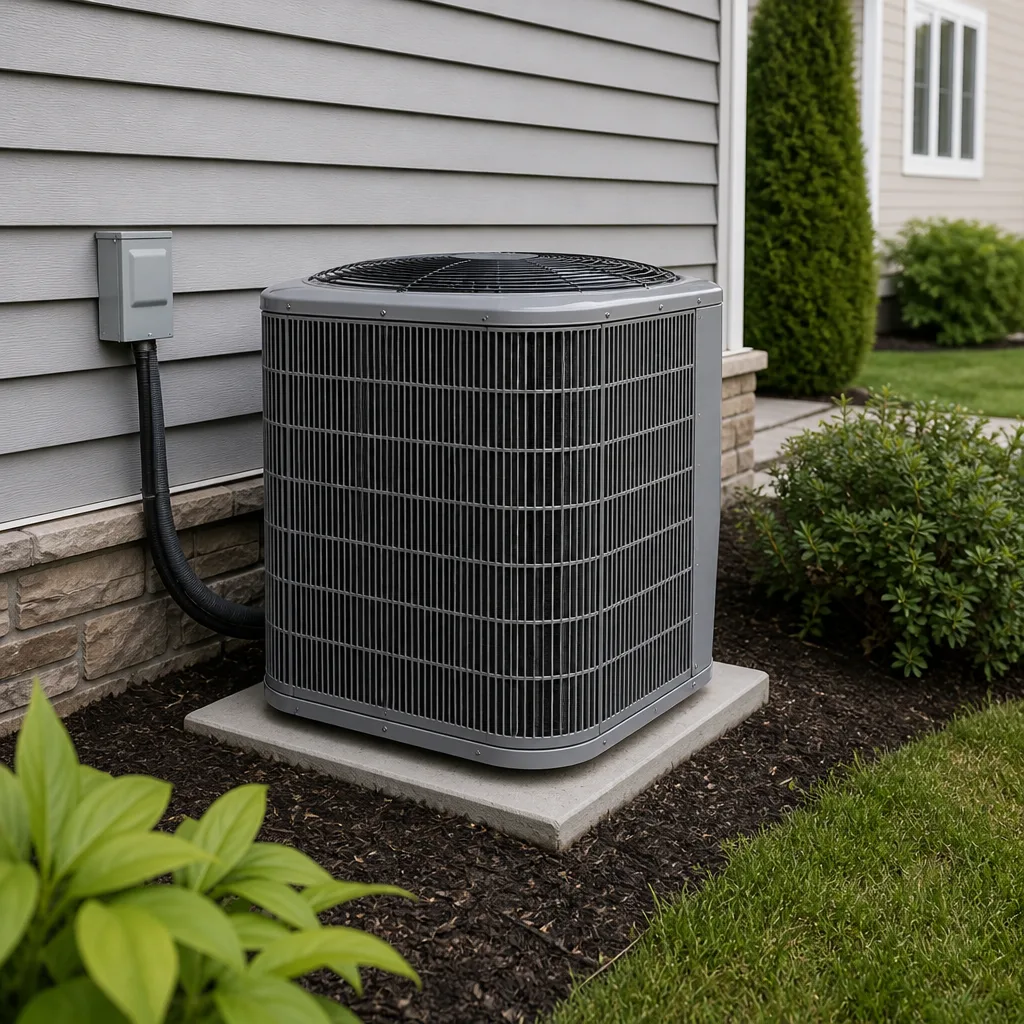 Carrier
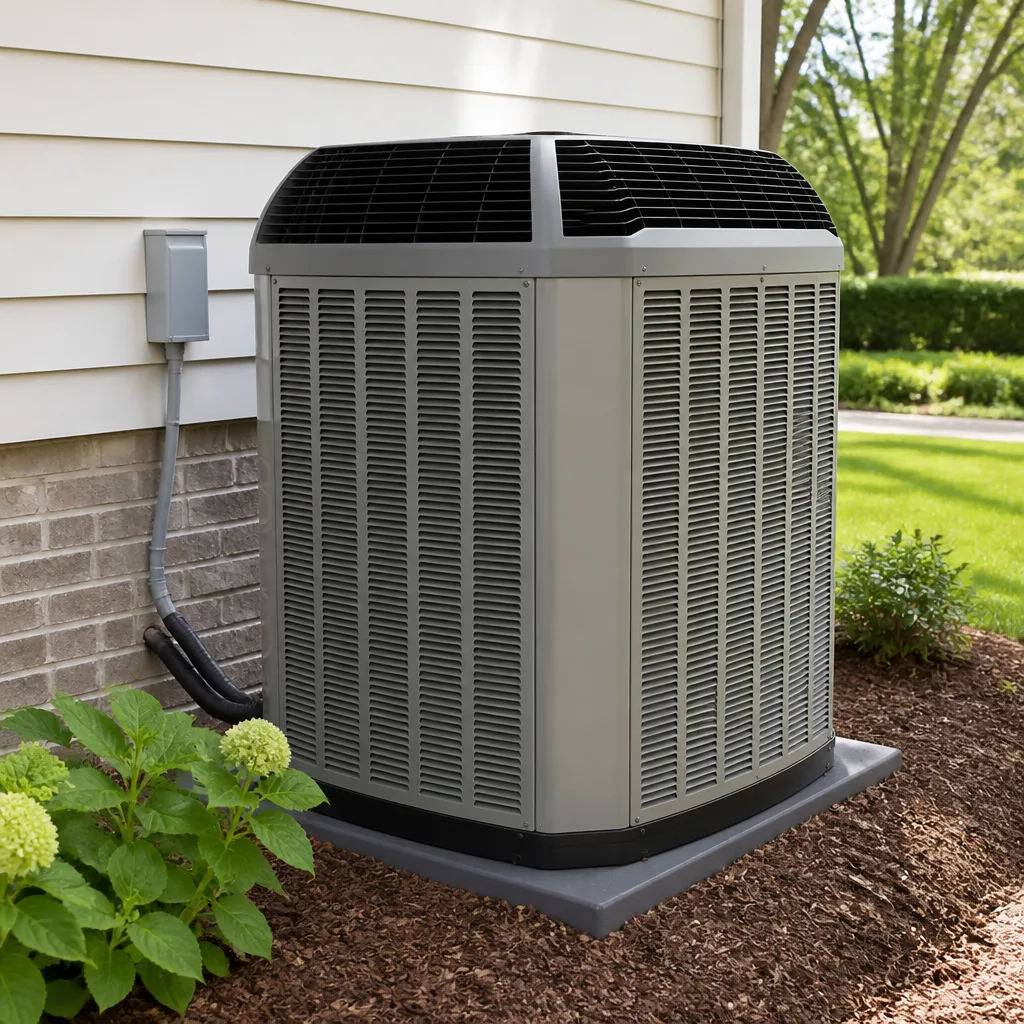 Trane
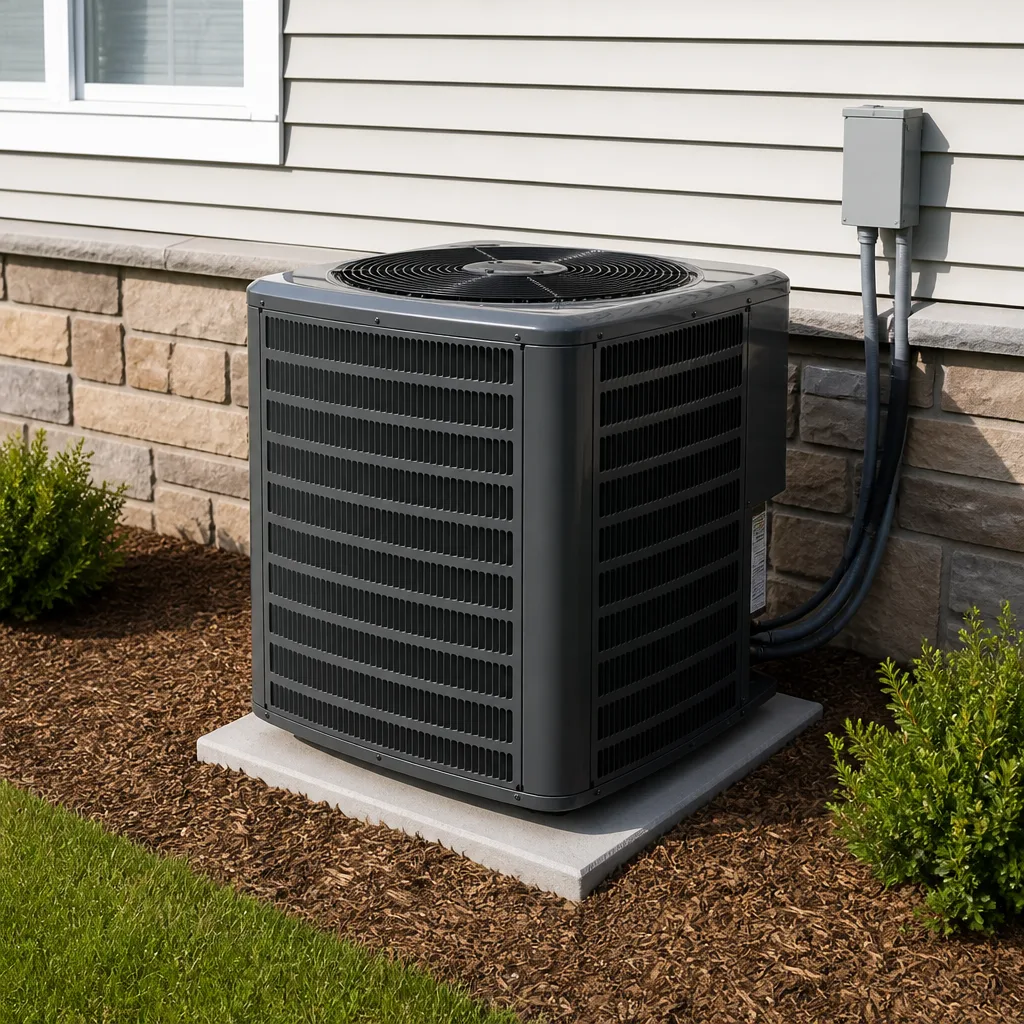 Goodman
Seasonal tune-up and full diagnostic on your Carrier, Trane, or Goodman system - readings shown to you before any repair is proposed
Diagnosis first, numbers second - you approve the repair price before a single part goes in.
Get your free estimateThe Complete AC Maintenance Guide for Enterprise Homeowners
The national recommendation is one AC tune-up per year. In Enterprise, NV, where your system may log 2,000+ run hours annually, that schedule is less like annual maintenance and more like changing your oil every 15,000 miles. Southern Nevada doesn’t give air conditioners an off season. From May through October, a unit here fights heat that stays above 95°F well into the evening, breathes dust that never really settles, and cycles through water that’s hard enough to leave scale on everything it touches. This guide shows Enterprise homeowners how to calibrate AC maintenance to that reality: which parts fail first, how often to inspect them, what you can do yourself before a professional visit, and what a complete tune-up should actually include.
Quick Answer
In Enterprise, AC maintenance should happen twice a year, not once: a full professional tune-up before the cooling season starts in April or May, and a lighter inspection in early fall before the unit runs hard again. The condenser coil, capacitors, and blower motor degrade fastest under desert heat and dust, so those three get checked every visit. A complete tune-up here runs roughly $150 to $300 per system, and skipping it is the fastest way to turn a $200 service into a $1,400 repair.
Styles & brands we work with
- AC repair
- Furnace & heating
- Heat pumps
- Ductless mini splits
- Carrier
- Trane
- Goodman
Table of Contents
- Why an Enterprise Maintenance Calendar Looks Different
- Shifting Your Tune-Up to the Real Cooling Season
- The Three Components That Fail Fastest in Desert Heat
- The Pre-Season Checklist You Can Do Yourself
- Hard Water and Dust: What They Do to Your System
- What a Complete Professional Visit Should Include
- What AC Maintenance Costs in Enterprise
- When Maintenance Isn’t Enough: Repair or Replace?
Why an Enterprise Maintenance Calendar Looks Different
Most maintenance advice online was written for places with four mild seasons and a cooling load measured in weeks. Enterprise runs its air conditioning for roughly half the year. A house in the southern valley can see 100°F-plus afternoons from June through September, and the shoulder months don’t offer much relief. That changes the math on maintenance in a few concrete ways.
First, run hours. A system that runs 2,000 hours a year accumulates wear at roughly triple the rate of one running 600 to 700 hours in a milder climate. A capacitor rated for a certain number of cycles will reach the end of its life in Enterprise in a fraction of the calendar time it would take elsewhere. Second, dust. The desert doesn’t just have more dust; it has fine particulate that coats coils and clogs filters faster than the humidity-heavy air back east. Third, water. Enterprise sits on some of the hardest municipal water in the country, and your condensate drain and evaporator coil deal with that water every single day the AC runs.
Put together, the standard “tune it up every spring” advice isn’t wrong in Enterprise, it’s just incomplete. A homeowner here benefits from a spring tune-up plus an early-fall check, especially before the late-summer stretch when the system has been running nonstop for months and a failure would be most expensive.
If your system is already acting up, don’t wait for a maintenance visit: AC Repair in Enterprise is the faster path.
Shifting Your Tune-Up to the Real Cooling Season
The generic advice says “service your AC in spring.” In Enterprise, that advice deserves a date attached to it. The system needs to be ready before the first sustained 95°F week, which typically arrives in late April or early May. Book the tune-up in March or early April so any needed parts (a capacitor, a contactor, a fan motor) can be ordered and installed before the first heat wave, not after.
Here’s a practical calendar for an Enterprise home:
- March to early April: Full professional tune-up. Coil cleaning, electrical checks, refrigerant level, drain line flush. This is the high-value visit.
- May through June: Check the filter every three to four weeks. Dust season is real here, and a clogged filter strains the blower motor and the coil.
- July through August: Watch for short cycling, weak airflow, or rising electric bills. These often signal a failing capacitor or a dirty coil before the system actually quits.
- Late September to October: Light inspection before any early heat returns. Confirm the drain line is clear and the condenser is free of dust and debris.
- November through February: This is when your furnace does its work, which is a separate maintenance topic entirely.
The point isn’t to add visits for the sake of it. It’s that in Enterprise, the cooling season is long enough and hot enough that a once-a-year schedule leaves a system running unattended for the worst 90 days of its life. A two-visit calendar is calibrated to that.
If you’re heading into heating season too, Furnace Repair in Enterprise covers what to watch for on the other side of the year.
The Three Components That Fail Fastest in Desert Heat
We’ve seen this pattern across enough Enterprise homes that it’s become predictable: when a system fails in July, it’s usually one of three things, and all three are worn down by heat and dust rather than by calendar age.
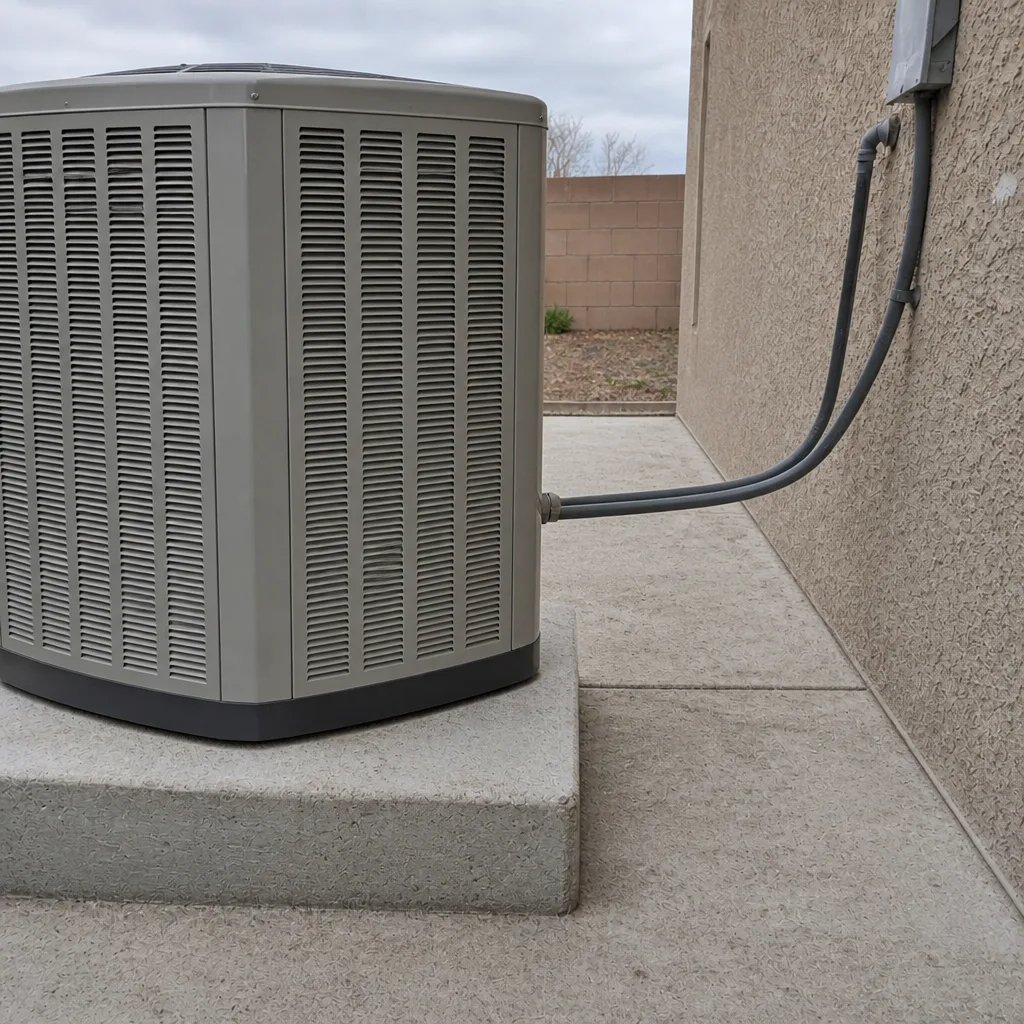
- Condenser coils. The outdoor coil is where your system dumps heat. In Enterprise, it’s also where dust collects. A dusty coil forces the compressor to work harder, which raises head pressure and shortens compressor life. Inspection and cleaning should happen on every professional visit, and homeowners should rinse the outdoor coil gently a few times during the season.
- Capacitors. These are the small, inexpensive parts that help start and run the fan and compressor motors. Heat degrades capacitors faster than anything else. A failed run capacitor is one of the most common no-cool calls we see in Enterprise, and it usually costs well under $350 to replace, parts and labor included.
- Blower motors. The indoor blower moves air through your ducts. Dust and constant run hours wear the bearings, and a struggling blower motor shows up as weak airflow and rising power bills before it fails outright. Blower motors on Enterprise systems typically need attention earlier in their life than in mild climates.
If your system uses a Carrier, Bryant, or American Standard condenser, the coil geometry varies by model, but the dust problem is identical. Cleaning intervals in Enterprise should be tighter than the manufacturer’s generic guidance. If any of these three components is already suspect, a maintenance visit today is far cheaper than a repair in August. Our AC Maintenance in Enterprise page explains how a tune-up catches these before they strand you.
The Pre-Season Checklist You Can Do Yourself
Doing a few safe tasks before the professional arrives means the paid visit goes toward the work only a technician can do. Here’s what you can handle yourself:
- Replace the air filter. Use the size printed on the old filter. In Enterprise, a pleated MERV 8 to MERV 11 filter is a reasonable balance between dust capture and airflow; very high-MERV filters can restrict airflow and strain the blower.
- Clear the area around the outdoor unit. Trim vegetation back at least two feet. Make sure nothing blocks airflow through the coil fins.
- Gently rinse the outdoor coil with a garden hose, fins only, low pressure. Never use a pressure washer; it bends the fins.
- Check the condensate drain pan and line for standing water or visible debris. If you see water accumulating, note it for the technician.
- Test the thermostat by setting it a few degrees below room temperature and confirming the system starts and cools.
- Note any odd behavior. Short cycling, weak airflow from certain vents, unusual noises, or a rising bill are all useful clues to hand over.
Do not open the electrical panel, test capacitors, or handle refrigerant lines yourself. Those involve line voltage and pressurized refrigerant, and both can cause serious injury. That work belongs to a trained technician.
Hard Water and Dust: What They Do to Your System
Two environmental realities in southern Nevada drive maintenance frequency harder than anywhere else we work: hard water and fine dust.
Hard water matters because your air conditioner produces condensate every hour it runs. That water flows down a drain line and away. In most of the country, that line stays clear. In Enterprise, the mineral content in the water can leave scale deposits inside the drain line and on the condensate pan, and over time those deposits narrow the line until it clogs. When the drain clogs, water backs up, and a float switch (if you have one) shuts the system off, or water spills into the ceiling or attic. Flushing the drain line should be part of every professional visit, and if you’ve had a clog before, it’s worth asking the technician to check it at the fall visit too.
Dust does double duty: it coats the condenser coil outdoors and loads the filter indoors. The evaporator coil, the indoor coil, can pick up a sticky film of dust over months of steady run time. Dirty evaporator coils reduce cooling capacity and can cause the coil to ice up. In Enterprise, we recommend evaporator coil inspection at least once a year, and cleaning if a film is visible.
Neither problem shows up on a thermostat. Both are why a professional visit for an Enterprise home should include more than a filter swap.
What a Complete Professional Visit Should Include
Not every “tune-up” is the same. Some companies offer a cheap special that amounts to a filter change and a visual glance. Here’s what a genuine AC maintenance visit should cover, line by line, so you can tell the difference:
- Filter check and replacement. The technician should confirm the current filter’s condition and recommended MERV rating.
- Outdoor condenser coil inspection and cleaning. Fins checked for damage, coil cleaned properly for the model.
- Indoor evaporator coil inspection. Checked for dust film and icing.
- Condensate drain line and pan. Flushed and checked for scale buildup, given Enterprise’s hard water.
- Electrical component checks. Capacitors, contactors, and wiring tested and compared to spec.
- Refrigerant level check. Charged to the manufacturer’s spec, not just “topped off” without a leak check.
- Blower motor inspection. Bearings, belt (on older systems), and airflow.
- Thermostat calibration and operation check.
- Written report of everything found, plus a written price before any recommended repair begins.
That last point matters. A trustworthy HVAC company gives you a written price before work starts, on every job. Brandt HVAC sends a background-checked, uniformed technician to your door with a name and photo sent ahead of time and a photo ID badge shown at the door, part of what we call the Threshold Verified standard. If anyone arrives you weren’t told to expect, that visit is on us.
What AC Maintenance Costs in Enterprise
Here’s what a maintenance visit and the most common repairs found during one typically run in the Enterprise market:
- Full AC tune-up, per system: $150 to $300
- Filter replacement (provided by technician): $20 to $60 depending on size and MERV rating
- Capacitor replacement: $200 to $350, parts and labor included
- Condensate drain line flush and cleaning: $100 to $200
- Blower motor replacement: $400 to $900, parts and labor included
- Refrigerant recharge with leak check: $250 to $600 depending on refrigerant type and amount
Two visits a year at roughly $150 to $300 each is still cheaper than one emergency compressor repair, which can run into four figures. That’s the math. A well-maintained system in Enterprise also holds its efficiency longer, and a system near the end of its life shows better numbers at electric-bill time.
When Maintenance Isn’t Enough: Repair or Replace?
Eventually maintenance stops being enough. Here’s a practical rule: if a system is under 12 years old and the repair costs less than a third of a replacement, repair is usually the right call. Past 12 to 15 years, or if you’re facing a compressor replacement, replacement starts making sense, especially in Enterprise, where a modern high-efficiency unit can cut summer bills noticeably.
Replacement work in Enterprise isn’t a same-day job. It’s load-calculated for your home, ordered, and scheduled, with a written fixed price and any rebate or financing paperwork handled up front. For a system that’s failing right now, a repair call is the faster route. Our AC Repair in Enterprise page explains how we handle those same-day emergencies, and 365-Day Done Right Promise covers the repair for 365 days: if it fails, we come back at no charge.
Common Mistakes to Avoid
- Skipping the fall visit. Spring tune-ups are the default. In Enterprise, the fall inspection catches drain line scale and coil dust before the system runs another hot stretch.
- Running the wrong filter. A restrictive high-MERV filter in a system sized for lower airflow can strain the blower motor. Check the manufacturer’s airflow spec before going to a MERV 13.
- Rinsing the coil with a pressure washer. It bends the fins flat and does more harm than good. Use a garden hose only.
- Ignoring a climbing electric bill. In Enterprise, rising summer bills often trace back to a dirty coil or a weak capacitor. Catching it in June saves an August emergency call.
- Accepting a repair quote without a written price. Every job, every time, should start with a written price you approve before work starts. If it doesn’t, walk away.
- Letting a drain line clog go unflushed. Hard water in southern Nevada means scale buildup happens faster than most homeowners expect. A clogged line can damage ceilings, not just ACs.
- Choosing a technician you weren’t told to expect. You should know exactly who is coming to your door before they arrive, by name and photo. Anything less is a security problem, not a scheduling one.
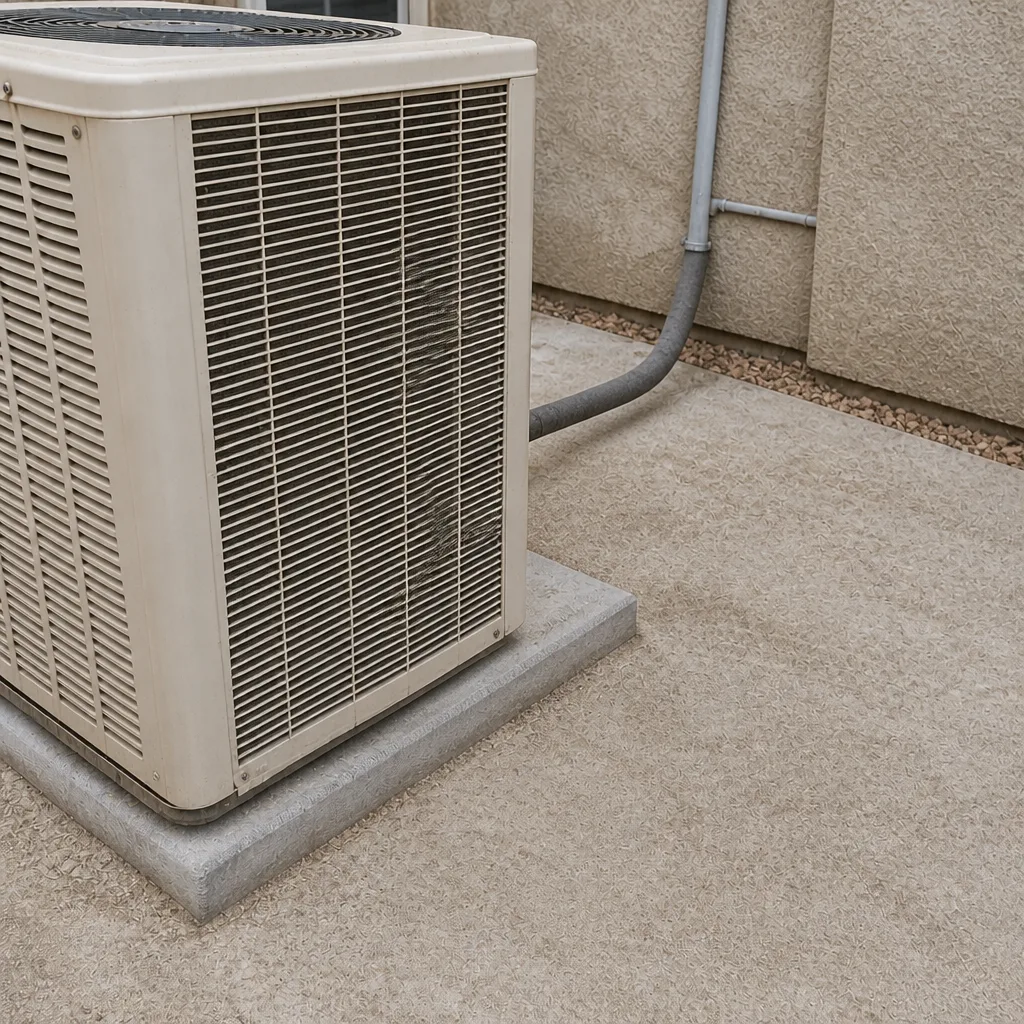
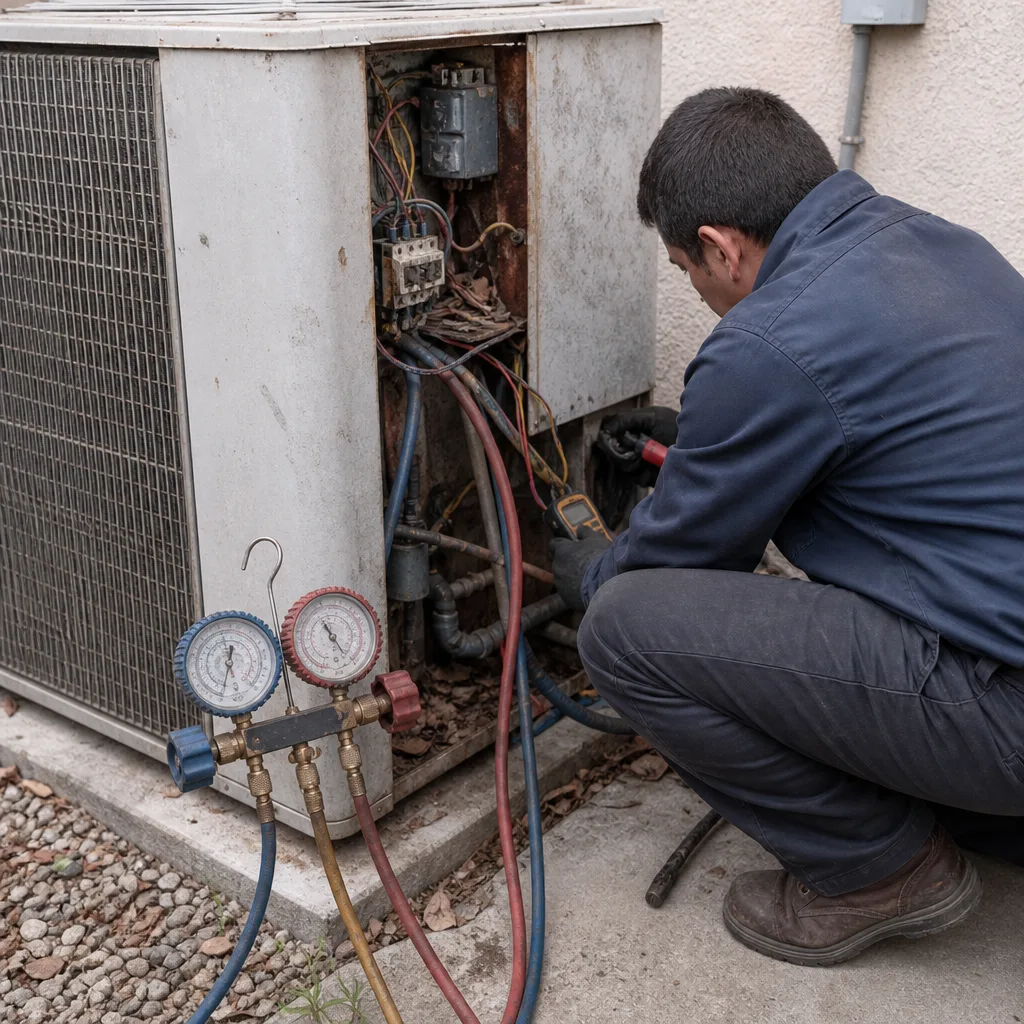
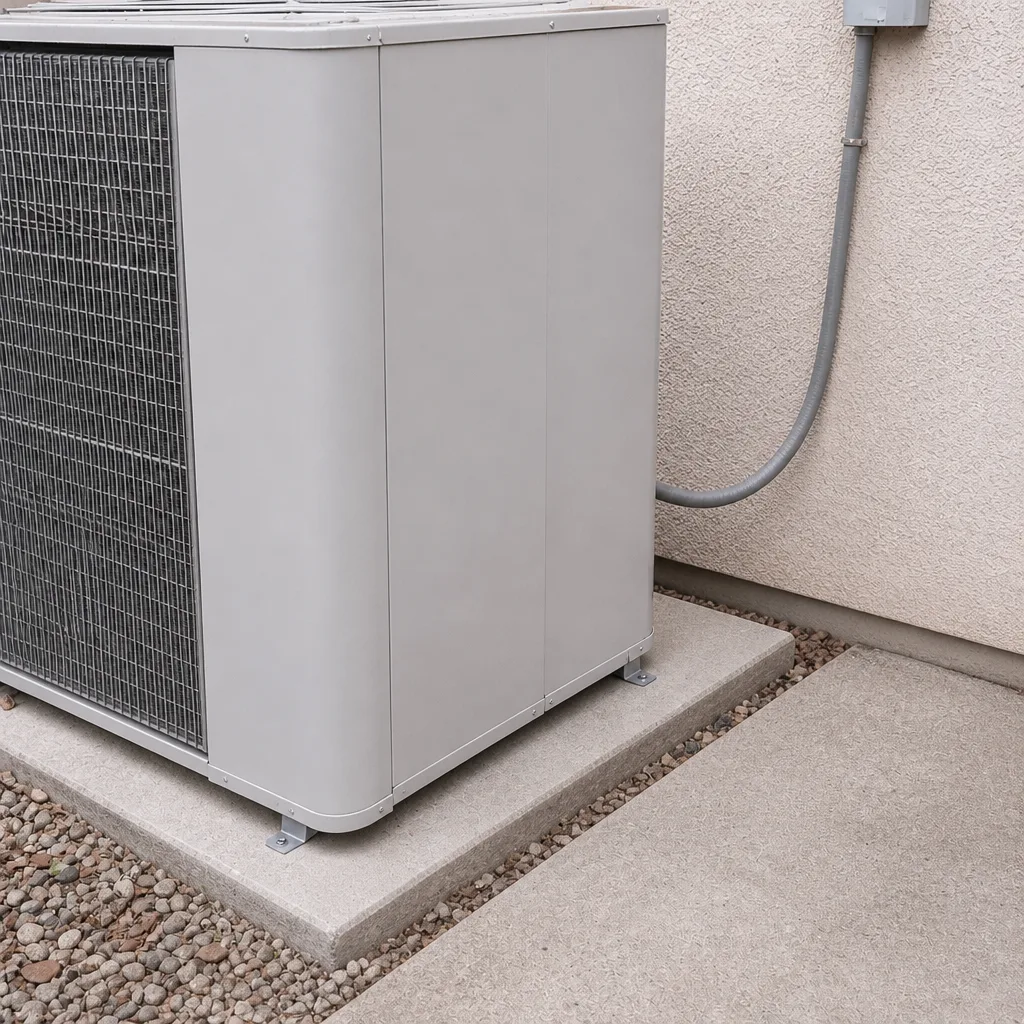
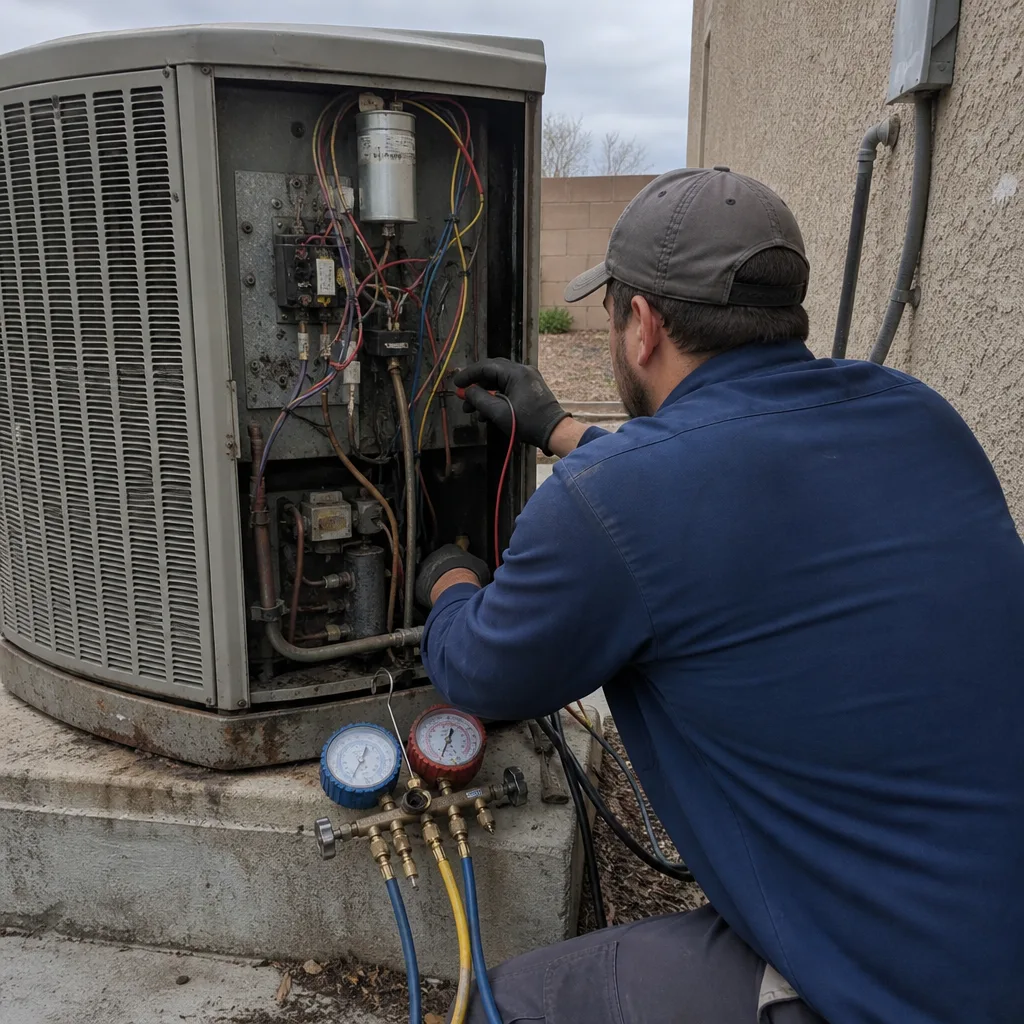
See the difference
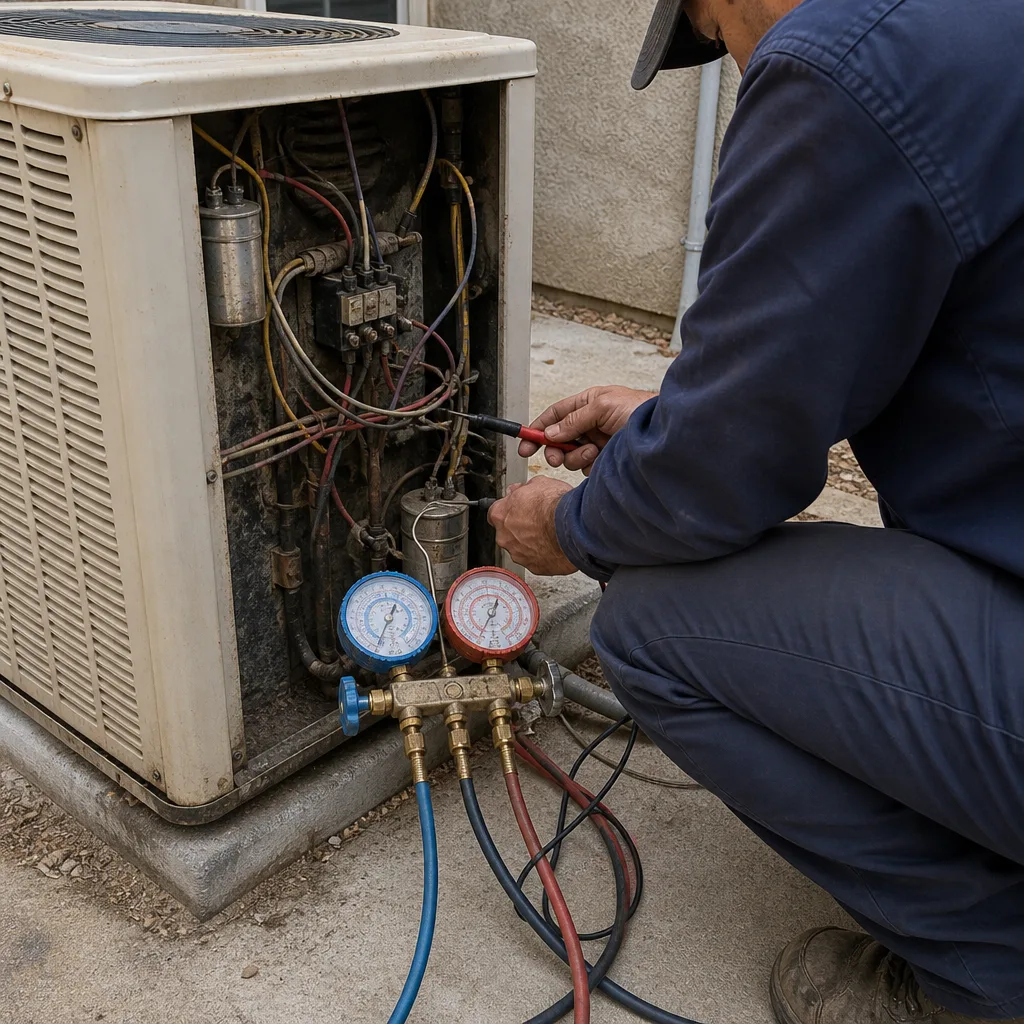 Before
 After
 Before
 After
 Before
 After
When to Call a Professional
Some things you can check yourself. Others need a trained technician, and the line matters: anything involving line voltage, the electrical panel, capacitors, contactors, the compressor, or refrigerant lines is a professional job. Those components carry serious shock and burn hazards, and refrigerant work requires recovery equipment and certification. If your system isn’t cooling on a 100°F Enterprise afternoon, or you see ice on the indoor coil, or the breaker trips when the AC kicks on, call. A seasonal tune-up is also worth booking early, since it’s a scheduled job, not an emergency. Brandt HVAC Enterprise offers free estimates in Enterprise to help you get started. Call (844) 797-9490 and a live person will answer, day or night, with no callback queue.
Frequently Asked Questions
Twice a year for most Enterprise homes: a full tune-up in March or April before the cooling season and a lighter inspection in early fall. The longer run hours and heavier dust load in southern Nevada justify a two-visit schedule that a once-a-year mild-climate schedule doesn’t. Call (844) 797-9490 for an exact quote on a tune-up; estimates are free.
A complete tune-up covers filter check, condenser and evaporator coil inspection and cleaning, condensate drain line flush, electrical component testing, refrigerant level check, blower motor inspection, thermostat check, and a written report of everything found with a written price before any repair. If a company’s tune-up is a filter swap and a card, it doesn’t count.
Most full tune-ups in the Enterprise market run $150 to $300 per system. Minor repairs found during a visit, like a capacitor replacement, typically run $200 to $350 parts and labor. Call (844) 797-9490 for a written quote before anything begins.
Rebate programs change regularly, and a high-efficiency unit may qualify for state or utility incentives. The exact amount depends on the model and current program rules. We’ll walk through the paperwork with you and confirm eligibility before you commit to a replacement.
For repair calls, often yes. A failed capacitor or a tripped breaker is typically a same-day fix, and calls are answered by a live person 24 hours a day. Replacement work is not same-day; it’s load-calculated, ordered, and scheduled with a written fixed price. Call (844) 797-9490 to get into today’s queue.
A rising bill in Enterprise usually points to a dirty condenser coil, a weak capacitor, or a clogged filter blocking airflow. All three make the system work harder for the same cooling. A maintenance visit catches them before they become a breakdown. Call (844) 797-9490 to book one.
The Bottom Line
In Enterprise, AC maintenance is a two-visit calendar, not a single annual tune-up. The cooling season runs May through October at 95°F and higher, and the three components that degrade fastest (condenser coils, capacitors, blower motors) fail on a shorter timeline than national guidance assumes. Handle the filter and coil cleaning yourself, then bring in a professional for the electrical, refrigerant, and drain line work. A complete tune-up should come with a written report and a written price before any repair. Done right, it’s the cheapest thing you can do for your system. Brandt HVAC Enterprise is here when you’re ready: call (844) 797-9490 for a free estimate, and you’ll know exactly who’s coming to your door.
Written by the team at Brandt HVAC Enterprise.