

 AC repair
 Furnace & heating
 Heat pumps
 Ductless mini splits
 Carrier
 Trane
 Goodman
Seasonal tune-up and full diagnostic on your Carrier, Trane, or Goodman system - readings shown to you before any repair is proposed
Diagnosis first, numbers second - you approve the repair price before a single part goes in.
Get your free estimateRheem Capacitor Replacement: The Enterprise Owner’s Guide
We replace failed Rheem run capacitors with a correctly matched part, and most jobs land between $150 and $650 installed, depending on the capacitor type and how hard it is to reach. Same-day service is often available in Enterprise, and a live person answers our phone at any hour. Most owners find out the capacitor failed on the first hot afternoon when the outdoor fan hums but won’t spin, or the compressor clicks and quits before the house cools. The air handler may run fine while the condenser sits silent, which is the classic sign of a start or run capacitor that has drifted out of spec.
Key Takeaways
- Rheem units use both run capacitors and dual-run (round) capacitors, and the replacement has to match the microfarad (µF) rating and voltage printed on the old can.
- Installed cost typically runs $150 – $650, with a written price before any work begins.
- A failed capacitor is one of the most common no-cooling causes in Enterprise’s summer heat, and it’s usually a same-day fix.
- This work involves stored electrical charge. It’s a job for a trained technician, not a homeowner.
Which Rheem Models This Applies To
This applies to the whole Rheem residential line we see in Enterprise: the Classic and Prestige condensing units, the Rheem Value series, and the Rheem air handlers and package units that pair with them. Rheem has used a few different capacitor layouts over the years. Older Rheem condensing units often run a single round dual-run capacitor that feeds both the compressor and the condenser fan from one can. Newer and variable-speed models may split those into separate run capacitors plus a start capacitor with a relay. The part you need is printed right on the side of the old capacitor: two µF ratings (for example, 45/5 µF), a voltage rating like 370V or 440V, and a tolerance band. A part number alone won’t always tell you, so we match on those printed values and the physical size.
On the OEM-versus-aftermarket question, we’re straightforward about it. Rheem-branded capacitors are the factory part, but a quality aftermarket capacitor from a known manufacturer meets the same µF and voltage spec and is what we install on most jobs. A capacitor is a commodity part; what matters is the match, the connections, and the testing afterward. We’re an independent service provider and not affiliated with Rheem, so we’re free to recommend whichever capacitor meets spec. We also service Carrier, Trane, and Lennox systems the same way.
Styles & brands we work with
- AC repair
- Furnace & heating
- Heat pumps
- Ductless mini splits
- Carrier
- Trane
- Goodman
Signs Your Rheem Capacitor Replacement Is Failing
A failing capacitor doesn’t usually announce itself. Here’s what owners in Enterprise tend to notice before they call:
- The outdoor fan won’t spin, but the compressor hums. The fan capacitor has lost capacity, so the motor can’t get the push to start. You may hear the compressor trying while the fan blades sit still.
- The compressor clicks and shuts off within seconds. A weak start capacitor can’t supply the extra jolt the compressor needs to come up to speed, so the unit trips its internal overload and quits.
- The unit runs longer and cools less. A capacitor that has drifted a few µF off spec still runs the motor, just inefficiently, so the system works harder for less cooling.
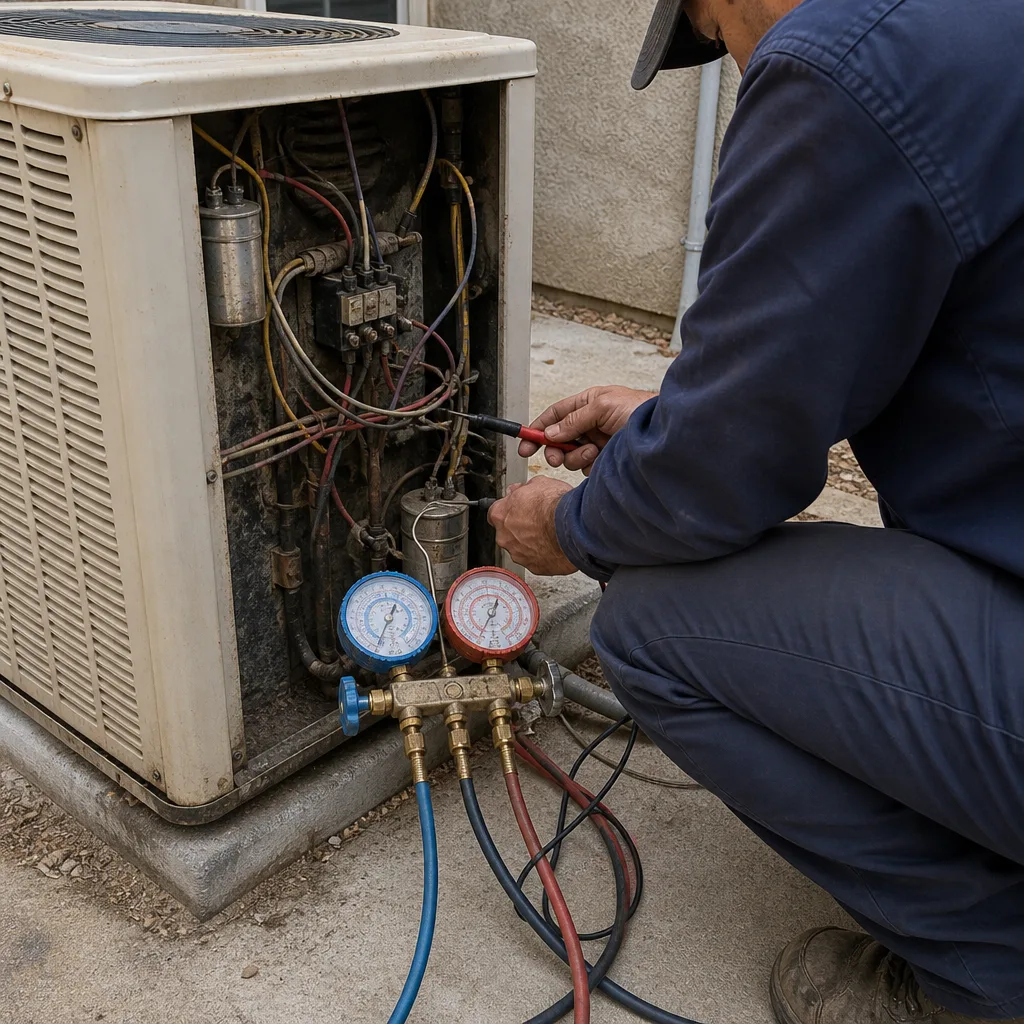
- A bulging or leaking capacitor can. Heat and age cause the can to swell or weep fluid at the top. That’s a failed part, visible once the panel is off.
- Intermittent shutdowns on hot afternoons. The part tests fine cold but fails once the unit heats up, which is why these calls cluster in a Enterprise July.
High heat is hard on capacitors, and Enterprise summers push them to the edge. A capacitor that would last years in a mild climate can fail faster here because the outdoor unit cooks all day.
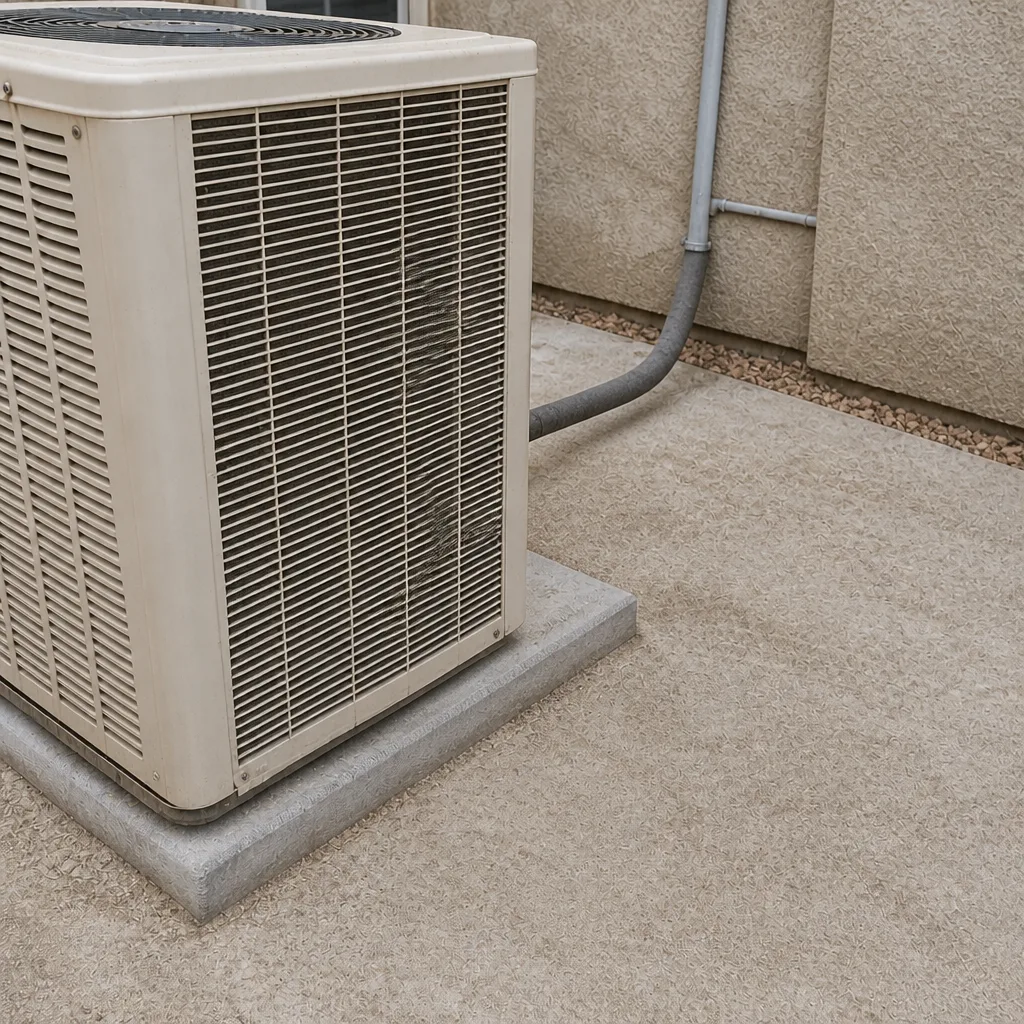
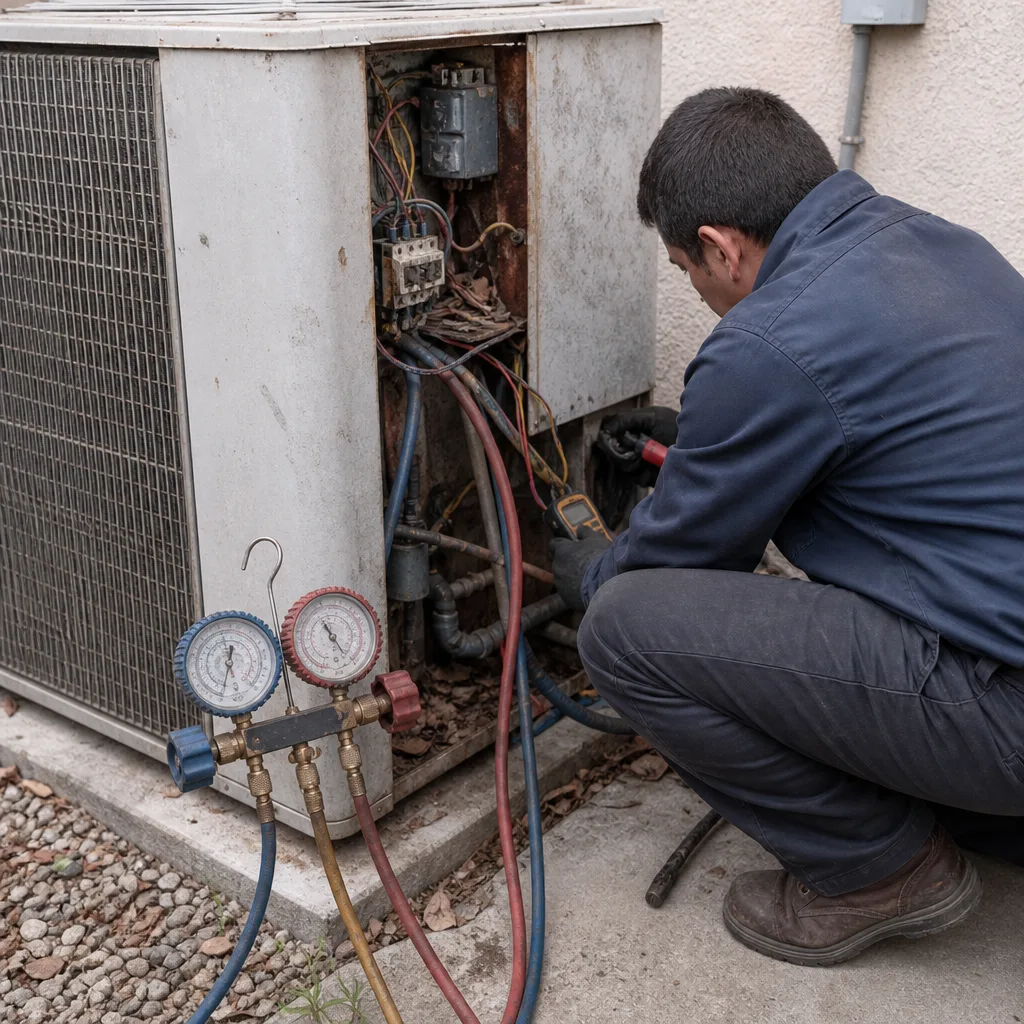
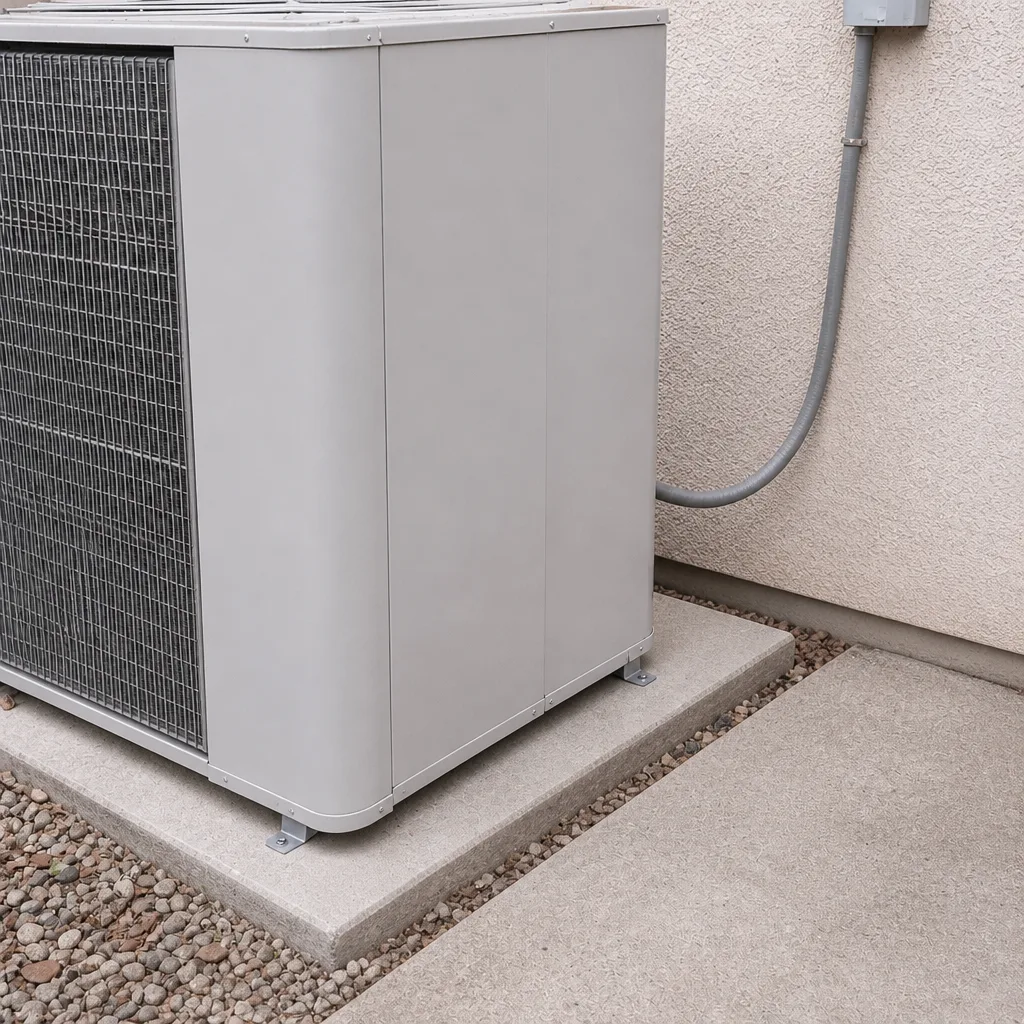
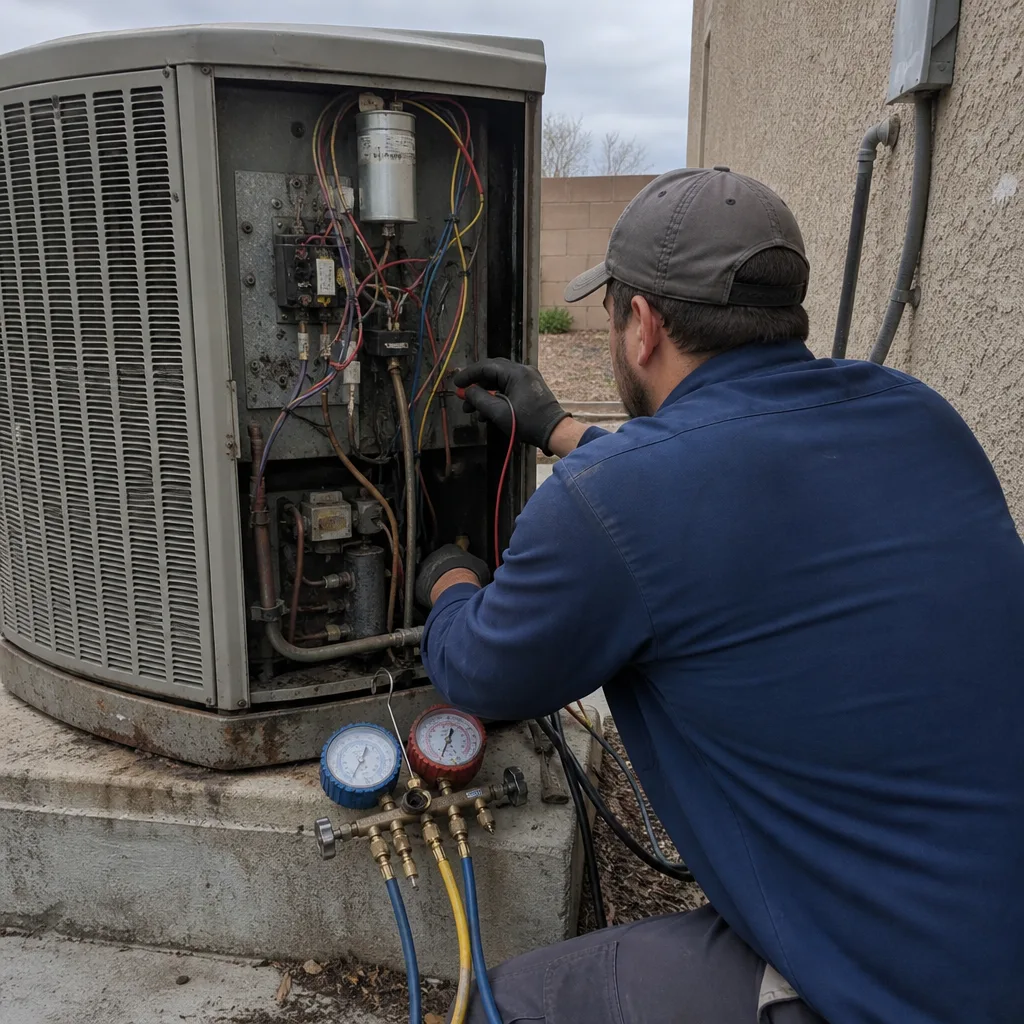
See the difference
 Before
 After
 Before
 After
 Before
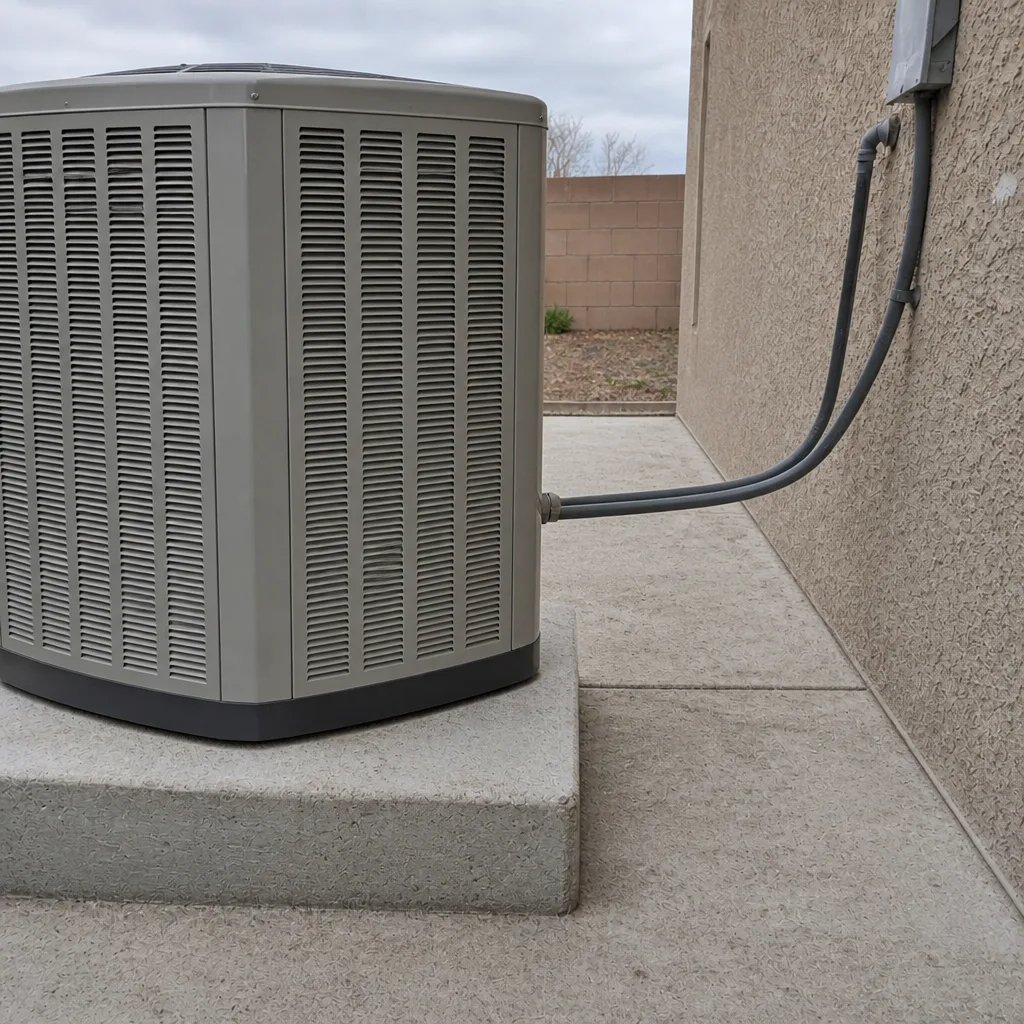 After
Replacement Cost & What’s Included
In Enterprise, a Rheem capacitor replacement typically runs $150 – $650 installed, parts and labor together. Here’s what moves you within that range:
- Capacitor type: a single run capacitor sits near the low end; a dual-run or start-capacitor-plus-relay job lands higher.
- Access and location: a capacitor on the outdoor condenser is quick to reach; one buried in a tight air-handler cabinet takes longer.
- Diagnosis: we test the whole circuit, not just the suspect can, so you’re not paying for a part you didn’t need.
Every job starts with a written price you see and agree to before any work begins, and it includes testing the new part under load. The repair carries a written guarantee under our 365-Day Done Right Promise: if it fails within the year, we come back at no charge.
DIY or Call Us?
There’s a plain safety reason we don’t hand out step-by-step instructions for this one. A capacitor stores a charge even after the power is off, and it can deliver a serious shock to anyone who isn’t trained to discharge and test it safely. That’s not a scare tactic, just how these parts work. The compressor and fan motor circuits carry live voltage as well.
What you can safely check: confirm the breaker, note whether the outdoor fan turns at all, and read the µF and voltage printed on the old capacitor if it’s visible. Then call us at (844) 797-9490. We install the correctly matched Rheem-compatible part, test the system under load, and leave a written price and a written guarantee. Background-checked, badged technicians are sent to you by name and photo before every visit.
FAQs
Most Rheem run capacitors last somewhere between five and ten years, but in Enterprise’s heat expect the shorter end of that range. Capacitors degrade faster when the outdoor unit runs hard through long hot seasons.
No. A capacitor is a sealed part with no serviceable pieces inside, so it’s always a replacement. Once the can bulges or the reading drifts off spec, the fix is a new, correctly matched part, not a repair.
Once we’ve diagnosed it, a capacitor swap usually takes under an hour. The diagnosis and load testing add time, and if we’re replacing a start capacitor and relay together, expect a bit longer. Most jobs are done in a single visit.
We match on the µF ratings, voltage, and physical size printed on your old capacitor, then install a part that meets the same spec. We test it under load before we leave and back the work with our 365-Day Done Right Promise. Call (844) 797-9490 for a free estimate.
Written by the team at Brandt HVAC Enterprise, serving Enterprise and nearby areas.