
Last updated November 17, 2026
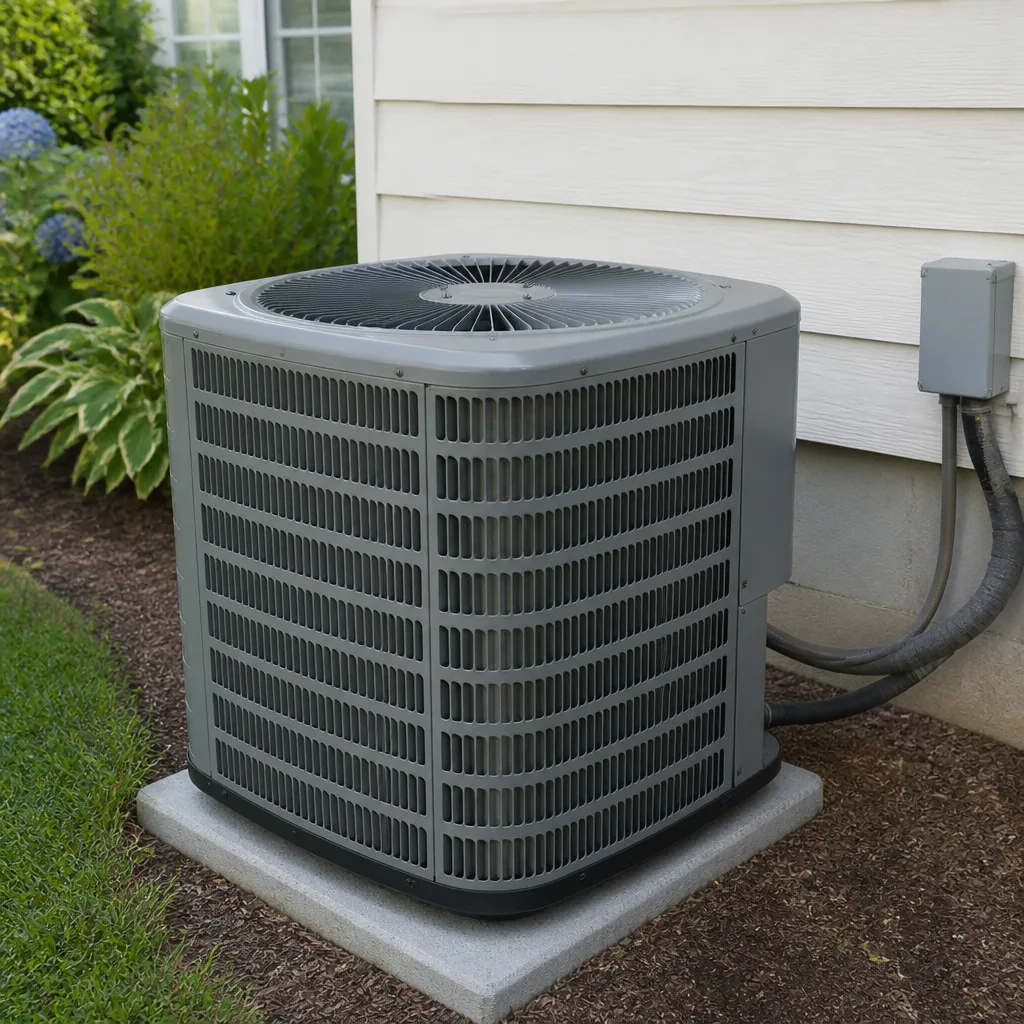 AC repair
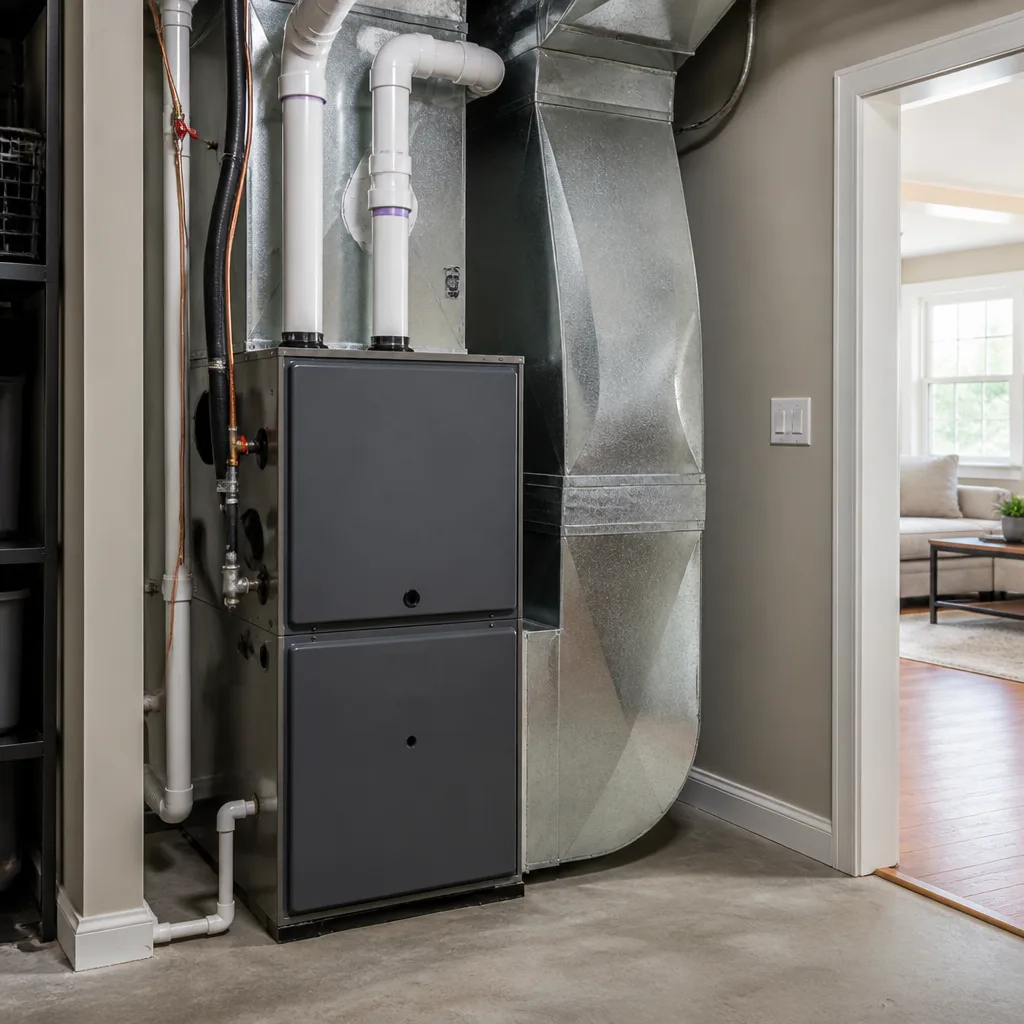 Furnace & heating
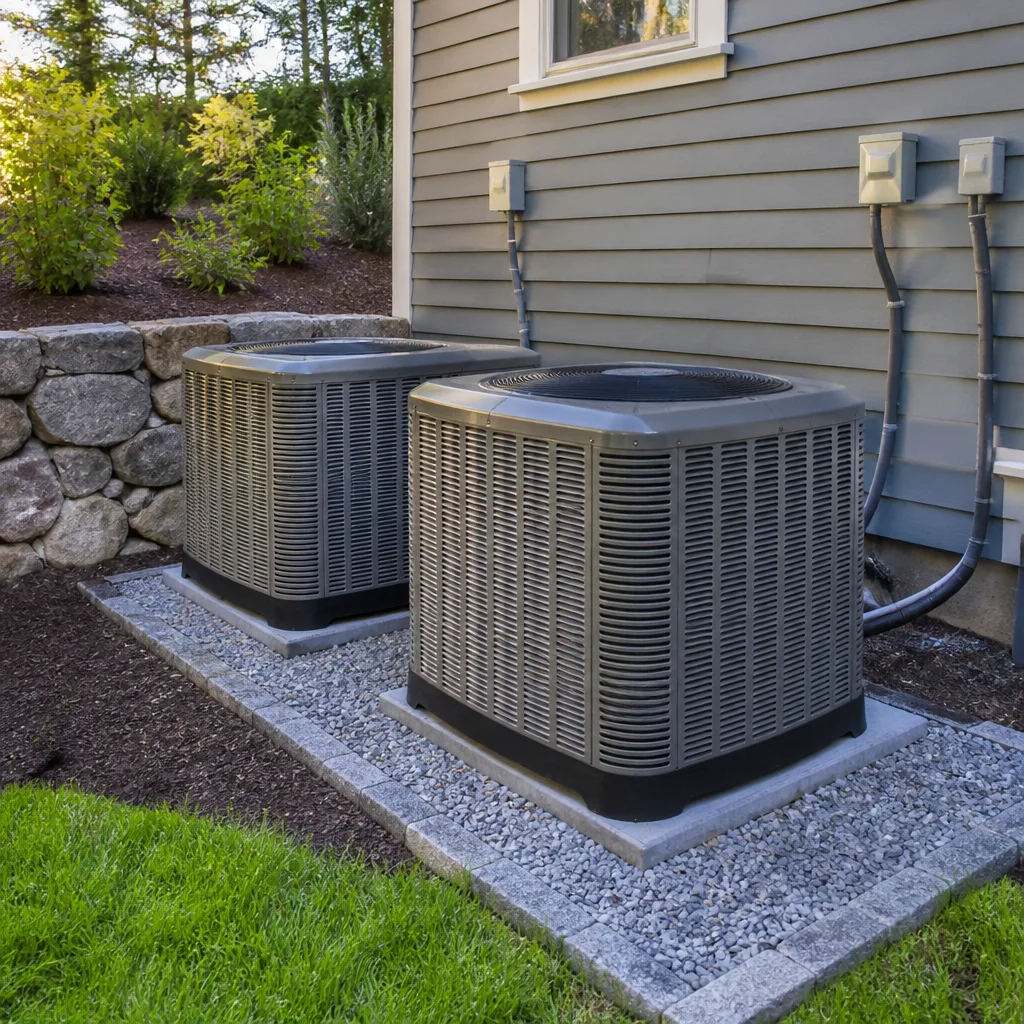 Heat pumps
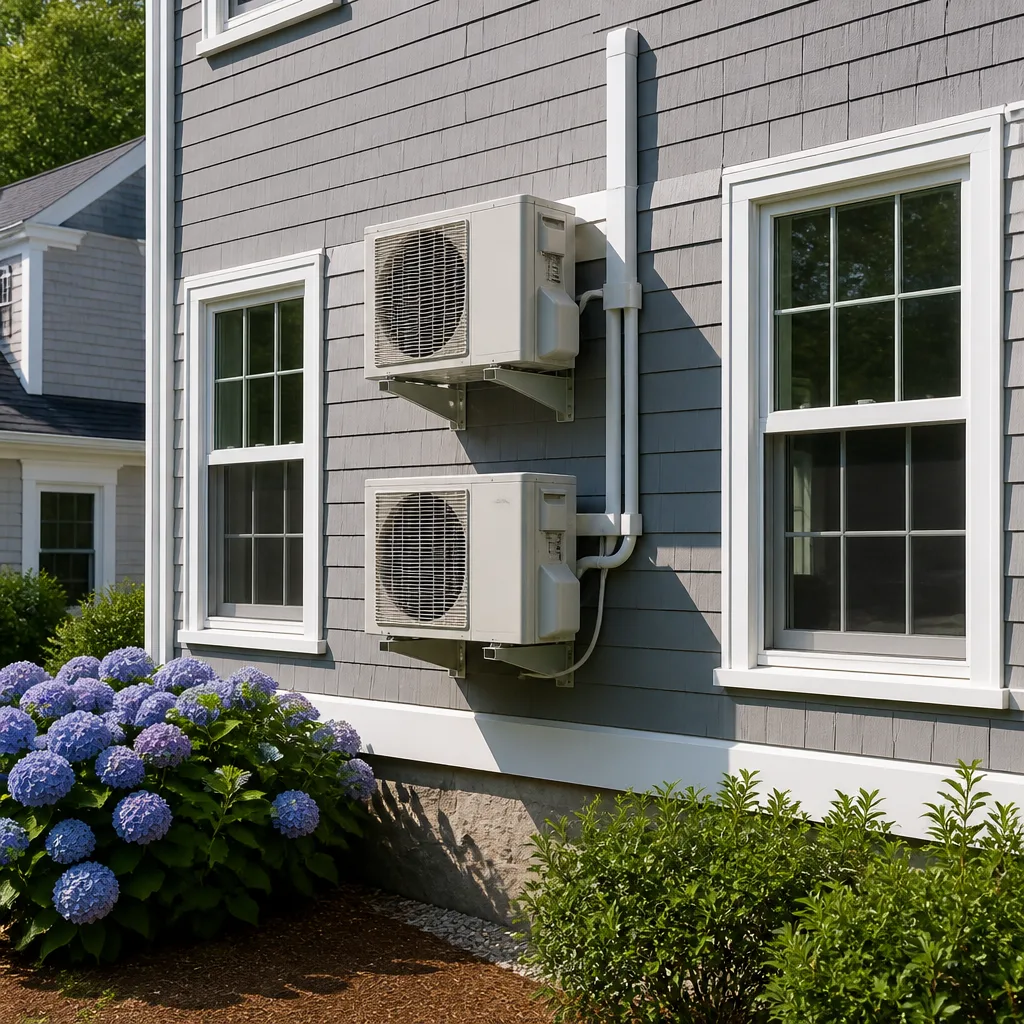 Ductless mini splits
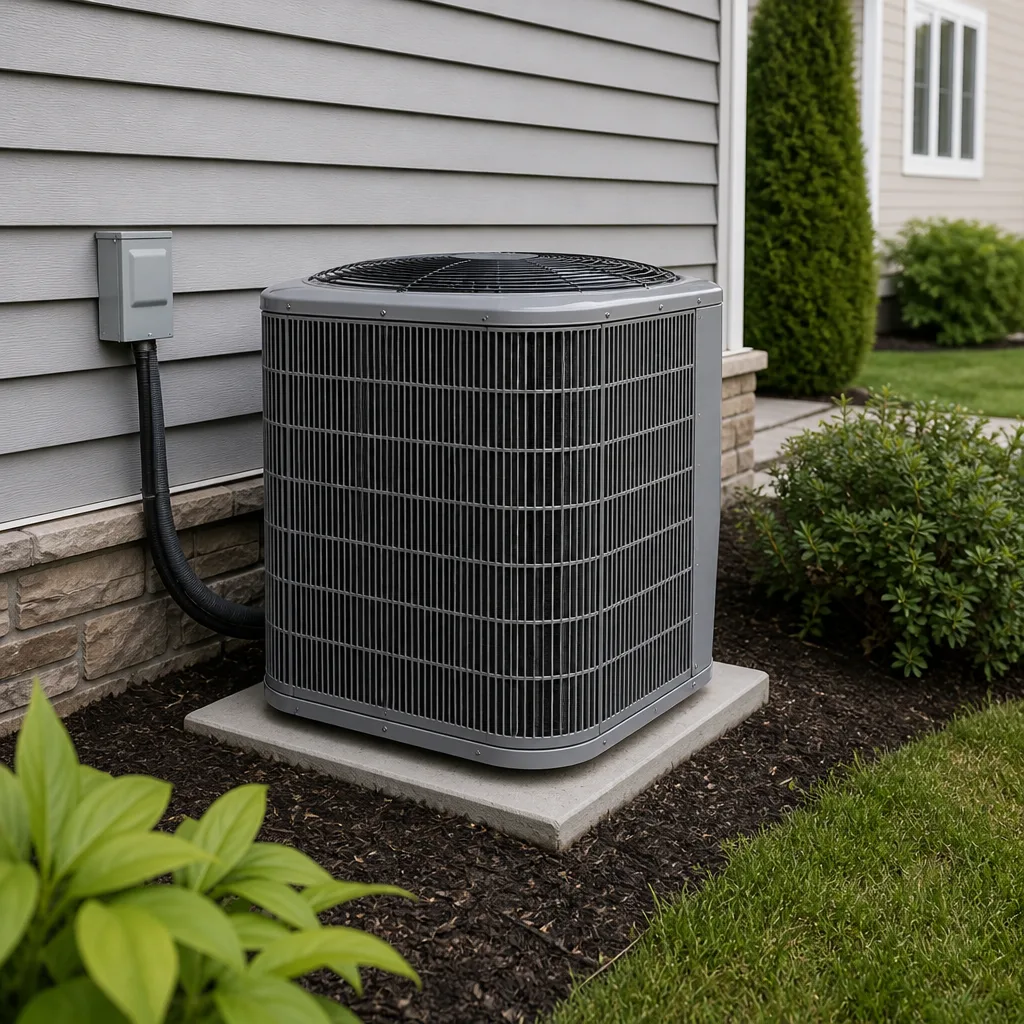 Carrier
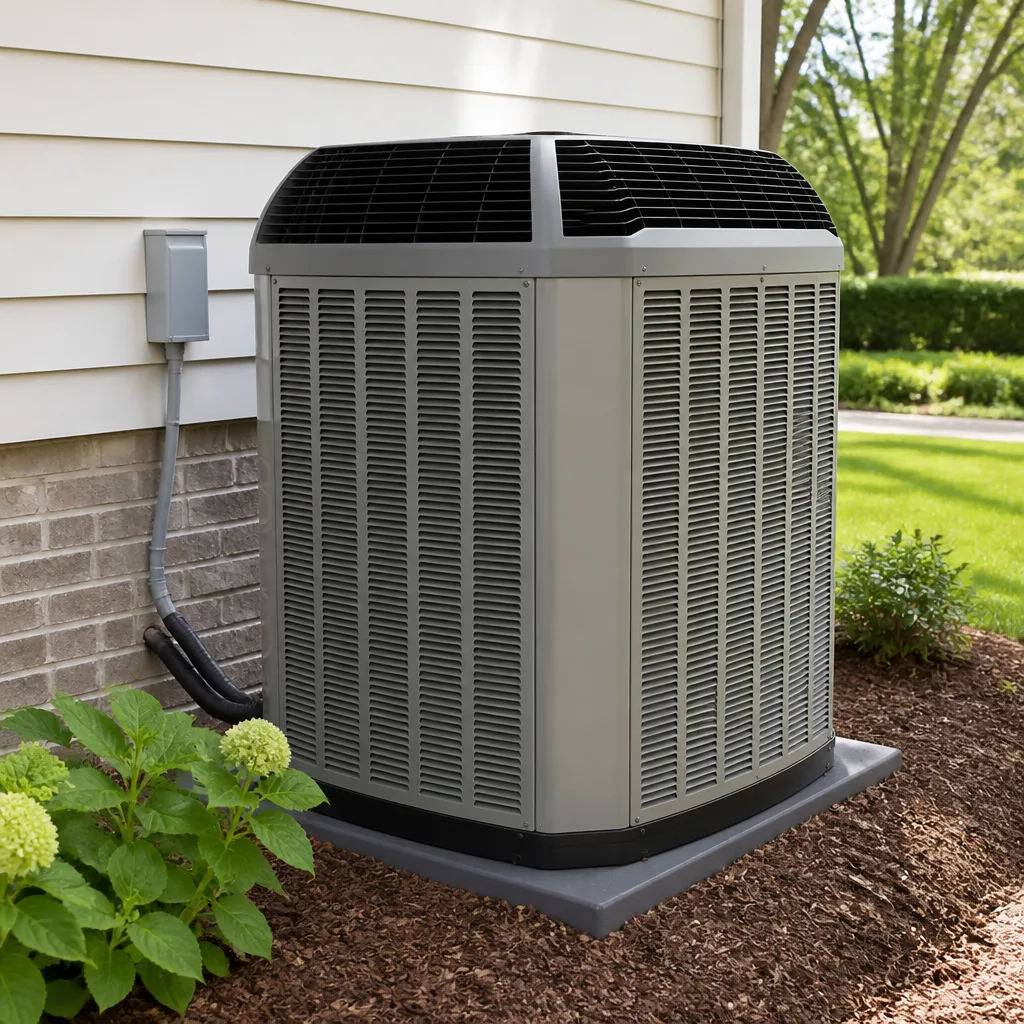 Trane
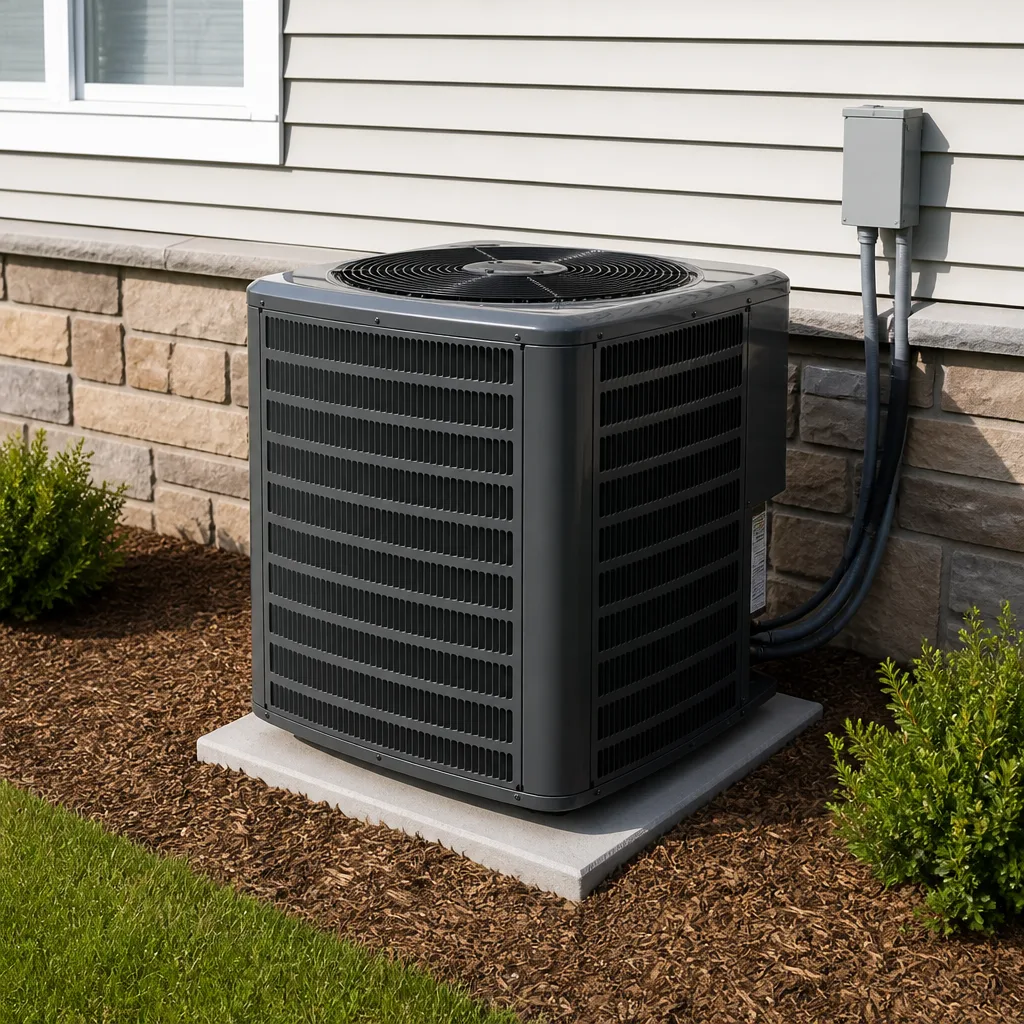 Goodman
Seasonal tune-up and full diagnostic on your Carrier, Trane, or Goodman system - readings shown to you before any repair is proposed
Diagnosis first, numbers second - you approve the repair price before a single part goes in.
Get your free estimateThe Complete Guide to HVAC in Enterprise
Enterprise logged more than 320 sunny days in 2023, and every one of them put a load on somebody’s air conditioner. That’s not a Las Vegas statistic copied over. Enterprise sits south of the Strip and east of the I-15 corridor, and its afternoons run differently than the tourist core. The heat arrives earlier, the dust settles differently, and the soil under your outdoor unit is often the same unforgiving caliche that builders had to rip through before your slab went down. Add new-construction settling that cracks ductwork faster than most installers will admit, and you get an HVAC market where copying what worked in another suburb is a costly mistake. This guide covers how to size, place, maintain, and protect a system in Enterprise specifically.
Quick Answer
HVAC in Enterprise is about surviving dry, sun-drenched summers, a shoulder season that can flip from heating to cooling in a single day, and a housing boom that left many homes with builder-grade ductwork and equipment that may already be undersized for the load. Get the sizing calculation done by someone who accounts for Enterprise’s elevation, sun exposure, and dust, keep the filters and coils clean, and schedule service and replacement before the June call rush, not during it. That combination prevents most of the repair bills homeowners here call us about.
Styles & brands we work with
- AC repair
- Furnace & heating
- Heat pumps
- Ductless mini splits
- Carrier
- Trane
- Goodman
Table of Contents
- Why Enterprise’s Microclimate Changes the Sizing Math
- The Dust Problem Nobody Warns You About
- New Construction and Builder-Grade Ductwork
- Licensing and Permits in Unincorporated Clark County
- Caliche Soil and Outdoor Unit Placement
- When to Schedule Service in Enterprise
- What “Threshold Verified” Means at Your Door
- What an Honest HVAC Visit Looks Like in Enterprise
Why Enterprise’s Microclimate Changes the Sizing Math
Enterprise isn’t a climate clone of central Las Vegas. The community sits south of the Strip and the international airport, which puts it on a slightly different pattern of afternoon sun and wind than the east valley or the master-planned north. Its dust index trends a bit higher than the core during the spring and fall wind months, and the summer ground temperatures swing more because the sun hits the west-facing walls of homes here with little of the afternoon cloud cover that occasionally cushions the foothills. A sizing calculation – the load calculation that determines which system your home actually needs – has to account for all of it, not just square footage.
What does that mean in practice? A properly done Manual J load calculation in Enterprise weighs window orientation, ceiling height, insulation values, duct location, and the sun exposure of the specific lot. Two homes of the same square footage on the same street can need different tonnage if one faces west with full afternoon sun and the other is shaded by a wall or a neighbor. We’ve seen builders install identical equipment on both. The result: the shaded home short-cycles in mild weather and never dehumidifies right, and the sun-baked home runs nonstop in July and still doesn’t keep up. Both call us within three years. Sizing for the address, not the floor plan, prevents that.
If your system is running longer than it should this summer, call us at (844) 797-9490 and our team will calculate the load for your specific home, not just quote the same tonnage a neighbor has.
The Dust Problem Nobody Warns You About
Dust is the quiet thief of HVAC efficiency in the desert Southwest, and it’s a bigger deal in Enterprise than most homeowners expect. Between the construction traffic, the open desert edges on the community’s south and east sides, and the spring wind that carries fine particulate across the valley, your system is pulling grit through its coil and blower year-round. A dirty condenser coil can raise your electric bill by 15% to 30% because the compressor has to work harder to move heat out of your home. Multiply that over a summer here and the dust problem becomes expensive fast.
Here’s what actually helps, in order of impact:
- Change your filter every 60 to 90 days. In Enterprise, during the windy stretches, 30 to 45 days is reasonable for a 1-inch filter. A clogged filter starves the coil and shortens the life of the blower motor.
- Have the condenser coil cleaned once a year, ideally in spring. That means washing the outdoor coil so the fan can pull air through the fins. The dust that plants itself between the fins in Enterprise is finer than most people expect, and it doesn’t rinse off with a garden hose spray unless it’s done methodically.
- Keep the outdoor unit clear. Trim vegetation 2 feet away, and don’t stack boxes, landscaping rock, or pool equipment against it. The unit needs airflow to dump heat.
- Watch for dust into the return. If you see dust settling on your vent grilles a week after cleaning, that’s a sign the filter or the duct sealing has a problem.
None of this is complicated, but it’s the difference between a system that hits 15 years and one that quits at 8. Scheduled AC Maintenance in Enterprise handles the coil cleaning and the checks that catch dust damage before it becomes a repair.
New Construction and Builder-Grade Ductwork
The bigger story in Enterprise is velocity: homes went up fast here through the 2010s and 2020s, and many of those homes are now 3 to 5 years old and starting to show it. Builder-grade ductwork often uses flexible insulated duct, thin-gauge metal, and couplings that are taped or zip-tied together. In other climates, that survives. In Enterprise’s dry heat and seasonal swing, the tape dries, the flex runs sag, and the joints open. Sealing is the first thing we check on a home in a newer Enterprise community because it’s usually where the comfort complaints come from.
Our experience with builder-installed systems suggests the most common weak points, in rough order of frequency:
- Disconnected flex duct in the attic. The connection between the plenum and the run comes loose, either at the collar or the boot over the register. That room stops cooling, and the system pulls hot attic air into your living space.
- Leaking register boots. The metal shoe that delivers air to the room is sealed to the drywall with a bead of mastic. Heat and settling crack it, and you lose 10% to 20% of your airflow into the attic or wall cavity.
- Undersized return air. A single return per floor works in a template plan. It may not work in a home with a lot of sun exposure. The system starves for air and you get noise and weak cooling.
- Condensate drain problems. The PVC drain line that carries water from the indoor coil to the outside can clog or lose pitch, and you get water stains on a ceiling or a shutdown.
- Failed capacitors and contactors. The run capacitors in a builder-grade condenser are the first thing to fail in the desert heat. They’re inexpensive parts, but they fail at inconvenient times.
- Refrigerant charge drift. A leaking Schrader valve or a joint from install day means low charge, and the system runs forever without cooling the house.
If you’re in a newer Enterprise community and the cooling has gotten weaker every summer, an inspection that checks duct static pressure and refrigerant charge will usually find the answer in an hour or two. The fix is often sealing, not new equipment.
For the full diagnostic and repair options, see AC Repair in Enterprise.
Licensing and Permits in Unincorporated Clark County
Enterprise is an unincorporated community in Clark County, and that matters more than most homeowners realize. The licensing and permit rules that apply to HVAC work in Enterprise are set by Clark County, not by the City of Las Vegas. A contractor licensed and permitted in the city can still be outside the proper authority for a job in unincorporated Enterprise. When we tell homeowners to verify who’s pulling the permit, that’s why: if a system replacement is done without a permit, you can inherit the problem when you sell, and the county can require a correction.
What to check before anyone touches your system:
- Ask for the contractor’s license number and verify it with the state. Nevada requires a licensed contractor for HVAC work. If the number isn’t provided or doesn’t check out, don’t let them start.
- Confirm who pulls the permit. For a replacement or a new install, the county permit should be pulled in the contractor’s name, not yours. Ask to see the permit number before work begins.
- Get the written scope. The price, the equipment model, the permit, the haul-away of the old unit. Put it in writing. Every job we do starts with a written price before any work begins, and that’s the standard to hold anyone to.
- Ask about the inspection. A permitted install in Enterprise gets inspected by the county. If the contractor plans to skip that step, that’s a red flag.
We’ve seen homeowners in Enterprise discover after the fact that a furnace or AC swap was done without a permit. The saving up front became a problem on the sale, and the fix wasn’t cheap. The permit protects you, not the contractor.
Caliche Soil and Outdoor Unit Placement
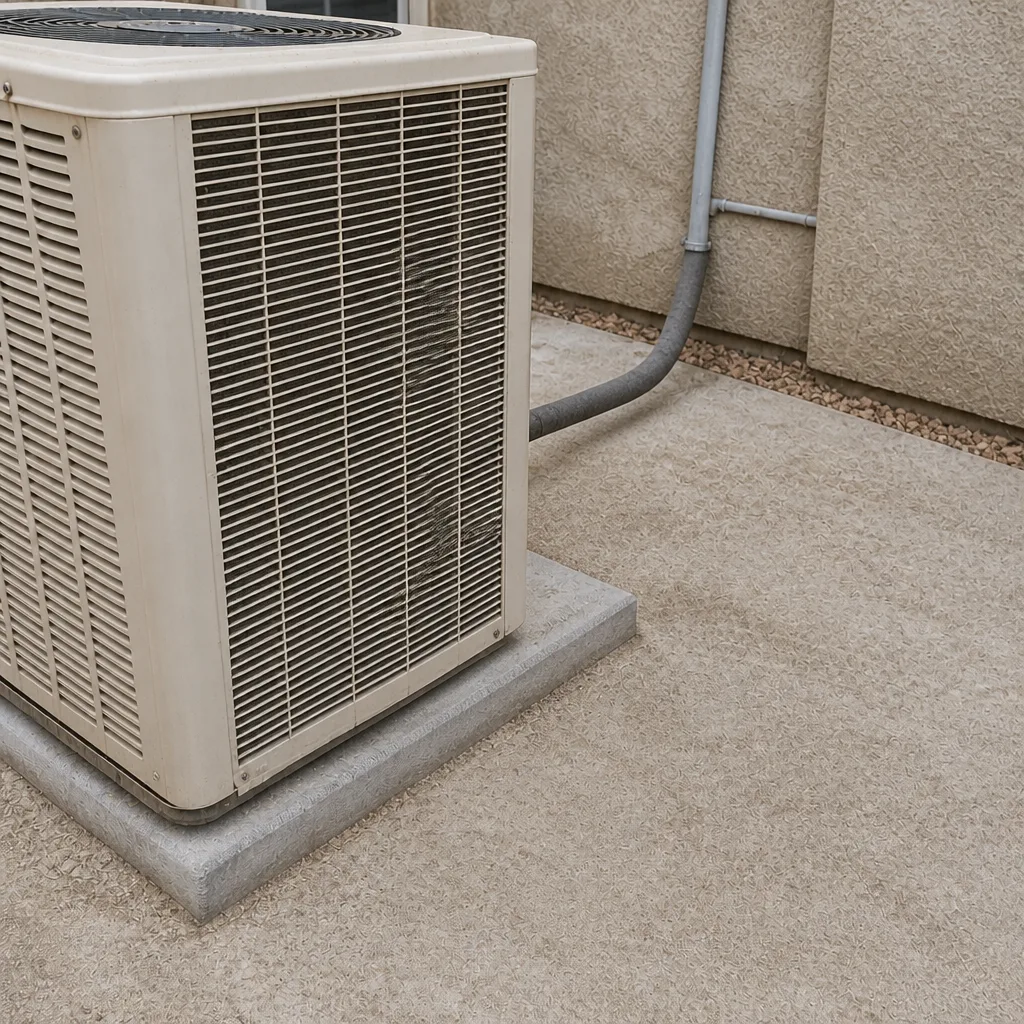
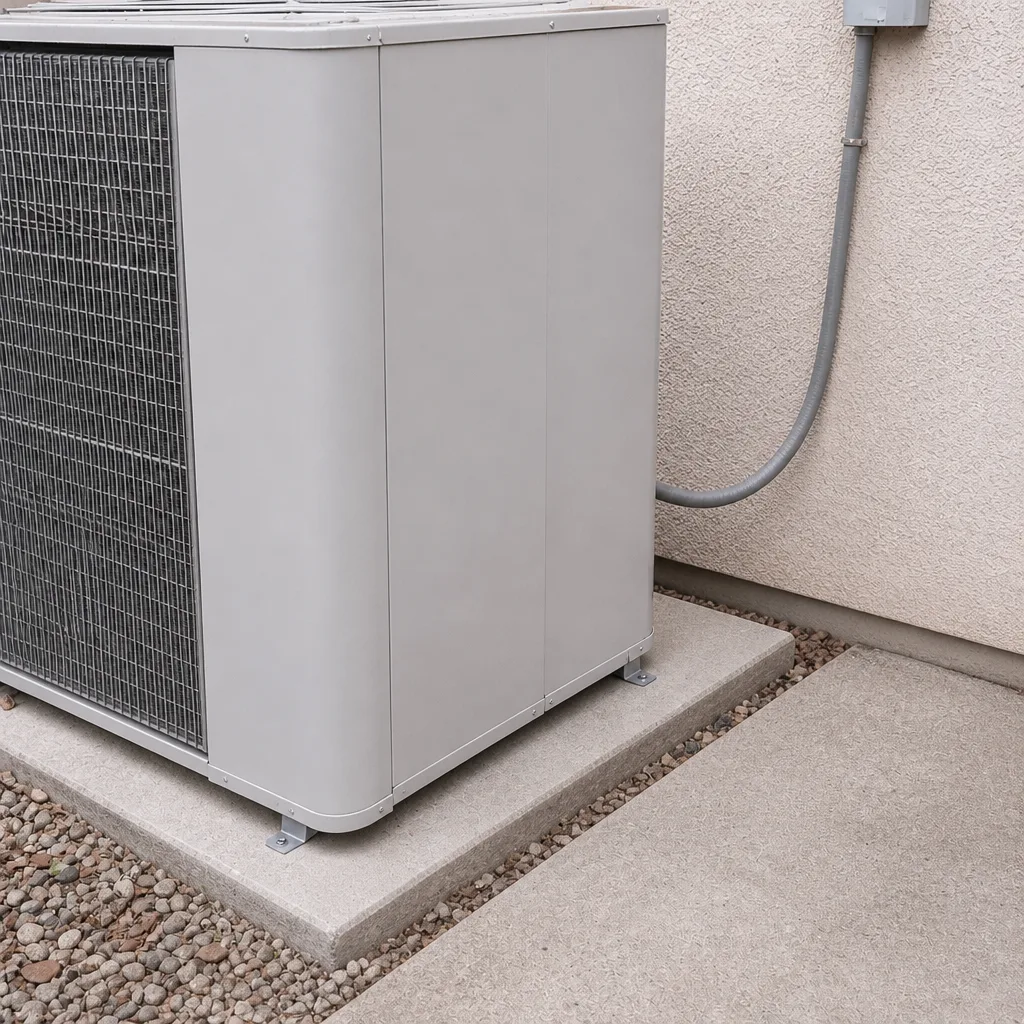
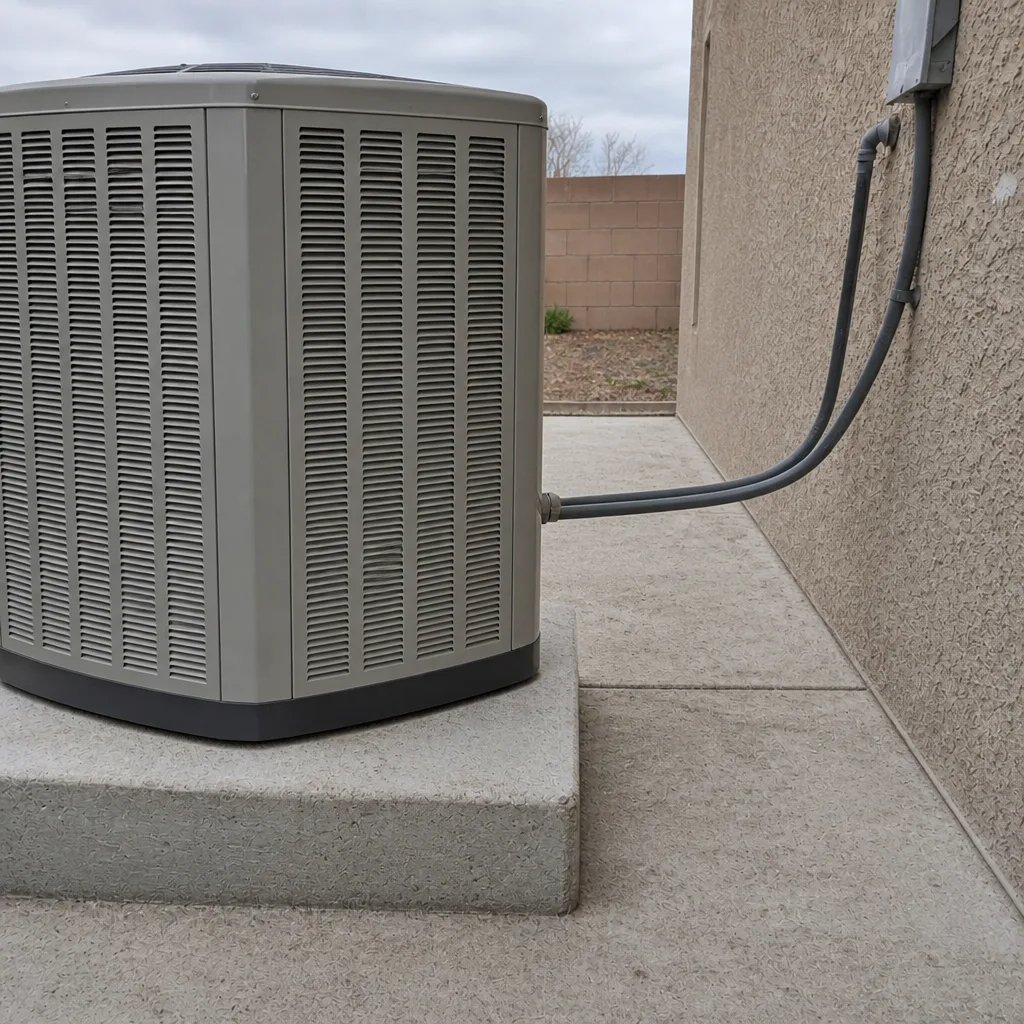
Caliche is the cemented layer of calcium carbonate that runs through the soil in this part of the valley, and it affects where your outdoor condenser sits. A condenser needs to be level, on a solid pad, and clear of the house and the circulation zone. When a builder sets the unit on a plastic pad over graded fill that later settles, or on a slab that cracked from caliche expansion, the unit tips. A tipped condenser vibrates, wears the fan bearing, and can leak refrigerant from stress on the lines. In Enterprise, we check pad level and line-set condition on every service call because this is a genuine failure point here that gets overlooked elsewhere.
The other piece is shade. Some Enterprise homes have a wall or a neighbor’s structure casting afternoon shade on the outdoor unit. That’s good for efficiency, but it also invites dust and debris to collect under the unit and around the base. Clear the leaves and grit every few months, and keep an eye on the pad. The outdoor unit is the least-sexy piece of your system and the one that dies first when it’s neglected.
If your condenser is rocking or sitting low on one side, have it looked at before the heat arrives. Call us at (844) 797-9490 for a free estimate on correcting the pad or relocating the unit.
When to Schedule Service in Enterprise
Here’s the timing insight that saves the most money and the most frustration: schedule HVAC service in Enterprise in April or early May, before the June call volume hits. When the first 105-degree day lands, the entire valley picks up the phone. Wait times on non-emergency repairs stretch out, and the technician who reaches your home is working a long, tired day. Book the tune-up in the shoulder season and you get a thorough visit, the filter and coil cleaned, and the small problems caught before they leave you without cooling.
The other timing note is the heating side. Enterprise winters are mild, but overnight lows can dip close to freezing, and the same systems that cool all summer also heat in the winter. A Furnace Repair in Enterprise call in January is common but avoidable. Have the furnace checked in October, because a heat exchanger crack or a failing igniter is much cheaper to find in the fall than during a cold snap.
The seasonal rhythm we recommend for Enterprise homes:
- March or April: AC tune-up and coil cleaning.
- May: Check the thermostat programming and the filter supply. Replace filters before summer.
- September: Post-summer inspection. Look for refrigerant loss, dirty coils, and duct issues that surfaced during the heavy season.
- October: Furnace or heat pump check before heating season.
- Any month: Address the small noises, the weak airflow, the odd smell before it becomes a full repair.
What “Threshold Verified” Means at Your Door
Enterprise has a lot of homeowners who are home alone during the day, parents with young kids, older residents who’ve lived here since the community was much smaller. Opening the door to a stranger is a real concern, and it’s the reason we built our verification standard around it. Threshold Verified means every technician who arrives is background-checked and identity-verified. Before any visit, you’re told the technician’s name and shown a photo. At the door they present a photo ID badge. If anyone arrives at your home who you were not told to expect, that visit is on us, and we make it right.
We think that matters more in a suburban market like Enterprise than it does downtown, because the volume of service traffic through these neighborhoods is high and homeowners have less context on who’s legitimate. When you call us, a live person answers, 24 hours a day, 7 days a week, including holidays. No voicemail, no callback queue, no automated phone tree. You get a name and a photo before anyone is in your driveway.
The name Brandt comes from an old word for a firebrand, which is a fitting name for the work of keeping a home warm. We’re part of the Threshold Group family of home-service companies, established in 2003, and each location is independently owned and operated. Our technicians have up to 23 years of experience. We service all major residential HVAC brands, including Goodman, Rheem, and Daikin, and we follow the same standard on every job: a written price before any work starts, a written guarantee on every repair, and the 365-Day Done Right Promise. If a repair fails within the guarantee period, we return at no charge.
You can read more about the full range of services at Brandt HVAC Enterprise home.
What an Honest HVAC Visit Looks Like in Enterprise
We think a homeowner who knows what to expect is a homeowner who doesn’t get taken advantage of. Here’s what a straight HVAC visit should look like, in order, and what each step tells you about the company you called.
- You get a technician name and photo before the visit. A background check and an ID badge at the door are the minimum standard in our book. If a company won’t tell you who’s coming, that’s information.
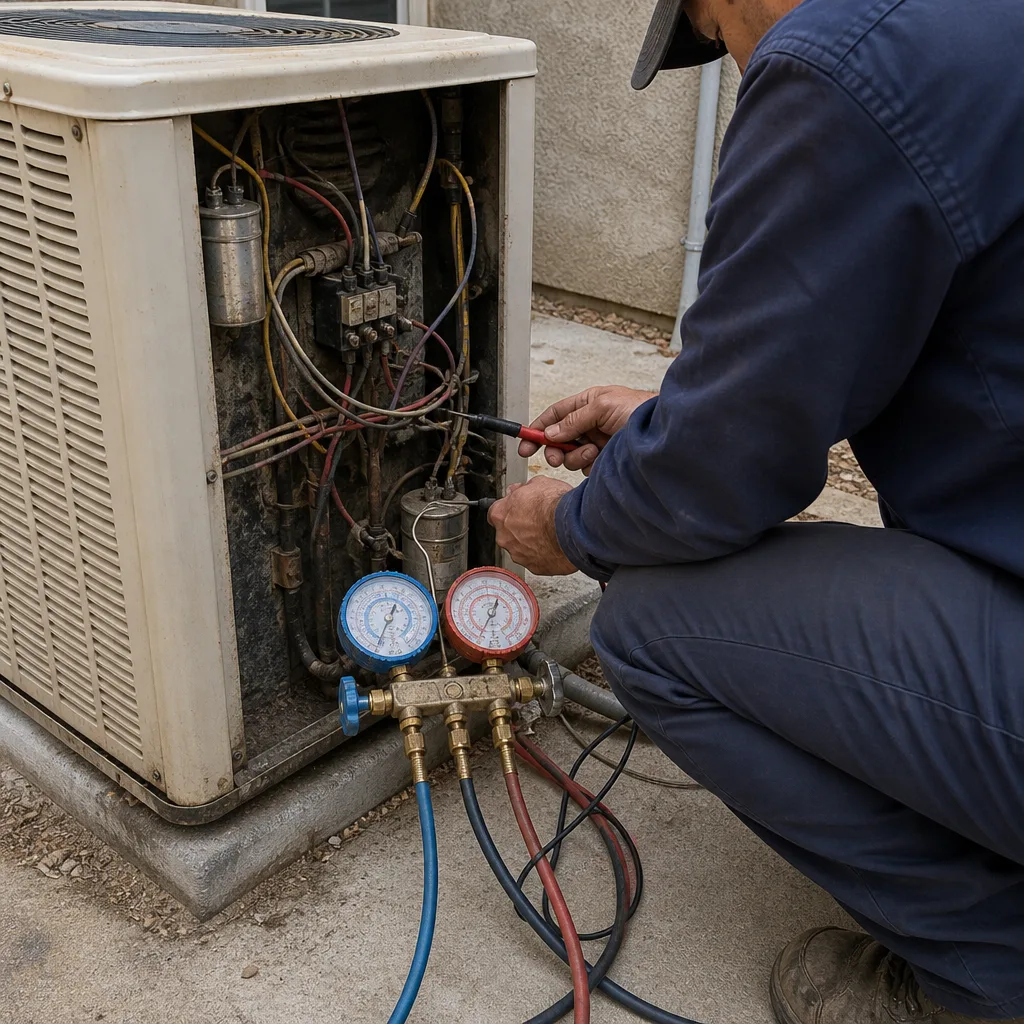
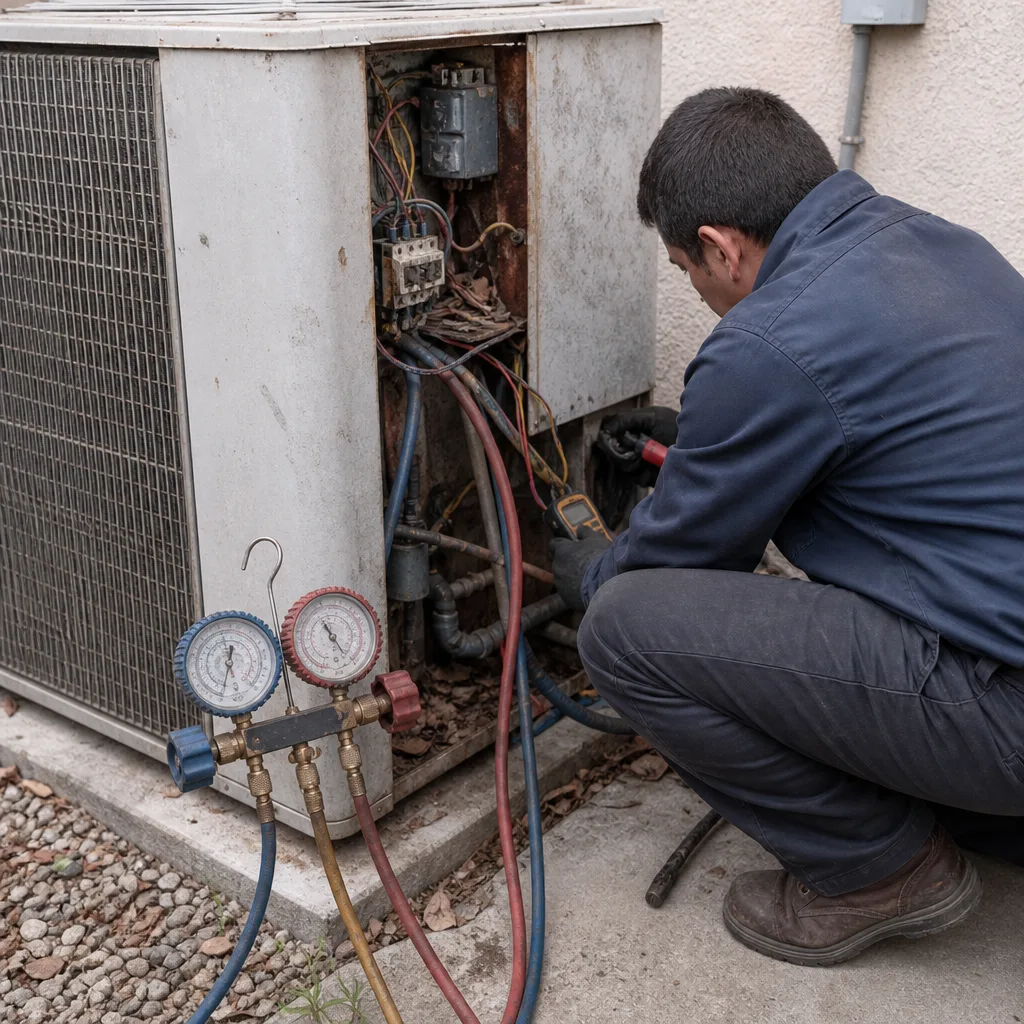
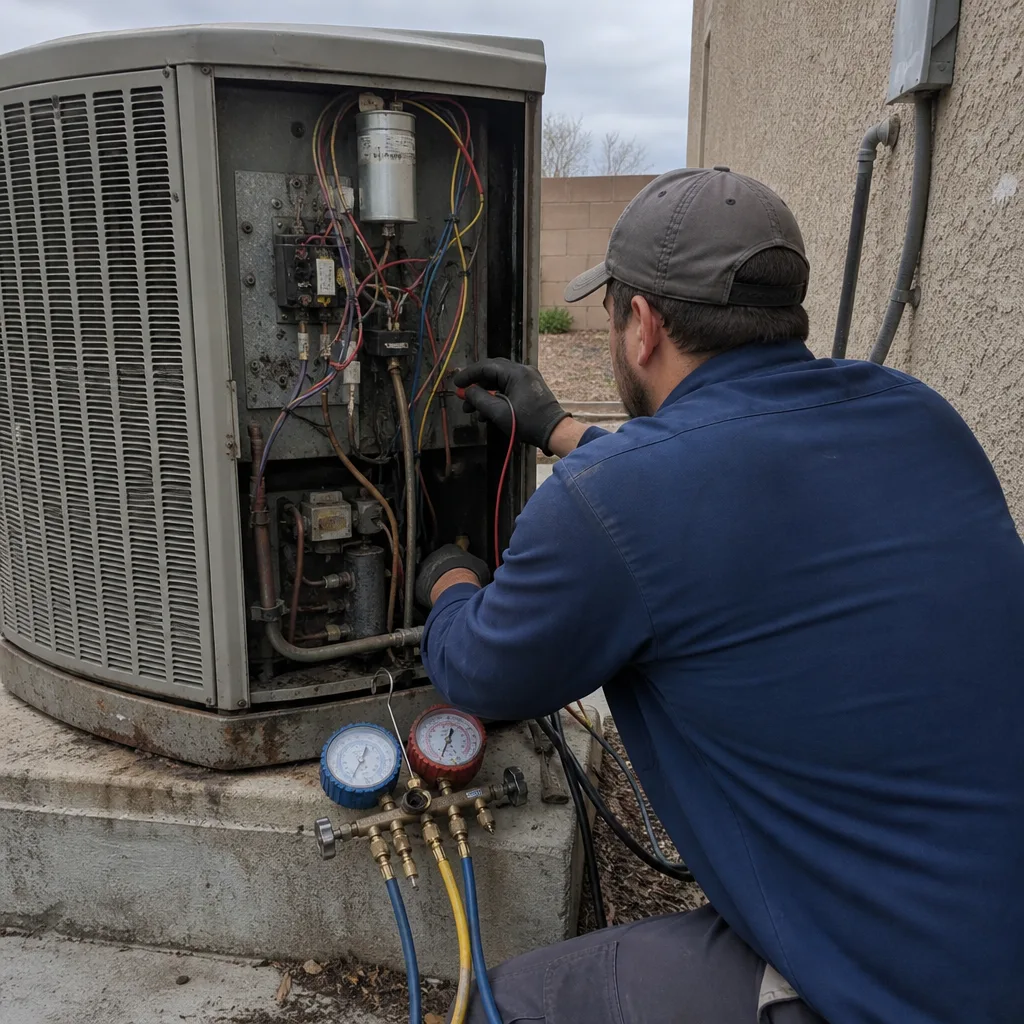
- The technician diagnoses before quoting. A real diagnostic takes 30 to 60 minutes. It involves checking refrigerant pressures, electrical components, airflow, and duct static. If a quote appears in the first 10 minutes, it’s not based on much.
- You get a written price before any work begins. On every job, no exceptions. That includes the repair, the parts, the labor, and the haul-away if there is any. The price is the price. No surprise add-ons after the technician starts.
- You get a written guarantee on the repair. Not a verbal promise. A written statement of what’s covered and for how long. Ours is 365 days, backed by the 365-Day Done Right Promise.
- You can decline the repair without pressure. There’s no artificial scarcity here. No countdown clock. No “only two slots left.” You decide on your schedule.
Most of the repair calls we see in Enterprise are things like failed capacitors, low refrigerant from a slow leak, condensate drain clogs, failing igniters, and duct connections that came apart. Most of them are diagnosed and priced in one visit. If you’re unsure whether the problem is a repair or a replacement, ask for a written comparison and read it carefully before you decide. For a broader maintenance plan, see AC maintenance in Enterprise.
Common Mistakes to Avoid
- Assuming Las Vegas sizing applies to Enterprise. It usually doesn’t. The sun exposure and dust load here call for an actual load calculation, not a square-footage rule of thumb copied from a neighbor’s install.
- Skipping the duct check on a newer home. A 4-year-old home in Enterprise can have leaking boots and disconnected flex that cost 20% to 30% of your cooling. The equipment is fine; the ductwork isn’t.
- Waiting until the first 105-degree day to call. The June rush means longer waits and tired technicians. Schedule in April or May, when the visit is thorough and you’re not fighting the queue.
- Ignoring a rocking condenser. Caliche and settling tip the outdoor pad, and a tipped unit wears out its bearings and can leak refrigerant. Level it before it fails.
- Hiring on price alone without verifying the contractor’s license and permit. A permit pulled in your name, or no permit at all, is a future problem on resale. Confirm who’s actually responsible.
- Skipping the filter during the windy months. A 1-inch filter can clog in 30 to 45 days in Enterprise when the wind is up. A clogged filter starves the coil and shortens the blower motor’s life.
- Letting anyone in the door without a name and a photo. If a company won’t tell you who’s coming, that’s an answer. You can always reschedule for a visit you know about in advance.
See the difference
 Before
 After
 Before
 After
 Before
 After
When to Call a Professional
A few problems in Enterprise are genuinely worth a same-day call, and a few can wait for a scheduled visit. Call us if your system has stopped cooling entirely, if you hear a loud metallic scrape or rattle from the outdoor unit, if you see water staining around the air handler, if your system is short-cycling on and off every few minutes, or if your electric bill has jumped by more than a third with no other explanation. Don’t reset a breaker and hope. A failed capacitor, a refrigerant leak, or a failing blower motor doesn’t fix itself, and running the system through a failure will usually turn a modest repair into a bigger one. Brandt HVAC Enterprise offers free estimates in Enterprise, and our phones are staffed by a live person 24 hours a day. Call (844) 797-9490 and we’ll tell you who’s coming and when.
Frequently Asked Questions
Most AC repairs in Enterprise run $180 to $450, and the price depends on the part and the diagnosis. A failed capacitor or contactor is on the low end. A refrigerant recharge or a blower motor is higher. You get a written price before any work begins, and the estimate is free. Call (844) 797-9490 for an exact quote on your system.
Repair is usually the right call if your system is under 10 years old and the repair costs less than a third of a new system. Replacement starts making more sense past 12 to 15 years, or if you’ve had two or more repairs in the last two years, especially in an Enterprise home with original builder-grade ductwork. The guide covers both paths above. If you need a written comparison, call (844) 797-9490.
The most common causes we find in Enterprise are a dirty condenser coil, low refrigerant from a slow leak, a clogged filter, or a duct connection that’s come apart in the attic. Any of the four will make the system run continuously without reaching the set temperature. A diagnostic visit will find the one that applies to your home. Call (844) 797-9490 to schedule one.
Yes, most replacement and new-install HVAC work in unincorporated Enterprise requires a Clark County permit, and it should be pulled in the contractor’s name. Confirm the permit before work begins, and make sure the county inspection happens. If a contractor won’t pull the permit, don’t let them start. Call (844) 797-9490 if you have questions about your job.
Every 60 to 90 days is the baseline, but during the windy spring and fall months in Enterprise, 30 to 45 days is better for a 1-inch filter. A clogged filter starves the coil and shortens the motor’s life. If you’re not sure which filter your system takes, call (844) 797-9490 and we’ll tell you.
March or April is the sweet spot. You beat the June call rush, the technician has time for a thorough visit, and a small issue gets caught before the heat arrives. Fall is the best time for a furnace check, in October, before the first cold night. Call (844) 797-9490 to get on the schedule.
The Bottom Line
HVAC in Enterprise isn’t a copy-paste of Las Vegas or any other suburb. The microclimate, the dust index, the caliche soil, the new-construction settling, and the unincorporated Clark County permit rules all change the right answer for a given home. Get a real load calculation from someone who knows the address. Keep the filter and coil clean. Check the ductwork on newer homes. Book the tune-up before the summer rush. And hold anyone who comes to your door to the standard you deserve: a written price before any work starts, a written guarantee with the repair, and a technician you were told about in advance. That’s the standard we work to in Enterprise, and it’s the one to hold any HVAC company to.
Call (844) 797-9490 for a free estimate. Our phones are answered by a live person 24 hours a day, and we’ll tell you who’s coming, show you a photo, and prove it at the door.
Written by the team at Brandt HVAC Enterprise.