
Last updated November 17, 2026
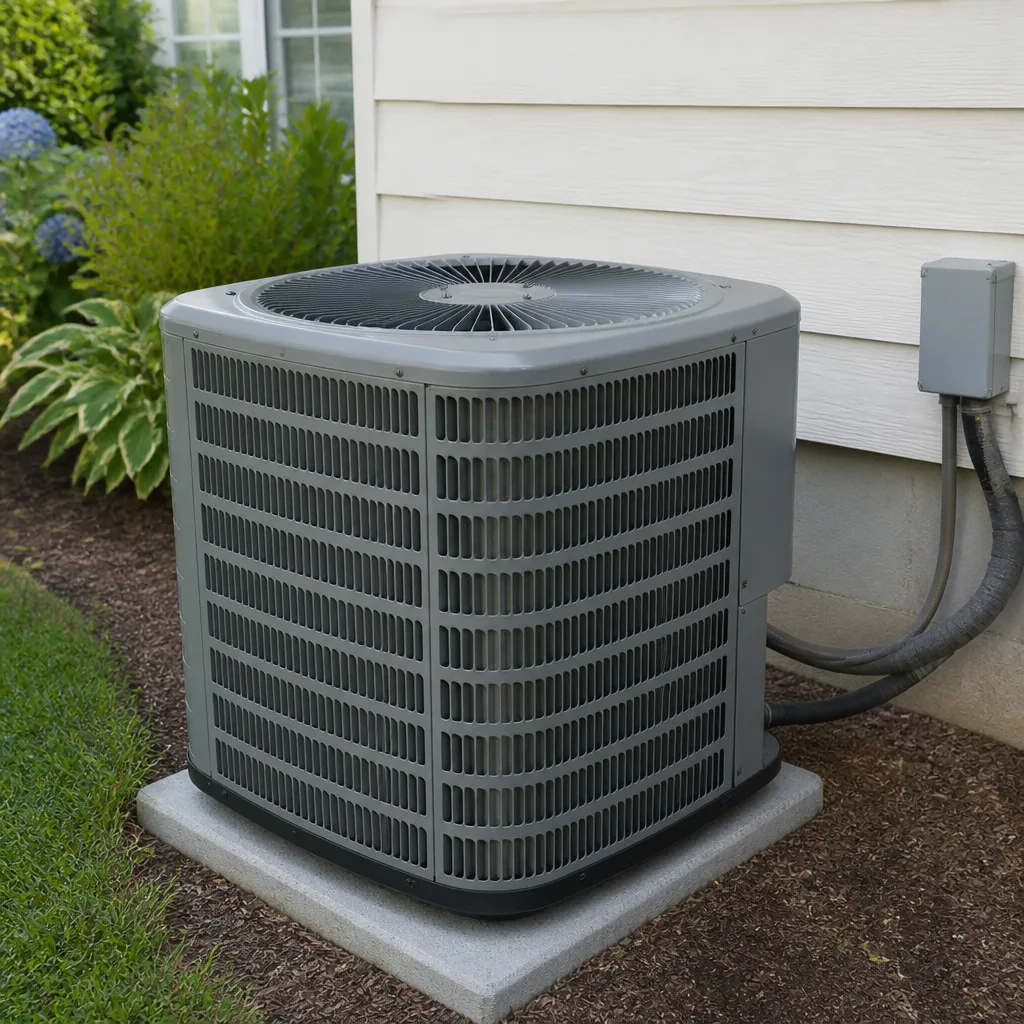 AC repair
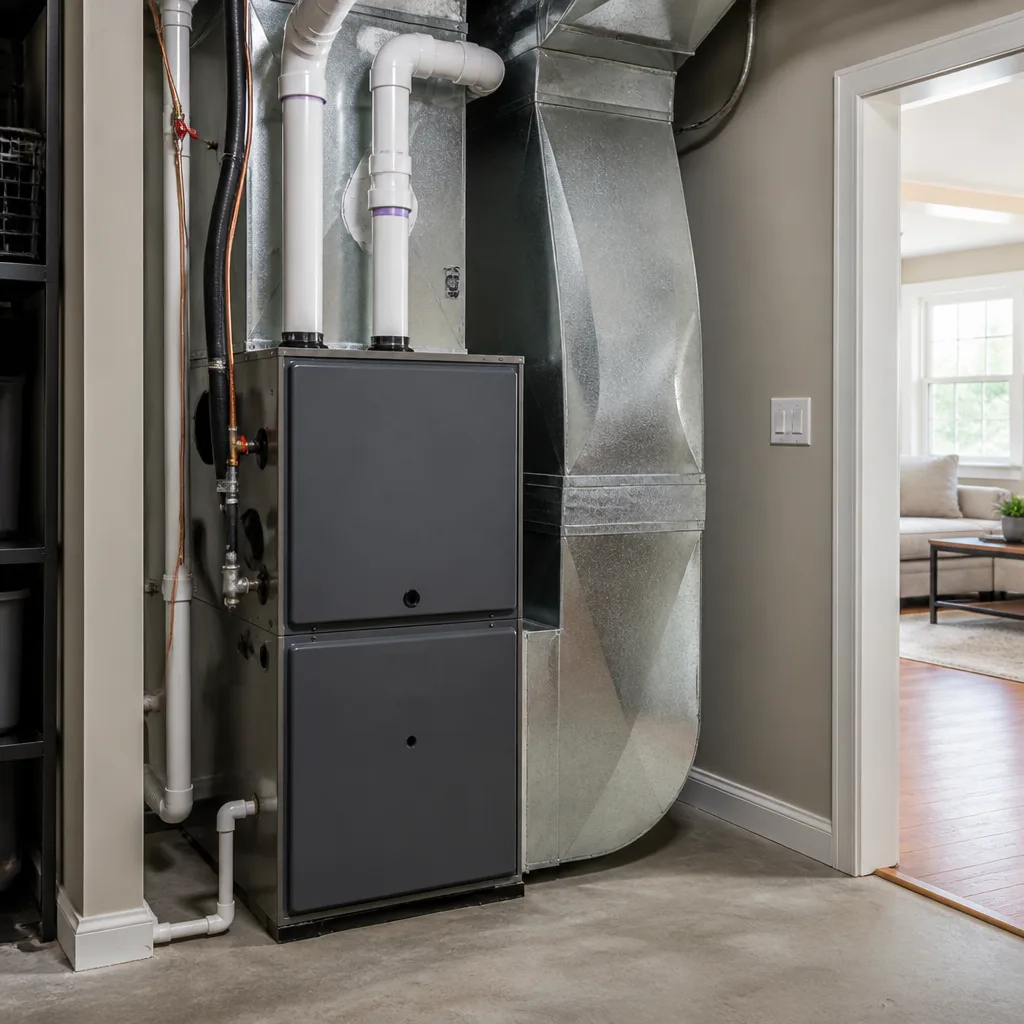 Furnace & heating
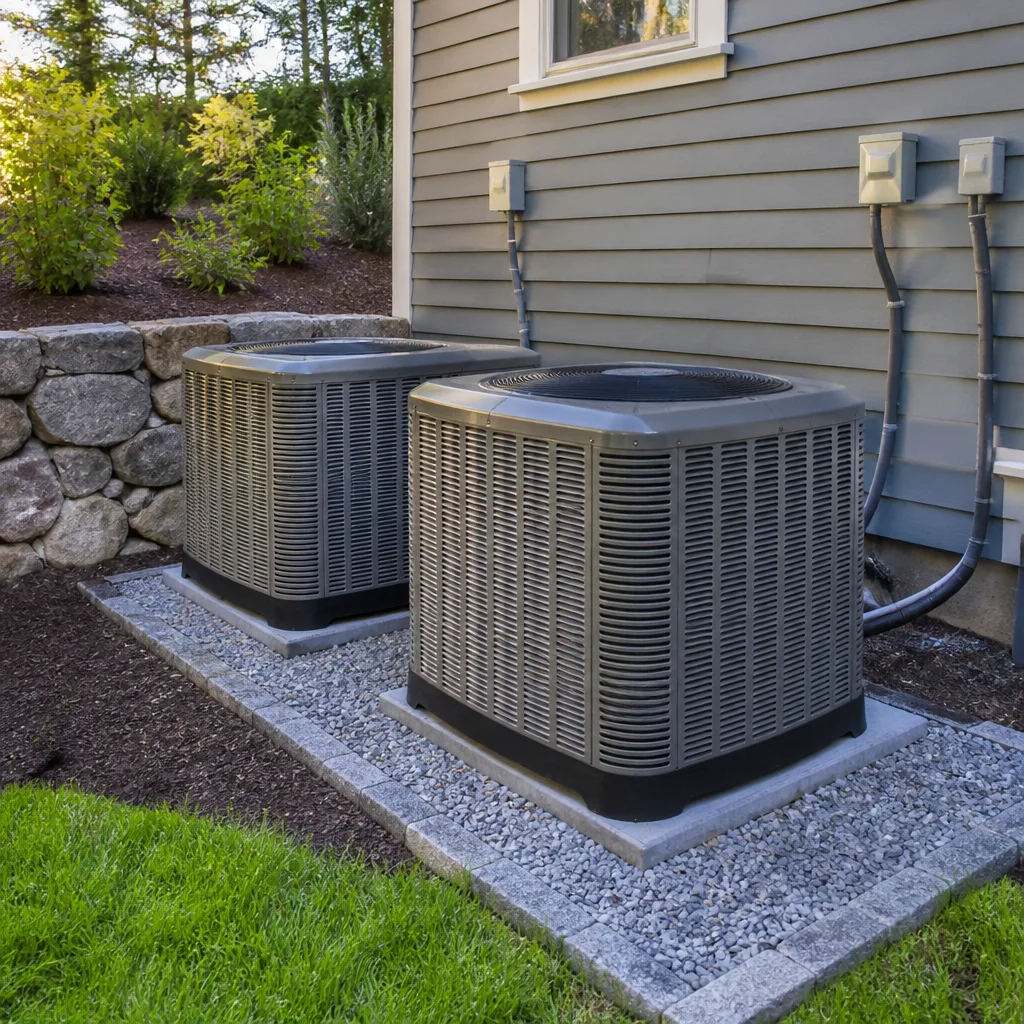 Heat pumps
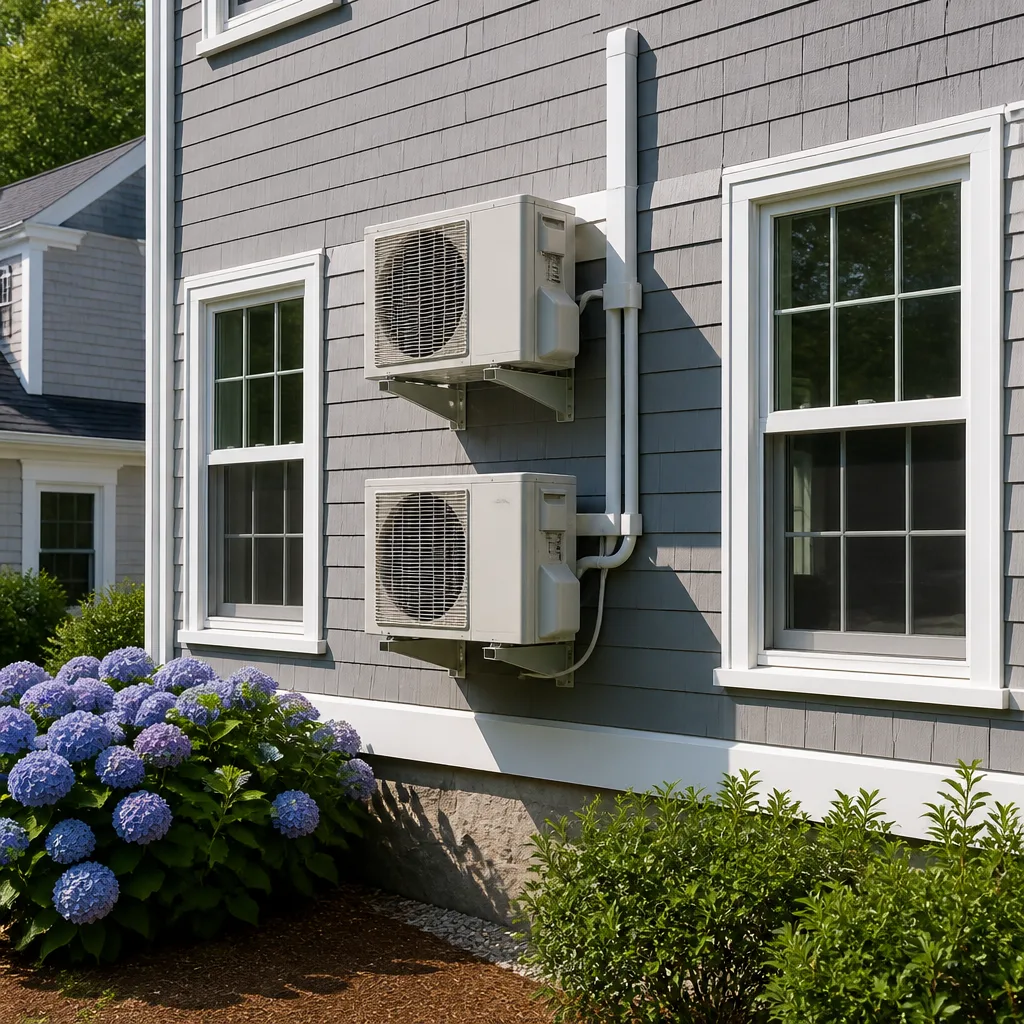 Ductless mini splits
 Carrier
 Trane
 Goodman
Seasonal tune-up and full diagnostic on your Carrier, Trane, or Goodman system - readings shown to you before any repair is proposed
Diagnosis first, numbers second - you approve the repair price before a single part goes in.
Get your free estimateDIY vs Professional AC Maintenance: What’s Safe to Do Yourself
You can legally change your air filter, flush your drain line, and clean your condenser fins. The moment you touch the refrigerant lines for any reason, you’ve crossed into federally regulated territory that requires EPA Section 608 certification, and most homeowners have no idea that line exists. That line matters more than the money-versus-quality argument you usually hear. It decides whether your manufacturer warranty survives a compressor failure and whether the work you did is even legal. In this guide, we lay out every common AC maintenance task in one of three buckets: safe DIY, gray area, and requires a licensed technician. We explain what “voiding your warranty” actually means when you file a claim, which DIY tasks quietly wreck equipment, and where professional help earns its price. Enterprise homeowners deal with brutal desert summers, and that heat raises the stakes on every one of these calls.
Quick Answer
Changing your filter, flushing the condensate drain, rinsing condenser fins, and keeping the outdoor unit clear are safe DIY tasks that won’t hurt your system or your warranty. Anything involving refrigerant, electrical components, the compressor, or deep coil cleaning sits behind EPA Section 608 certification or a licensed technician’s tools, and doing it yourself can void the manufacturer warranty and create a genuine safety hazard. If you’re unsure which bucket a task falls into in your Enterprise home, call (844) 797-9490 and a live person will tell you straight.
Styles & brands we work with
- AC repair
- Furnace & heating
- Heat pumps
- Ductless mini splits
- Carrier
- Trane
- Goodman
Table of Contents
- The Three Buckets: Safe DIY, Gray Area, Licensed Technician
- What EPA Section 608 Actually Means for You
- What “Voiding Your Warranty” Really Means When You File a Claim
- The DIY Tasks That Cause Real Damage
- The Honest Math: Filter Savings vs. Compressor Failure
- Why Enterprise Summers Change the Maintenance Calendar
- Who’s Coming to Your Equipment? Verification in a Trust-Sensitive Trade
- Common Mistakes to Avoid
The Three Buckets: Safe DIY, Gray Area, Licensed Technician
Most AC maintenance advice blurs these categories together, and that’s where trouble starts. Here is the clean split we use when we walk an Enterprise homeowner through their system.
Safe DIY (no certification, no warranty risk)
- Change the air filter. Every 1-3 months, more often during dusty desert months when the wind kicks up fine grit.
- Flush the condensate drain line. A cup of distilled white vinegar down the access port clears the algae that builds up in warm condensate.
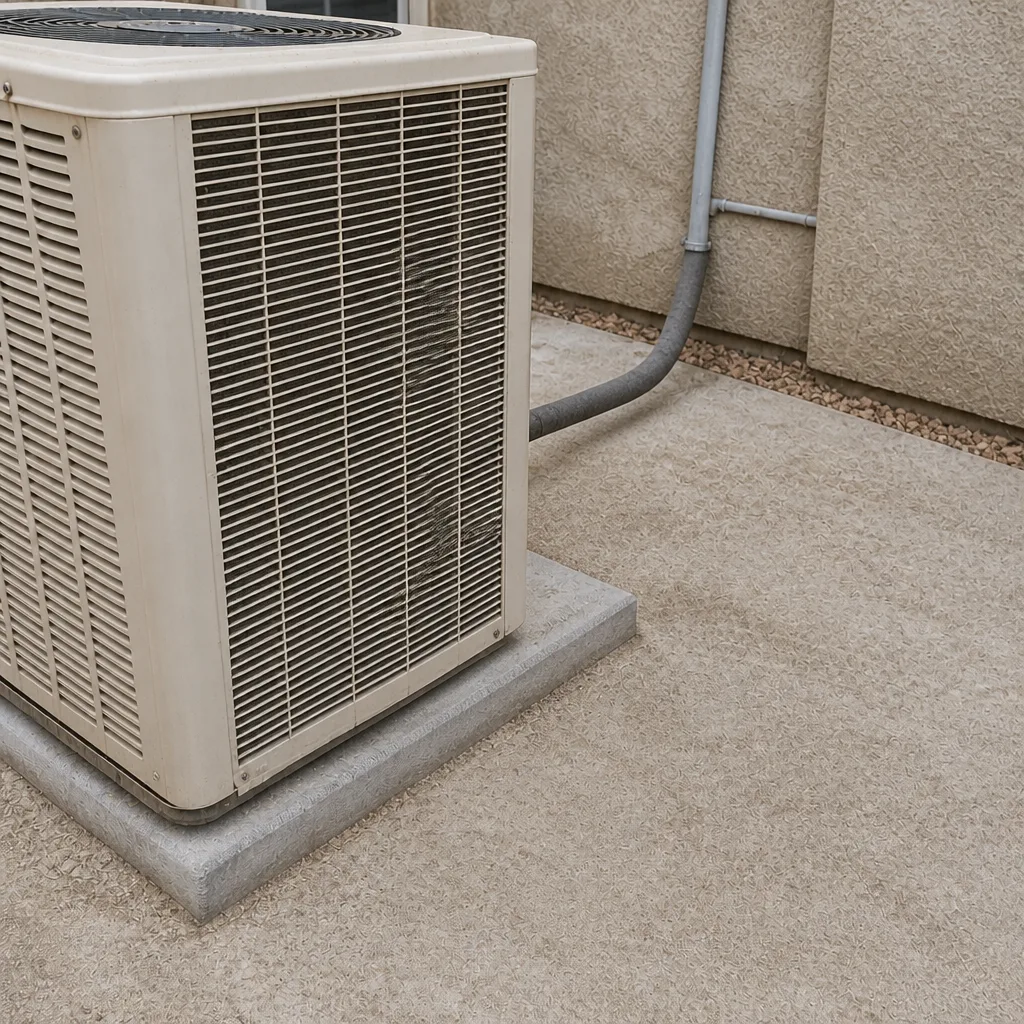
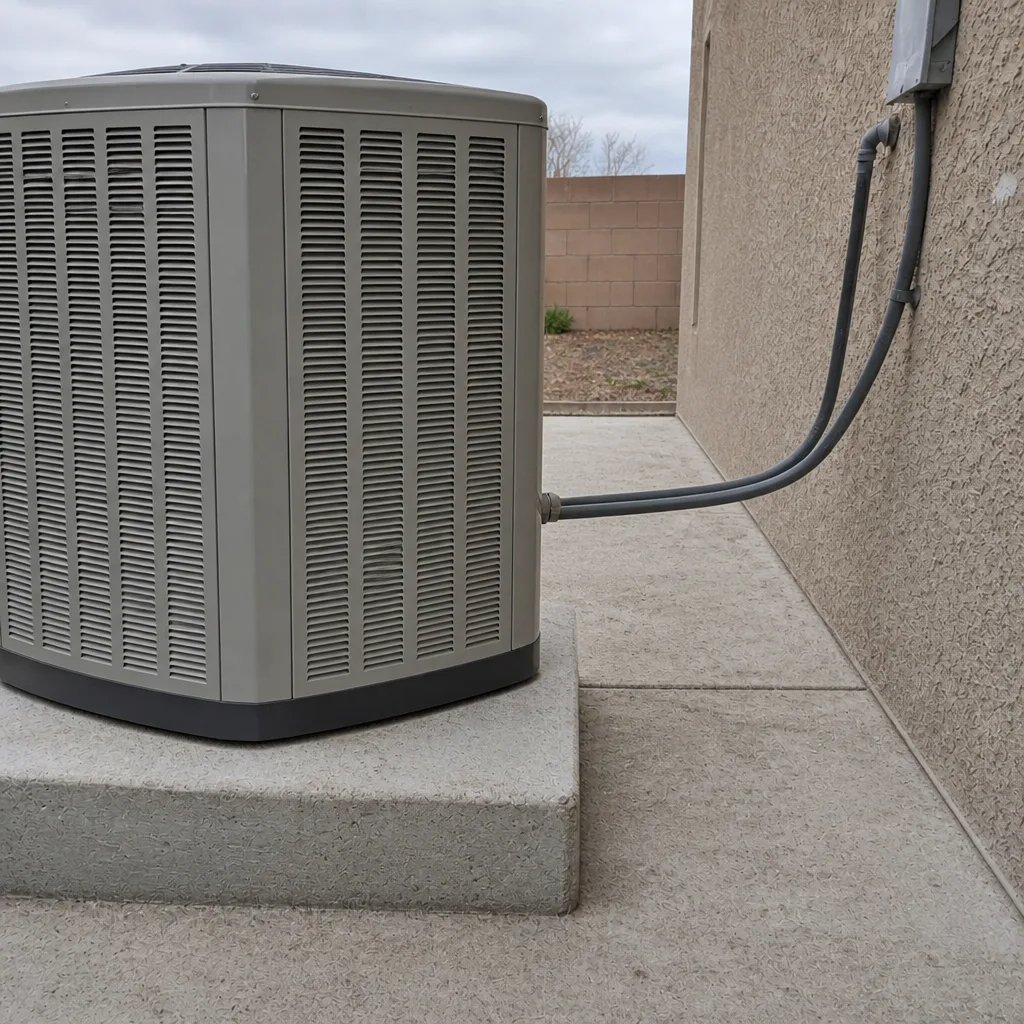
- Rinse the condenser fins. A gentle garden hose spray from the inside out, with the power off, clears dust and cottonwood fluff.
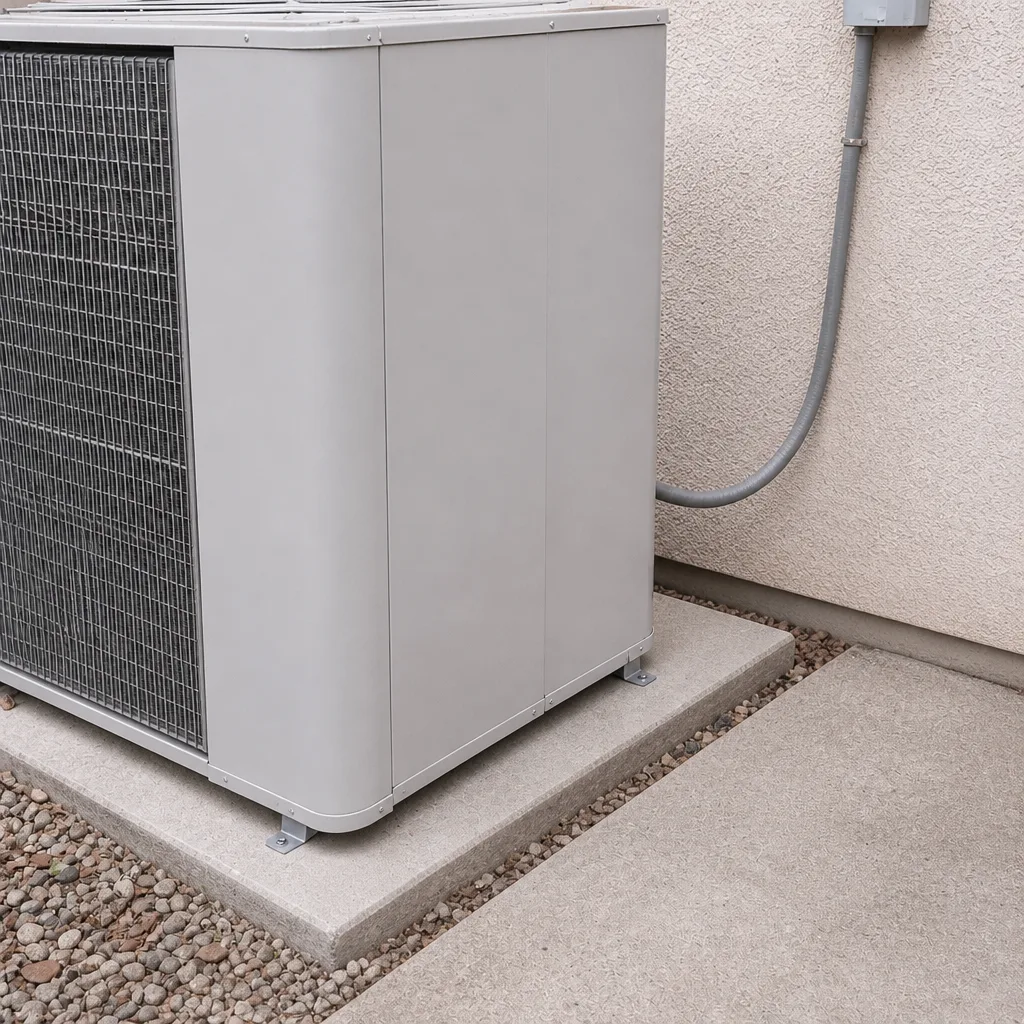
- Clear two feet around the outdoor unit. Trim weeds, move hoses, keep patio furniture and pool floats away from airflow.
- Straighten bent fins. A fin comb does this safely without puncturing the coil.
- Swap the thermostat batteries and test the schedule. No risk, real benefit.
Gray area (safe if done carefully, easy to get wrong)
- Light surface cleaning of the indoor evaporator coil. Only with the approved no-rinse cleaner for your unit. The wrong chemical can eat the aluminum fins.
- Checking the condensate pump. You can observe it and clear obvious blockages, but rewiring or replacing is technician work.
- Replacing a thermostat. A simple swap is doable for a confident homeowner, but miswiring the low-voltage control can damage the board.
Requires a licensed technician
- Anything touching refrigerant – checking charge, topping off, recovering, evacuating, brazing lines.
- Electrical work – capacitors, contactors, compressor terminals, disconnect boxes.
- Deep coil cleaning that requires pulling the coil or using acid-based cleaners.
- Compressor diagnosis or replacement.
- Duct sealing and static pressure testing.
If your AC is already struggling in Enterprise heat, our AC repair service in Enterprise handles the tasks on that third list.
What EPA Section 608 Actually Means for You
EPA Section 608 of the Clean Air Act makes it illegal for anyone without proper certification to handle refrigerants. In plain language: refrigerant is a controlled substance under federal law, and the practice of opening, charging, or recovering it is restricted to certified technicians. That includes simply “topping off” the system with a can of refrigerant from a hardware store, which is why those cans are no longer sold to the general public.
Why does this matter beyond legal risk? Because refrigerant doesn’t just disappear. When a system is low, refrigerant has leaked somewhere, and adding more without finding the leak hides a problem that will get worse. It also releases refrigerant into the atmosphere, and each pound of the most common blends carries a global warming potential hundreds of times that of carbon dioxide. On top of that, manufacturers write their warranties around this rule. A system serviced by an uncertified person who introduces non-approved refrigerant or contaminates the lines can be flagged at the point of claim.
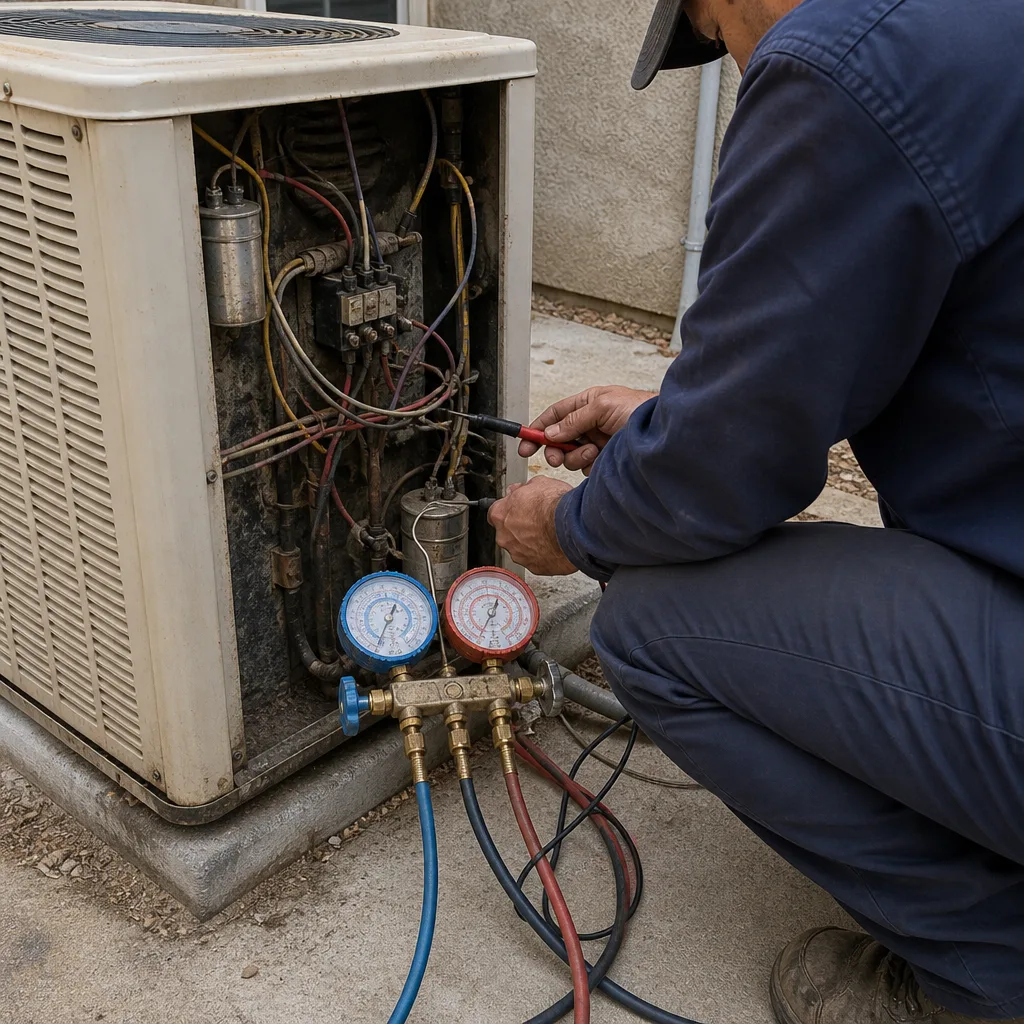
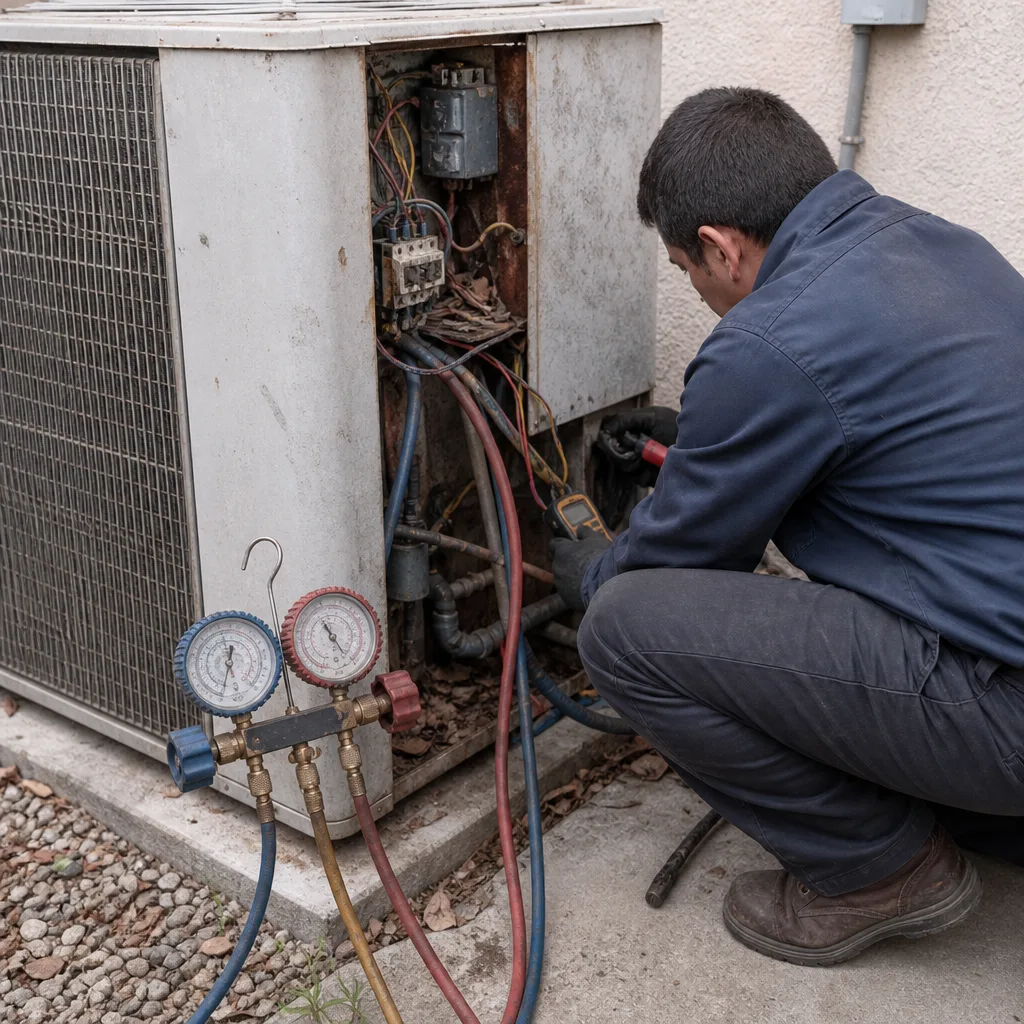
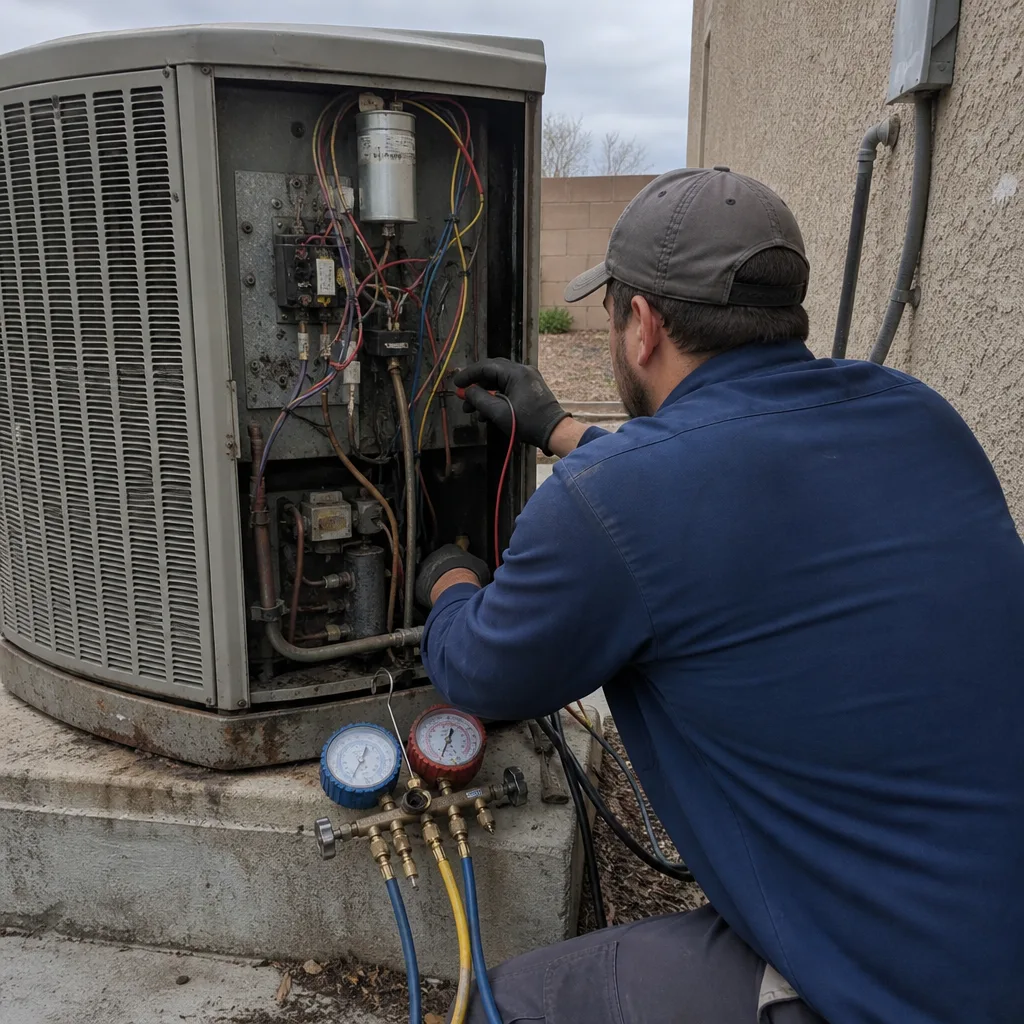
Certified technicians carry the recovery equipment, gauges, and vacuum pumps needed to do this legally and correctly. When we send a technician to an Enterprise home, that certification is part of the standard, along with the background check that comes with our AC maintenance service in Enterprise. Refrigerant work is not a homeowner project. It’s the clearest line on the whole list.
What “Voiding Your Warranty” Really Means When You File a Claim
Homeowners hear “void your warranty” and picture the whole policy disappearing. That’s not quite how it works. A manufacturer warranty can be denied for a specific failed component if the manufacturer can show that improper service, unapproved refrigerant, or a non-certified repair caused the failure. The rest of the warranty often stays intact.
In practical terms, here’s what happens when a compressor fails during the coverage window:
- The manufacturer’s claims team reviews the service history attached to the unit’s serial number.
- They look for evidence of unapproved refrigerant, improper electrical work, or a system operating outside spec.
- If they can attribute the failure to that work, they deny the specific claim, and the homeowner pays for the compressor themselves.
- If the failure traces to a defect, they honor the warranty regardless of ordinary maintenance.
The compressor is the most expensive single component in a residential system, often running well north of a thousand dollars in parts alone before labor. Keeping a paper trail of professional service protects that claim. When we complete a repair, the written guarantee we leave behind documents what was done and who did it, which is exactly what a manufacturer wants to see. It also supports the 365-Day Done Right Promise if something fails and needs a return visit.
The DIY Tasks That Cause Real Damage
The tasks that hurt equipment are the ones that seem easy until they aren’t. Two stand out.
Coil cleaning with the wrong chemical
Evaporator and condenser coils are aluminum, and aluminum is soft. Acid-based coil cleaners, if left too long or mixed too strong, eat into the fins and thin the coil walls, which leads to leaks. Once a coil leaks, refrigerant escapes, and the only fix is a repair or replacement. Approved no-rinse cleaners are fine when used exactly as directed. Off-label cleaners, degreasers, or pressure washers are how coils get ruined. In our experience servicing Enterprise homes, we’ve seen more coil damage from aggressive cleaning than from dirt.
Drain line blowing in the wrong direction
Homeowners often clear a clogged condensate drain with shop-vac pressure or a blast of air. If the pressure pushes debris back toward the indoor unit instead of out through the drain, you can force sludge into the drain pan and the coil’s drain channel. Then the pan overflows, water soaks into ceiling drywall or attic insulation, and a simple clog turns into water damage. Flushing with vinegar or a gentle drain brush pulls debris the right way. High-pressure air is the tool that turns a five-minute job into a service call.
Other DIY repairs that quietly cost money include swapping a capacitor with the wrong microfarad rating, replacing a contactor without matching the amp rating, and pulling the thermostat off the wall without labeling wires. Each is inexpensive only if you get it right the first time.
The Honest Math: Filter Savings vs. Compressor Failure
Changing your own filter saves real money. A filter runs between roughly $10 and $30 depending on MERV rating and size, and doing it yourself 4-6 times a year saves maybe $60-$150 in labor compared with having someone else do it as a standalone visit. That’s honest savings, and we encourage it. Keep doing it.
The math flips when the filter goes unchanged. A clogged filter restricts airflow across the evaporator coil. Low airflow drops the coil temperature, the coil ices up, and the compressor works harder to push refrigerant through. On a 110-degree afternoon in Enterprise, that compressor is already near its limit. Chronic low airflow is one of the most common paths to compressor failure, and the repair or replacement cost is measured in thousands. A $20 filter changed on schedule prevents that.
The same logic applies to professional inspections. A technician catches a failing capacitor for a modest repair now, versus a no-cooling call at 4 p.m. on the hottest day of the year. For the full picture of what an inspection should cover, see our guide on AC maintenance in Enterprise.
Why Enterprise Summers Change the Maintenance Calendar
Enterprise isn’t like most of the country. Summer heat routinely pushes past 105 degrees, and the seasonal dust and cottonwood fluff that blows through the valley fills coils fast. Systems here run harder and longer than almost anywhere, often 8-10 months of the year rather than the 4-5 months a homeowner in a milder climate expects. That changes the maintenance calendar in practical ways:
- Filter changes happen more often. Every 4-6 weeks during peak dust season, not every three months.
- Outdoor coils need rinsing twice a summer. The dust that settles on the condenser fins insulates them and reduces heat rejection.
- Drain lines clog faster. Warm condensate and long runtimes mean more algae growth. Flush monthly in the hottest months.
- Capacitors fail sooner. Heat degrades the electrolytic capacitors that start the compressor and fan motors. This is a technician check, not a homeowner one.
- Spring prep matters more than fall prep. In Enterprise, the system needs to be ready before May, not before October.
If you want a schedule built around Enterprise conditions rather than a generic national checklist, our team can map one to your system and your home.
Who’s Coming to Your Equipment? Verification in a Trust-Sensitive Trade
AC maintenance is a category where you’re letting someone into your garage, your attic, your backyard, and often your home while you’re there alone with kids or as an older homeowner. That’s a real consideration, and most HVAC companies don’t address it. They compete on price. We compete on certainty about who shows up.
Under our Threshold Verified standard, every technician is background-checked and identity-verified. Before the visit, we tell you the technician’s name and share a photo, so you know who’s coming. At the door, they show a photo ID badge. If anyone arrives who you were not told to expect, that visit is on us, and we make it right. Every job starts with a written price before any work begins, and every repair carries a written guarantee backed by the 365-Day Done Right Promise. If a repair fails within the guarantee period, we return at no charge. Live people answer the phone 24 hours a day, 7 days a week, nights and holidays included, so you’re never stuck in a voicemail queue when the AC quits.
It fits the work. The name Brandt comes from an old word for a firebrand, a fitting name for the work of keeping a home warm. It’s also a name that stands for something specific: you know who’s at your door before you open it.
Common Mistakes to Avoid
- Topping off refrigerant yourself. This is illegal without EPA Section 608 certification and can void a compressor warranty claim. Even if you could buy the refrigerant, adding it without finding the leak makes the underlying problem worse.
- Using acid-based coil cleaner. It thins the aluminum fins and leads to coil leaks. Use only approved no-rinse cleaner, or leave it to a technician.
- Blowing a drain line with high pressure. This can push debris into the drain pan and cause water damage. Flush with vinegar or use a gentle brush instead.
- Skipping filter changes during dust season. In Enterprise, dust and cottonwood fluff load filters fast. A clogged filter chokes airflow and strains the compressor.
- Replacing a capacitor without matching the rating. A wrong microfarad or voltage rating can fail immediately or damage the compressor. This is a technician task.
- Letting the outdoor unit get overgrown. Weeds and stored patio items within two feet of the condenser cut airflow and raise head pressure, especially in Enterprise summer heat.
- Assuming a manufacturer warranty covers neglect. Warranties cover defects, not missed maintenance. Keep a service record so a claim stands on solid ground.
See the difference
 Before
 After
 Before
 After
 Before
 After
When to Call a Professional
Call a professional for anything that touches refrigerant, electrical components, the compressor, or deep coil cleaning. Also call if your system is icing up, short-cycling, making a hard-start noise, or blowing warm air during an Enterprise heat wave. Those symptoms point to problems that DIY work can’t fix and can make worse. If it’s been more than a year since your last full inspection, that’s a call too, because the technician checks the parts of the system you can’t safely inspect yourself. If you’re unsure whether a task is in your lane, our team will tell you straight rather than sell you something you don’t need.
Brandt HVAC Enterprise offers free estimates in Enterprise. Call (844) 797-9490 and a live person will answer, day or night.
Frequently Asked Questions
No. EPA Section 608 certification is required by federal law to handle refrigerants, which means charging, recovering, or opening the system is off-limits for homeowners. Beyond the legal issue, adding refrigerant without finding the leak masks a problem that will return and can void the manufacturer warranty on the compressor. Call (844) 797-9490 for a certified technician in Enterprise.
No. Filter changes are ordinary homeowner maintenance and every manufacturer expects them. What voids a warranty claim is improper service on regulated components like refrigerant or electrical parts. Keep the filter changed on schedule and leave the rest to a certified technician.
Every 4-6 weeks during dust and cottonwood season, and every 1-3 months the rest of the year, depending on your filter’s MERV rating and whether you have pets. Enterprise’s desert dust loads filters faster than national averages. If your filter looks gray after a month, shorten the interval.
It means the manufacturer can deny a specific failed-component claim, most often the compressor, if they can attribute the failure to unapproved service. The rest of the warranty usually stays intact. Documenting professional service protects the claim. Call (844) 797-9490 for a written record of every repair.
Pricing varies by market, but a full inspection typically includes coil cleaning, refrigerant charge check, electrical component testing, drain flush, and a written report. Call (844) 797-9490 for an exact quote in Enterprise. Estimates are free, and the written price comes before any work starts.
Ask before you book. With Brandt HVAC Enterprise, you’ll be told your technician’s name and shown a photo before the visit, and they’ll show a photo ID badge at the door. That’s the Threshold Verified standard. If anyone arrives you weren’t told to expect, the visit is on us.
The Bottom Line
Change your filter, flush your drain, rinse your condenser fins, and keep the outdoor unit clear. Those four tasks are safe, legal, and genuinely useful in an Enterprise home. Everything else, from refrigerant to electrical to deep coil work, belongs behind EPA Section 608 certification and a licensed technician. The line isn’t just about money. It’s about staying legal, keeping your manufacturer warranty intact, and avoiding repairs that cost thousands. Know which bucket each task falls into, and you’ll save money without gambling on your system. And know who’s coming to your door, because that matters too. If you’d like help with an inspection or to talk through what your system needs, see our furnace repair service in Enterprise for the heating season and Brandt HVAC Enterprise for everything else.
Call (844) 797-9490 for a free estimate. A live person answers 24 hours a day, 7 days a week.
Written by the team at Brandt HVAC Enterprise.