
Last updated November 17, 2026
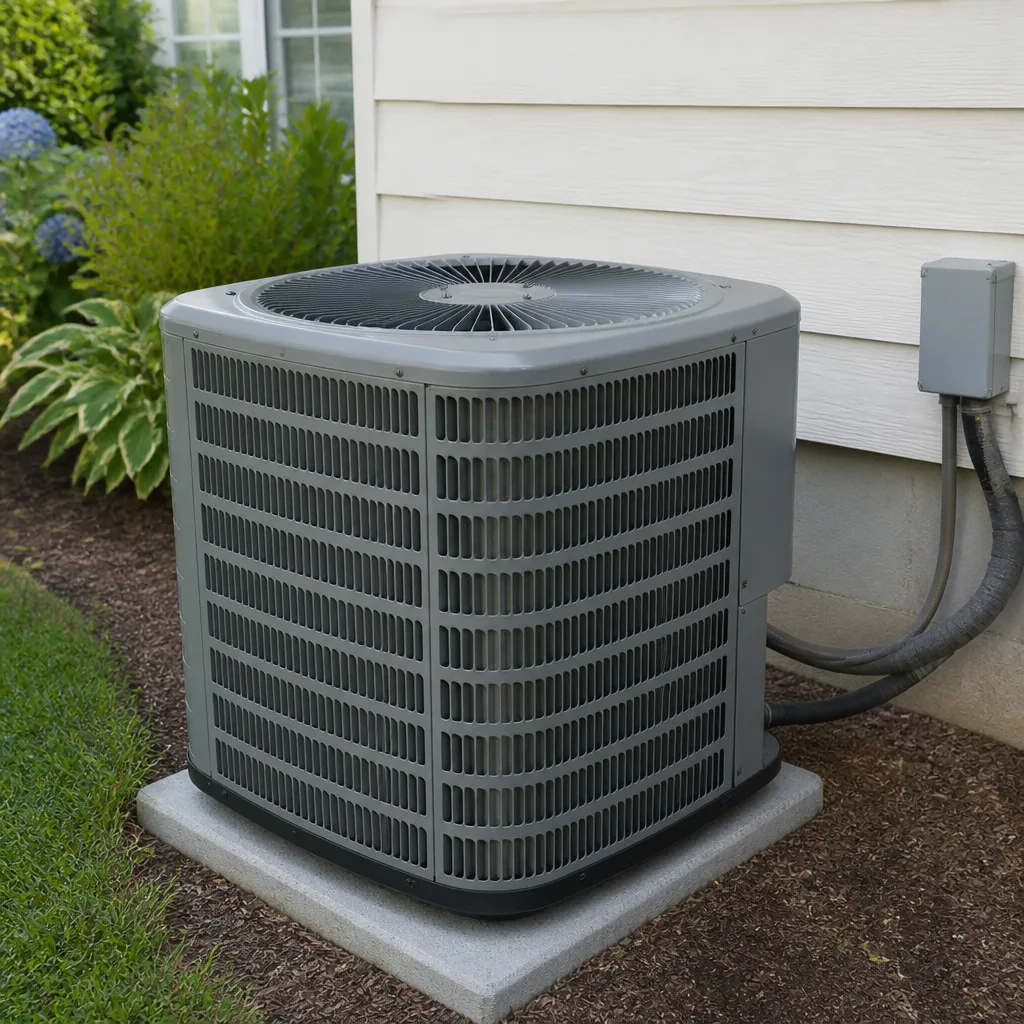 AC repair
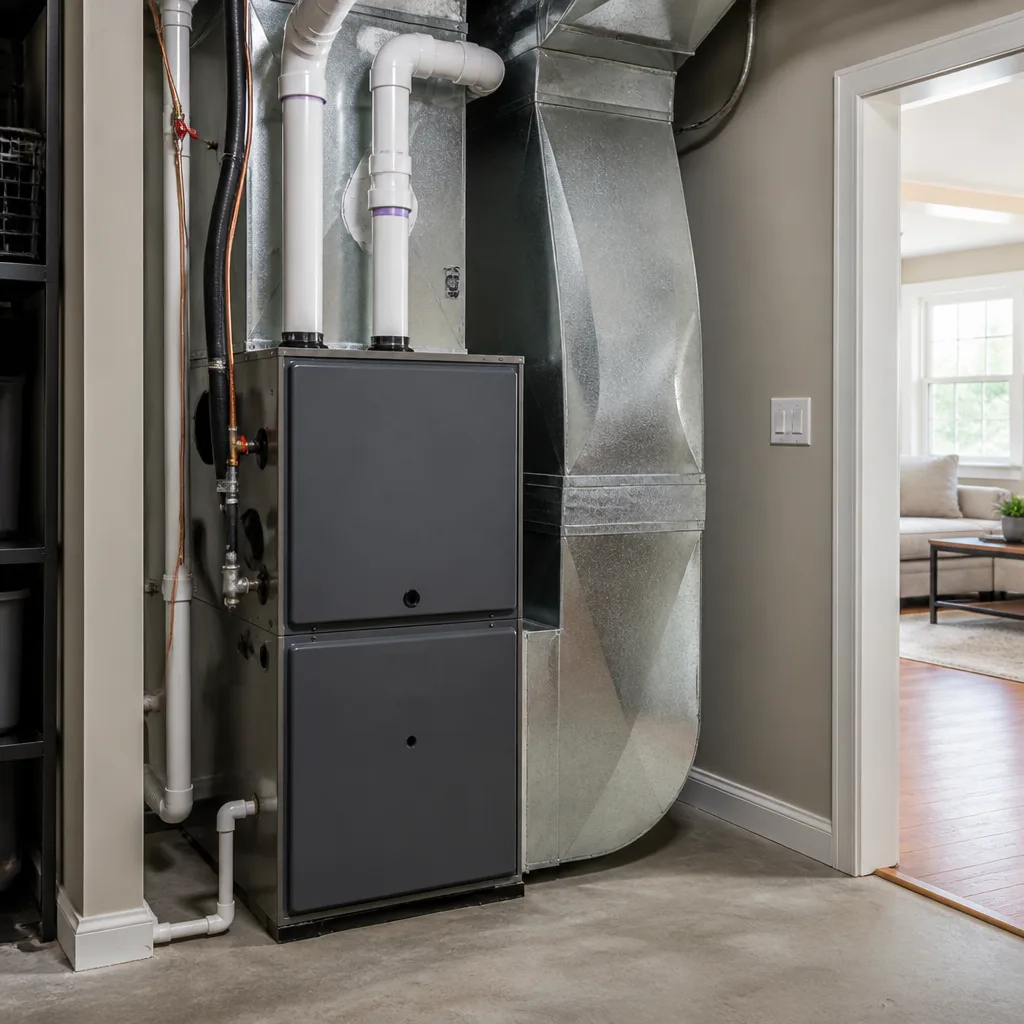 Furnace & heating
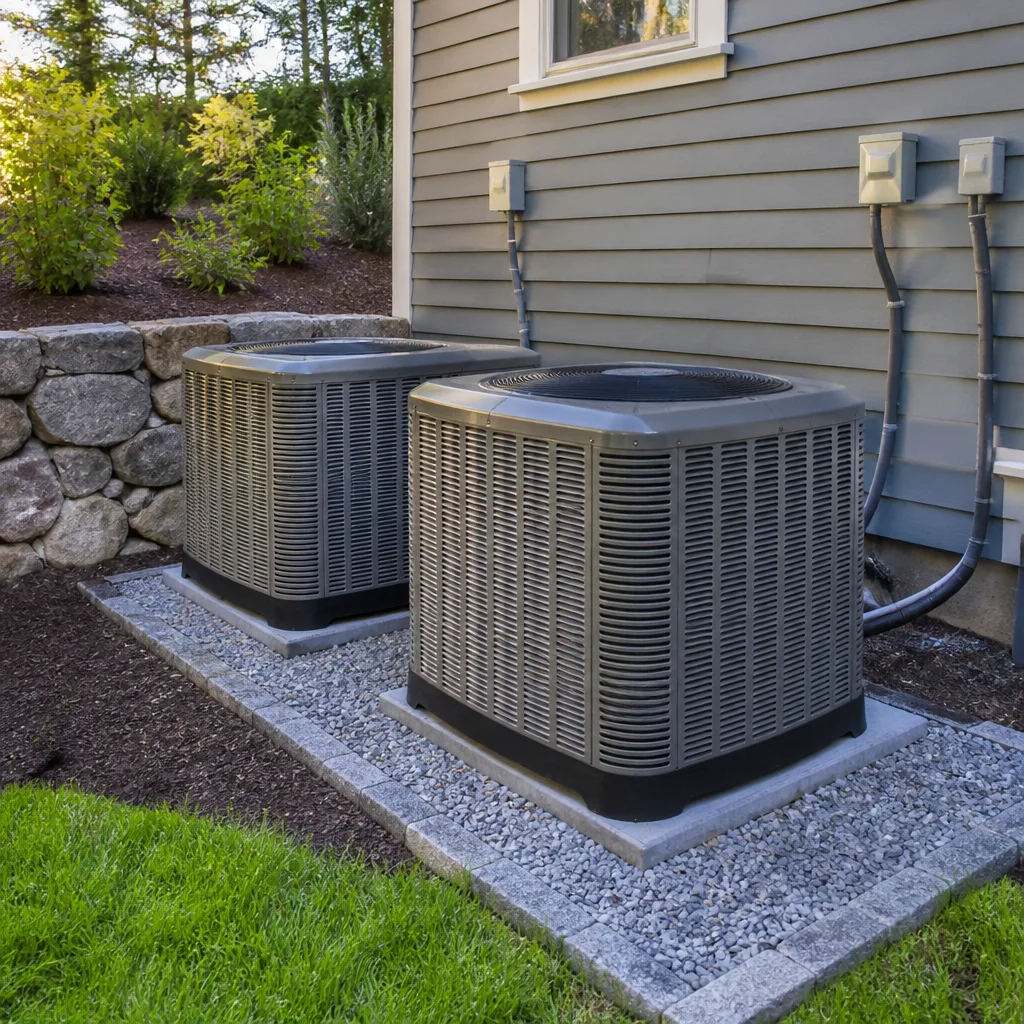 Heat pumps
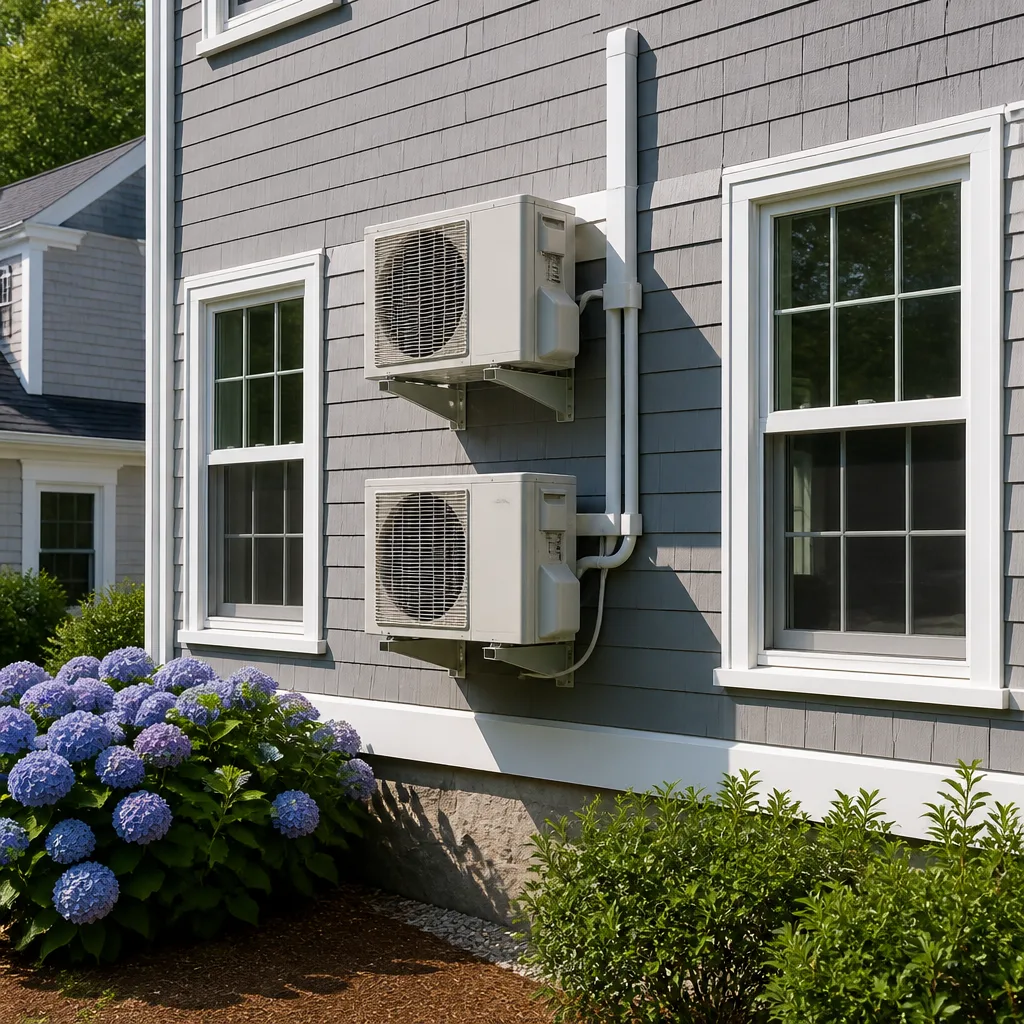 Ductless mini splits
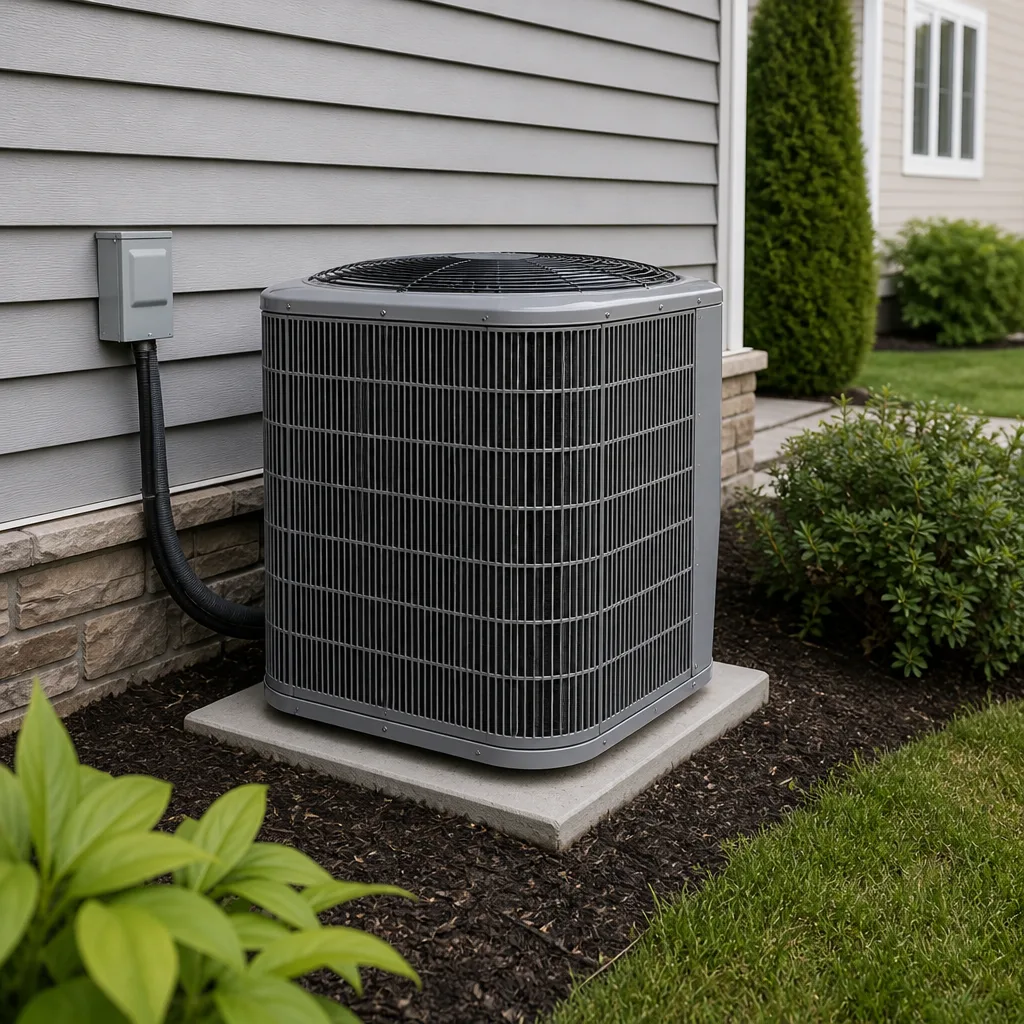 Carrier
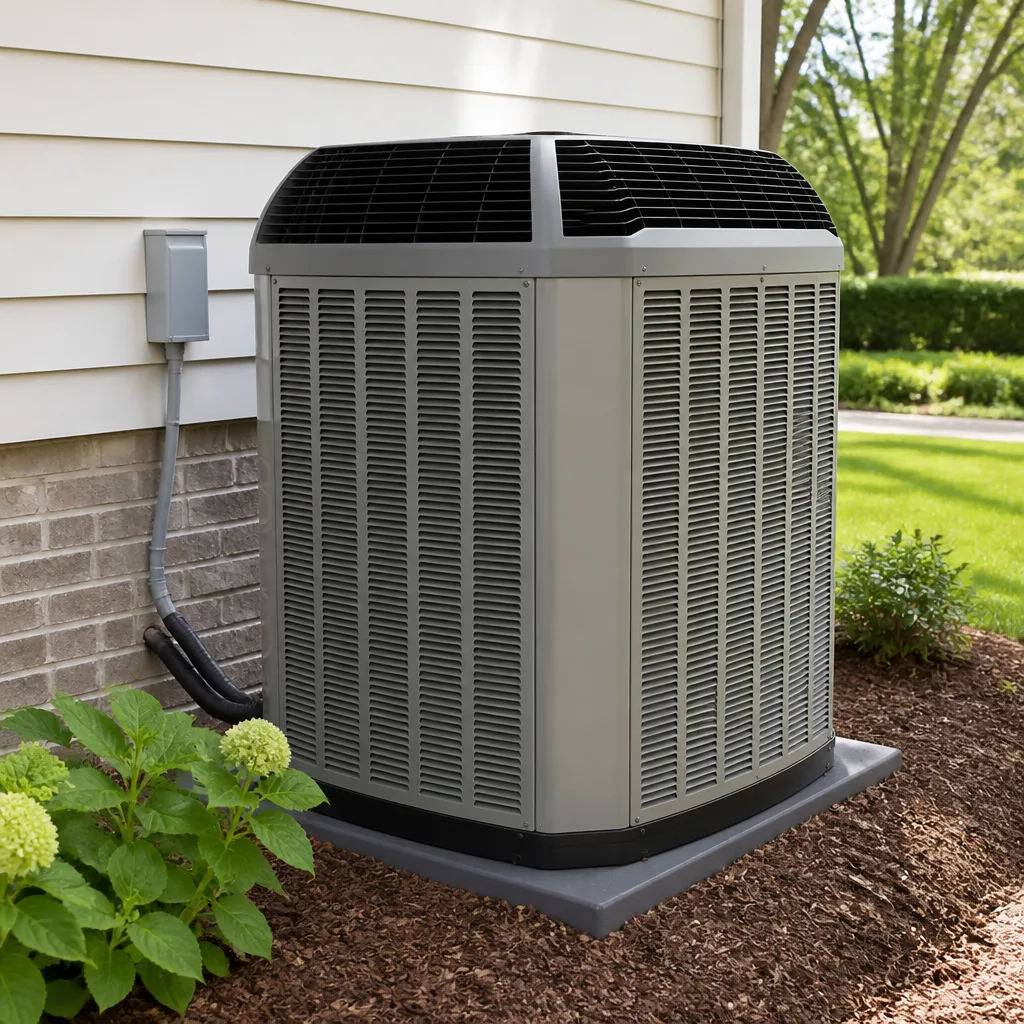 Trane
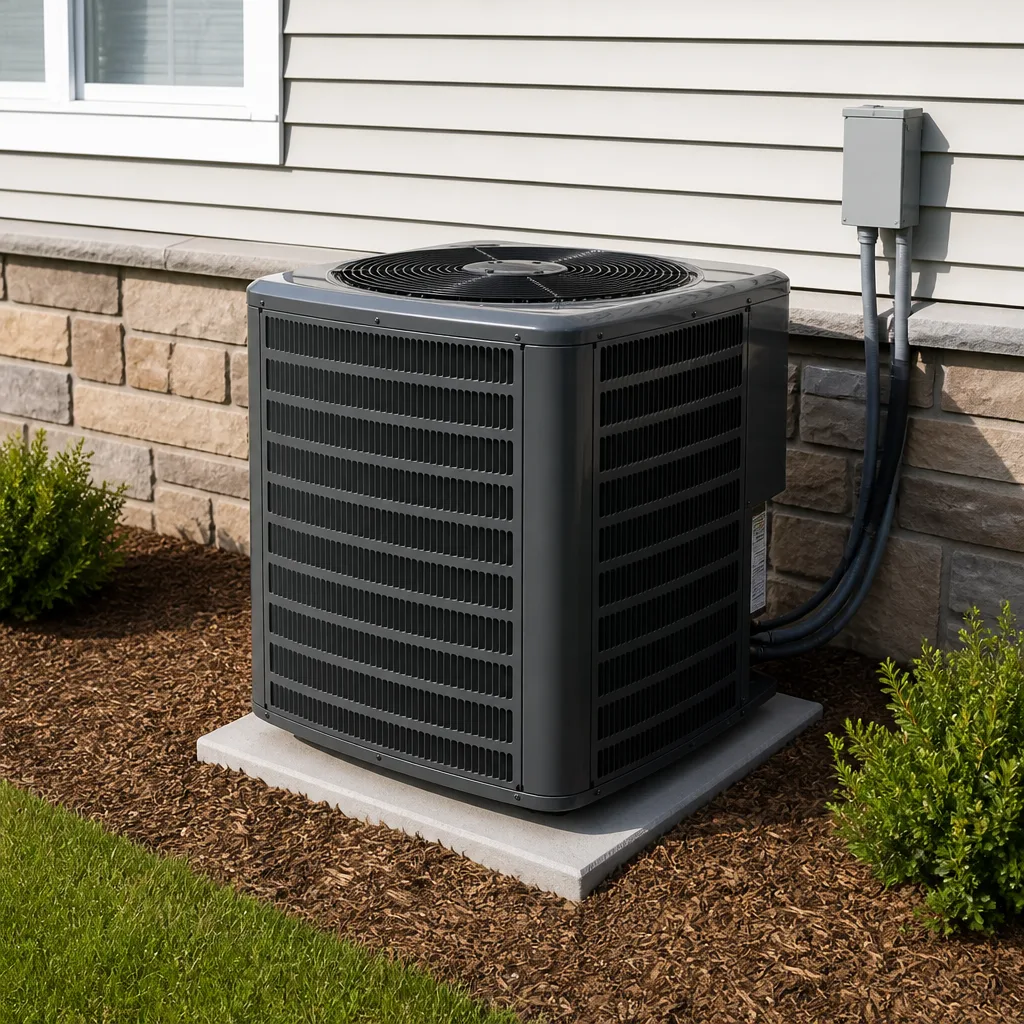 Goodman
Seasonal tune-up and full diagnostic on your Carrier, Trane, or Goodman system - readings shown to you before any repair is proposed
Diagnosis first, numbers second - you approve the repair price before a single part goes in.
Get your free estimateAC Repair Warning Signs Every Homeowner Should Know
That faint burning smell when your AC kicks on isn’t “just dust burning off.” It’s one of three distinct odor signatures, and each one points to a different component failure already in progress. Here’s the uncomfortable truth we’ve learned after years of AC repair in Enterprise: most air conditioning failures send warnings for weeks before they quit. Homeowners explain away the small stuff – the click that repeats, the bill that creeps up, the air that feels “almost cold” – right up until the compressor dies on a 108-degree afternoon. This guide reframes six of those “minor” symptoms as the specific, expensive failures they’re predicting, and tells you which ones mean schedule a visit versus shut the system off right now.
Quick Answer
The six warning signs that most often precede an AC breakdown are refrigerant leaks, short-cycling, unusual odors, weak airflow, rising electricity bills, and strange noises – and short-cycling is the most expensive to ignore because it stresses the compressor. Some signs (odd smells, tripping breakers) mean turn the system off and call now; others (rising bills, weak airflow) give you days to schedule. In Enterprise, where summers run past 105°F and desert dust loads up outdoor coils fast, these symptoms accelerate.
Styles & brands we work with
- AC repair
- Furnace & heating
- Heat pumps
- Ductless mini splits
- Carrier
- Trane
- Goodman
Table of Contents
- Odor Signals: Burning Plastic vs. Musty vs. Chemical
- Short-Cycling: The Most Expensive Symptom to Ignore
- Your Electricity Bill as an Early Warning Sign
- Weak Airflow and What It’s Telling You
- Noises That Mean Something Specific
- Schedule Soon vs. Turn It Off Right Now
- What to Tell the Dispatcher When You Call
- When to Call a Professional
Odor Signals: Burning Plastic vs. Musty vs. Chemical
A smell is the most misread warning sign in air conditioning, because homeowners default to “it’s probably dust.” Sometimes it is – the first start-up of the season can carry a light dusty smell that fades in an hour. But three distinct odors point to three distinct mechanical problems, and the urgency differs for each.
Burning plastic smell
This is the one to respect. Burning plastic usually means an electrical component – a fan motor winding, a wire, a capacitor – is overheating. It can also be the insulation on wiring degrading where it meets the air handler. Turn the system off at the thermostat and call. Continuing to run it can turn a motor replacement into a small electrical fire. Crack open a window and don’t restart it “just to see.”
Musty, wet-basement smell
That smell is biological. It means mold or mildew is growing somewhere in the system, usually on the evaporator coil or in the drain pan, and being blown through your house. In Enterprise, the swing between a monsoon-damp July and single-digit humidity the rest of the year creates condensation pockets that don’t fully dry. A musty smell is often a drain pan issue or a clogged condensate line that’s holding moisture. It gives you days to schedule, but it shouldn’t wait weeks – you’re breathing what it’s growing.
Chemical or “sweet” smell
A sharp, chemical, almost sweet odor can signal a refrigerant leak. Refrigerant is a regulated substance, and this one needs a professional – it’s not a DIY fix, and it’s not safe to keep running the system while a known leak is active. Turn it off and call.
Short-Cycling: The Most Expensive Symptom to Ignore
Short-cycling is when your AC turns on and off every few minutes instead of running a normal cycle of 15 to 20 minutes before it reaches the set temperature and rests. It sounds harmless – the house still gets cool, right? It doesn’t. Short-cycling is the single most expensive symptom to ignore because of what it does to the compressor, the most expensive part in the system.
Every time a compressor starts, it draws a heavy inrush of current and takes the mechanical wear of a cold start. A system that cycles every three minutes instead of every twenty takes that wear six times as often. Compressors don’t fail loudly – they fail over months of accumulated stress. We see it most in undersized or oversized units and in systems with a failing capacitor or low refrigerant charge.
What short-cycling signals
- Low refrigerant charge – the system cools too quickly to satisfy the thermostat, then restarts before it can run a full cycle.
- A failing start capacitor – the compressor struggles to start and trips on the overload.
- An oversized system – common in older Enterprise homes where a unit was sized for square footage rather than the actual desert heat load.
- A dirty outdoor coil – in a dust-heavy climate, a clogged coil can’t shed heat, and the compressor overheats and shuts off.
If you count more than three or four on-off cycles in an hour, get it looked at. A $180-$350 capacitor or refrigerant check now is a fraction of a $1,200-$2,400 compressor replacement later.
Your Electricity Bill as an Early Warning Sign
Your utility bill is a diagnostic tool nobody reads. In our experience, a jump of more than about 15% to 20% in cooling-season usage – comparing the same months year over year and accounting for rate changes – is worth investigating. That’s the range where efficiency loss starts showing up before comfort does. A bigger jump, 30% or more, usually means something specific: a failing capacitor, a refrigerant leak, or a blower motor pulling more current than it should.
Enterprise summers make this easy to track. Pull last July’s bill and this July’s bill. If the weather was similar and your habits didn’t change, that difference is the AC telling you it’s working harder to do the same job. We’ve caught plenty of refrigerant leaks and failing blower motors this way – the homeowner had no other symptom yet. It gives you time to schedule instead of time to panic.
Weak Airflow and What It’s Telling You
When the air coming out of the vents feels less forceful than it used to – you can’t feel it across the room, or the upstairs never cools – the system is telling you one of two things: something is restricting the flow, or the blower is losing strength. Neither is a “wait and see.”
First thing to check (the safe part)
- Replace the air filter if it’s more than 90 days old (30 days in dusty Enterprise months).
- Confirm no registers are closed or blocked by furniture.
- Check that the return-air grille isn’t covered or clogged with pet hair.
If airflow is still weak after a fresh filter, the restriction is inside the system or the blower is failing – that’s a technician call. A weak blower motor can burn out completely, and a frozen evaporator coil from restricted airflow can send liquid refrigerant back to the compressor. Both get more expensive the longer they run.
Noises That Mean Something Specific
Air conditioners make noise – the compressor hum and fan whoosh are normal. What’s not normal is a noise that wasn’t there last season. Each sound points somewhere specific:
- Clicking or ticking that repeats – usually a relay, contactor, or capacitor struggling to engage. Short-cycling often follows.
- Grinding or screeching from the outdoor unit – a failing fan motor bearing or a loose belt. Stop the system and call.
- Buzzing from the outdoor unit – can be a loose electrical connection or a failing contactor. Electrical buzzing is a fire-risk signal, not a curiosity.
- Banging or clanking – a loose or broken part inside the compressor or fan assembly. Turn it off.
- Hissing – typically refrigerant escaping. Call.
Schedule Soon vs. Turn It Off Right Now
Not every warning sign carries the same urgency. Sorting them right is how you prevent a repair from becoming a replacement.
Turn the system off and call now
- Burning plastic or chemical smell.
- Hissing (possible refrigerant leak).
- Buzzing at the outdoor unit or a breaker that trips.
- Banging or grinding from the compressor or fan.
Schedule within a few days
- Musty odor (mold growth in the system).
- Short-cycling.
- Weak airflow after a fresh filter.
- Electricity bill running 15%-20% higher in cooling season.
- Inconsistent cooling (some rooms cold, some warm).
Enterprise’s desert climate adds a category we take seriously: when the outdoor unit keeps tripping its breaker in 110-degree heat, it’s often a compressor working beyond its limit – sometimes with a dirty coil, sometimes with a failing capacitor. Either way, that’s a “call now.”
What to Tell the Dispatcher When You Call
You’ll get faster, more accurate service if the person on the phone knows what you’re describing. Tell them these six things:
- The exact symptom – “burning plastic smell” or “turns on for two minutes then stops,” not “the AC isn’t working.”
- How long it’s been happening – days or weeks.
- What you already checked – fresh filter, breaker position.
- The system’s age and brand if you know it (Bryant, Carrier, Trane, American Standard – the major brands we service).
- Whether it’s still running or you’ve shut it off.
- Whether it’s the AC or the furnace if you have a combined system – they can share a blower, and the symptom location helps.
That detail is what lets the technician arrive with the right diagnostic tools instead of making a second trip. When you call Brandt HVAC Enterprise at (844) 797-9490, a live person answers – 24/7 – and walks through these questions with you before anyone is dispatched.
When to Call a Professional
Any of the turn-off-now symptoms above mean call immediately. Any schedule-soon symptom that persists past a few days – or makes your home uncomfortable – also means call. The signs that most often get ignored longest are the quiet ones: the bill up 18%, the upstairs never quite cool, the pump-click you’ve stopped noticing. Those are the ones that turn into a compressor. Brandt HVAC Enterprise offers free estimates in Enterprise – call (844) 797-9490, and a live person will walk through your symptoms and get you scheduled. Learn more about AC Repair in Enterprise to see how a visit works.
Does Brandt HVAC Enterprise work on all AC brands?
Yes. Brandt HVAC Enterprise services all major residential HVAC brands, including Carrier, Trane, Lennox, Goodman, Rheem, York, Daikin, Bryant, and American Standard. When you call, tell the dispatcher your brand and symptoms, and we’ll match the tech and parts correctly.
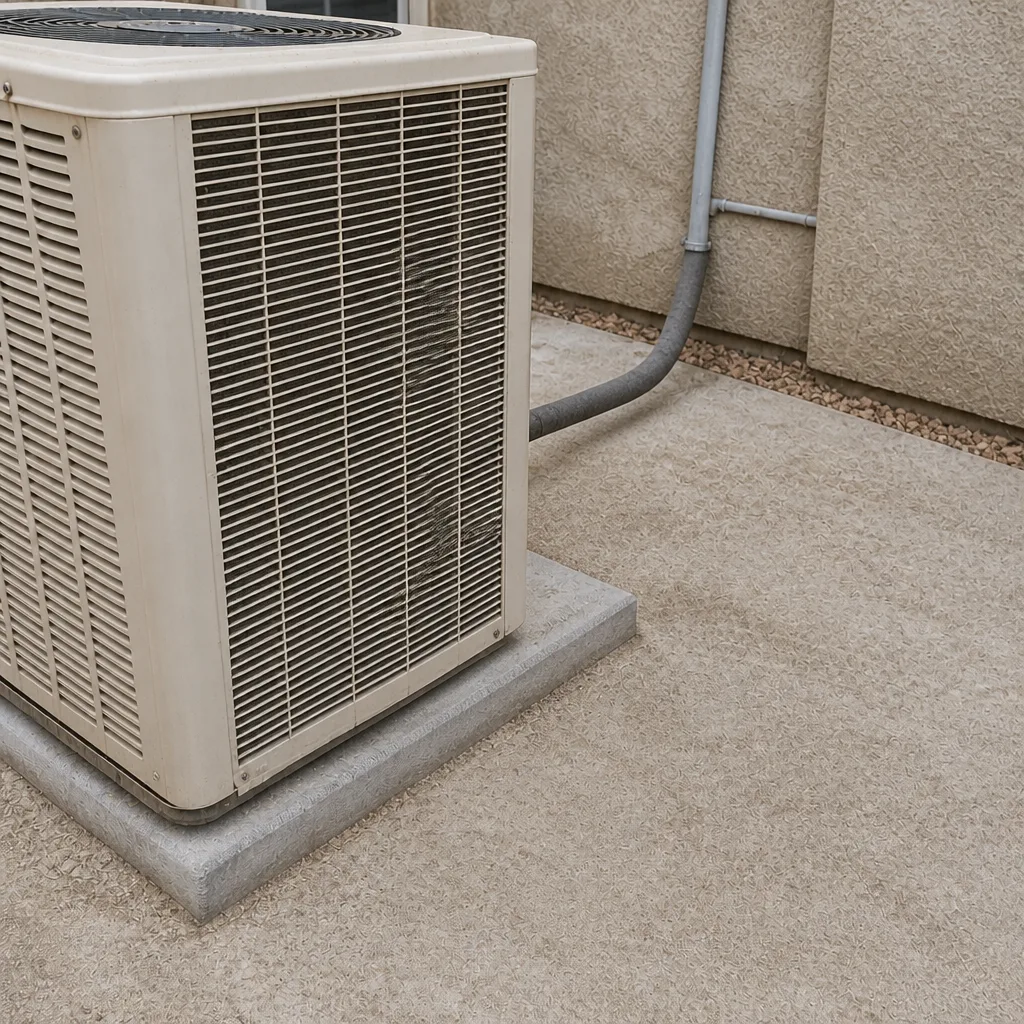
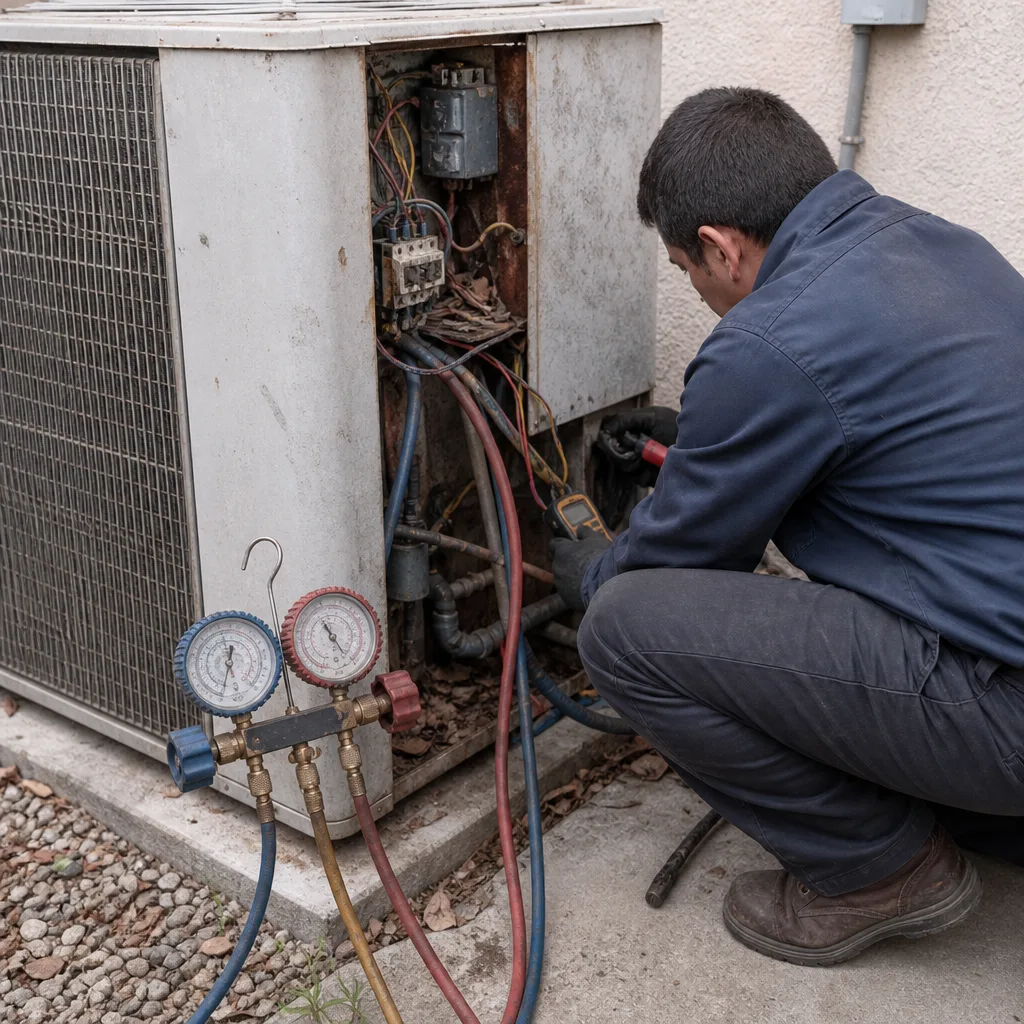
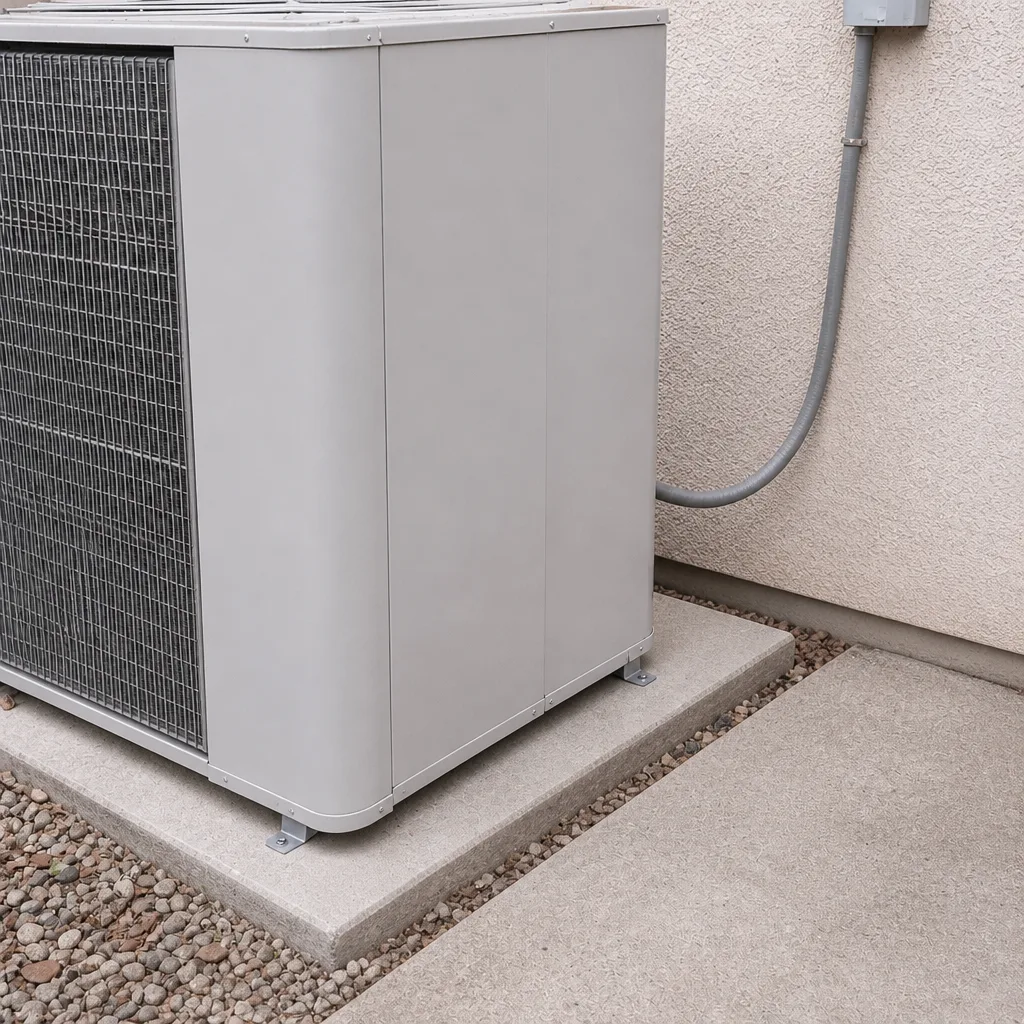
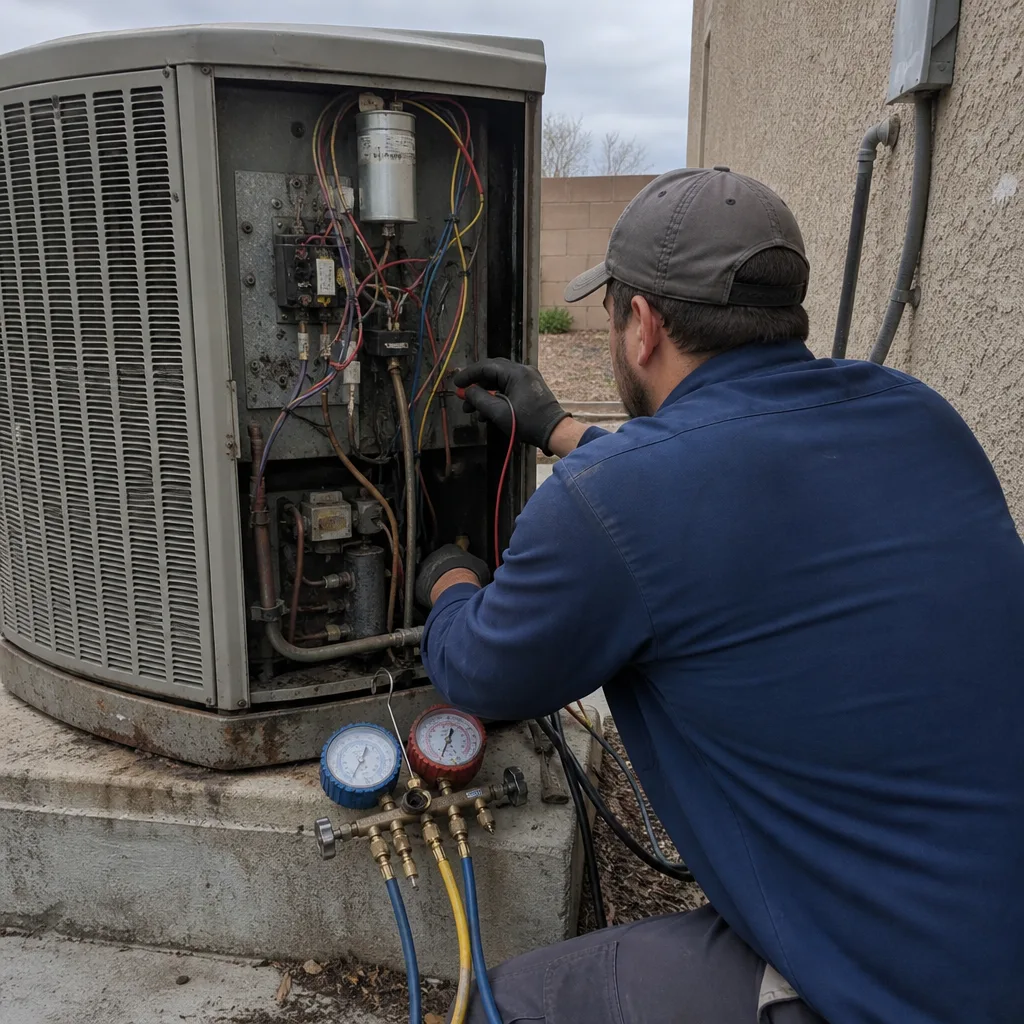
See the difference
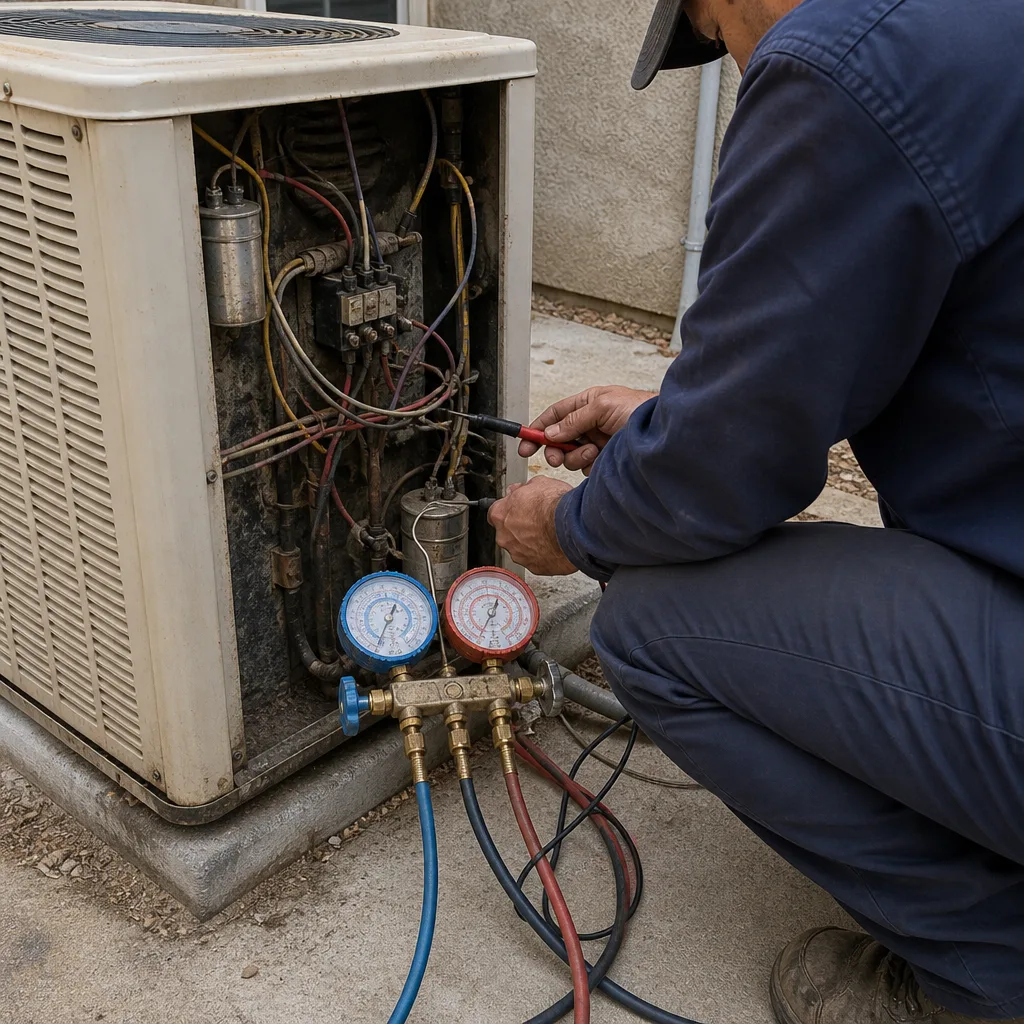 Before
 After
 Before
 After
 Before
 After
Common Mistakes to Avoid
- Assuming a burning smell is dust. It’s dust only if it fades within an hour on the season’s first start. If it persists or returns, it’s electrical – shut it off.
- Resetting the breaker over and over. A breaker that trips repeatedly is doing its job. Reset once to confirm, then call. Repeated resets can turn a small fault into a compressor failure.
- Letting the outdoor coil stay dirty. In Enterprise, dust coats the outdoor coil faster than in humid climates – a dirty coil means the compressor runs hotter, and heat is what kills compressors.
- Skipping a filter change because “it still looks okay.” After 60-90 days in this dust, it isn’t. A clogged filter is the most common cause of weak airflow that turns into a frozen coil.
- Ignoring the bill because the AC still cools. A 15%-20% cooling-season jump is often a refrigerant leak or failing blower in progress. Catching it early is a $200-$400 repair; catching it after a compressor is $1,200-$2,400.
- Waiting for the compressor to fail before considering short-cycling. Short-cycling is the warning. When the compressor finally goes, you’re looking at replacement, not repair.
Frequently Asked Questions
Most common AC repairs in Enterprise run $150-$650 depending on the part: capacitor replacements $180-$350, blower motor replacements $400-$700, and refrigerant leak repairs $250-$600 plus recharge. Compressor replacements climb to $1,200-$2,400. Every Brandt HVAC Enterprise job starts with a written price before any work begins – never a verbal estimate that changes later. Call (844) 797-9490 for an exact quote.
Often yes – short-cycling is a priority call regardless of season, and we aim for same-day service whenever the schedule allows. If your system is short-cycling, turn it off at the thermostat and call (844) 797-9490. A live person answers any hour.
Sometimes – utility rebates and efficiency incentives change by program and by year, and we’ll walk you through what applies to your situation when we’re on site. Repairing is often the better call unless the system is near the end of its life or the compressor has failed. Call (844) 797-9490 and we’ll help you sort repair from replacement with a written price for each.
The 365-Day Done Right Promise covers the repair we made – if it fails within 365 days, we come back and make it right at no charge, no argument. That means the specific part and work we performed is guaranteed for a full year. If a different component fails later, that’s a new diagnosis and we’ll show you a written price before doing anything.
Repair is usually the right call when the compressor is still healthy and the repair is a discrete part – a capacitor, a contactor, a blower motor. Replacement tends to make more sense when the compressor has failed, the system is near the end of its service life, or the unit is sized wrong for your desert heat load. We’ll show you a written price for both paths so the decision is yours. Call (844) 797-9490 for a free estimate.
We send every technician’s name and photo before arrival, and they show a photo ID badge at the door. Our technicians are background-checked and identity-verified under the Threshold Verified standard. If anyone arrives who you weren’t told to expect, that visit is on us and we make it right. It’s how we earn the door.
The Bottom Line
Most AC breakdowns announce themselves weeks before they happen – as an odd smell, a bill that creeps up 15%-20%, a click you’ve stopped noticing. Sorting those signs into “turn it off now” and “schedule this week” is the difference between a $200-$400 repair and a $1,200-$2,400 compressor. In Enterprise’s desert heat, dust loads the outdoor coil early and makes every symptom move faster. Read your bill, listen for new noises, smell before you shrug – and when something feels off, tell the dispatcher exactly what you’re seeing. A live person is ready at (844) 797-9490, with a written price before anything starts. For the full picture of how repairs and maintenance fit together, start with the Brandt HVAC Enterprise home page.
Written by the team at Brandt HVAC Enterprise.