
Last updated November 17, 2026
 AC repair
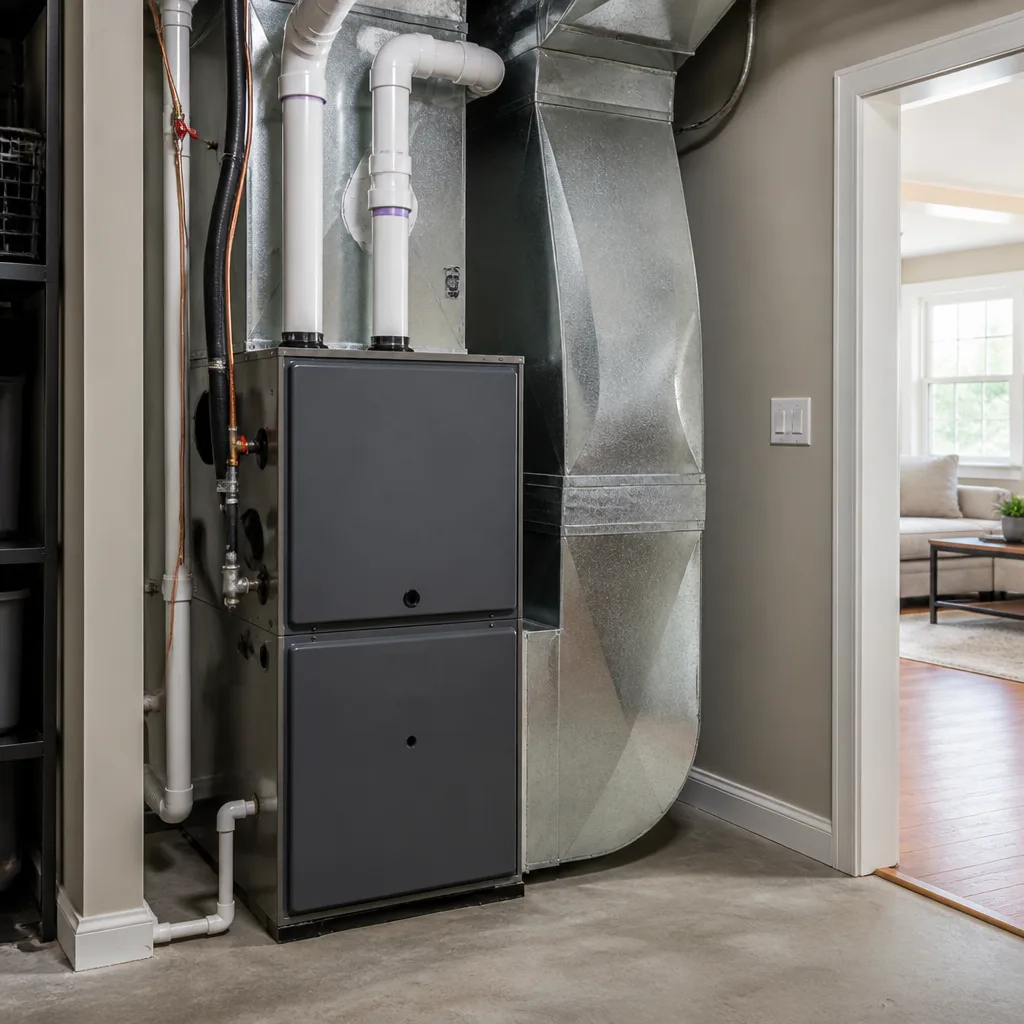 Furnace & heating
 Heat pumps
 Ductless mini splits
 Carrier
 Trane
 Goodman
Seasonal tune-up and full diagnostic on your Carrier, Trane, or Goodman system - readings shown to you before any repair is proposed
Diagnosis first, numbers second - you approve the repair price before a single part goes in.
Get your free estimateThe Complete Furnace Repair Guide for Enterprise Homeowners
Nevada’s furnace season is short, but it’s brutal on equipment. Your system sits idle through months of 100-degree heat, then gets asked to fire up on the first cold desert night of November. That dormancy-then-demand pattern is why Enterprise furnaces tend to fail in ways that national repair guides never mention. Most homeowners think about their furnace twice a year at most, so when something goes wrong they have no framework for judging what they’re being told or what they’re being charged. This guide builds that framework now, before an emergency forces the issue. You’ll learn how desert climate affects furnace parts, what the five most common repairs actually cost, what a legitimate written estimate looks like, and how to decide whether to repair or replace.
Quick Answer
Most furnace repairs in Enterprise fall between $150 and $650 depending on the part, and the five most common failures are igniters, flame sensors, gas valves, blower motors, and heat exchanger cracks. A written price should be in your hands before any work starts, and any technician at your door should match the name and photo you were given before arrival. If the repair fails within the guarantee period, a reputable company returns at no charge.
Styles & brands we work with
- AC repair
- Furnace & heating
- Heat pumps
- Ductless mini splits
- Carrier
- Trane
- Goodman
Table of Contents
- Why Desert-Climate Furnaces Fail Differently
- The Five Furnace Repairs We See Most in Enterprise
- Who Should Be Walking Through Your Door
- How to Read a Furnace Repair Estimate
- Repair or Replace? The Decision Framework
- What Enterprise Homeowners Should Check Before the First Cold Night
- Common Mistakes to Avoid
- Frequently Asked Questions
Why Desert-Climate Furnaces Fail Differently
In a cold-climate city, a furnace runs almost year-round, which keeps its internal parts exercised and its gas lines flowing. In Enterprise, the opposite happens. From roughly April through October, your furnace sits completely still while the outside air climbs past 100 degrees and the indoor air gets dry, dusty, and hot. That combination creates a specific set of problems.
Dust is the first culprit. A dormant furnace in the desert collects fine particulate in the burner compartment, on the flame sensor, and around the igniter. When the system finally gets the call in November, that dust film can prevent ignition on the first try or cause the flame sensor to read “no flame” and shut the gas valve after a few seconds. Homeowners in the older parts of Enterprise near the valley’s edge often see this after windy spring seasons.
The second issue is thermal shock on the heat exchanger. A metal component that’s sat at ambient temperature for six months gets asked to reach several hundred degrees within minutes. Repeated expansion and contraction stress the seams and welds, which is where hairline cracks develop. A cracked heat exchanger is the one furnace failure you should never ignore, because it can let combustion gases into your living space.
The third pattern is spider and insect nesting in the intake and draft paths. It sounds like a small thing. It isn’t. Blocked combustion air causes incomplete burning, which trips safety switches and, in bad cases, produces carbon monoxide.
What this means practically: a furnace that “worked fine last winter” can fail on the first cold night in Enterprise without any warning sign. That’s the desert pattern, and it’s why we recommend a pre-season check rather than a wait-until-it-breaks approach.
The Five Furnace Repairs We See Most in Enterprise
These are the repairs that fill most of our November and December calendar in Enterprise. Prices below are honest ranges for parts and labor together, not teaser numbers.
1. Igniter Replacement
Most furnace igniter replacements run $150 to $300, parts and labor included. The igniter is the small ceramic element that heats up to light the gas. In desert climates they fail from dust film and thermal stress after long dormancy. A failed igniter is the single most common “no heat” call we get in Enterprise.
2. Flame Sensor Cleaning or Replacement
Flame sensor service typically runs $120 to $250. The sensor is a thin metal rod that confirms a flame is actually present. When it gets coated with dust or oxidation, it reads “no flame,” and the furnace shuts off the gas as a safety measure. The furnace will often run for a few seconds, then stop, then try again. If yours does that, the flame sensor is the likely cause.
3. Gas Valve Replacement
Gas valve replacement generally runs $350 to $650, depending on the valve and the furnace model. The gas valve controls fuel flow. A stuck or failing valve means the burner never lights, or it lights and then drops out. This is a job that requires a licensed technician: gas work is not a homeowner repair, and a botched valve is a genuine safety hazard.
4. Blower Motor Replacement
Blower motor replacement usually runs $400 to $800. The blower is what pushes heated air through your ducts. A failing blower makes a scraping or squealing noise, runs slowly, or stops altogether. In Enterprise, blower motors get a double workload because they run hard all summer for AC and then switch to heating duty.
5. Heat Exchanger Repair or Replacement
Heat exchanger work runs $600 to $1,500 or more, and in some cases the right answer is to replace the furnace rather than repair it. A cracked heat exchanger can leak carbon monoxide into your home, which is why this is the one repair we handle as a safety priority. If your furnace has a crack here, a carbon monoxide alarm near your bedrooms is not optional.
Who Should Be Walking Through Your Door
Furnace repair means a stranger entering your home, often while you’re alone, often with children in the house. That’s a real consideration, and it deserves a real answer rather than a shrug. Here’s what a professional arrival should look like.
Before anyone comes, you should know the technician’s name and see a photo of them. Not a generic company logo, not a name on a phone invoice. A specific person, sent to you by name and photo. At the door, that person should be wearing a photo ID badge they present without you having to ask, and be in a uniform.
Ask these credentials before you schedule, not after:
- Is the technician background-checked?
- Is their identity verified by the company, not just claimed?
- Is the company insured and bonded?
- Will I get a written price before any work starts?
- What exactly does the written guarantee cover, and for how long?
The Brandt HVAC Threshold Verified standard is built around this: every technician who comes to your door is background-checked and identity-verified, introduced by name and photo, and badged at the door. If someone arrives who you weren’t told to expect, that visit is on us and we make it right. It’s a small policy that changes a lot about how it feels to open your door. The name “Brandt” comes from an old word for a firebrand, which feels fitting for the work of keeping a home warm.
If a company can’t answer those five questions plainly, that’s your answer. Call the next one. You can also read more about furnace repair in Enterprise to see the specific services behind this standard.
How to Read a Furnace Repair Estimate
A legitimate furnace repair estimate is a written document you agree to before anyone touches a wrench. It should be specific, itemized, and free of vague language. Here’s how to read one in two minutes.
Line items that should always be there
- Part name and part number. “Igniter” is a category. “Hot surface igniter, model-specific” is a part. You should be able to look up what’s being installed.
- Labor hours or a flat labor rate. Either is fine, but it should be there in writing.
- Diagnostic fee, and whether it’s applied to the repair. Many companies charge a trip fee. Ask upfront whether it’s credited against the work.
- Written guarantee terms. The guarantee should state exactly what it covers and for how long. Something like “this repair is guaranteed for 365 days, and if it fails we return at no charge” is a real guarantee. “Covered under warranty” is not.
- Total, in plain dollars. The number you’ll actually pay.
Language that signals a padded quote
- “System tune-up” as an unexplained add-on to a repair.
- “May need” language that isn’t tied to a specific test result.
- Recommendations to replace parts that aren’t failing, with no diagnostic evidence shown to you.
- Quotes that changed between the phone call and the arrival.
The rule that protects you: no work starts before you see and agree to the cost in writing. That’s how every Brandt HVAC job runs, without exceptions. If a technician won’t put it in writing, ask them to leave.
Repair or Replace? The Decision Framework
The hardest question in furnace ownership isn’t what’s broken. It’s whether to fix it. Here’s the framework we use, and it holds up well in Enterprise homes where furnaces often run longer than their rated life because they only work a few weeks a year.
Age
Most residential furnaces are rated for 15 to 20 years. Under 12 years old, repair almost always makes sense. Past 18 years, repairs start to look like throwing money at a system that’s near its end, especially if the repair is structural like a heat exchanger.
Repair History
One repair in five years is normal. Three repairs in two seasons is a pattern. Repeated failures in different systems (ignition, then blower, then pressure switch) usually mean the furnace is failing in multiple places at once, and each fix is buying you months rather than years.
Heat Exchanger Condition
This is the decision-maker. A heat exchanger is not something to “monitor” once it’s cracked. If a technician confirms a crack or heavy corrosion on the heat exchanger, and the furnace is more than 12 to 15 years old, replacement is the right call in nearly every case. If the furnace is younger, a heat exchanger repair may still make sense under a manufacturer’s parts warranty, and it’s worth checking.
The 50% Rule
If the repair cost is more than half the cost of a new furnace, replacement starts to make financial sense. Below 50%, repair wins. The exception is safety: a heat exchanger crack overrides the math.
For homeowners considering replacement, our Brandt HVAC Enterprise home page walks through the system options we install, and our team installs and services all major residential HVAC brands, including Carrier, Trane, and Lennox. If it’s time to look at a new system, we hand you a written fixed price, a set install date, and rebate and financing paperwork handled for you. That’s a scheduled project, not same-day work.
What Enterprise Homeowners Should Check Before the First Cold Night
Fifteen minutes in late October saves almost everyone a November emergency call. Here’s the pre-season routine for an Enterprise home.
- Change the filter. A dust-loaded filter from cooling season will choke your furnace’s airflow the first time it fires. Replace it before first use.
- Turn the furnace on for 10 minutes during the day. Pick a warm afternoon. It’s the best way to catch a failure before you need the heat. If it doesn’t light or smells like gas, call right away and shut it off.
- Check the exhaust and intake vents outside. Look for bird nests, spider webs, or debris blocking the termination. Blocked vents are a real hazard.
- Test carbon monoxide alarms. Press the test button on every alarm in the house. If they’re more than 7 years old, replace them.
- Clear space around the furnace. Combustion needs air. Don’t stack boxes or store paint next to the unit.
- Look at the flame through the sight glass if you have one. A healthy flame is blue. A yellow, lazy, or flickering flame means call a technician.
Never open the burner compartment, gas lines, or heat exchanger panel yourself. Those parts need a trained technician with gas-certified tools and a carbon monoxide meter.
Many Enterprise homes also run an aging AC system, and the same dormancy-then-demand logic applies to AC maintenance in Enterprise for the summer side of the year.
Common Mistakes to Avoid
- Waiting until it’s 40 degrees at night to turn the furnace on for the first time. In Enterprise, the first cold night is the worst time to discover a failure. Test the system in October.
- Accepting a phone quote without a written price. A verbal estimate that changes on arrival is the single most common repair complaint. Get the price in writing before anyone starts.
- Letting a technician into your home without verifying who they are. You should have a name and a photo before arrival. If the person at the door doesn’t match, don’t open it.
- Ignoring a yellow flame or a sulfur smell. Yellow flames and a rotten-egg smell are both signals of incomplete combustion. Shut off the gas at the meter if you smell gas, leave the house, and call the gas company.
- Choosing the cheapest quote on a heat exchanger job. The lowest bid is often the one that skips the carbon monoxide test. On that repair, the safety steps are the point.
- Replacing a furnace on the first failure. One igniter or flame sensor repair is not a reason to replace a 9-year-old system. Get a second opinion if a technician pushes replacement on a single inexpensive repair.
- Forgetting that desert dust collects in the burner compartment. A furnace that’s never been cleaned in five years in Enterprise is a common source of first-cold-night failures.
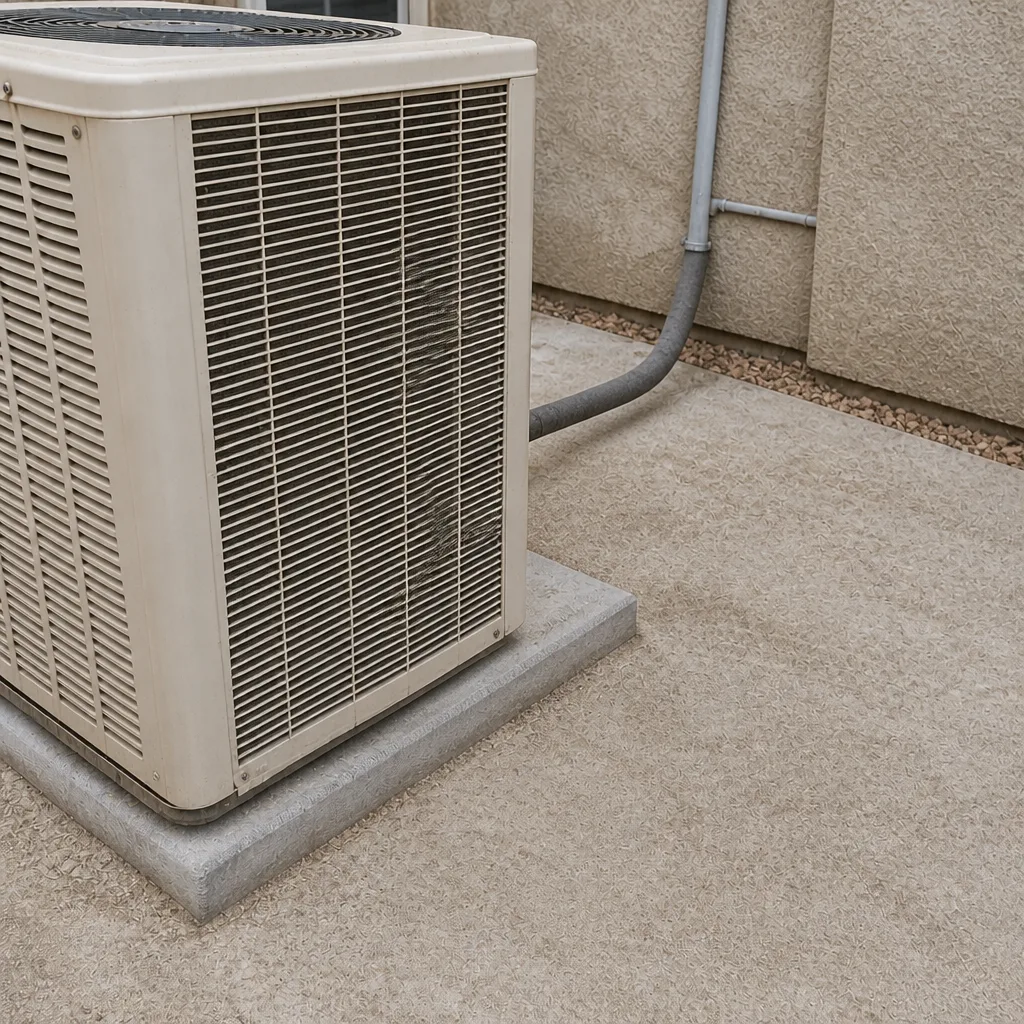
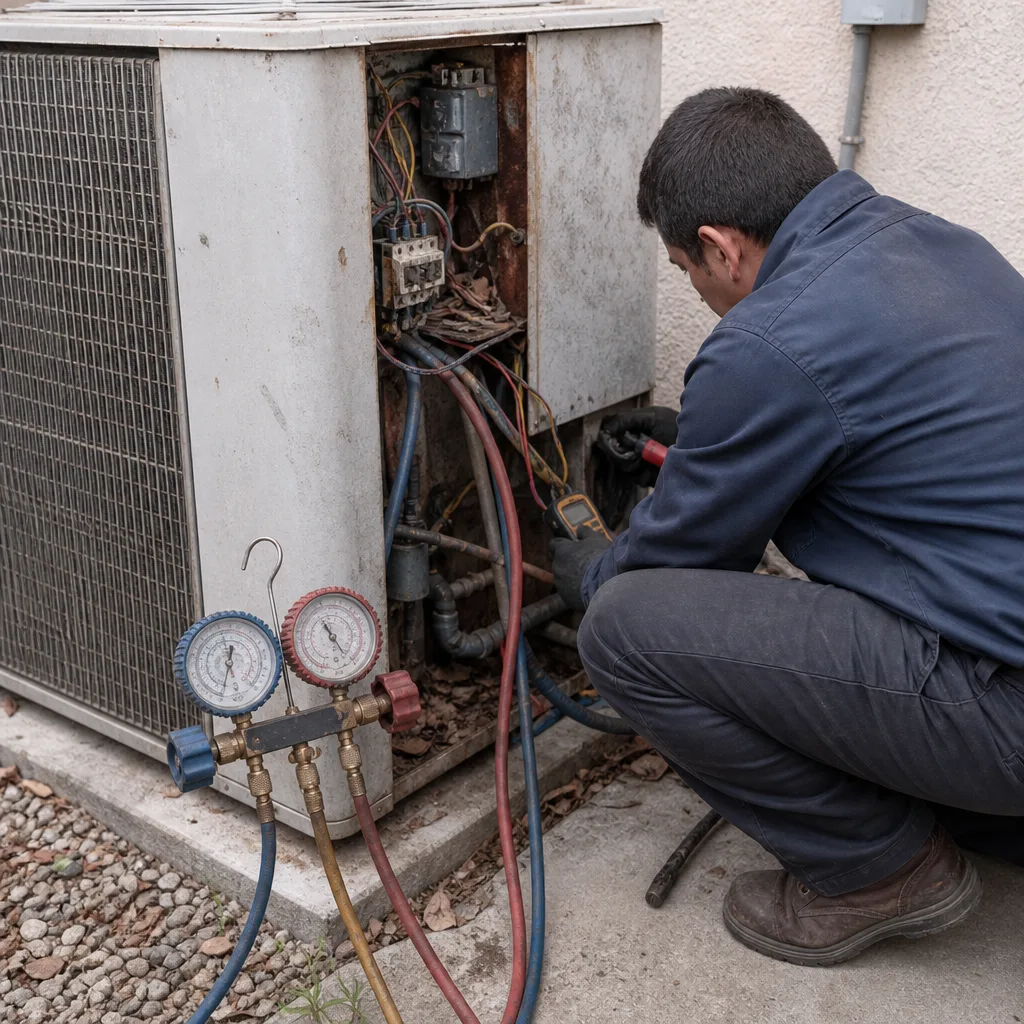
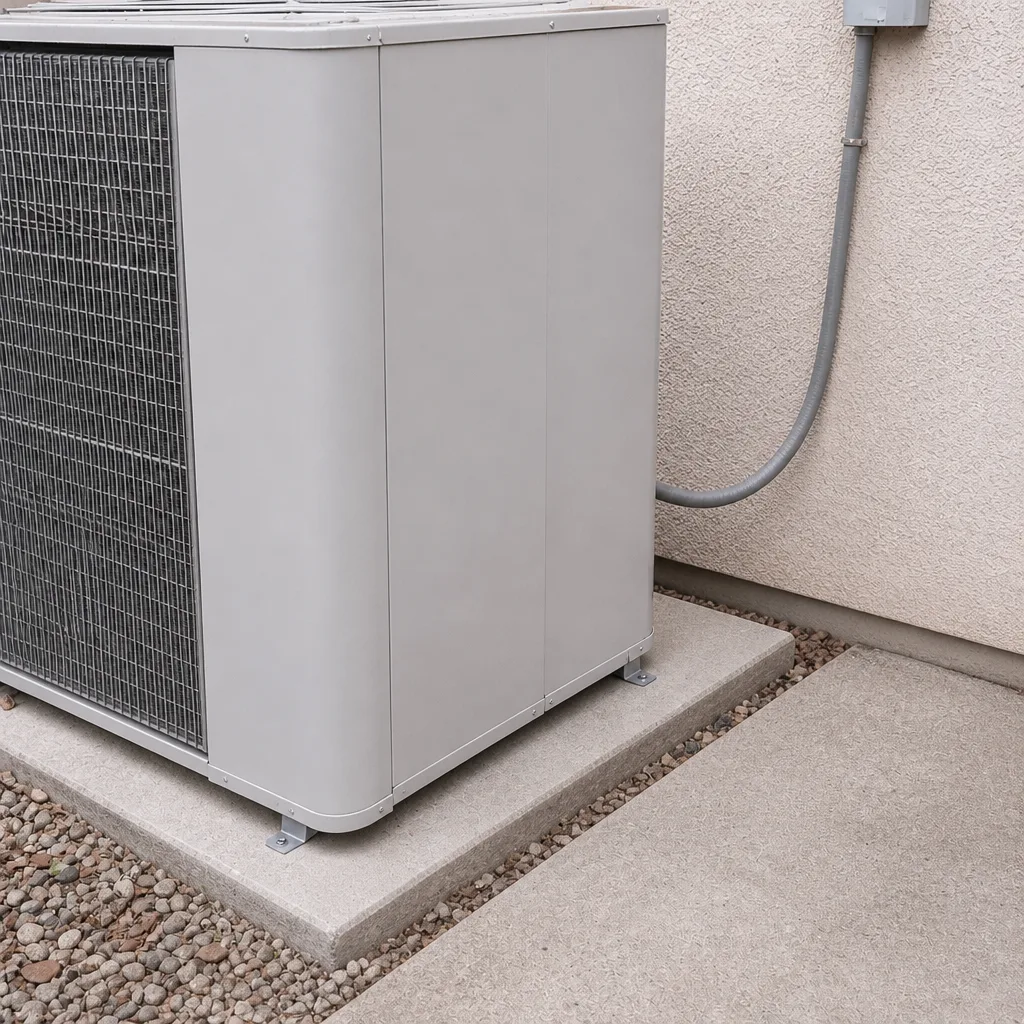
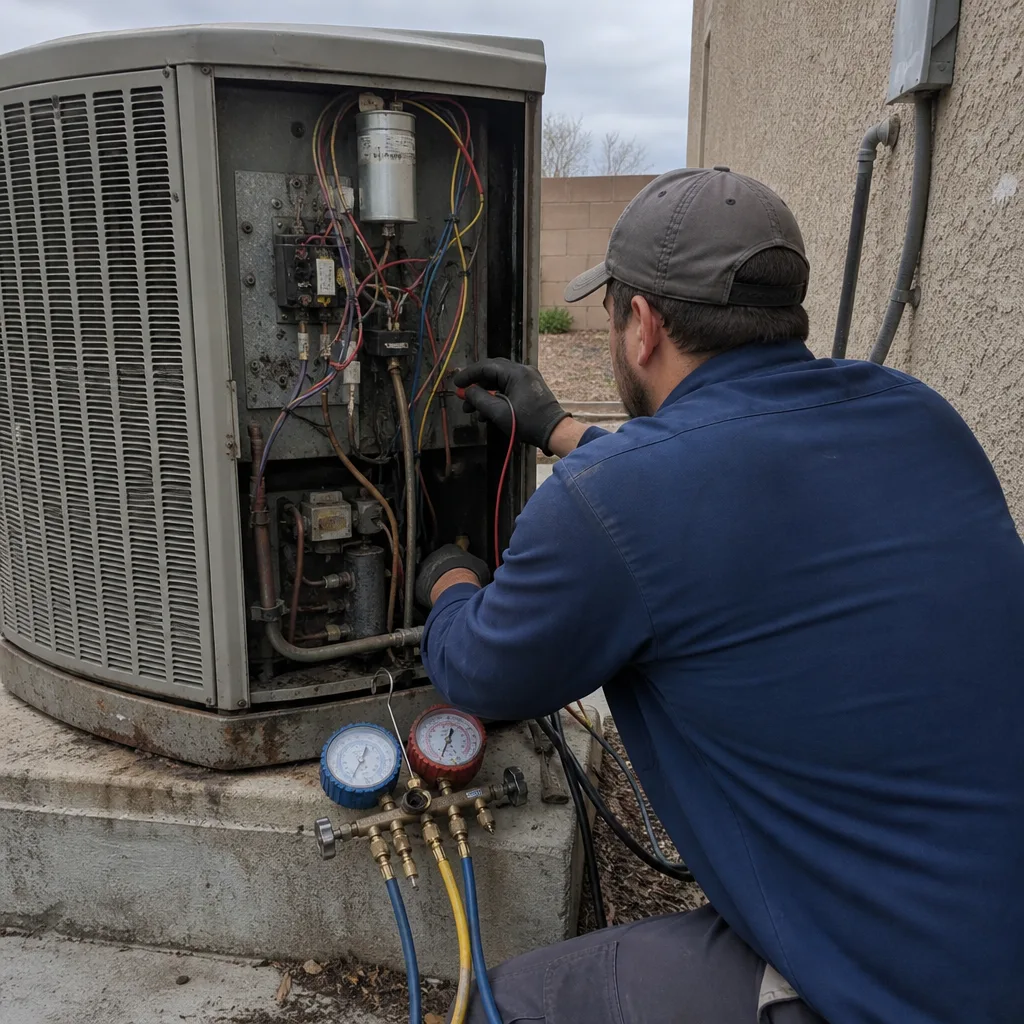
See the difference
 Before
 After
 Before
 After
 Before
 After
When to Call a Professional
Some furnace issues are homeowner items: filter changes, clearing the space around the unit, testing alarms. Everything involving gas, electricity inside the cabinet, combustion, or heat exchanger inspection belongs to a licensed technician. Call immediately if you smell gas, hear a crack in the heat exchanger confirmed by a technician, see a yellow lazy flame, notice soot around the furnace, or get repeated flame failures after the system has lit. For everyone else in Enterprise: schedule a pre-season inspection before the first cold night, and you’ll avoid most of the failures that fill November’s appointment books. If your furnace has stopped heating and you’re in Enterprise, our team answers live at all hours. AC repair in Enterprise is our summer counterpart, and the same verification standard applies to both.
If you’re not sure whether you need service, call us and describe what’s happening. We’ll tell you honestly whether it’s a call-out or a routine visit.
Frequently Asked Questions
Most furnace repairs in Enterprise run $120 to $650, with the average landing around $300. Igniters ($150 – $300) and flame sensors ($120 – $250) are the most common; gas valves and blower motors run higher. Heat exchanger work is $600 and up, and replacement sometimes makes more sense. Call (844) 797-9490 for an exact quote on your furnace – estimates are free.
Yes. Our phones are answered by a live person 24 hours a day, every day, and same-day furnace repair is available in Enterprise for most no-heat calls. Call (844) 797-9490 and we’ll give you a time window and the technician’s name and photo before they arrive.
Every repair we complete is covered for 365 days under the 365-Day Done Right Promise, which states exactly what’s covered, for how long, and what happens if the repair fails. If it fails within that window, we return at no charge. If it’s not done right, we make it right.
The most likely cause is a dirty or failing flame sensor, which reads “no flame” and shuts the gas off as a safety measure. A blocked vent or failing pressure switch can also cause it. Any of these should be diagnosed by a technician, and the fix is usually inexpensive.
Repair if the furnace is under 12 years old and the repair costs less than half of a new system. Replace if it’s over 18 years old, has had three or more repairs in two years, or has a confirmed cracked heat exchanger. Given Enterprise’s desert climate, we see many older furnaces fail because of heat exchanger cracks. Call (844) 797-9490 and we’ll walk you through the specifics on your unit.
Rebate programs change, so the right answer is to ask the installer what’s currently available. We handle the rebate and financing paperwork for you when you replace a system. Replacement is scheduled work: we give you a written fixed price and a set install date rather than promising same-day. Call (844) 797-9490 to start the process.
The Bottom Line
Enterprise’s furnace season is short, but the failure pattern is real: long dormancy, first-cold-night demand, and repair calls that spike in November. The framework in this guide is what protects you: know the five common repairs and their honest cost ranges, expect a written price before work starts, verify who’s coming to your door by name and photo, and use the 50% rule plus heat exchanger condition to decide between repair and replacement. A written guarantee that covers the repair for 365 days is your proof the company stands behind its work. Call Brandt HVAC Enterprise at (844) 797-9490 for a free estimate – our phones are answered live, every hour.
Written by the team at Brandt HVAC Enterprise.