
Last updated November 17, 2026
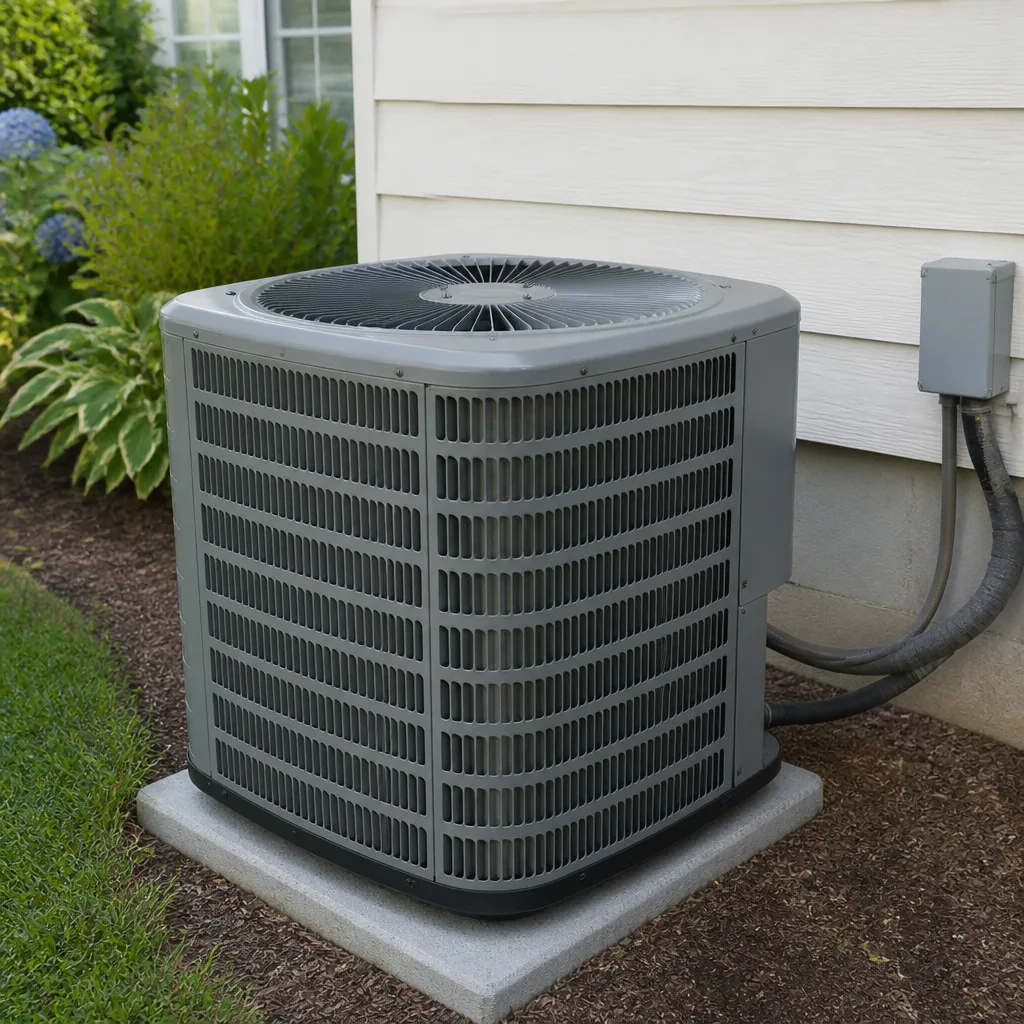 AC repair
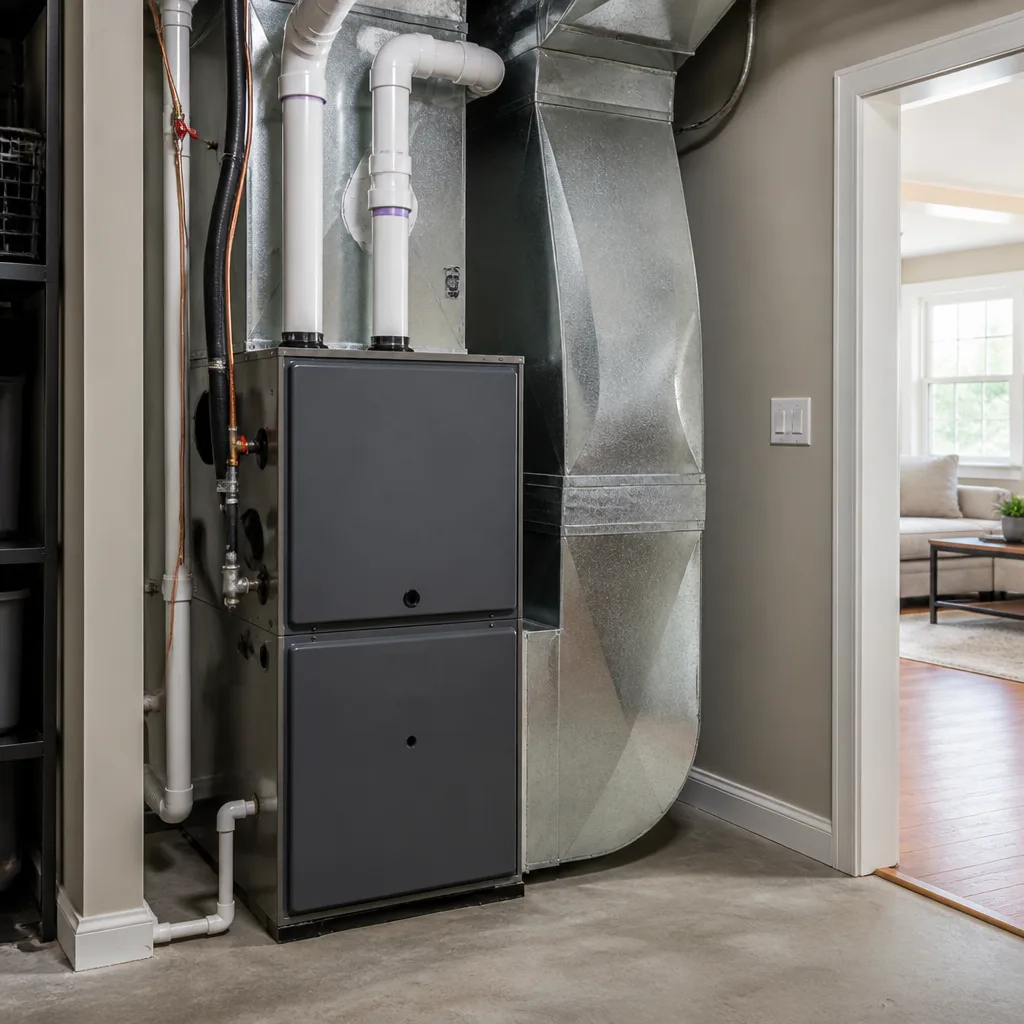 Furnace & heating
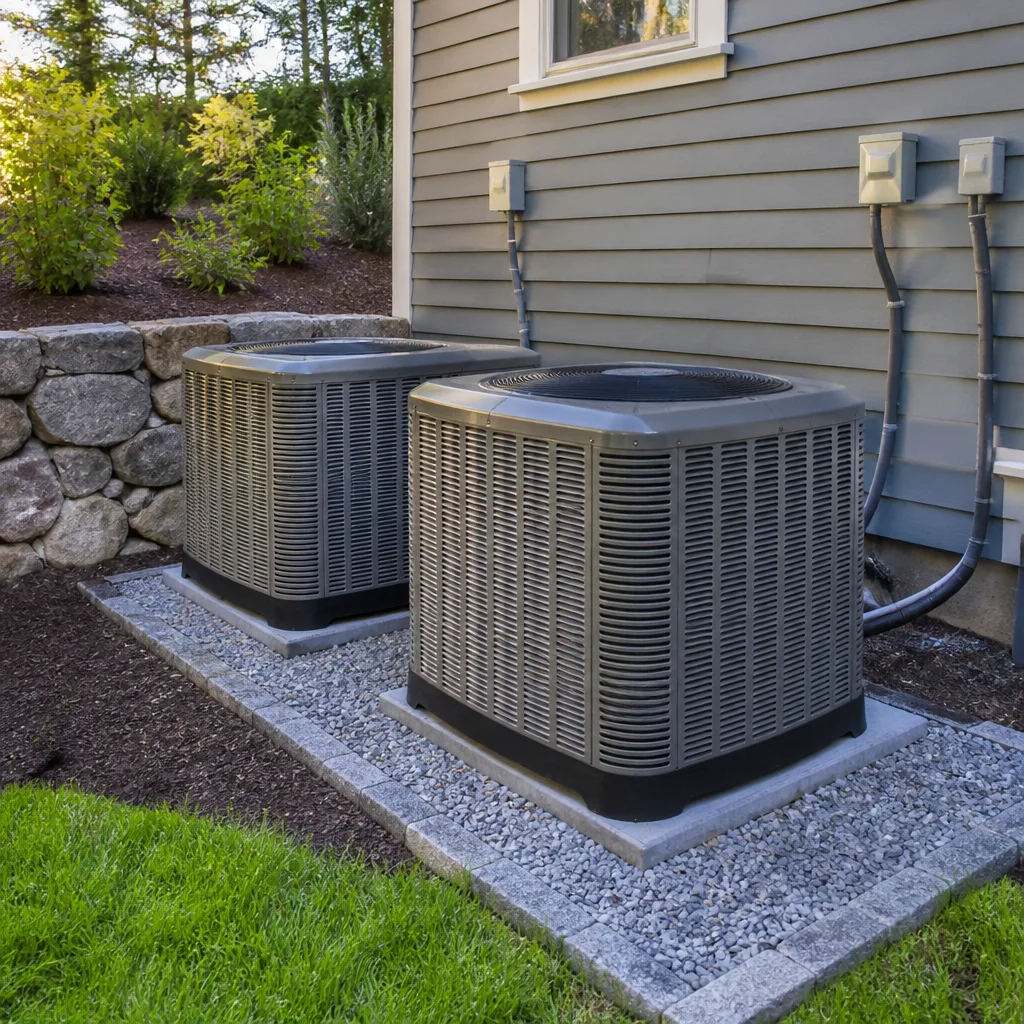 Heat pumps
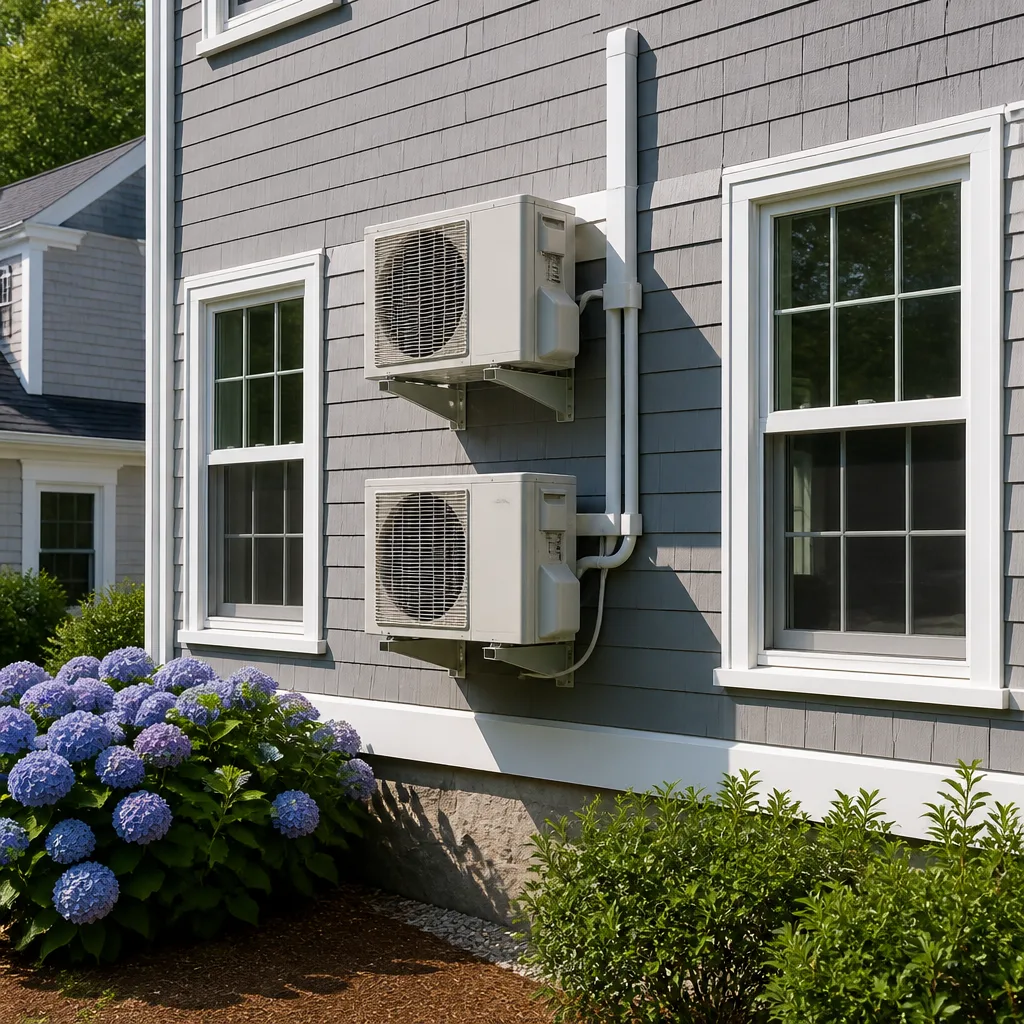 Ductless mini splits
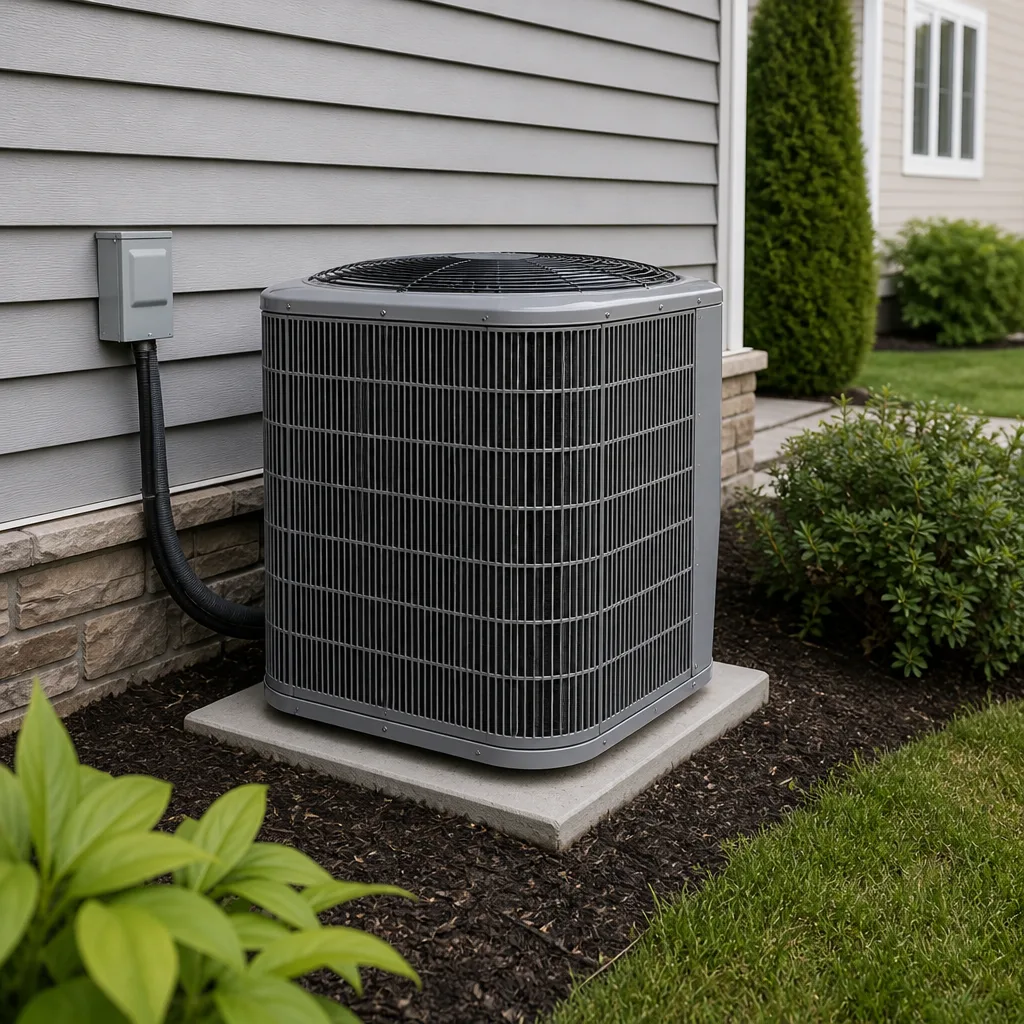 Carrier
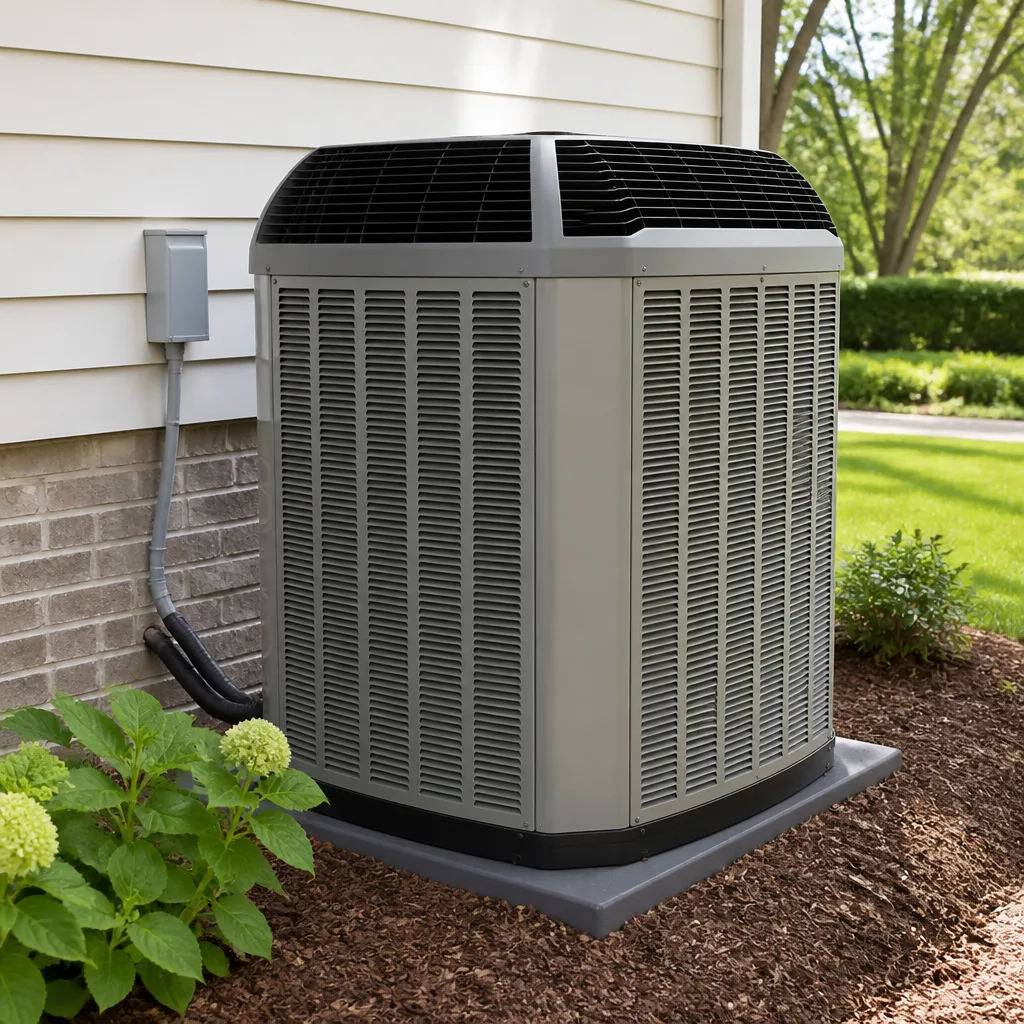 Trane
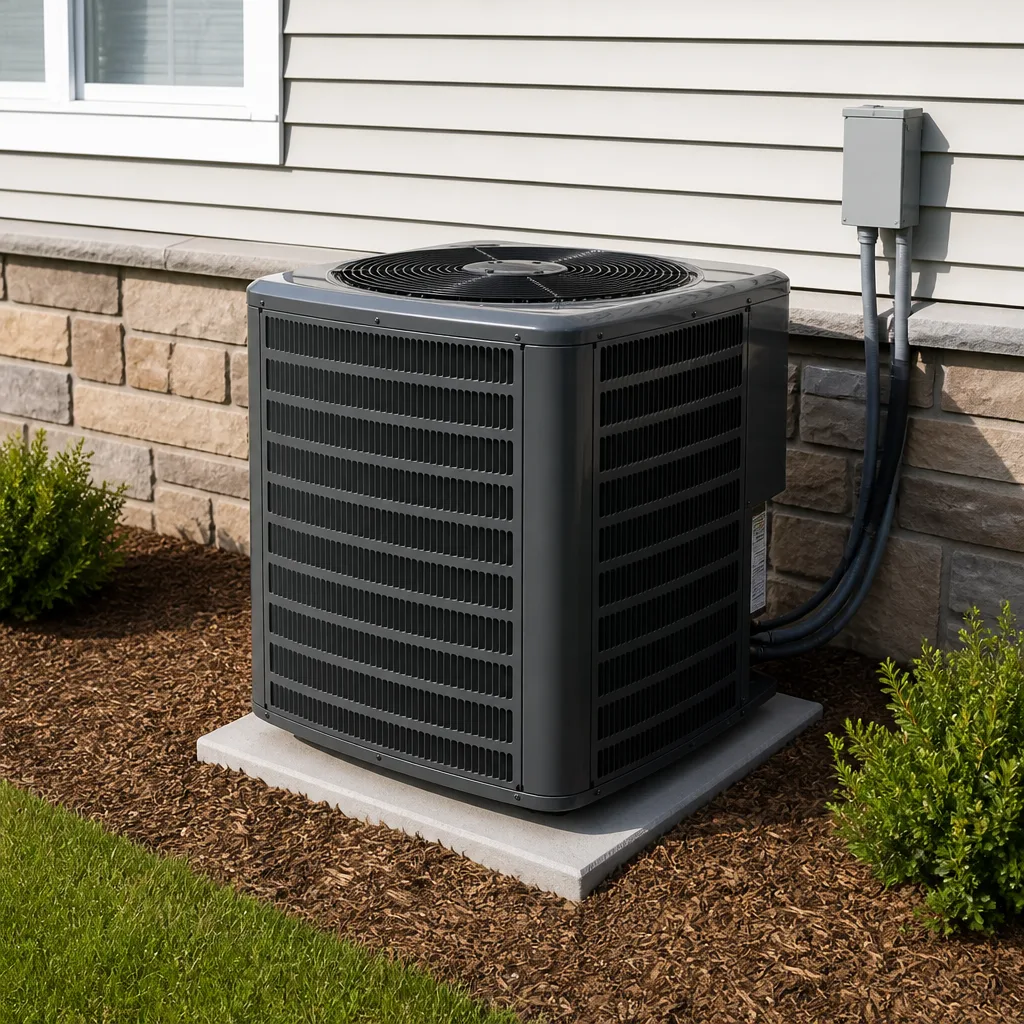 Goodman
Seasonal tune-up and full diagnostic on your Carrier, Trane, or Goodman system - readings shown to you before any repair is proposed
Diagnosis first, numbers second - you approve the repair price before a single part goes in.
Get your free estimateHow Long Does AC Maintenance Take? Timelines and What to Expect
A proper AC tune-up in a desert climate home takes 60 to 90 minutes minimum. If a technician is wrapping up in 25 minutes, something on the checklist didn’t get done. That’s the part nobody tells you when you book the appointment. You’re not standing there with a stopwatch, and even if you were, most homeowners don’t know what a full service visit includes. This guide breaks down a real maintenance visit task by task, with realistic time allocations so you can benchmark what you’re actually getting. We’ll also cover which tasks get skipped during rushed visits, how home size and system age change the timeline, and how Brandt HVAC Enterprise handles appointments in Enterprise so you know exactly who’s coming and what they’ll do before anyone pulls into your driveway.
Quick Answer
A full AC maintenance visit typically takes 60 to 90 minutes for a standard single-system home, and 2 hours or more for larger homes, multiple systems, or equipment that hasn’t been serviced in over a year. In Enterprise, where summer temperatures regularly push past 105°F and the system runs almost continuously from May through September, expect the longer end of that range because there’s more wear to inspect and clean.
Styles & brands we work with
- AC repair
- Furnace & heating
- Heat pumps
- Ductless mini splits
- Carrier
- Trane
- Goodman
Table of Contents
- What Happens During a Full Maintenance Visit? Task-by-Task Breakdown
- Which Tasks Get Skipped During a Rushed Visit?
- What Affects How Long Your AC Maintenance Takes?
- How to Tell a Legitimate Finding From an Upsell
- How Brandt HVAC Enterprise Structures the Appointment
- What You Can Check Yourself vs. What Requires a Technician
- What Does AC Maintenance Cost, and Is It Worth It?
- When Should You Schedule AC Maintenance in Enterprise?
What Happens During a Full Maintenance Visit? Task-by-Task Breakdown
Here’s a realistic walkthrough of a complete maintenance visit. Times are approximate and assume a single system in reasonable condition. We’ve been doing this work long enough to know that “quick tune-ups” leave out entire steps of this list, and you can’t tell unless you know what the full list looks like.
- Introduction and system walkthrough (5-10 minutes). The technician confirms the scope, checks your thermostat settings, and takes a baseline of the system’s current performance.
- Filter inspection and replacement (3-5 minutes). A clogged filter forces the system to work harder and drives up energy costs. This is the simplest part of the visit and the easiest to skip.
- Condensate drain flush (5-10 minutes). In a desert climate, the drain line can clog with dust and algae. A blocked drain causes water damage and shuts the system down.
- Outdoor condenser coil cleaning (15-25 minutes). Dust and debris build up on the coil fast in Enterprise. A dirty coil means the system can’t reject heat efficiently, which raises pressure and wears out the compressor.
- Refrigerant charge check (10-15 minutes). The technician measures the charge against the manufacturer’s spec and looks for leaks. Low refrigerant isn’t a “top it off” problem; it means something leaked.
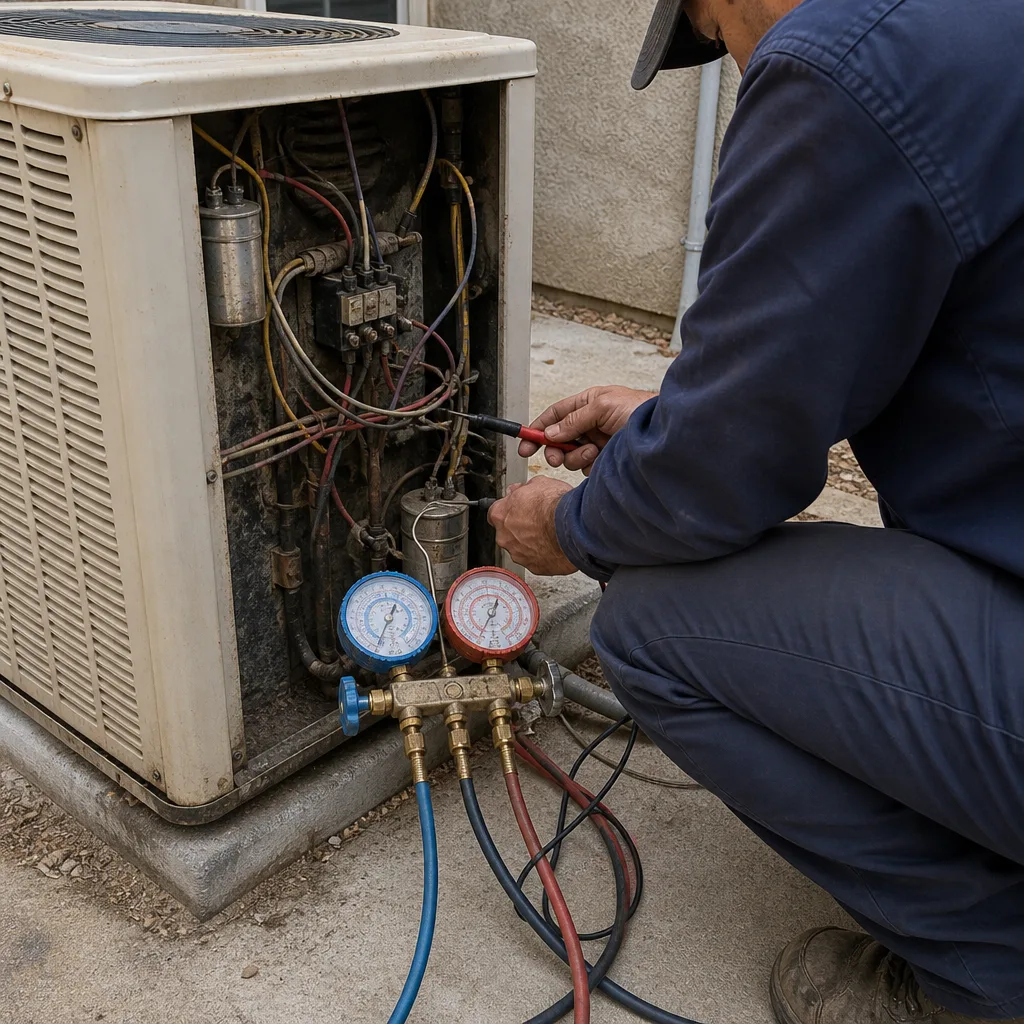
- Electrical component inspection (10-15 minutes). Capacitors, contactors, and wiring connections get tested. A weak capacitor is the most common cause of a summer breakdown and shows up on a meter before it fails.
- Blower wheel inspection and cleaning (10-20 minutes). The blower wheel circulates air through your home. When it’s caked with dust, airflow drops, and the system runs hotter and longer.
- Airflow and temperature split check (5-10 minutes). The technician measures supply and return temperatures to confirm the system is moving air and cooling within spec.
- Thermostat calibration and final report (5-10 minutes). Everything gets tested together, and you should receive a written record of what was checked and what was found.
Add those numbers up and you land between 70 and 120 minutes, depending on the system. Anything under 45 minutes means one or more of the middle steps either didn’t happen or got the once-over. For more on what a full service visit should include, see our AC Maintenance in Enterprise page.
Which Tasks Get Skipped During a Rushed Visit?
Two tasks get cut more than any others: coil cleaning and blower wheel inspection. Both take real time, both are messy, and neither shows up in a homeowner’s usual check-the-thermostat glance. That’s exactly why they’re the first to go when a visit is rushed.
Coil Cleaning
The condenser coil is a finned metal grid on your outdoor unit. In Enterprise, dust, cottonwood fluff, and fine grit coat those fins within a single summer. When the coil is dirty, the system can’t release heat, so it runs longer, pulls more electricity, and puts strain on the compressor. Repeatedly running with a dirty coil is one of the main routes to an early compressor failure, which is the most expensive single component in your system. A 15-minute coil cleaning is cheap insurance against a multi-thousand-dollar repair.
Blower Wheel Inspection
The blower wheel lives inside the indoor air handler. As it spins, it collects dust on its blades. When the blades are coated, the wheel moves less air, which means your home cools unevenly and the evaporator coil can freeze. Checking and cleaning the blower wheel is a 10 to 20 minute job you’ll never see happen unless you know to look for it. Some AC maintenance checklists include a “visual check” of the blower wheel without actually pulling it, which is not the same thing. In our experience, an annual check that skips the blower wheel is leaving the single biggest airflow problem unaddressed.
If you suspect your system got a rushed service in the past, a proper inspection is worth the visit. If airflow is already a problem, our AC Repair in Enterprise team handles troubleshooting beyond routine maintenance.
What Affects How Long Your AC Maintenance Takes?
Three factors swing the timeline more than anything else: home size, system age, and how long it’s been since the last proper service.
- Home size. A 1,200 square foot home with one system runs toward 60 minutes. A 3,000 square foot home with two systems or a zoned setup runs 2 hours or more. More square footage means more supply vents and returns to check, and often a larger air handler with more to clean.
- System age. A unit that’s 5 years old and regularly serviced is quick to work through. One that’s 15 years old and has never had a real tune-up takes longer because the technician is more likely to find worn capacitors, a failing contactor, or a coil that needs an extended cleaning.
- Last maintenance date. If the last proper service was more than 18 months ago, expect the visit to run on the long end because almost everything needs more attention. In a climate where the system runs 5 months straight, “last serviced a while ago” means real wear.
Add to that your thermostat type, the number of zones, and whether the system has a filter cabinet or a standard slot filter. If your home has a very old unit and you’re weighing repair against replacement, read our guide to choosing the right path for your system.
Rough time benchmarks for scheduling:
- Standard single system, serviced within the last year: 60-75 minutes
- Standard single system, overdue for service: 75-90 minutes
- Two systems or a large zoned system: 90-120 minutes
- Two systems, both overdue: 120-150 minutes
- System with known performance complaints: allow 120 minutes minimum
How to Tell a Legitimate Finding From an Upsell
“While I’m here, I found something” is a normal sentence during a real maintenance visit. The system has a lot of moving parts, and some of them wear out. The difference between a legitimate finding and a pressure tactic is whether the technician can show you the problem, the price, and the consequence of skipping it.
A legitimate finding looks like this:
- The technician shows you the failing part or the test result right there at the unit.
- The technician explains what the part does and what happens if it fails.
- You get a written price before any work starts.
- You’re told the repair can wait if it’s not urgent, and what the warning signs are.
- You get a clear “here’s the price either way” without a countdown or a “today only” discount.
An upsell pattern looks like this:
- “Your system is about to fail, we need to act today” with no test result shown.
- A price for a repair or replacement that appears after a vague “found some issues.”
- A wildly low estimate that becomes a much higher invoice once work starts.
- Pressure to add services that weren’t part of the maintenance scope, with no explanation of why now.
- Reluctance to leave without a signed agreement.
At Brandt HVAC Enterprise, every job begins with a written price before any work starts, on every single job, and no work begins before you’ve seen and agreed to the cost. That’s not a sales tactic; it’s the structure of the appointment. If a repair is needed, our Furnace Repair in Enterprise team follows the same rule when heating season rolls around.
How Brandt HVAC Enterprise Structures the Appointment
You should know who’s coming, what they’ll do, and roughly when they’ll finish before the technician pulls into your driveway. That’s the standard we hold ourselves to, and it’s what the Threshold Verified standard is built around.
- You call and a live person answers. Our phones are staffed 24 hours a day, 7 days a week, by a real person. No voicemail, no callback queue, no automated phone tree.
- You get a name and a photo before arrival. Every technician is background-checked and identity-verified. You’ll know who’s coming before the doorbell rings.
- They arrive with a photo ID badge and show it at the door. If anyone arrives who you weren’t told to expect, that visit is on us and we make it right.
- You get a written price before any work starts. The scope of the visit is agreed up front, so there’s no surprise at the end.
- You get a written report of what was checked and what was found. The report tells you what’s healthy, what’s wearing, and what’s fine for now.
- You get a written guarantee on the work. Every repair includes a written guarantee, and if a repair fails within the guarantee period, we return at no charge under the 365-Day Done Right Promise.
That structure is the same whether you’re in a small home or a large property, and it’s the same across every Brandt HVAC location, each of which is independently owned and operated. We’re part of the Threshold Group family, and the name Brandt comes from an old word for a firebrand, which is a fitting name for work that keeps a home warm or cool.
What You Can Check Yourself vs. What Requires a Technician
Some of the maintenance checklist is safe for a homeowner. Some of it involves electrical components and refrigerant lines and shouldn’t be touched without training and the right tools. Here’s how to split the list.
Safe for you to check between service visits:
- Replace the air filter every 1 to 3 months. In Enterprise dust, lean toward 30 days during peak summer.
- Keep the outdoor unit clear of weeds, debris, and shade-cloth that blocks airflow.
- Check that the condensate drain line isn’t dripping where it shouldn’t.
- Listen for new or louder sounds when the system kicks on.
- Write down any temperature swings or odd smells you notice, so you can tell the technician.
Best left to a trained technician:
- Anything involving the electrical panel, capacitors, contactors, or wiring. These hold dangerous voltage even when the power is off, and a careless move can injure or worse.
- Refrigerant line work. Refrigerant is a pressurized system; a leak or a bad connection is a safety hazard, not a DIY job.
- Coil cleaning. The coil is delicate, and the cleaning chemicals and pressures involved require training.
- Blower wheel removal and cleaning. The wheel is inside the air handler and often behind electrical controls.
If you’re not sure whether something falls into the safe category, don’t guess. A quick call is a reasonable move. Our technicians have up to 23 years of experience working with Carrier, Trane, Daikin, and other major brands.
What Does AC Maintenance Cost, and Is It Worth It?
AC maintenance pricing varies by market, but here’s a realistic range for Enterprise. A standard maintenance visit for a single system typically runs in the low-to-mid hundreds of dollars, and a two-system home runs higher. What you’re paying for is time on the equipment and the report that documents what was checked.
Where the value shows up is in avoiding emergency repairs. A $150 to $250 maintenance visit that catches a weak capacitor or a dirty coil costs far less than a summer breakdown repair or, worse, an early system replacement. Across our work in Enterprise, we regularly see system failures in July and August that trace back to a coil that hadn’t been cleaned in two years or a capacitor that had been running on borrowed time since spring. Maintenance catches those before they strand a family in 110-degree heat.
Every repair we do includes a written guarantee, and no work starts until you’ve seen and agreed to a written price. If a maintenance visit turns up a repair, you’ll know the price before anything is touched. For homeowners deciding between repair and replacement, the rule of thumb is if the repair costs more than a third of a new system’s price and the system is over 12 years old, replacement is usually the better value. If the repair is modest and the system is younger, repair wins. Call us and we’ll walk through the numbers with you.
When Should You Schedule AC Maintenance in Enterprise?
Schedule service in early spring, before the first heat wave. In Enterprise, the cooling season starts earlier than most of the country, and by late April the system is running every day. If you wait until the first 100-degree day, you’re competing with everyone else for an appointment slot and you’re testing a system that hasn’t been touched in a year.
The best window is March through early May. Spring maintenance catches problems when the system is still idle, so a weak capacitor or a dirty coil gets fixed before it becomes a no-cooling emergency in July. If you missed the spring window, a fall visit still helps, because it resets the system for the next summer and heads off winter heating failures at the same time. In our experience, homeowners in Enterprise who schedule maintenance in the spring spend less on summer repairs and deal with fewer unexpected breakdowns.
Common Mistakes to Avoid
- Assuming a quick visit is a good visit. A 25-minute appointment isn’t efficient; it’s incomplete. If the visit ends before the technician has checked the coil and the blower wheel, ask what was skipped.
- Skipping service because the system is “working fine.” Most system failures start as small problems that a maintenance visit would catch. Waiting for a breakdown is the expensive way to find that out.
- Stretching the filter change interval during dusty months. In Enterprise, a filter that’s clean in April can be clogged by June. Check it monthly in summer.
- Letting the outdoor unit get buried in debris. Weeds, cottonwood fluff, and garden supplies stacked against the condenser choke airflow and force the system to work harder.
- Accepting a verbal price. If you’re quoted a number and work starts without a written price, you have no protection if the invoice changes. Insist on a written price before any work begins.
- Hiring a company that won’t tell you who’s coming. If the scheduler can’t give you a name and a photo, you’re opening the door to a stranger with no way to verify who they are.
- Ignoring the report. If the technician’s written report shows a component that’s wearing, plan the repair before the part fails. Replacing a part on a schedule is a fraction of the cost of a mid-summer breakdown.
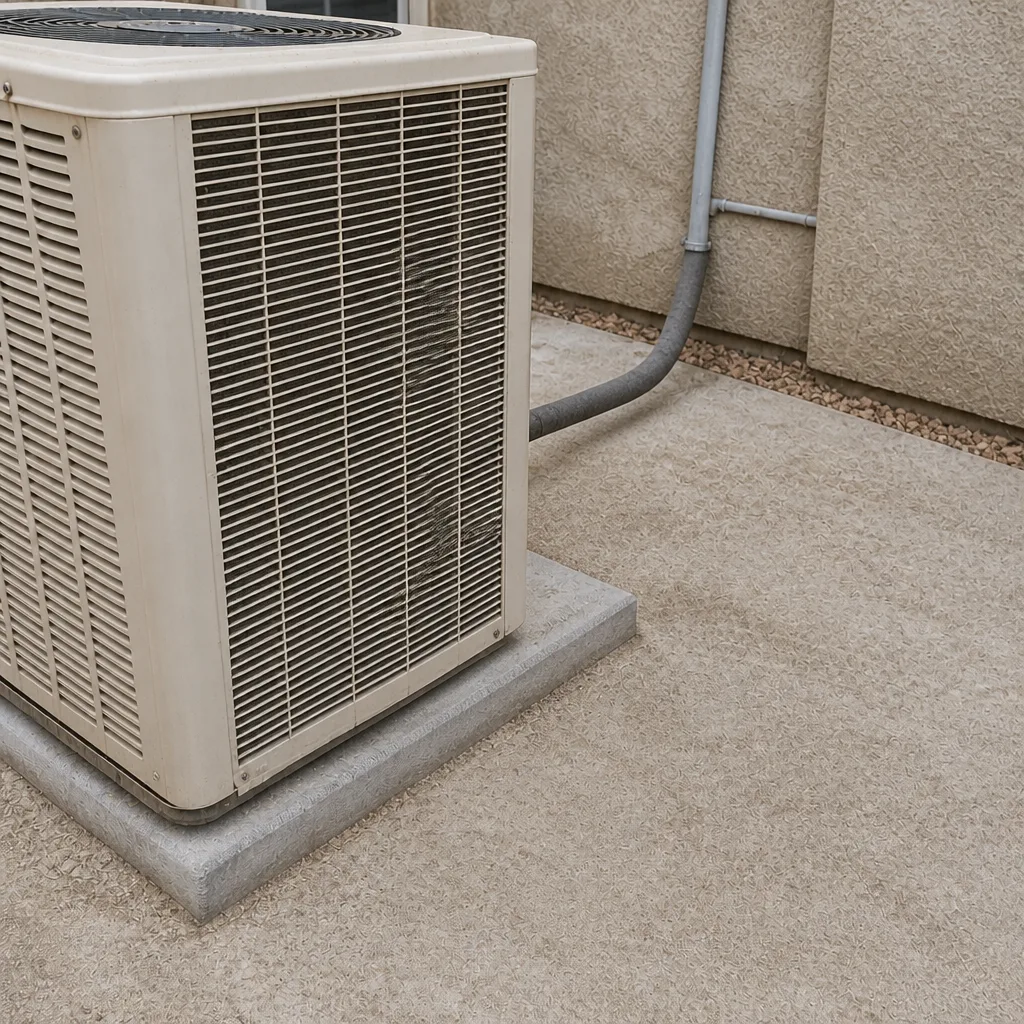
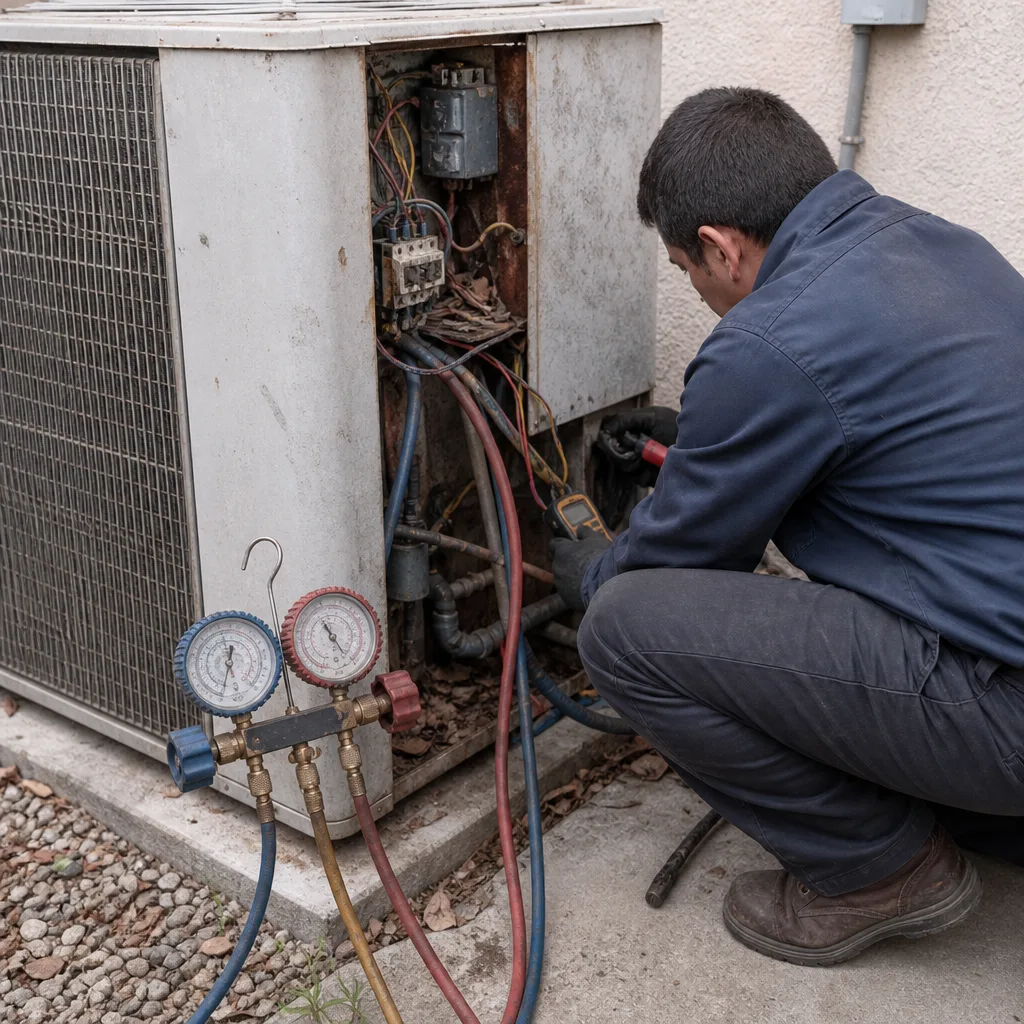
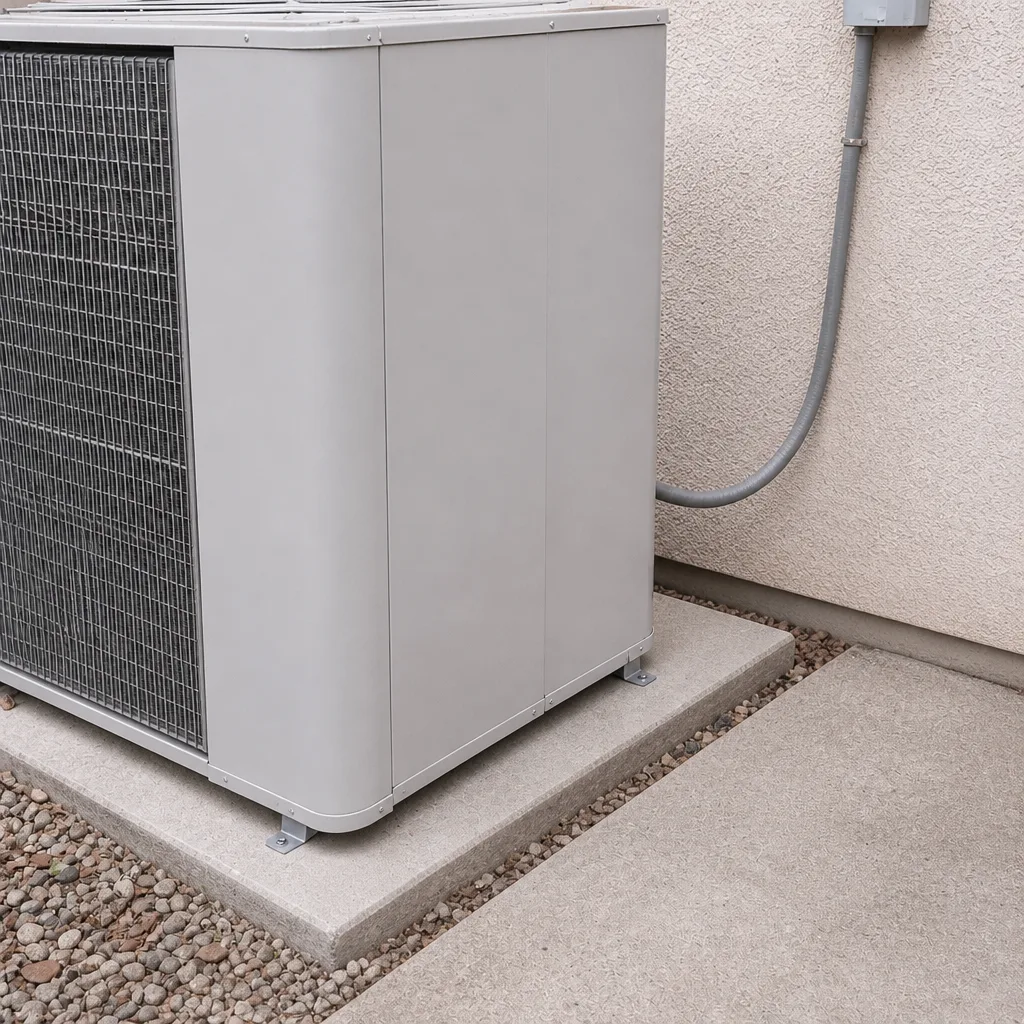
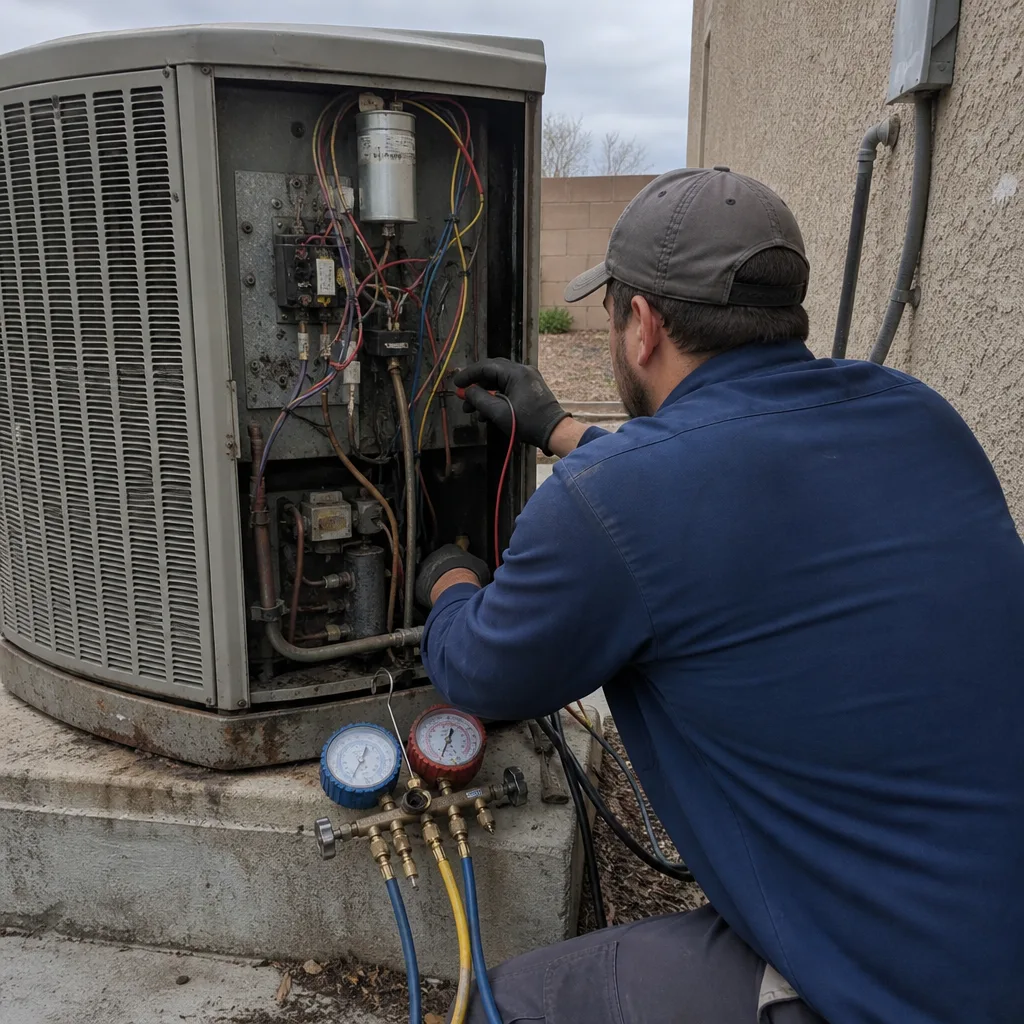
See the difference
 Before
 After
 Before
 After
 Before
 After
When to Call a Professional
Call a professional if your system hasn’t been serviced in a year, if your energy bills have crept up without a rate change, if any room in the house is noticeably warmer than the rest, or if the system is making new or louder noises. Call immediately if the AC stops cooling, if you see water pooling around the indoor unit, or if you smell a burning or musty odor when the system runs. Those symptoms point to problems that get worse, not better, and a few rapid cycles can turn a small repair into a compressor replacement. Brandt HVAC Enterprise offers free estimates in Enterprise and a live person answers the phone 24 hours a day, 7 days a week. Call (844) 797-9490 and we’ll tell you exactly who’s coming and how long to expect the visit to take.
Frequently Asked Questions
AC maintenance usually takes 60 to 90 minutes for a standard single-system home, and 2 hours or more for large homes, multiple systems, or equipment that hasn’t been serviced in over a year. If a technician finishes in 25 minutes, parts of the checklist were likely skipped. Call (844) 797-9490 for a free estimate and to schedule a full visit.
Expect the longer end of the range in Enterprise: 75 to 90 minutes for a single system, and 2 hours or more for larger homes. The desert climate means more dust, more coil buildup, and more wear, so the inspection and cleaning steps take longer than in cooler, more humid climates. Call for a free estimate and we’ll give you a realistic time window.
You can safely replace air filters, keep the outdoor unit clear of debris, and check for visible water leaks. Coil cleaning, blower wheel inspection, refrigerant work, and electrical component testing require training and the right tools, and some of it involves dangerous voltage. Leave those to a technician; a wrong move near a capacitor or refrigerant line can injure you. Call (844) 797-9490 to schedule a professional visit.
Coil cleaning and blower wheel inspection are the two most commonly skipped tasks. Both take real time and neither is visible to a homeowner, which is why they’re the first to go when a visit is rushed. Skipping them shortens the life of the compressor and the system as a whole. Call for a free estimate and ask for a full checklist.
AC maintenance in Enterprise typically runs in the low-to-mid hundreds of dollars for a single system, and more for homes with two systems or larger equipment. What you’re paying for is time on the equipment plus a written report of what was found. Call (844) 797-9490 for a written price before any work starts.
You get a written price for the repair before any work starts, plus a clear explanation of what the failing part does and what happens if it’s ignored. You decide whether to fix it now or wait. If a repair fails within the guarantee period, we return at no charge under the 365-Day Done Right Promise. Call (844) 797-9490 for a free estimate.
The Bottom Line
A real AC maintenance visit takes 60 to 90 minutes for a standard single-system home, and 2 hours or more for larger or overdue systems. The tasks most likely to be skipped in a rushed visit are coil cleaning and blower wheel inspection, and both matter in Enterprise, where dust and summer heat punish missed maintenance. Know the timeline before you book, ask what’s included, insist on a written price, and know who’s coming before they arrive. Brandt HVAC Enterprise answers the phone with a live person 24 hours a day, shows you a name and photo before arrival, and gives you a written price before any work starts. Call (844) 797-9490 for a free estimate and a maintenance visit that actually covers the full checklist.
Written by the team at Brandt HVAC Enterprise.