
Last updated November 17, 2026
 AC repair
 Furnace & heating
 Heat pumps
 Ductless mini splits
 Carrier
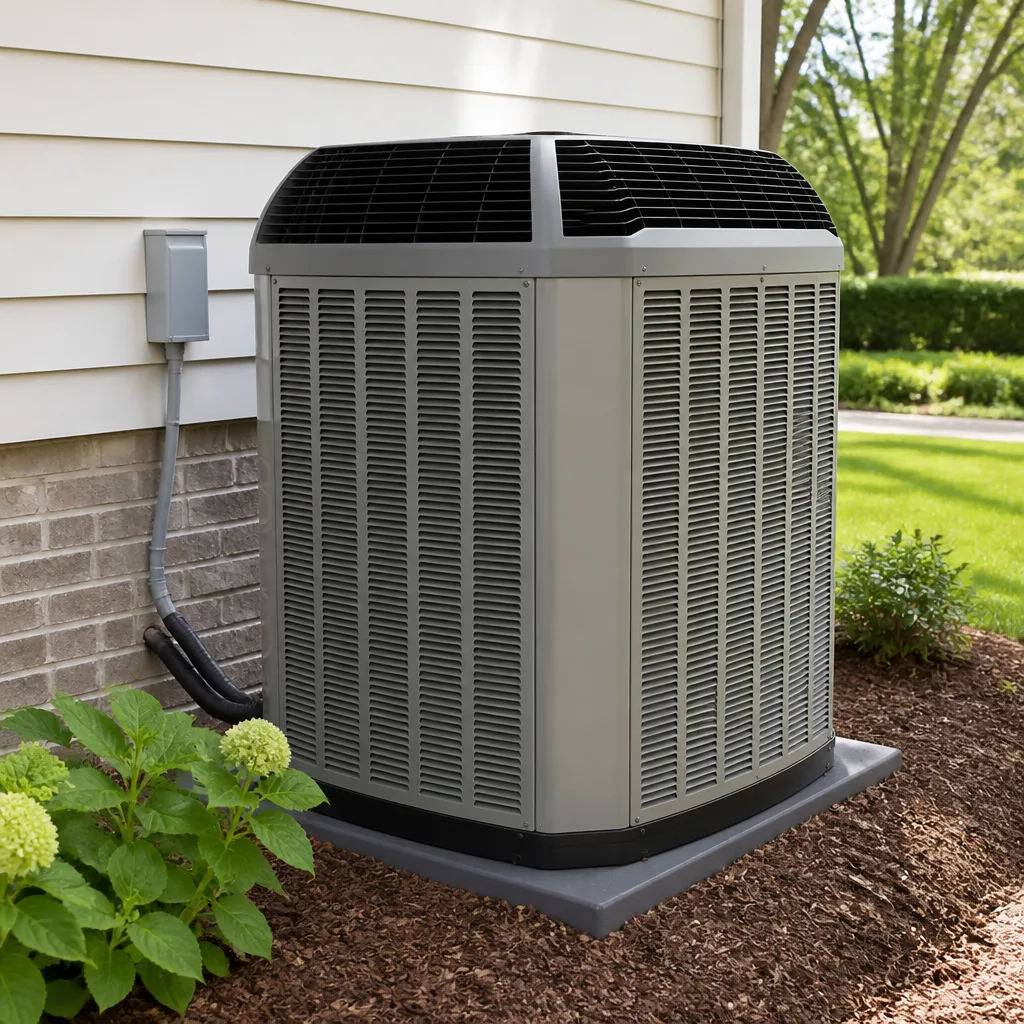 Trane
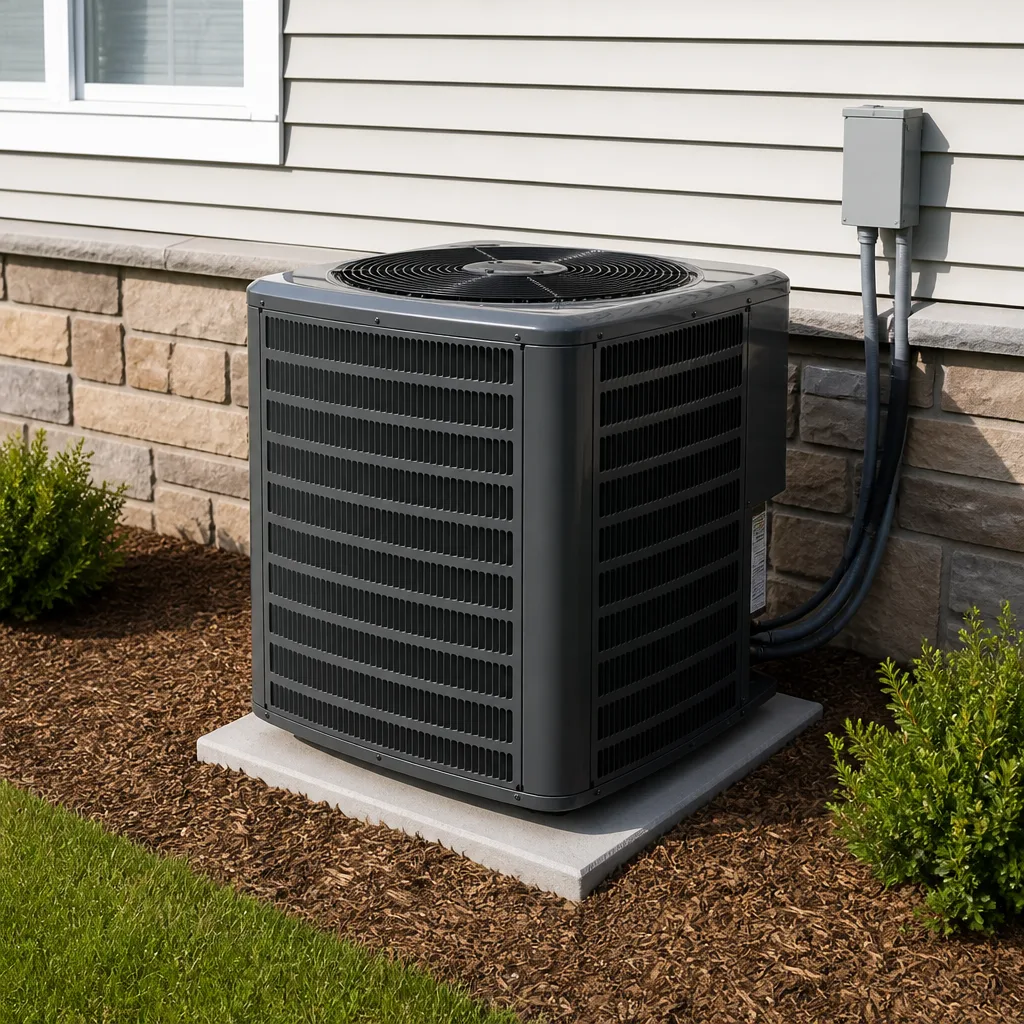 Goodman
Seasonal tune-up and full diagnostic on your Carrier, Trane, or Goodman system - readings shown to you before any repair is proposed
Diagnosis first, numbers second - you approve the repair price before a single part goes in.
Get your free estimateSeasonal HVAC Care for Enterprise: Year-Round Homeowner’s Guide
By the time most Enterprise homeowners schedule their spring tune-up in May, daytime highs are already in the mid-90s and HVAC companies are booking 10 – 14 days out. The service window that actually prevents summer breakdowns is February and March, when the desert is mild and technicians aren’t buried. Enterprise doesn’t run on four seasons. It runs on two brutal ones and two short transitions, and treating HVAC care as a twice-a-year event means missing the exact weeks that keep your system alive through July. This guide maps every task to Enterprise’s real climate calendar, not a national template, so you know what to do and when.
Quick Answer
In Enterprise, HVAC care is built around four climate phases, not four seasons: a February – March cool window for coil cleaning and ductwork, an April – June ramp-up for pre-summer checks, a July – September monsoon stretch for surge and dust protection, and an October – November cooldown for the refrigerant and heating checks most homeowners skip. Book your tune-up in February or March, not May, and you’ll avoid both the 10 – 14 day wait and the summer demand pricing. The single most-skipped task is the October refrigerant check, which catches leaks before they strand you the following July.
Styles & brands we work with
- AC repair
- Furnace & heating
- Heat pumps
- Ductless mini splits
- Carrier
- Trane
- Goodman
Table of Contents
- Enterprise’s Four Climate Phases (and What Goes in Each)
- The February – March Cool Window: Your Best Booking
- Monsoon Prep (July – September): Dust, Surges, and Outdoor Equipment
- The October Cooldown Check Everyone Skips
- Enterprise’s Short, Hard Heating Season
- Building Your 12-Month Enterprise HVAC Calendar
- Common Mistakes to Avoid
- When to Call a Professional
Enterprise’s Four Climate Phases (and What Goes in Each)
National maintenance checklists assume a slow spring warm-up and a long, gradual fall. Enterprise doesn’t offer either. Our year splits into four distinct phases, and each one has a single task that matters more than the rest. Miss the phase and the work gets harder, pricier, and more crowded the following season.
Here’s how the calendar actually breaks down in Enterprise:
- Cool window (February – March): Mild days, low demand, easiest booking. This is when coils get cleaned and ductwork gets sealed, because a technician can get on the roof or into the attic without heat-stroke conditions. The one task: coil cleaning and duct inspection.
- Ramp-up (April – June): Temps climb into the 90s and systems start running hard. This is the pre-summer performance check. The one task: a full cooling tune-up with refrigerant and capacitor testing.
- Monsoon stretch (July – September): Blowing dust, lightning, and grid surges. The one task: outdoor equipment and electrical protection.
- Cooldown (October – November): The short transition everyone ignores. The one task: the October refrigerant check and the November heating-component test.
What makes this matter in Enterprise specifically is that our summer is long enough that a system installed or serviced on a national “spring” schedule is already a month behind by the time the first 100°F day hits. If you want to work with a team that plans around this reality, our AC maintenance in Enterprise service is built on exactly these windows, not a generic twice-a-year template.
The February – March Cool Window: Your Best Booking
February and March are the best months to book HVAC work in Enterprise, full stop. Daytime highs sit in the comfortable range, demand for service is at its lowest, and you’re not competing with every other homeowner who suddenly remembered their AC in May. The math is simple: book in February, get scheduled in days. Book in May, wait 10 – 14 days and pay summer demand rates.
This window is when three specific jobs belong:
- Evaporator and condenser coil cleaning. Desert dust packs into coil fins over the winter. A dirty coil makes the system work harder and can knock efficiency down by double digits. Cleaning it in February means the system starts summer clean, not limping.
- Ductwork repair and sealing. Leaky ducts in an attic that hits 140°F in July are a nightmare to access. In February, an attic is workable. Sealing leaks and reconnecting loose joints now means you’re not paying to cool your attic all summer.
- Full performance check and refrigerant verification. This is the tune-up that matters most. It’s also the one most homeowners delay until the system fails.
We’ve seen plenty of Enterprise homes where a February coil cleaning and a sealed duct run turned a struggling 12-year-old system into something that made it another five summers. That’s not a sales pitch. It’s what happens when you do the right task in the right month.
Pair this window with a proper AC repair in Enterprise visit if you noticed any issues the previous summer. Fixing a weak capacitor or a slow drain in February is cheap. Fixing it in July, when the system is down and everyone’s calling at once, is neither cheap nor fast.
Monsoon Prep (July – September): Dust, Surges, and Outdoor Equipment
Enterprise’s monsoon season runs roughly July through September, and it does two things to HVAC systems that national guides rarely mention: it fills the air with blowing dust and grit, and it throws power surges at outdoor equipment during lightning activity. Both hit the components most likely to fail.
Here’s what actually breaks during monsoon, and how to protect against it:
- Capacitors. The start-and-run capacitors that kick your compressor on are sensitive to heat and voltage spikes. A surge event can take one out in an afternoon, and a failed capacitor means no cooling on the hottest day of the year. Ask for capacitor testing before monsoon and again after.
- Control boards. The circuit board that runs your system is the most expensive part to replace after a surge. A whole-home surge protector or a dedicated HVAC surge module is inexpensive insurance given how much lightning Enterprise sees in August.
- Outdoor condenser coils. Blowing dust coats the outdoor unit and clogs the fins. Rinse the unit down after a major dust event (with the power off) or have it cleaned, and keep the area around it clear of debris.
- Drain lines. Monsoon humidity means more condensate. A clogged drain line shuts the system down and can damage the pan and surrounding structure. Flush it or have it flushed before the season.
A note on the outdoor unit: keep vegetation and stored items at least two feet away, and don’t cover the unit during monsoon unless you’re protecting it from a direct hail event. A covered unit can’t breathe, and heat buildup is worse than the dust.
The October Cooldown Check Everyone Skips
October is the most-skipped maintenance month in Enterprise, and it’s the one that costs homeowners the most the following summer. When the heat breaks in October, people stop thinking about their AC. That’s exactly when a refrigerant check should happen.
Here’s why the timing is right. Refrigerant leaks are slow and quiet. Over a summer, a small leak drops your charge, and the system fights to keep up without ever fully failing. By the following July, that small leak has grown into a no-cooling emergency. Checking refrigerant levels in October, while the system is still running but demand is low, catches the leak before it becomes a July crisis. If a recharge is needed, it’s a planned cost rather than an emergency one. (A refrigerant recharge, in plain terms, means refilling the fluid that moves heat out of your home.)
October is also the right month to schedule a full system inspection so you go into winter knowing exactly what shape everything is in. If a repair does come up, our furnace repair in Enterprise team can handle the heating side, and every job starts with a written price before any work begins.
Enterprise’s Short, Hard Heating Season
Enterprise’s heating season is short, but it’s hard on two components in particular: heat strips and ignitors. When the first cold snap hits in late November or early December, systems that sat idle all summer get called into duty suddenly, and the parts most likely to have quietly degraded are the ones that spark or heat.
The November test that matters:
- Heat strips (for heat-pump and electric systems). Heat strips are the electric resistance elements that provide backup or primary heat. They draw a lot of current and can degrade or fail after a long idle summer. A technician tests them under load, not just visually, because a strip that glows but doesn’t produce rated heat is a problem you won’t notice until a cold night.
- Ignitors (for gas furnaces). The ignitor is the part that lights the burner. It’s a wear item, and an ignitor that’s cracked or weak will fail on the first cold morning of the year, usually the worst possible time. Testing it in November is a few minutes of work. Replacing it as an emergency is a service call. Most igniter replacements run $150 – $300, parts and labor included.
- Carbon monoxide and safety checks. Any gas-fired heating check should include a combustion and CO safety test. This is a safety item, not a tune-up nicety.
If you’re in Enterprise and your system is a Bryant or American Standard heat pump, the November heat-strip test is especially worth scheduling. Those systems run heat strips more than homeowners expect during our cold snaps. Don’t wait for the first freeze to find out they’re weak.
Building Your 12-Month Enterprise HVAC Calendar
Here’s a printable framework tied to Enterprise’s actual weather milestones. Pin it to the fridge or save it to your phone. The point isn’t perfection; it’s doing the right task in the right month so nothing lands on the worst possible day.
- January: Review last year’s service records. Note any repairs that were recommended but deferred.
- February: Book your coil cleaning and duct inspection. This is the cool window.
- March: Ductwork sealing and any deferred repairs. Replace filters.
- April: Full cooling tune-up. Refrigerant and capacitor testing. Clean the outdoor unit.
- May: Check the drain line and pan. Test the thermostat schedule. Replace filters again.
- June: Pre-summer performance check if you didn’t do April. Confirm outdoor unit clearance.
- July: Monsoon prep: surge protection, capacitor check, clear debris. Post-dust-event coil rinse.
- August: Mid-monsoon inspection. Watch for short-cycling or weak cooling.
- September: End-of-monsoon check. Clean the outdoor unit after the dust season.
- October: The cooldown check. Refrigerant verification and full inspection.
- November: The heating test. Heat strips or ignitor check before the first freeze.
- December: Replace filters, test the heating system under load, review the year’s repairs.
If you want to see how this framework maps to a full system tune-up, our maintenance service page walks through exactly what a professional visit covers, month by month. And if you’re new to Enterprise or just want the lay of the land, the Brandt HVAC Enterprise home page explains how we work.
Common Mistakes to Avoid
- Booking your tune-up in May. By May, Enterprise is already in the mid-90s and everyone is calling at once. You’ll wait 10 – 14 days and pay summer demand prices for a service that would have been faster and cheaper in February.
- Skipping the October refrigerant check. This is the single most expensive mistake in the Enterprise climate. A slow leak caught in October is a recharge; missed, it’s a no-cooling emergency the following July.
- Ignoring the heating system until the first freeze. Heat strips and ignitors degrade quietly. Test them in November, not on the first 35°F morning when the system won’t light.
- Covering the outdoor unit during monsoon. It can’t breathe. Keep it clear, rinse it after dust events, and protect it from surges, not from air.
- Assuming a twice-a-year tune-up is enough. The February and October windows matter more than the count. Two visits in the wrong months do less than one in the right month.
- Letting monsoon dust cake the condenser coil. A clogged outdoor coil fights all summer. Rinse it down after big dust events, and clear the area around it.
- Deferring recommended repairs into the “shoulder” months and then forgetting them. The quiet months are exactly when you should book them, because that’s when scheduling is easy and pricing is steady.
When to Call a Professional
Some tasks are DIY-friendly (filter changes, keeping the outdoor unit clear), but others are genuinely dangerous to touch. High-voltage capacitors, refrigerant handling, heat-strip and ignitor testing, and gas combustion checks all require training and the right tools, and the wrong move can cause serious injury. If your system won’t cool, won’t heat, short-cycles, smells like burning, or trips the breaker, call a professional rather than opening the cabinet. In Enterprise, Brandt HVAC Enterprise offers free estimates, and every repair comes with a written guarantee and a written price before any work starts. We send a background-checked, uniformed technician to you by name and photo before the visit, with a photo ID badge shown at the door. If anyone arrives who you weren’t told to expect, that visit is on us. Call (844) 797-9490.
See the difference
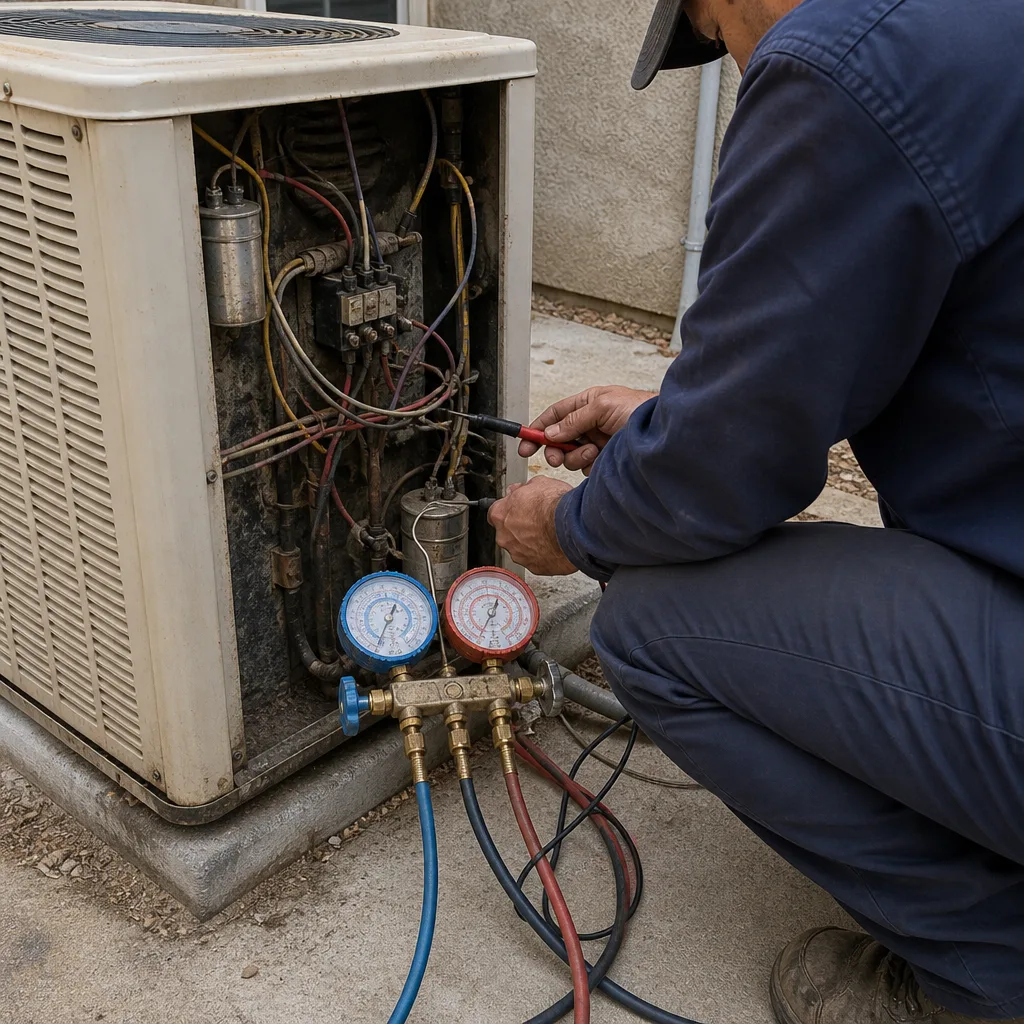 Before
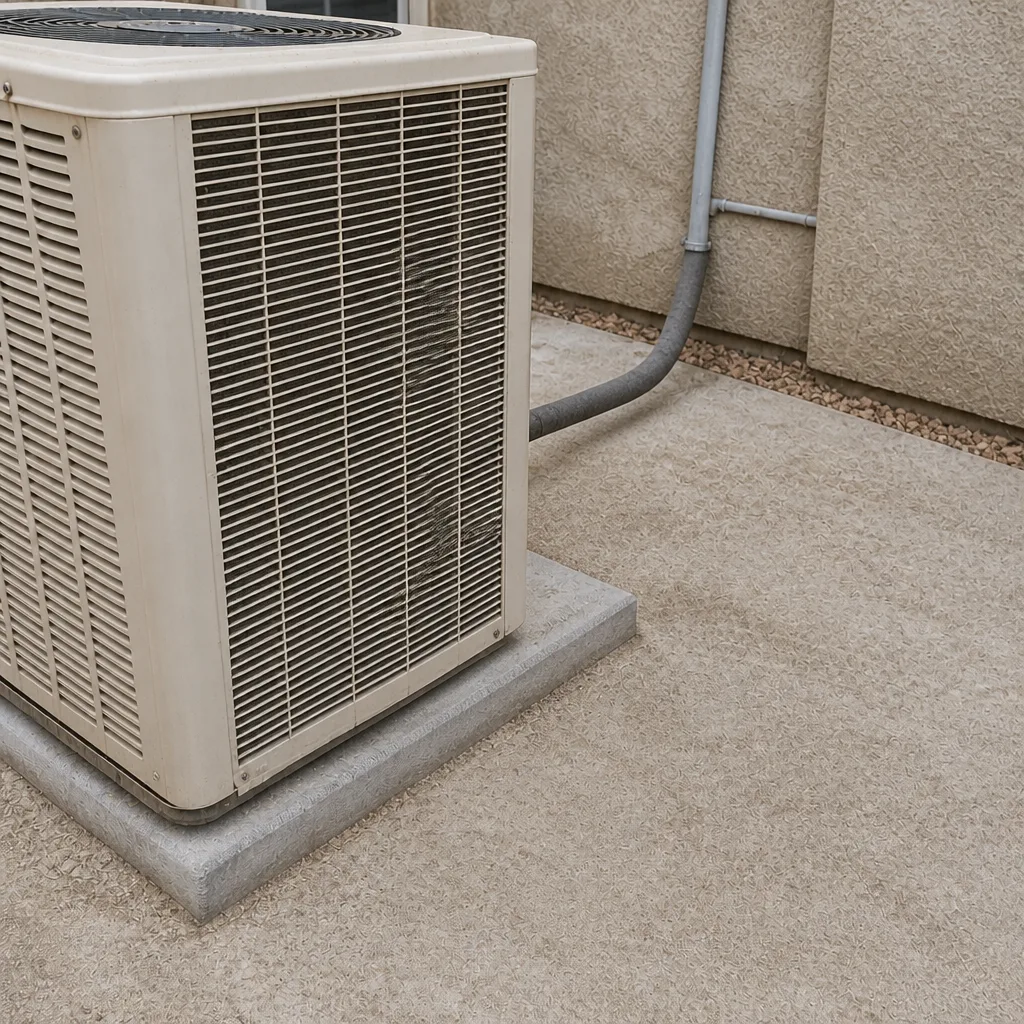 After
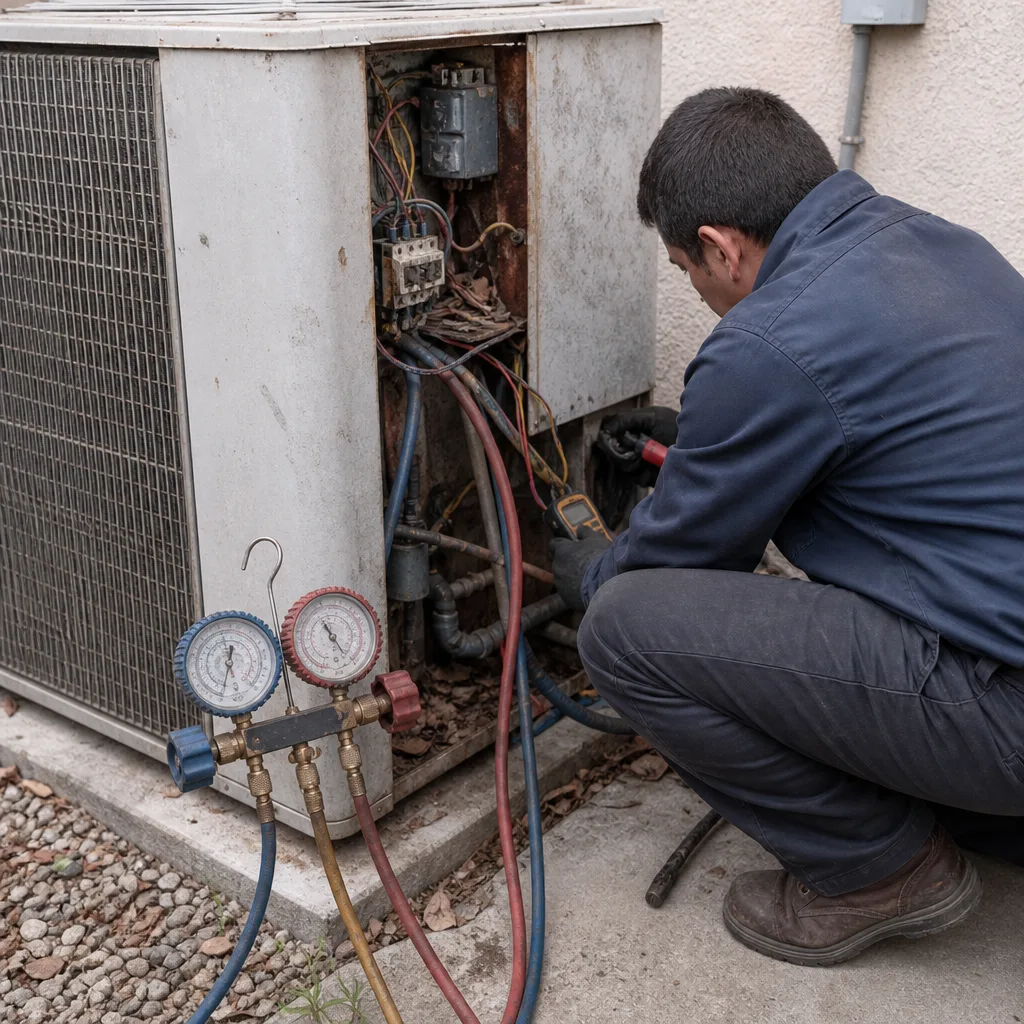 Before
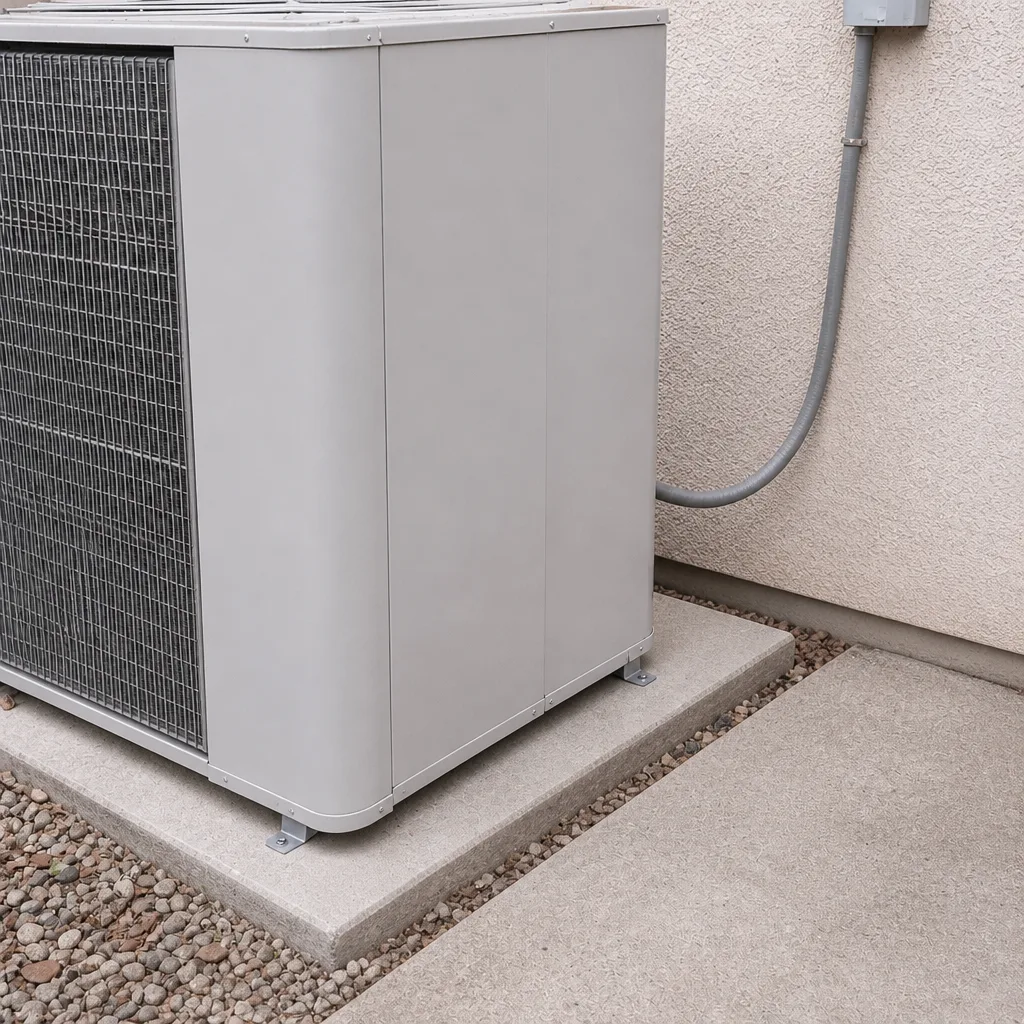 After
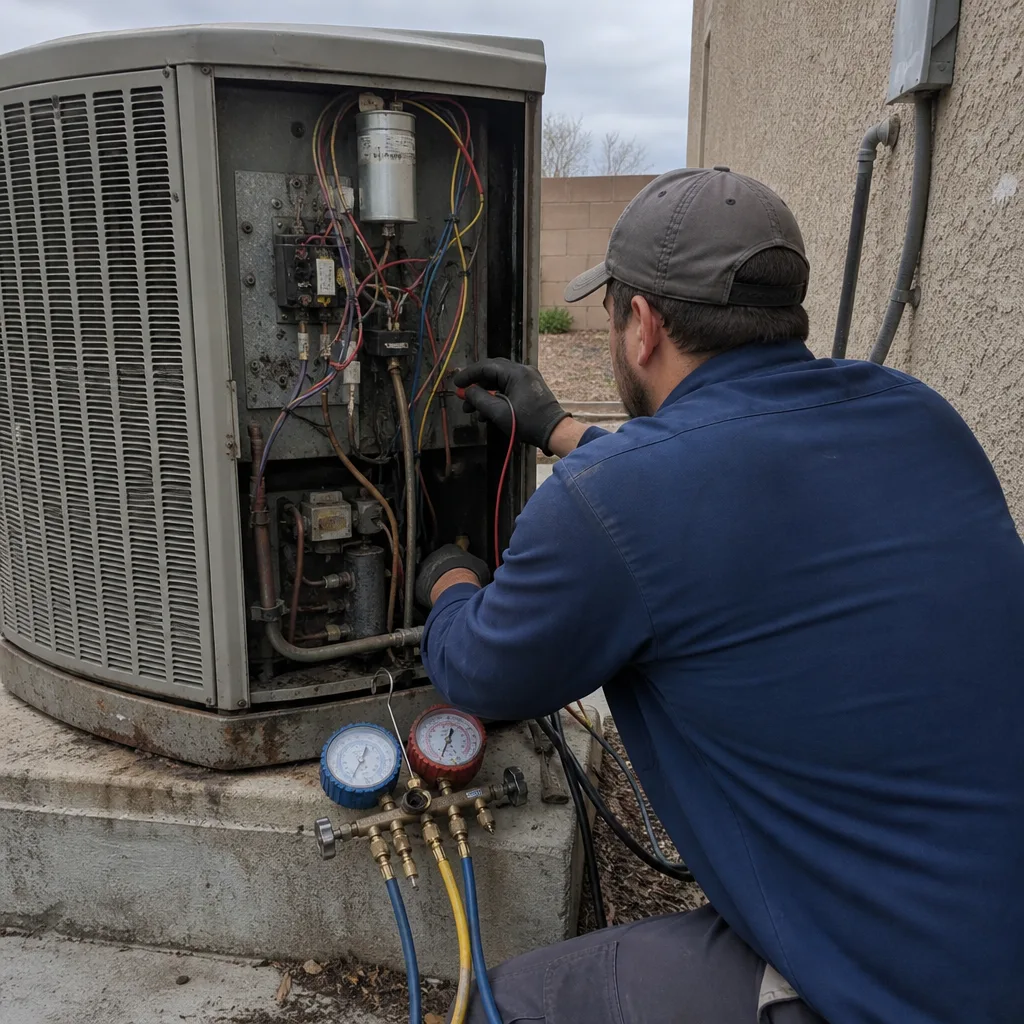 Before
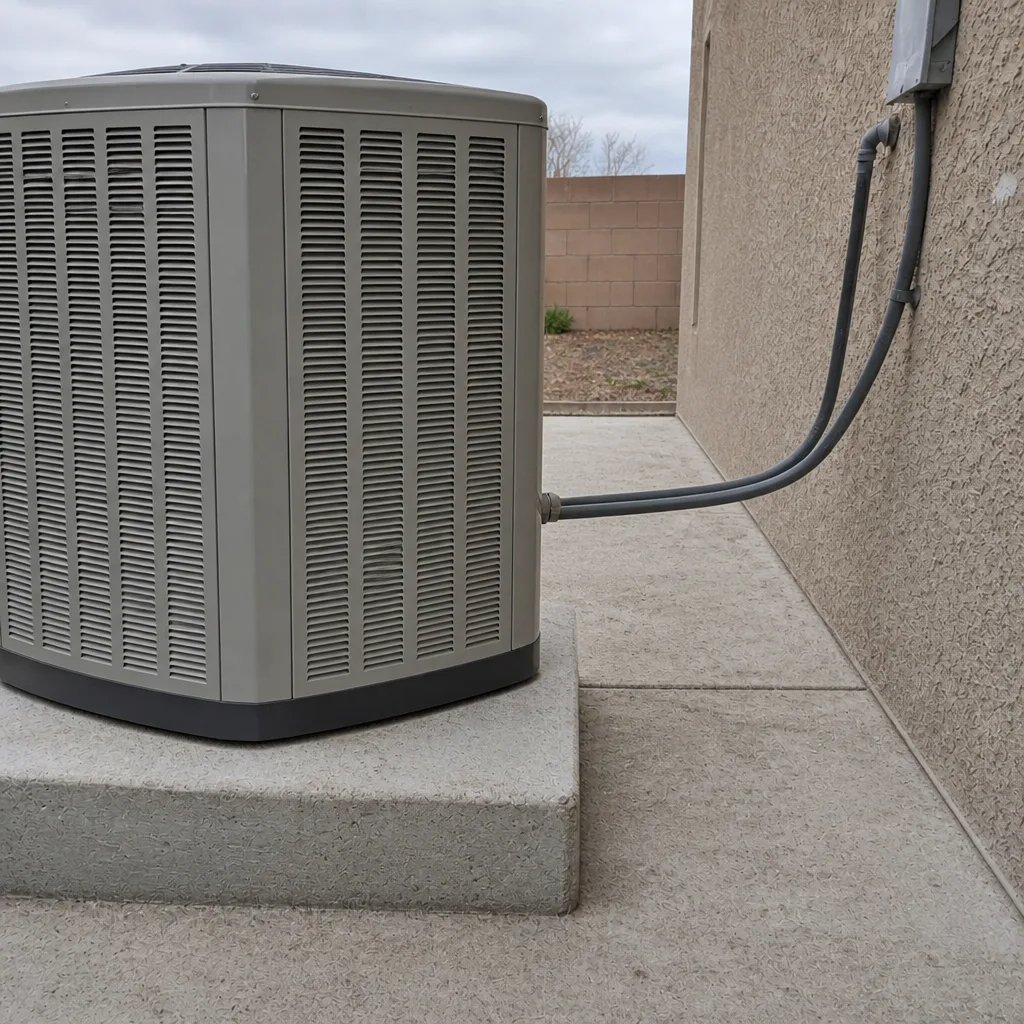 After
Frequently Asked Questions
February and March are the best months in Enterprise. Daytime highs are mild, demand for service is at its lowest, and you can get scheduled in days rather than the 10 – 14 day wait that builds by May. Book the cool-window tasks (coil cleaning and duct inspection) first, then the April cooling tune-up. Call (844) 797-9490 for an exact quote, and estimates are free.
Because they sit idle through a long summer, then get called into sudden duty on the first cold morning, and the wear that happened quietly over the year only shows up under load. Heat strips can degrade without any visible sign, and ignitors are a wear item that cracks over time. A November test under load catches both before they strand you on the coldest night. Call (844) 797-9490 to schedule.
Keep the area around it clear, rinse the coil after major dust events (with the power off), and add surge protection, because lightning-driven voltage spikes are what take out capacitors and control boards. Don’t cover the unit during monsoon. If your system short-cycles or weak cooling shows up after a storm, that’s a call-us situation.
Refrigerant recharge pricing depends on the system and the amount needed, so we give a written price before any work starts. You need one only if the level is low, which is exactly why the October check matters: it catches a slow leak while it’s still a planned cost instead of a July emergency. Call (844) 797-9490 for an exact quote.
In Enterprise, the deciding factors are age, repair frequency, and how the system performed through the last summer. A system that needed multiple repairs and still struggled through July is usually a replace, while a single repair on an otherwise strong system is a fix. We’ll give you a written price on the repair first, so you can decide with real numbers rather than a sales pitch. Call (844) 797-9490.
Rebate availability changes, and we won’t quote a number we can’t verify for your situation. We service all major residential brands, including Daikin and Carrier, and we’ll walk you through what’s currently available in your area and put it in writing along with the price and the guarantee. Call (844) 797-9490 to get an exact quote.
The Bottom Line
Enterprise HVAC care comes down to doing the right task in the right month. Clean coils and seal ducts in February and March, not May. Test refrigerant in October, not after a July failure. Test heat strips and ignitors in November, before the first cold snap. Protect the outdoor unit from monsoon dust and surges in July and August. A calendar built on Enterprise’s real phases beats a national template every time, because it puts the work in the windows that actually prevent breakdowns. When you’re ready to book, we’re here, and the price is in writing before anything starts.
Ready to put your Enterprise home on a real maintenance schedule? Call Brandt HVAC Enterprise at (844) 797-9490 for a free estimate. Our technicians have up to 23 years of experience, the phones are answered by a live person 24/7, and every repair is covered by the 365-Day Done Right Promise. We service Carrier, Trane, Lennox, Goodman, Rheem, York, Daikin, Bryant, and American Standard, and if a repair fails within the guarantee period, we return at no charge. Whether you’re booking the February cool window or catching up on the October check, one call gets you scheduled.
Written by the team at Brandt HVAC Enterprise.