
Last updated November 17, 2026
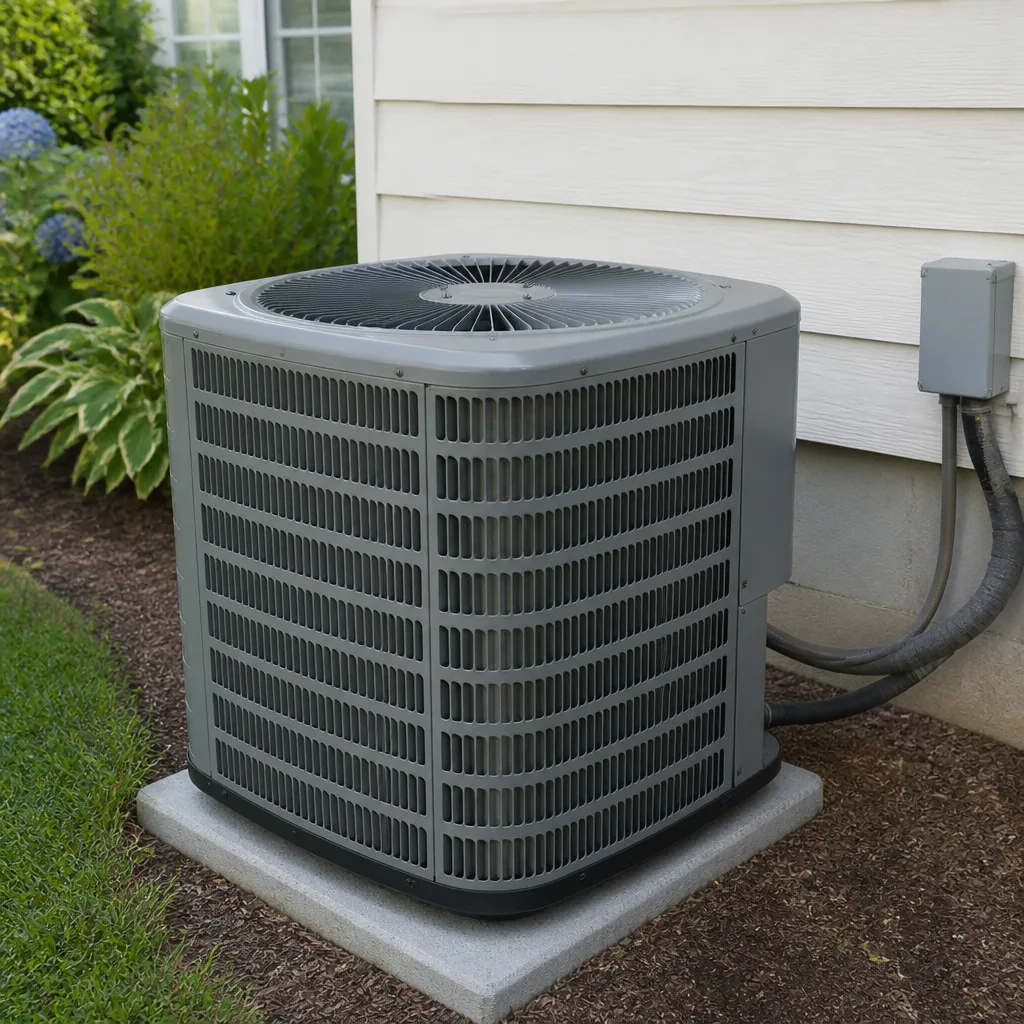 AC repair
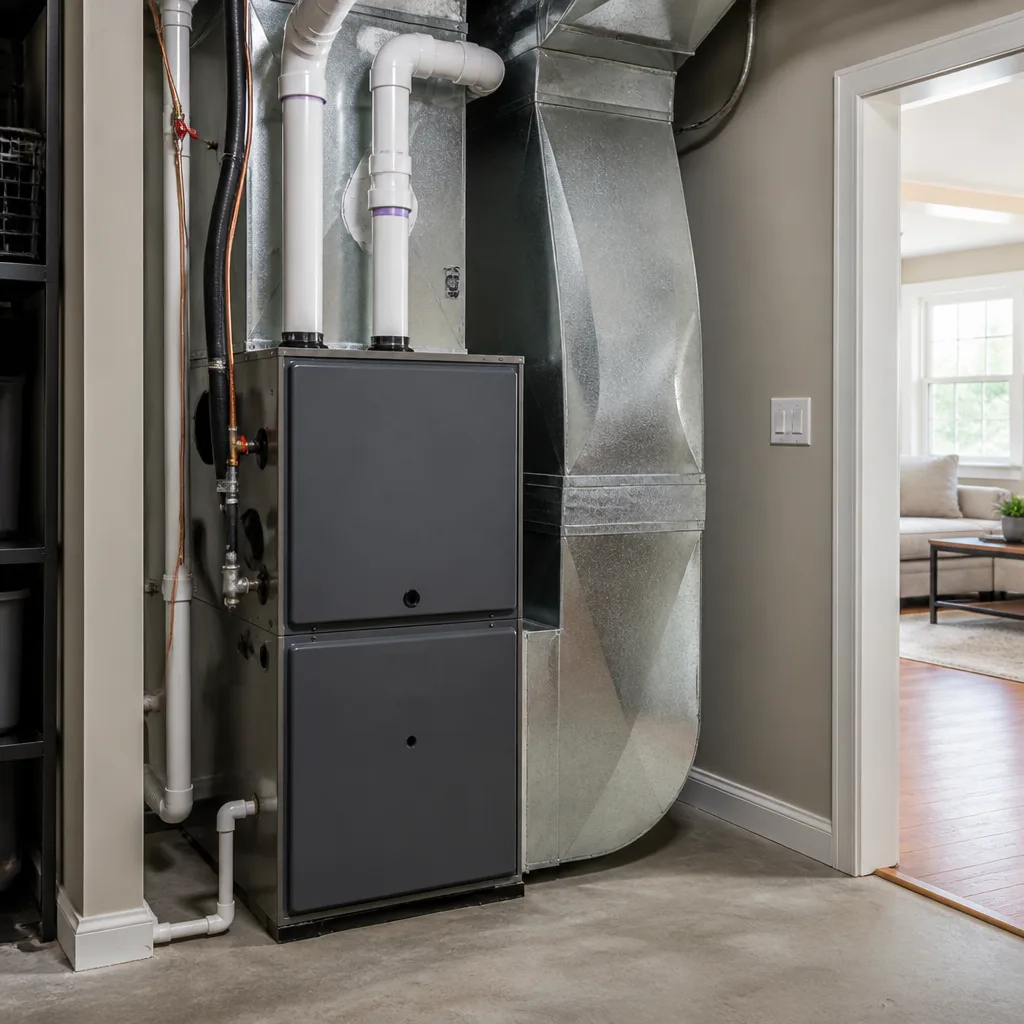 Furnace & heating
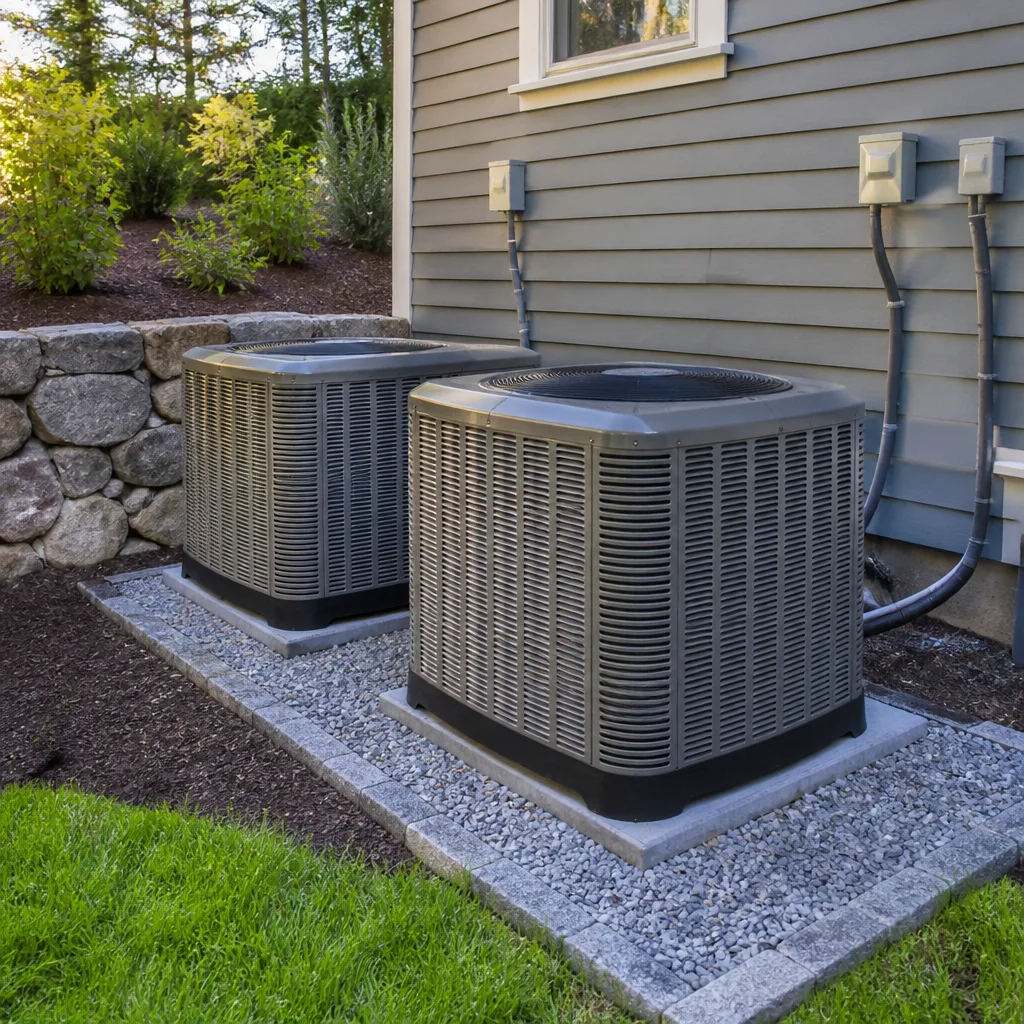 Heat pumps
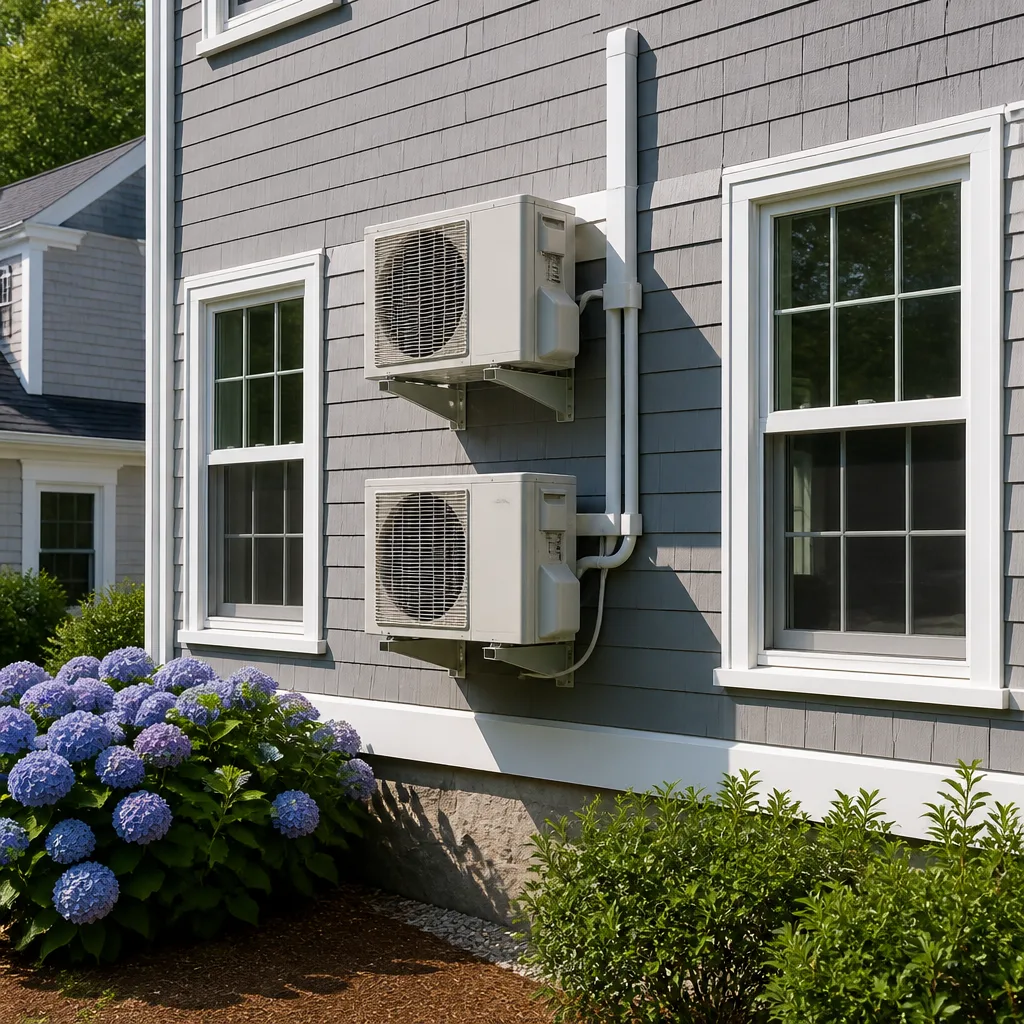 Ductless mini splits
 Carrier
 Trane
 Goodman
Seasonal tune-up and full diagnostic on your Carrier, Trane, or Goodman system - readings shown to you before any repair is proposed
Diagnosis first, numbers second - you approve the repair price before a single part goes in.
Get your free estimateDIY vs Professional Furnace Repair: What’s Safe to Do Yourself
There are exactly three furnace tasks a homeowner should do themselves, and they all involve the filter, the thermostat, or the power switch. Everything past that point runs into gas pressure, heat exchangers, and combustion, where a mistake isn’t expensive, it’s dangerous. We’ve seen what happens when a homeowner with good intentions and a YouTube video gets past the safe line, and the results range from a $1,200 part replacement to a carbon monoxide scare in the middle of a cold snap.
This guide draws the line at safety consequence, not skill level. It covers what you can safely handle, why the rest requires a licensed technician, how Nevada law treats furnace work, and how to verify who’s at your door before they touch a gas appliance. If you’re in Enterprise and your heat just quit, the honest answer is often the same: call (844) 797-9490, and if the problem is one you can fix in five minutes, we’ll tell you that too.
Quick Answer
Safe for most homeowners: replacing the air filter, checking or replacing thermostat batteries, resetting the furnace at the breaker or power switch, and confirming the thermostat is set to Heat. Anything involving the gas valve, igniter, flame sensor, heat exchanger, flue, or combustion air requires a licensed HVAC technician in Nevada. If you smell gas or your carbon monoxide alarm sounds, leave the house and call for help immediately – do not troubleshoot it yourself.
Styles & brands we work with
- AC repair
- Furnace & heating
- Heat pumps
- Ductless mini splits
- Carrier
- Trane
- Goodman
Table of Contents
- The Three Furnace Tasks You Can Safely Do Yourself
- Why Gas Furnace Components Require a Licensed Technician
- What Carbon Monoxide Risk Actually Looks Like in a DIY Context
- Nevada Licensing: What Homeowners Can Legally Do
- How to Verify a Technician Before They Touch Your Furnace
- What Furnace Repairs Actually Cost
- Why the Line Matters More in Enterprise Desert Conditions
The Three Furnace Tasks You Can Safely Do Yourself
These three tasks are safe, useful, and worth doing before you call anyone. Each has a clear stop condition – the point where you should hand it off. Knowing where that line is saves you time and, occasionally, a much larger repair bill.
1. Replace the air filter
A clogged filter is the single most common cause of a furnace that runs but never seems to heat the house properly. It restricts airflow, forces the blower to work harder, and can cause the furnace to trip its high-limit safety switch and shut off mid-cycle. A 1-inch filter should be replaced every 1 to 3 months. A 4-inch media filter can go 6 to 12 months, but only if you check it. In dusty Enterprise neighborhoods near the open desert, we see filters load up faster than the manufacturer’s chart suggests.
Stop condition: If the filter slot is caked with debris or you see rust or moisture inside the filter compartment, don’t just swap the filter and move on. That’s a symptom of a bigger airflow or condensation problem.
2. Check the thermostat batteries and settings
Before anything else, confirm the thermostat is set to Heat and the setpoint is above the current room temperature. Sounds obvious, but a surprising number of “no heat” calls are a thermostat in Cool mode or a schedule override that got bumped. Replace the batteries if the display is dim or blank. If the thermostat is hardwired and dead, that’s an electrical issue and worth a call.
3. Reset at the power switch or breaker
Every furnace has a power switch, usually a standard toggle on the side of the unit or on a wall nearby. If the furnace is completely dead, turn the switch off, wait 30 seconds, turn it back on. If the furnace is on a dedicated breaker in your panel, check whether it’s tripped – a breaker in the middle position (not fully on, not fully off) has tripped.
Stop condition: If the breaker trips again immediately when you reset it, stop. A furnace that trips its breaker is telling you something is drawing too much current, and that’s a technician’s job. If you’re not sure which breaker runs the furnace, don’t start flipping random switches in the panel – call and we’ll walk you to it.
Why Gas Furnace Components Require a Licensed Technician
A gas furnace is a combustion appliance, and that puts it in a different category from nearly every other thing in your home. It burns natural gas or propane to produce heat, and the byproducts of that process – including carbon monoxide – have to be vented out of your house correctly every single time it runs. There is no “mostly right” here.
Here’s what’s behind the panel, and why it’s not homeowner territory:
- Gas valve: This meters the exact amount of gas to the burner. Adjusted wrong, it produces incomplete combustion, soot, and CO. Adjusted very wrong, it’s a safety hazard. Technicians test gas pressure with a manometer and set it to a specification – not a guess.
- Heat exchanger: This is the metal box that separates exhaust gases from the air you breathe. A cracked heat exchanger can leak carbon monoxide into your supply air. You can’t see the cracks with your eyes; technicians use combustion analysis and visual inspection of the internal passages.
- Igniter and flame sensor: These are cheap parts but easy to damage, easy to install wrong, and easy to misdiagnose. A “bad igniter” is sometimes a bad control board sending the signal, or a flame sensor that needs cleaning.
- Flue and venting: The flue carries exhaust out of the home. A disconnected flue, improper slope, or blocked intake pulls combustion gases back into the house.
- Combustion air: Modern furnaces need a specific supply of combustion air. Sealing a closet door or adding insulation around the unit can starve the furnace and create CO.
None of this is designed to be a sales argument. It’s a description of what the equipment does and what happens when the settings are off. The wrong adjustment on a Daikin or Bryant gas valve doesn’t show up as an error code – it shows up as a headache, a CO alarm, or worse.
What Carbon Monoxide Risk Actually Looks Like in a DIY Context
Carbon monoxide is colorless, odorless, and tasteless. That’s the whole problem. In a DIY context, the most common path to CO exposure is not a dramatic mistake – it’s a small one paired with a small one, compounding over a heating season. These are the patterns we see:
- Sealing off combustion air. A homeowner finishes a basement, closes a mechanical closet, or wraps a furnace with foam board to quiet it. The furnace now pulls combustion air from a starved space, and the flame burns yellow and produces CO. This one is common in Enterprise homes where garages or utility closets get converted into finished space.
- Removing or wiring around a safety switch. The pressure switch, rollout switch, and flame rollout sensor all exist to shut the furnace down when something is wrong. Bypassing one to “get heat tonight” removes the safety and keeps the failure going.
- Improper venting after a DIY flue repair. A flue pipe reconnected with the wrong slope, tape instead of screws, or single-wall pipe where double-wall is required vents exhaust incorrectly.
- A heat exchanger left unchecked. A homeowner fixes the flame sensor or igniter, gets heat back, and calls it done. A crack in the heat exchanger goes undetected until a CO alarm or a health issue surfaces.
- An unvented or blocked fresh-air intake. Bird nests, dryer lint, and construction debris in the intake are common in homes that have sat empty or been remodeled.
The right response to any CO symptom – headache, nausea, dizziness, a CO alarm, rust streaks on the flue, sooty buildup – is to leave the house, get everyone outside, and call your gas utility or 911 first. Then call for furnace service. Never re-enter to “check it.”
If you don’t have working CO alarms in your home, install them today. Place one near each sleeping area and one on every level of the home. This single step matters more than anything else in this guide.
Nevada Licensing: What Homeowners Can Legally Do
Nevada treats HVAC work – and especially gas appliance work – with more scrutiny than most homeowners realize. The short answer: Nevada homeowners can do maintenance-level tasks on their own property (filter changes, thermostat batteries, cleaning around the unit), but any repair to the gas-fired components of a furnace requires a licensed HVAC contractor.
What that means in practice:
- Gas line work of any kind requires a licensed contractor. This includes extending a line, capping a line, or replacing a shutoff valve.
- Combustion components – gas valve, burners, igniter, flame sensor, heat exchanger, flue – fall under HVAC contractor licensing in Nevada. A handyman cannot legally perform this work.
- Electrical connections on the furnace itself generally require a licensed electrician or an HVAC contractor authorized for that scope.
- Unpermitted work can complicate insurance claims if a fire or CO incident is traced back to the furnace, and it will surface at resale when an inspector asks for documentation.
We see this come up regularly in Enterprise when homeowners inherit a house with DIY furnace work already done. The fix is not just a repair; it’s often a re-verification of the entire appliance. A licensed technician will pull the service record, test gas pressure, run combustion analysis, and document what’s been changed. That documentation matters if you ever sell the home or file a claim.
If you want a professional furnace repair in Enterprise that’s documented from the start, that’s the standard we work to.
How to Verify a Technician Before They Touch Your Furnace
Because furnace work is legally restricted to licensed contractors, verifying who’s in your home before the work starts is not a formality – it’s the thing that protects you legally and physically. Here’s the verification sequence we think every homeowner should run, whether they call us or anyone else.
- Look up the contractor’s license. Every licensed HVAC contractor in Nevada has a license number. Ask for it on the call and look it up through the Nevada State Contractors Board before the technician arrives. A legitimate company will give it without hesitation.
- Ask for the name and photo of the technician who’s coming. The best companies will send this to you before the visit. If the company can’t tell you who’s coming, that’s the answer.
- Confirm the visit is scheduled, not “someone in the area.” A company that dispatches whoever is closest at the moment is not one that can tell you who’s coming to your door.
- At the door: ask for a photo ID. A verified technician should have a badge that matches the name and photo you were sent. If someone arrives who you weren’t told to expect, don’t let them in. Call the company and confirm.
- Get the price in writing before any work starts. Written estimate, line-itemed, signed by you. No verbal-only prices, no “we’ll figure it out after we open it.”
This is what Threshold Verified means in practice – every technician is background-checked and identity-verified, introduced to you by name and photo before the visit, and shows a photo ID badge at the door. If anyone arrives who you weren’t told to expect, that visit is on us, and we make it right. It’s the piece of our service we’re most often thanked for, especially by customers who live alone or have young kids at home.
You can read more about our standards on the Brandt HVAC Enterprise home page.
What Furnace Repairs Actually Cost
Being honest about the numbers up front is part of drawing this line fairly. These are typical ranges for professional furnace repairs, parts and labor included. Actual pricing varies with brand, part availability, and what the diagnostic turns up.
- Igniter replacement: $150-$300
- Flame sensor cleaning or replacement: $120-$250
- Pressure switch replacement: $200-$400
- Control board replacement: $400-$700
- Gas valve replacement: $450-$800
- Inducer motor replacement: $500-$900
- Heat exchanger replacement: $1,200-$2,500 (frequently a replace-the-furnace decision on older units)
- Standard diagnostic visit: $75-$150, typically applied to the repair if you proceed
The bottom line on cost: the worst financial outcome isn’t paying for a diagnostic – it’s paying twice. Once for a part you bought yourself that didn’t fix it, and again for the actual repair, plus whatever damage the first attempt caused. For more on what a repair looks like from our side, see Furnace Repair in Enterprise.
Every repair we perform includes a written price before work starts and a written 365-day guarantee. If the repair fails within that year, we return at no charge – that’s the 365-Day Done Right Promise.
Why the Line Matters More in Enterprise Desert Conditions
Enterprise homes have some specific furnace realities worth knowing. Desert dust loads up filters faster than the manufacturer’s schedule suggests, and we regularly see filters that look fine at 60 days but are nearly choked by 90. If you’re near the southern edge of Enterprise, where lots back up to open desert, plan on the short end of the filter interval.
Temperature swings here can run 40 degrees between day and night in winter, which means your furnace may cycle more per day than a system in a milder climate. More cycles, more wear on igniters and flame sensors, and more opportunities for a small issue to become a “no heat tonight” call. The homes most prone to this are the older single-story builds around the older parts of Enterprise, where ductwork runs through unheated attic space. Furnaces in those homes work harder to keep up, and airflow restrictions in the return duct are more likely.
We also see the seasonal pattern where a furnace sat unused all summer, and the first cool night brings the first failure – usually a spider or dust on the flame sensor, or a blower that hasn’t spun in months. A quick professional AC maintenance visit in the fall (yes, the same visit can check furnace readiness) prevents most of these. That’s what AC Maintenance in Enterprise covers, and it’s the cheapest path to fewer winter surprises.
Common Mistakes to Avoid
- Taping or sealing a flue connection. Flue pipe joints require screws and proper slope, not foil tape. A taped joint can loosen from heat cycling and leak CO into the home. We’ve re-done this on more than a few Enterprise homes after the tape failed.
- Replacing an igniter without testing the control board. A furnace that won’t ignite isn’t always an igniter problem. If the control board isn’t sending voltage, a new igniter won’t fire either – and you’ve now paid for a part you didn’t need.
- Bypassing the flame rollout safety switch. The moment you do this to get heat going, you’ve removed the device that tells you something in the combustion chamber is wrong. If it tripped, something is wrong.
- Adjusting the gas valve “a little.” Gas pressure isn’t a tunable knob on a furnace. It requires a manometer and a manufacturer spec. Adjusting it by feel can create incomplete combustion and soot, and in a desert climate with dry air, soot buildup can go unnoticed for months.
- Skipping the furnace inspection in favor of a repair. A homeowner fixes the symptom (no heat) but not the cause (a cracked heat exchanger, a blocked flue). The furnace runs, and a hazard sits inside it.
- Letting an unverified technician in because the truck “looked legitimate.” A truck and a uniform don’t prove company authorization or licensing. Ask for the license and the photo ID; if the company can’t produce them, don’t let the work start.
- Running the furnace with a filter you can’t see light through. A fully loaded filter is not just inefficient – it’s the fastest path to a cracked heat exchanger on a modern furnace because the blower can’t move air.
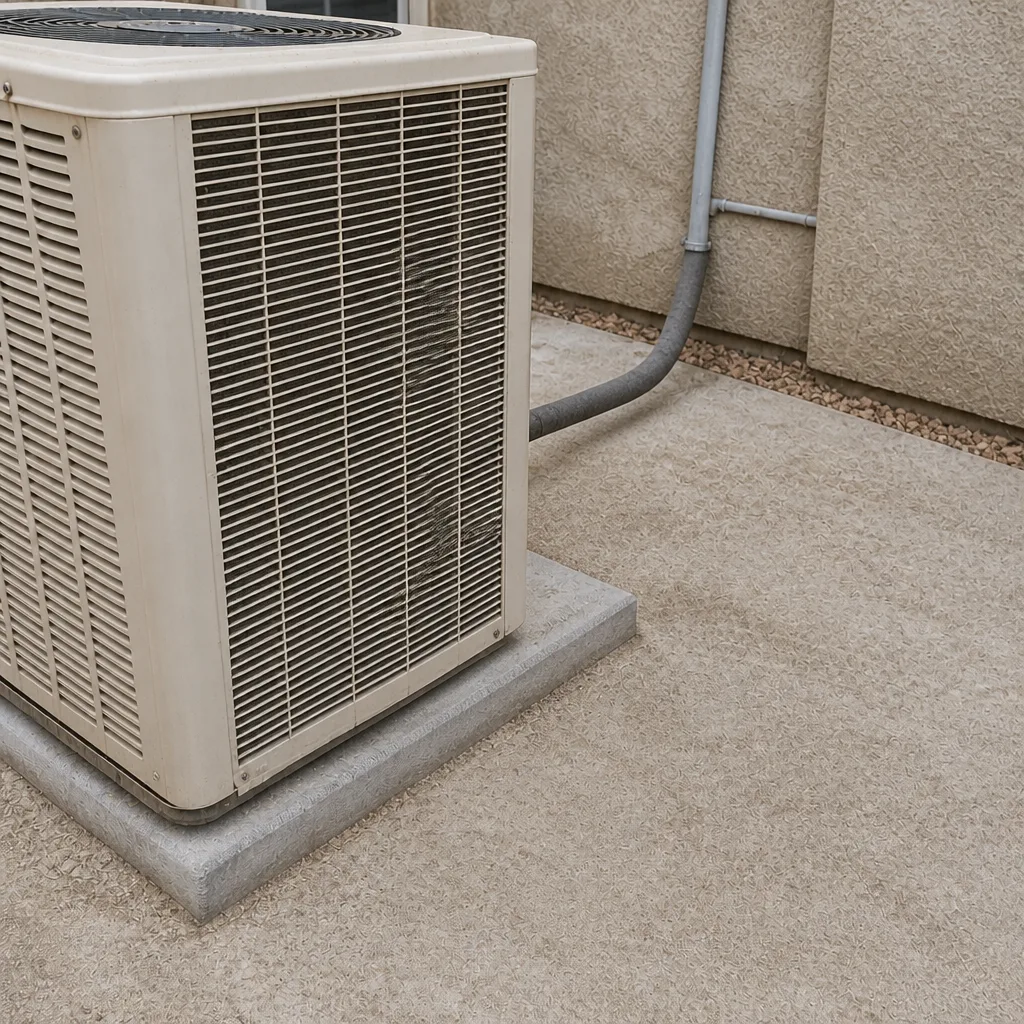
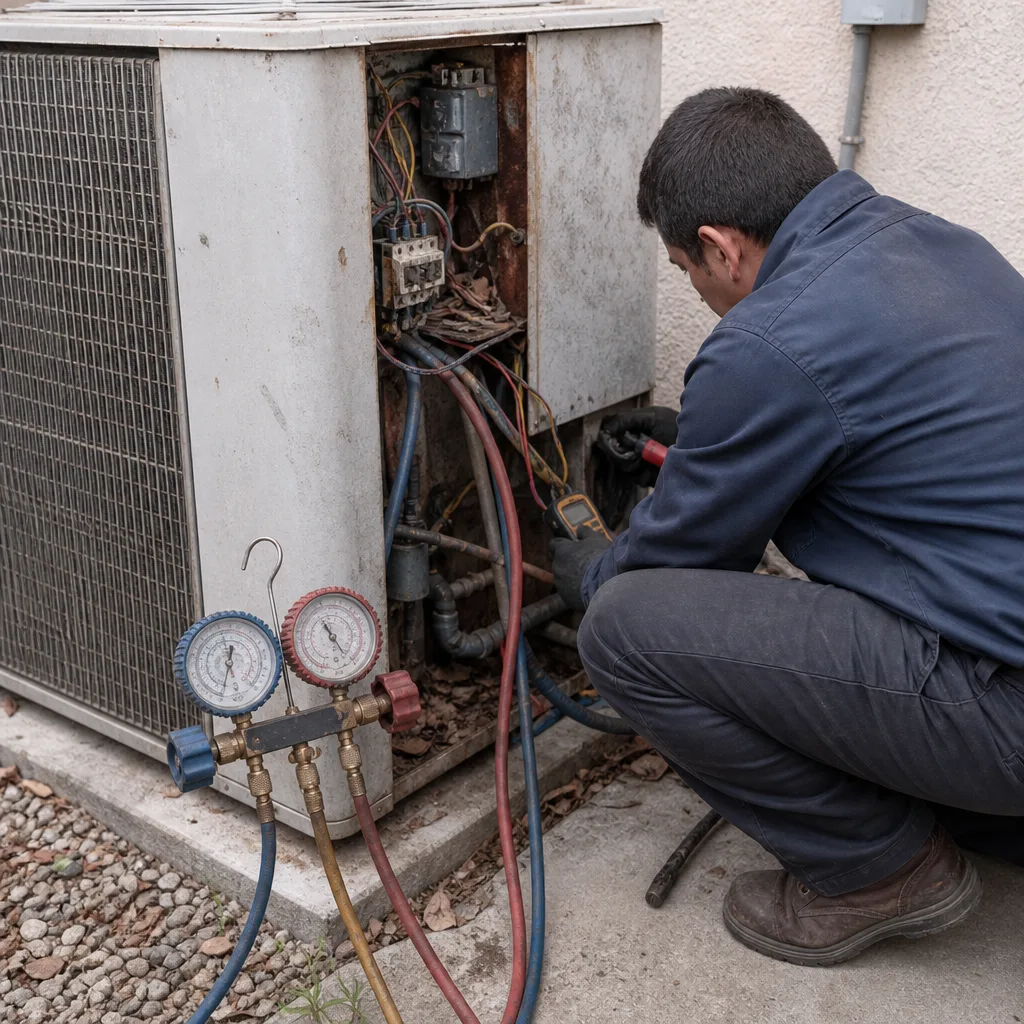
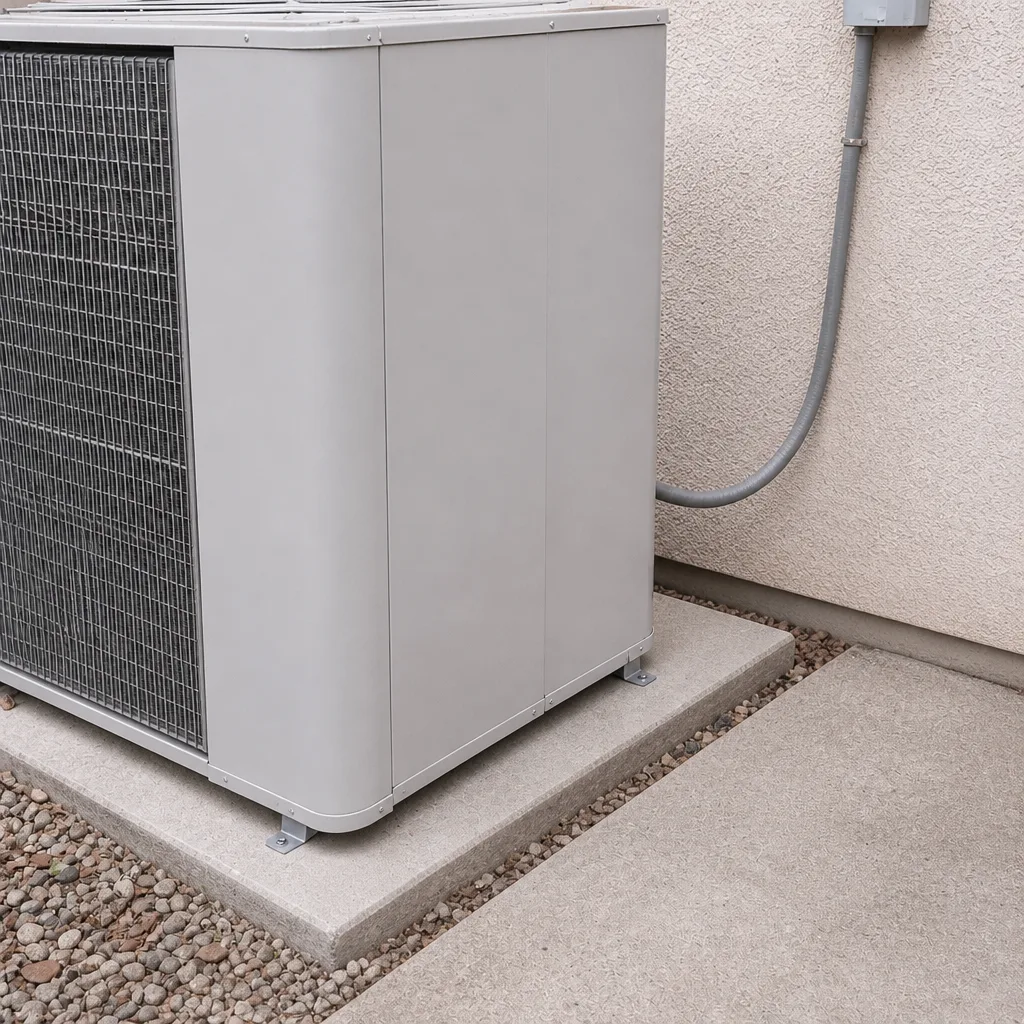
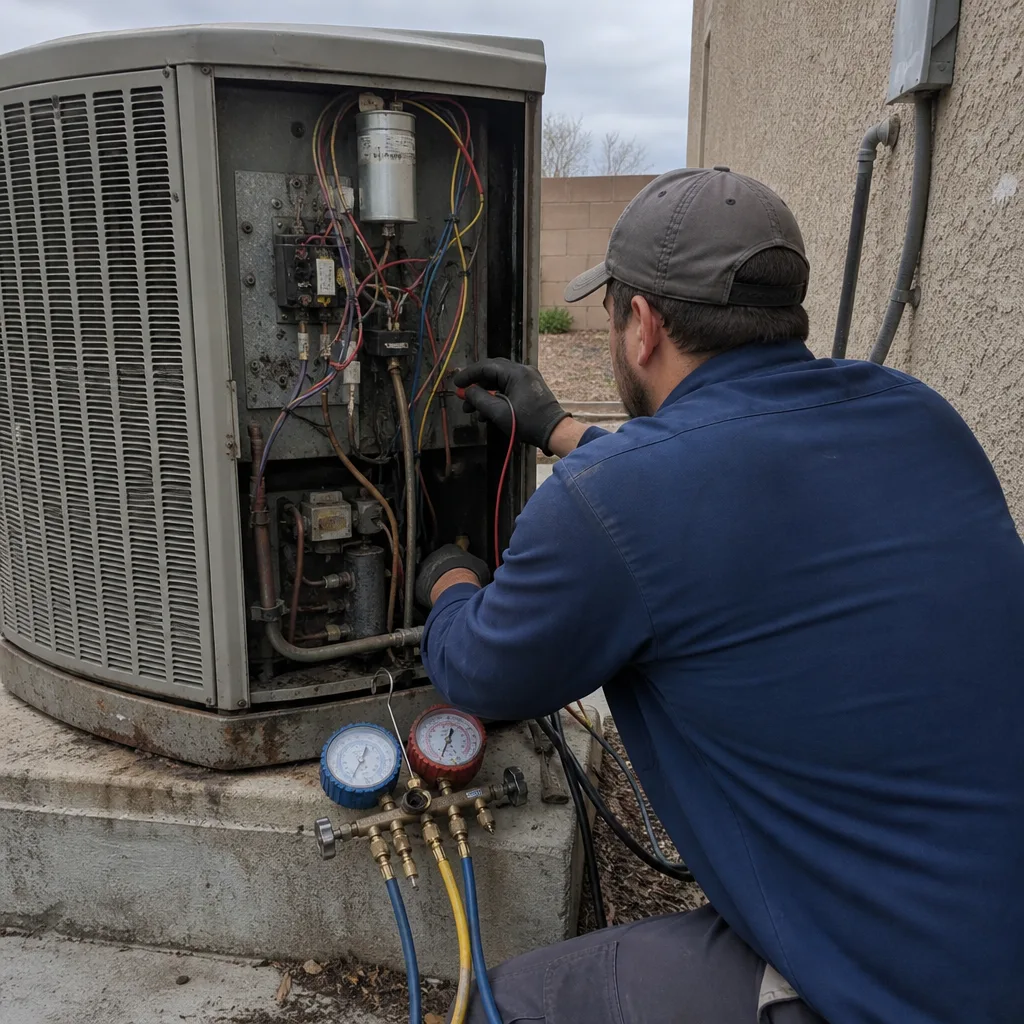
See the difference
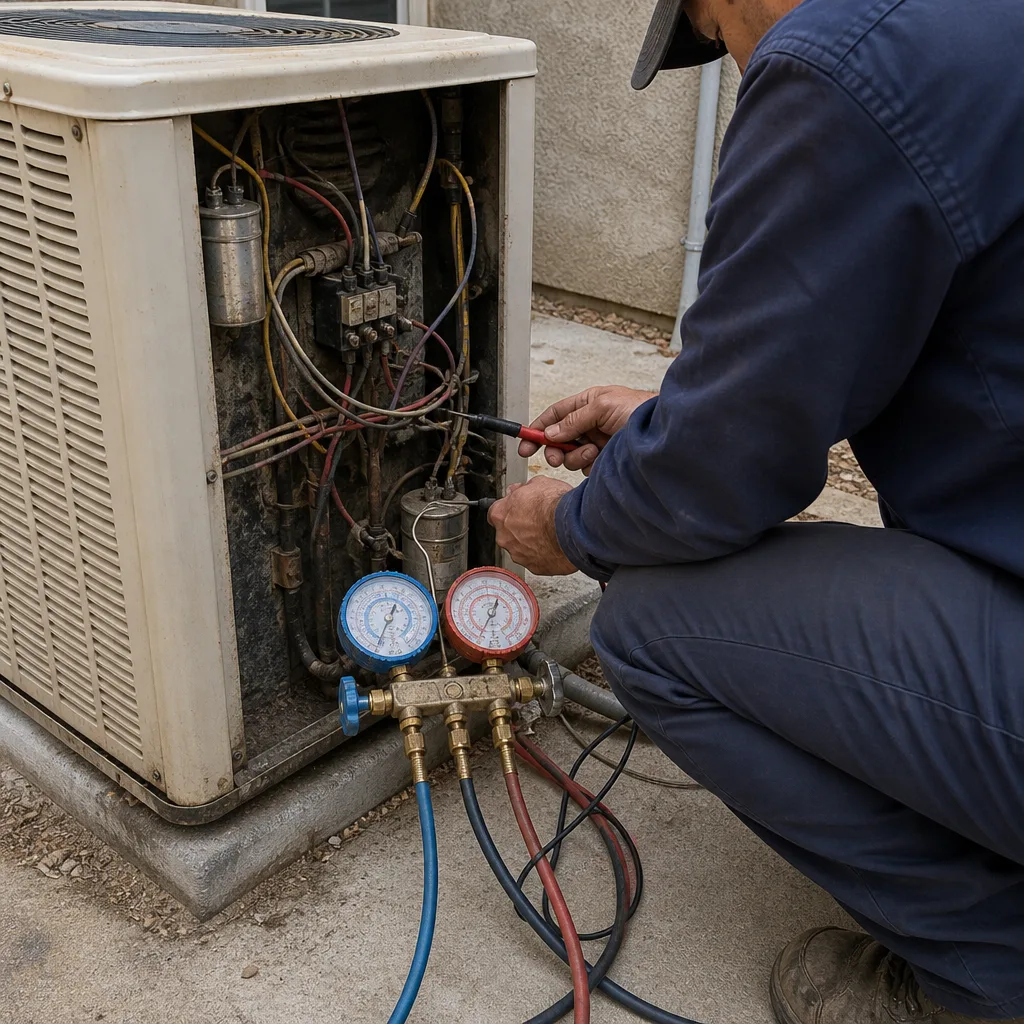 Before
 After
 Before
 After
 Before
 After
When to Call a Professional
Call a professional the moment any of the following is true: you smell gas, your CO alarm sounds, your furnace trips the breaker more than once, you see a yellow or orange flame instead of blue, you see soot or rust on the unit or flue, the blower runs but no heat comes out, or your furnace won’t fire but you’ve changed the filter and checked the thermostat. In any of those cases the furnace needs a technician with combustion analysis equipment and the licensed scope of work to make it right.
Brandt HVAC Enterprise offers free estimates in Enterprise – call (844) 797-9490, and a live person answers, day or night. Every job starts with a written price before any work begins, and every repair is covered by a written 365-day guarantee. If you want to look at what a professional repair visit includes, our Furnace Repair in Enterprise page walks through the diagnostic step by step.
Frequently Asked Questions
No, not on a gas furnace – the igniter replacement itself is mechanically simple, but getting to it requires opening the combustion chamber, and a misstep there is a gas and CO hazard. Replacing an igniter also involves diagnosing whether the igniter is the actual problem, which requires testing the control board’s voltage output. A properly licensed technician has the meter, the part, and the diagnostic sequence to get it right the first time. If you’re in Enterprise and you’ve already bought an igniter, we’ll install it or return it depending on the diagnosis – call (844) 797-9490 and we’ll be straight with you.
Yes, filter replacement is one of the three furnace tasks a homeowner should do themselves, and it’s the most important one for preventing larger failures. Replace a 1-inch filter every 1 to 3 months and a 4-inch media filter every 6 to 12 months, or sooner if your home is in a dusty area or has pets. If the replacement slot shows rust, moisture, or heavy debris, stop and call for a service visit – the filter isn’t the whole story. For anything more involved than a filter, our Furnace Repair in Enterprise page covers what a technician visit looks like.
If the furnace is completely dead, check the thermostat first, then the power switch on the unit, then the breaker – that reset sequence is safe to do yourself. If the breaker trips again right away, stop and call. A furnace that trips its breaker is pulling too much current, which is a sign of a failing blower motor, a short, or a control board fault. A trained technician can diagnose that in one visit; a homeowner resetting a tripping breaker repeatedly can turn a $400 repair into a $900 one. Call (844) 797-9490 and we’ll get a technician scheduled.
Ask for the contractor’s license number when you call, and look it up on the Nevada State Contractors Board site before the technician arrives. A legitimate HVAC company will hand it over without hesitation. Then, when the technician arrives, ask for a photo ID and confirm the name matches what you were told when the visit was scheduled. Threshold Verified goes one step further: every technician is background-checked and identity-verified, and we send the name and photo before the visit. If anyone shows up who you weren’t told to expect, that visit is on us.
Furnace work involves combustion, gas, and carbon monoxide – AC work involves refrigerant and electricity. The failure modes are categorically different: an AC mistake is usually expensive, and a furnace mistake can be a health hazard. That’s why the safe-line for furnace DIY draws closer to “call a professional” than it does for AC. Even something as simple as an AC capacitor replacement, which is common homeowner territory, has no furnace equivalent – the safe furnace tasks stop at the filter, the thermostat, and the breaker. Our AC Repair in Enterprise page covers the AC side if you’re comparing the two.
The 365-Day Done Right Promise covers the repair we performed for 365 days from the date of service – if it fails within that year, we return at no charge and make it right. No argument, no additional charge. That’s on every repair, in writing, and it’s the piece most homeowners tell us mattered most when they chose who to call. If you’re not sure whether a covered repair applies to your situation, call (844) 797-9490 and we’ll tell you straight.
The Bottom Line
The safe DIY list for furnace work is short: filter, thermostat, breaker. Those three tasks prevent a meaningful share of “no heat” calls, and every homeowner should know how to do them. Everything else – gas valve, heat exchanger, igniter, flame sensor, flue, control board – crosses from a comfort problem into a safety problem when it’s done wrong. The line in this guide is drawn where it is because the consequences of a mistake are dangerous, not because the parts are exotic.
If your furnace is on the professional side of that line, Brandt HVAC Enterprise is available 24/7 – a live person answers the phone, every job starts with a written price, and every repair is backed by the 365-Day Done Right Promise. Our technicians have up to 23 years of experience and work on all major brands, including Carrier, Daikin, and Bryant. Call (844) 797-9490 for a free estimate.
Written by the team at Brandt HVAC Enterprise.