
Last updated November 17, 2026
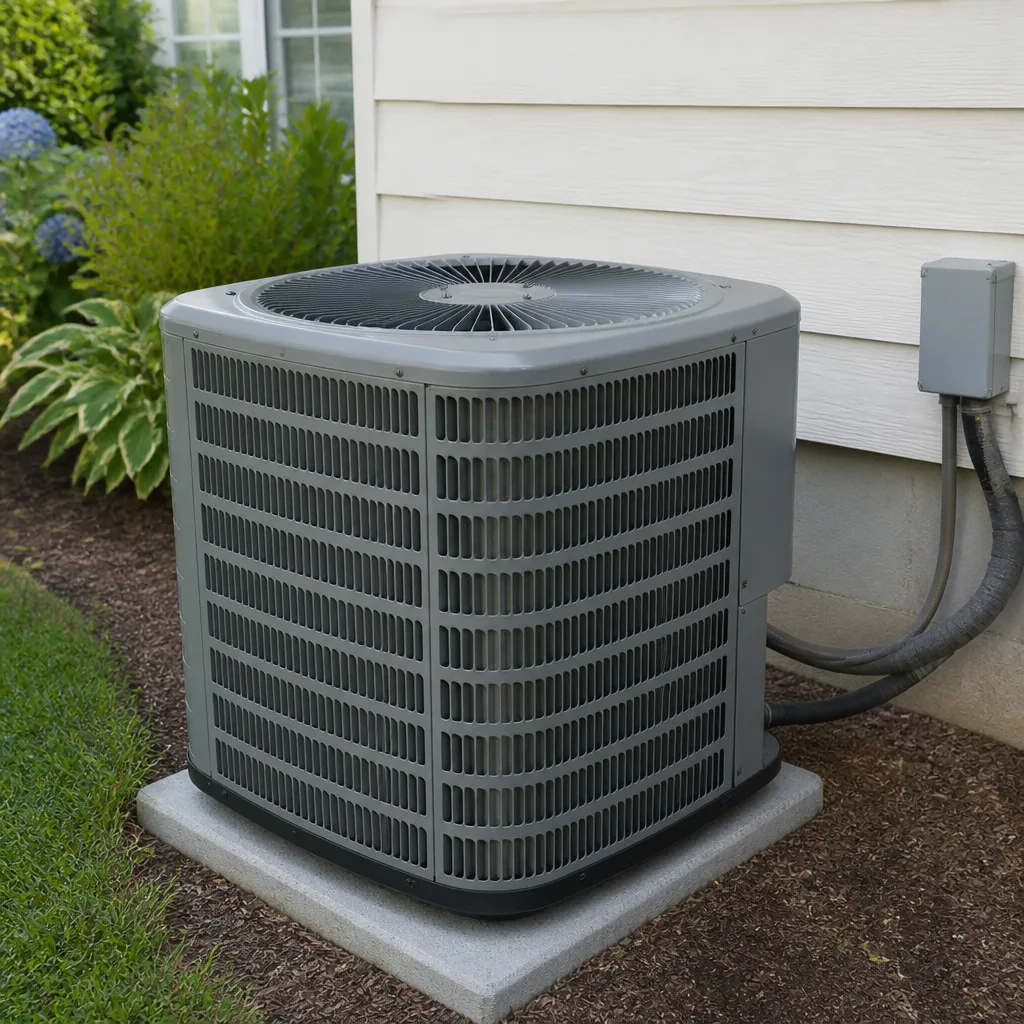 AC repair
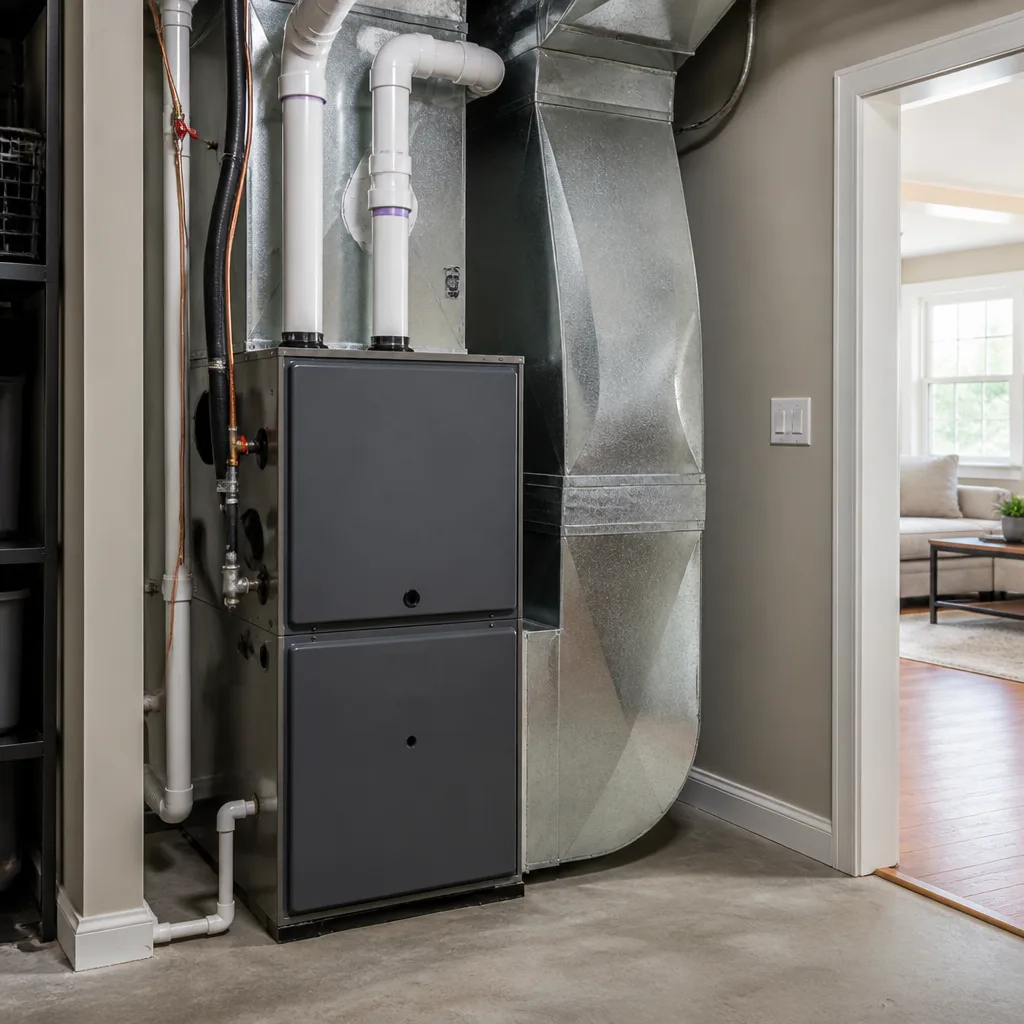 Furnace & heating
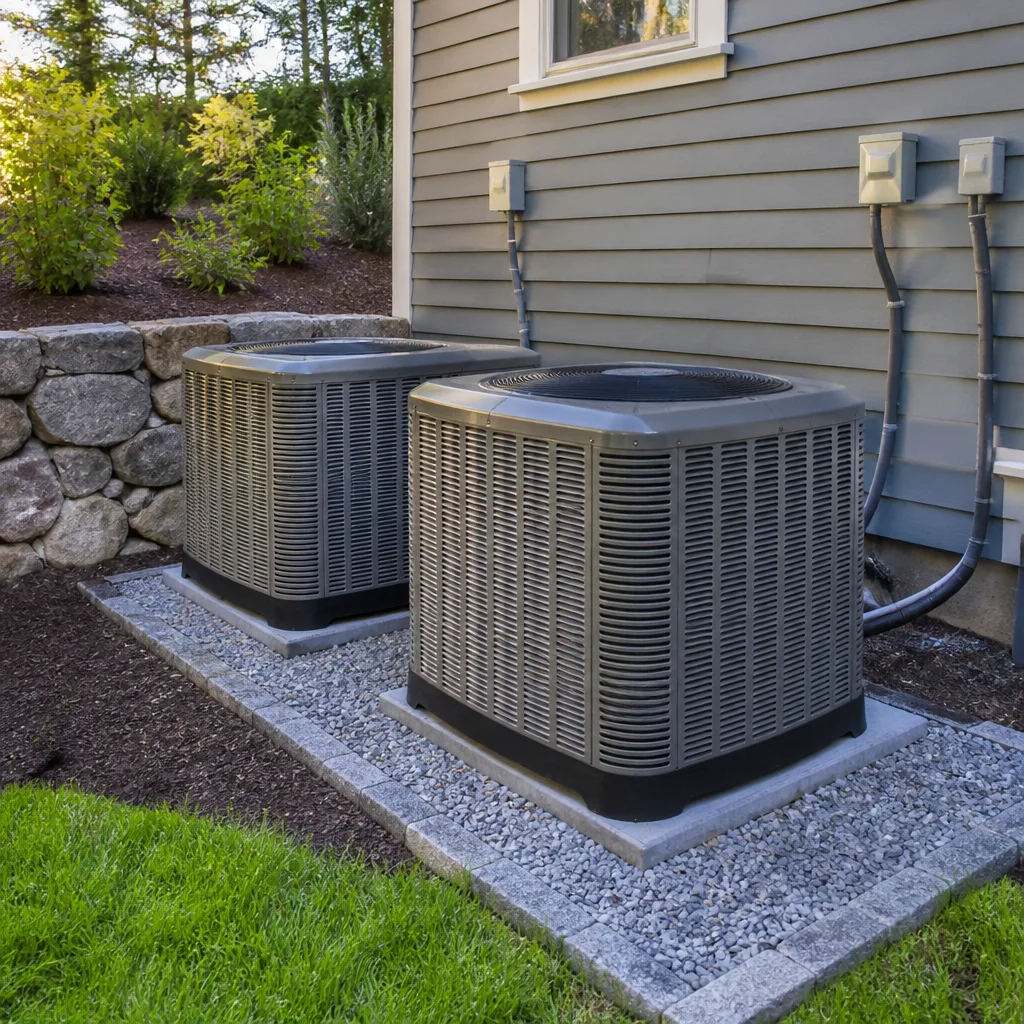 Heat pumps
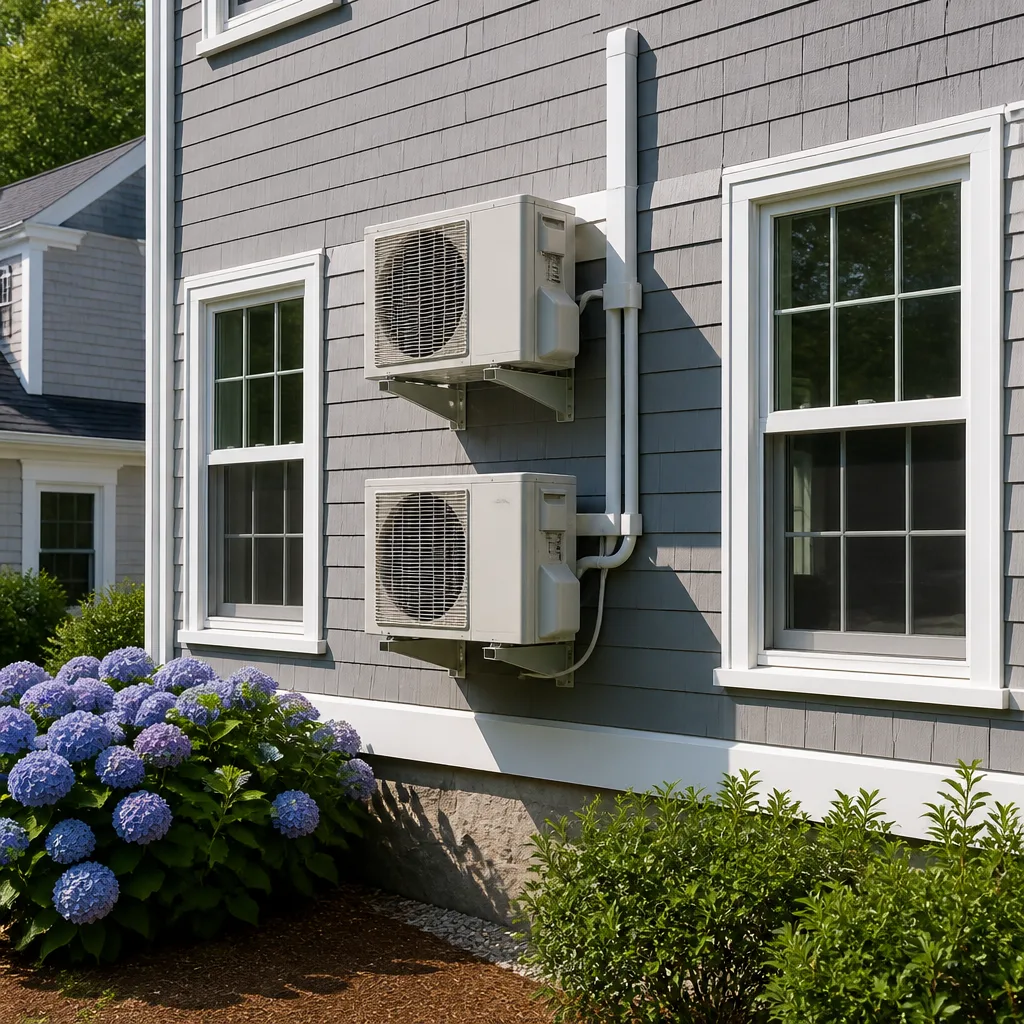 Ductless mini splits
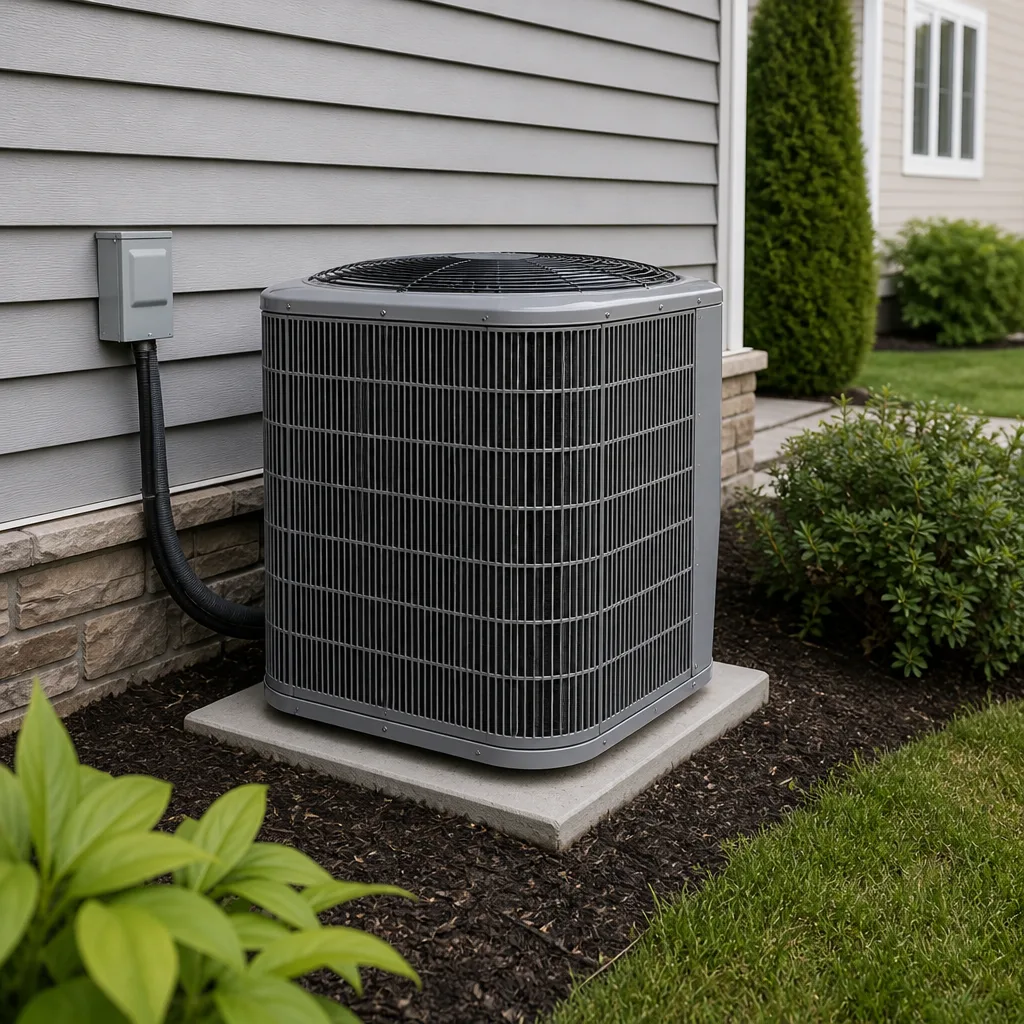 Carrier
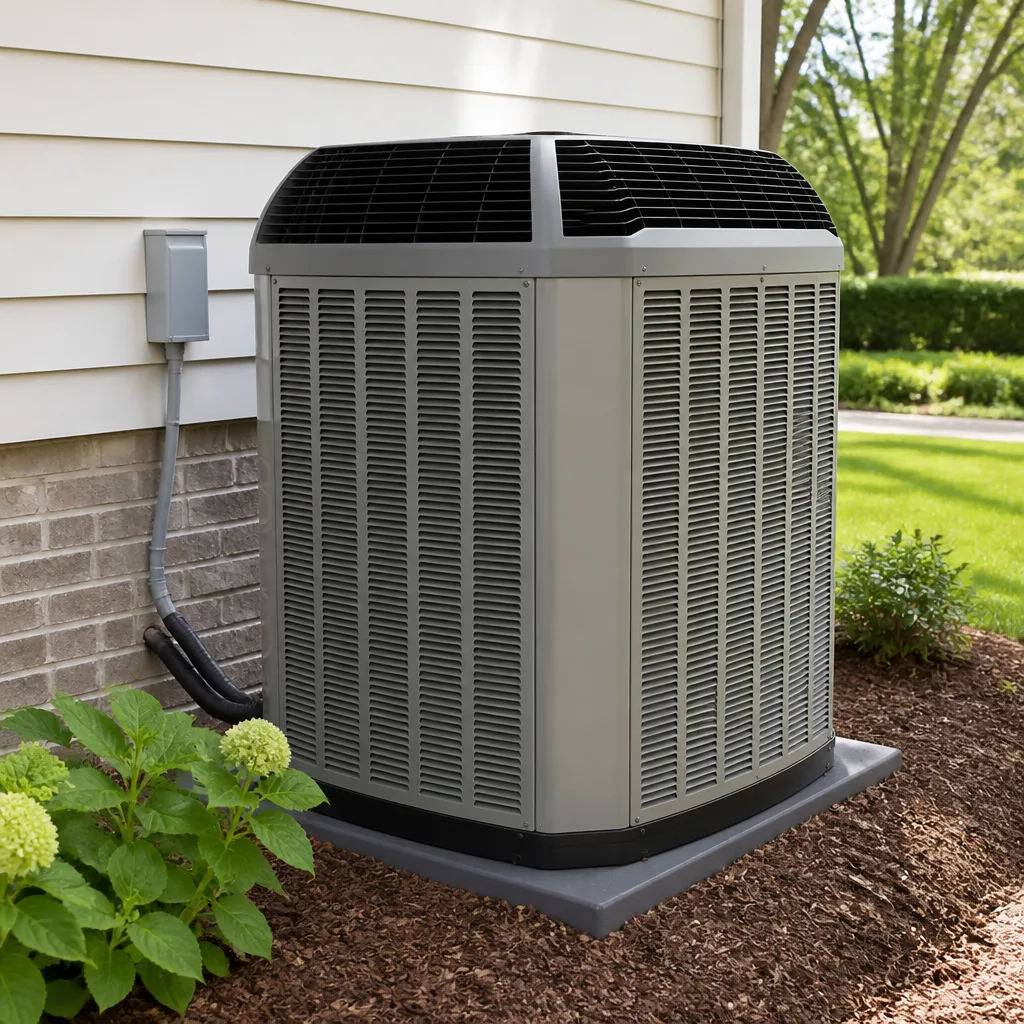 Trane
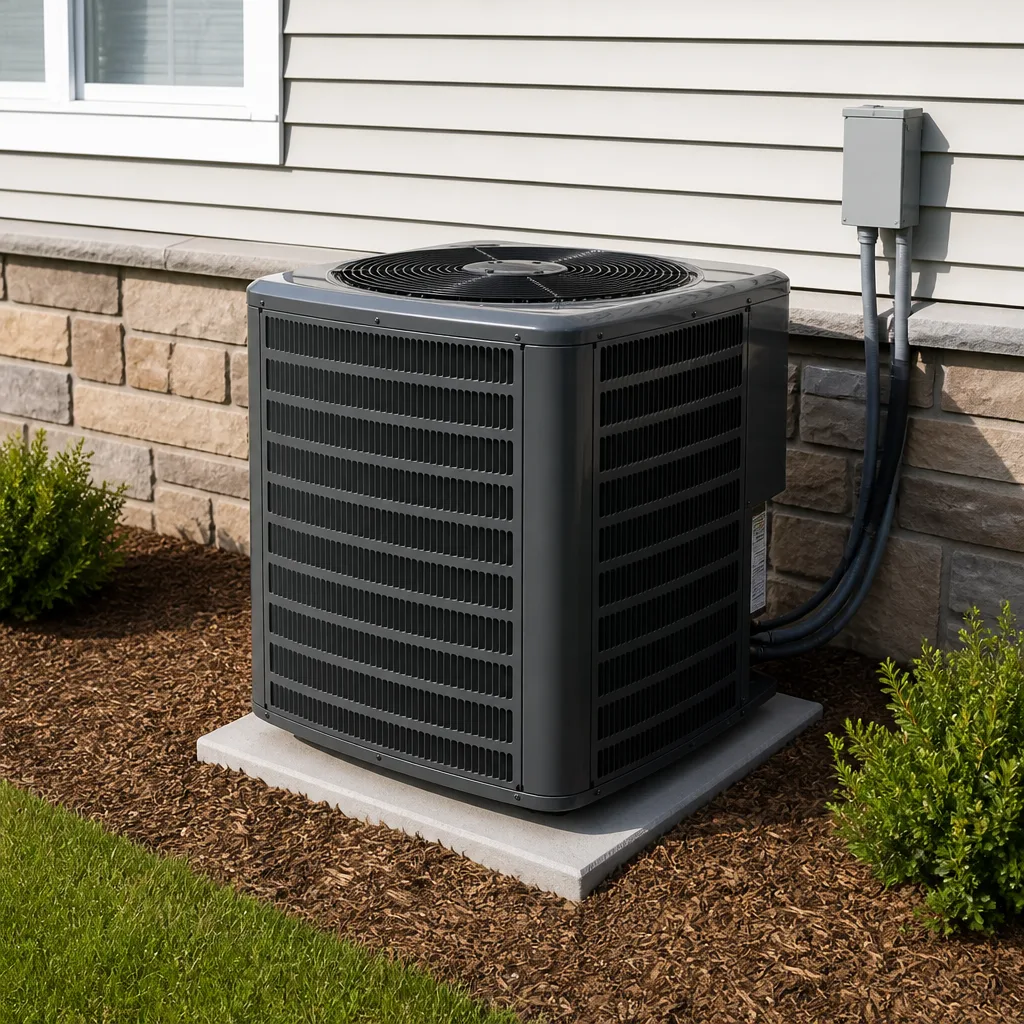 Goodman
Seasonal tune-up and full diagnostic on your Carrier, Trane, or Goodman system - readings shown to you before any repair is proposed
Diagnosis first, numbers second - you approve the repair price before a single part goes in.
Get your free estimateHow to Hire an HVAC Contractor in Enterprise: A Step-by-Step Guide
Nevada’s contractor license lookup takes about 45 seconds at nvcontractorsboard.com. Fewer than 1 in 10 homeowners bother to run it before letting someone open up their system, and that gap is exactly where trouble lives. Here’s the uncomfortable truth about hiring HVAC help in Enterprise: the moment your house hits 95 degrees inside or your furnace quits in a cold snap, you’re stressed, you’re in a hurry, and the person at your door knows it. That’s the moment bad operators count on. This guide walks you through a repeatable verification process – check the license, read the insurance certificate, demand a real pre-arrival notification, spot surge-season red flags, and compare written quotes line by line. Work through it once and you’ll never get talked into a bad decision again.
Quick Answer
To hire an HVAC contractor in Enterprise safely, verify three things before any work begins: an active Nevada State Contractors Board license in the correct classification (C-21 for refrigeration and air conditioning), a current Certificate of Insurance showing general liability and workers’ compensation coverage, and a written quote that lists equipment, labor, permit, disposal, and warranty details. Insist on a written price before work starts, and know the name and photo of the technician coming to your home. If any of those four are missing, walk away.
Styles & brands we work with
- AC repair
- Furnace & heating
- Heat pumps
- Ductless mini splits
- Carrier
- Trane
- Goodman
Table of Contents
- Step 1: Verify the Nevada License (and What C-21 Actually Covers)
- Step 2: Request and Read the Certificate of Insurance
- Step 3: Know Who’s Coming Before They Arrive
- Step 4: Spot Surge-Season Red Flags
- Step 5: Compare Quotes Apples to Apples
- What Brands and Parts You Should Expect to See
- Common Mistakes to Avoid
- Frequently Asked Questions
Step 1: Verify the Nevada License (and What C-21 Actually Covers)
Nevada doesn’t hand out HVAC licenses casually. Contractors must register with the Nevada State Contractors Board, post a bond, carry insurance, and pass exams tied to specific trade classifications. The classification that covers the work you actually need is C-21 – Refrigeration and Air Conditioning. Here’s what that covers: installation, repair, and maintenance of residential air conditioning systems, heat pumps, refrigeration equipment, and the refrigerant-handling side of the trade. A C-21 license holder is legally qualified to recover and recharge refrigerant, braze lines, and handle the electrical and mechanical components inside your system.
What C-21 does not cover: gas piping (that’s a plumbing classification), full electrical panel work (that’s a C-2 electrician), and sheet metal duct fabrication beyond what’s connected to the HVAC unit. This matters in Enterprise because a lot of homes here have gas furnaces with duct runs through the attic. If a contractor tells you they’ll “handle the gas line too, no problem” and they aren’t also licensed for it, that’s a red flag. Legitimate companies pull the right permits with the right trades.
How to Verify in Four Steps
- Go to nvcontractorsboard.com and click “License Lookup.”
- Enter the license number the contractor gives you – not just the company name, which can be spoofed.
- Confirm three things: active status, C-21 (or appropriate) classification, and that the license matches the business name on your quote.
- Screenshot the result. If there’s ever a dispute, that snapshot is your evidence.
In our experience, the license check is the single fastest way to filter out bad actors in Enterprise. It costs you less than a minute, and the 45 seconds it takes to confirm a C-21 number is the cheapest protection you’ll ever buy for your home.
Step 2: Request and Read the Certificate of Insurance
A current Certificate of Insurance (COI) is not optional. If a technician is injured on your property and the company isn’t covered, that injury can land on your homeowner’s policy – or on you directly. Ask for the COI as a PDF before you schedule a visit, not after the truck pulls into your driveway.
Here’s what an Enterprise homeowner should look for on that certificate:
- General liability – typically at least $1 million per occurrence. This covers damage to your home or property during the job.
- Workers’ compensation – required for any employer in Nevada. If the company has employees, they must carry it. Contractors who “just use subs” often don’t have it, which means an injured worker may come after you.
- Automobile liability – covers their vehicle if it damages your driveway or a neighbor’s property.
- Your name listed as “certificate holder” – the best companies will add you, which means the insurer will notify you if coverage lapses mid-job.
What a Bad COI Looks Like
Missing expiration dates. A policy number but no carrier name. A certificate from a carrier you can’t find online. A document that looks like a screenshot from someone else’s file. If any of that shows up, ask for a fresh copy directly from the insurance company. A legitimate contractor will send it within minutes. A fake one will stall. In Enterprise, where summer storms roll through fast, a contractor working without insurance on your roof-mounted unit is a risk that’s simply not worth taking.
Step 3: Know Who’s Coming Before They Arrive
This is where most HVAC companies lose their edge. A text that says “tech on the way, 30 min” tells you how long your wait is – not who’s walking through your door. For a homeowner who is home alone, lives with young children, or is older and does most appointments solo, that’s the wrong information.
A proper pre-arrival notification includes three things:
- The technician’s full name and photo, sent by text or email before the visit.
- The company’s license number visible on the notification itself, so you can verify it matches the job.
- A branded company badge presented at the door, showing the tech’s photo ID and the company’s name.
This standard is what we call the Brandt HVAC Enterprise home approach – our Threshold Verified standard means every technician is background-checked and identity-verified, sent to you by name and photo before every visit, and required to show a photo ID badge at the door. If anyone arrives who you weren’t told to expect, that visit is on us and we make it right. That’s not a marketing promise – it’s an operational rule.
When you’re vetting any contractor in Enterprise, ask the dispatcher directly: “Will you text me the technician’s name and photo before they come?” If the answer is anything other than “yes, always,” that tells you something about how they think about your safety.
Step 4: Spot Surge-Season Red Flags
Enterprise has the climate profile that produces surges in HVAC demand. When temperatures push past 110 degrees in July and a monsoon system knocks out power across the valley, the phone lines at every legitimate HVAC company go nuts – and into that gap step unlicensed operators looking for a fast payday. They roll in from out of state, work for a few weeks, and disappear before the busy season ends.
Red flags that should raise your alarm specifically during a heat wave or after a monsoon storm:
- “We were in the neighborhood” – legitimate companies don’t cruise subdivisions looking for work.
- Cash only, no receipt – a contractor who won’t take a card or give you a written invoice is a contractor you can’t trace.
- No physical address on the truck or paperwork – a real company has a place you can drive to.
- Pressure to decide “right now” – “this price is only good while my truck is here” is a classic.
- Brand-new magnetic signs on a rented truck – check the license. Often there isn’t one.
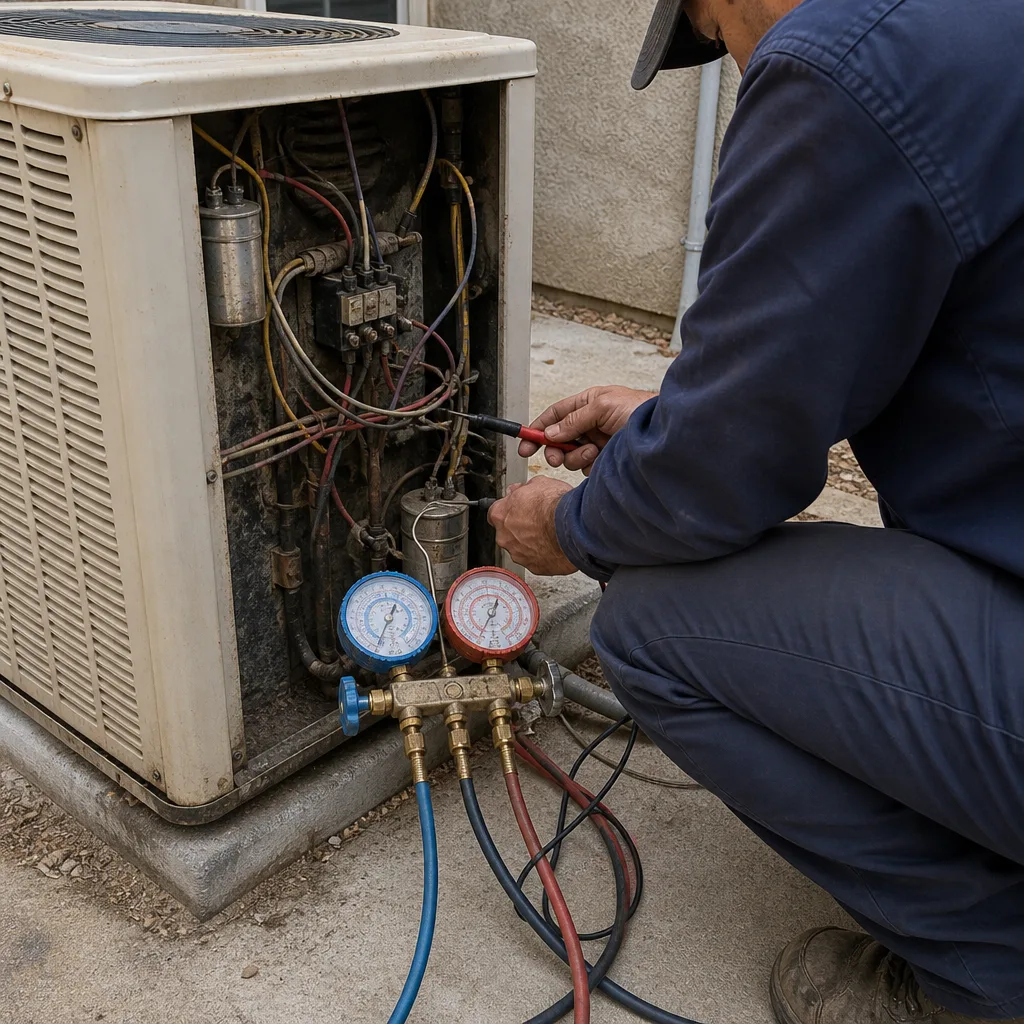
- Quotes given without ever looking at your system – a real tech opens the panel, checks pressures, and diagnoses before quoting.
Post-storm, the most common scam we hear about in Enterprise involves “free inspections” that always find a “cracked heat exchanger” or “failed capacitor” that didn’t exist. During surge periods, insist on a written diagnosis before any repair is authorized, and verify the license before the tech enters the house. For more on what regular care looks like so you’re not caught in a surge, see AC Maintenance in Enterprise.
Step 5: Compare Quotes Apples to Apples
Two quotes that read “$2,800” and “$2,300” aren’t comparable. One might include the permit and the other might not. One might cover refrigerant; the other might not. The only way to compare is line by line, and every honest HVAC quote contains the same five fields.
The Five Line Items Every Honest Quote Must Include
- Equipment make, model number, and capacity – “AC repair” isn’t a line item. “Replacement 3-ton Bryant condenser, model 116B” is.
- Parts with explicit pricing – not bundled into “service fee” or “miscellaneous.”
- Labor, with hours or flat rate stated – a legitimate quote tells you which it is.
- Permit and disposal costs – refrigerant recovery is a regulated step and disposing of the old system isn’t free.
- Written guarantee terms – what’s covered, for how long, and what the remedy is if it fails.
When a field is blank or missing, assume it’s not included. Blank warranty field? There isn’t one. No permit line on a system replacement? They aren’t pulling it, which in Enterprise means the job may not pass inspection when you sell the home. No model number? They may be planning to install a lower-tier unit than they quoted.
Free estimates in Enterprise should be just that – free, in writing, with all five fields filled in. If a company quotes you verbally and offers to “put it in writing after,” that’s not a quote, it’s a start of a negotiation.
What Brands and Parts You Should Expect to See
Any contractor who only offers one brand is a contractor selling that brand – not necessarily solving your problem. The major residential HVAC brands an experienced Enterprise contractor should be willing to work on include Carrier, Trane, Lennox, Goodman, Rheem, York, Daikin, Bryant, and American Standard. That list matters for two reasons: you want a company that can service and source parts for whatever is already in your home, and you want options if a repair turns into a replacement.
Daikin and Bryant, in particular, have solid coverage in the Southwest, which means parts are more available. Carrier and American Standard are common in homes built during Enterprise’s expansion in the 2000s. A company that only stocks Daikin and can’t source a Carrier control board is going to make you wait.
Parts matter just as much as brands. Ask any contractor you’re vetting: “Where do you source parts, and how long is typical for a compressor or control board?” In Enterprise, most reputable companies can get common parts within a day. If the answer is “a week or two,” that’s a supply chain problem that will hit you at the worst moment. For a deeper look at what fast, reliable repair actually looks like, see AC Repair in Enterprise.
Common Mistakes to Avoid
- Skipping the license check because “the truck looked professional.” A wrapped truck costs $4,000. A C-21 license costs more, and a scammer would rather buy the truck. Look up the license, every time.
- Accepting a verbal quote. Verbal quotes in Enterprise turn into “well, that was for a different part” once the panel comes off. Every dollar should be in writing before work starts.
- Letting a technician in without a pre-visit notification. If you don’t know who’s coming before they knock, you don’t know who’s knocking. That’s a security issue, not a scheduling convenience.
- Choosing on price alone after a monsoon takes out your unit. Surge-period pricing is where bad actors make their margin. A slightly higher written quote from a verified company is cheaper than paying twice.
- Ignoring the guarantee wording. “Warranty included” is meaningless. “Guaranteed for 365 days – if it fails, we return at no charge” is a commitment you can hold them to.
- Forgetting to ask about permits. Nevada requires permits for HVAC replacement. A contractor who skips the permit to save $80 is passing inspection risk onto you when you sell the home.
- Assuming the big van means bigger coverage. A single-truck operator can be excellent; a multi-truck fleet can be unlicensed. The van tells you nothing. The license number tells you everything.
See the difference
 Before
 After
 Before
 After
 Before
 After
When to Call a Professional
Some jobs are genuinely out of reach for a homeowner, and we’d rather you call than risk it. Anything involving refrigerant handling is legally restricted – recovering and recharging refrigerant requires an EPA-certified technician and a licensed contractor. Gas furnace work is another no-go zone: the heat exchanger and gas valve are genuinely dangerous components, and a mistake there can produce carbon monoxide, which is not a risk worth taking. Electrical panel work inside an air handler, compressor diagnostics, and any repair on a roof-mounted package unit in Enterprise all belong in professional hands – the fall hazard on a roof alone is a real reason to call. Brandt HVAC Enterprise offers free estimates in Enterprise – call (844) 797-9490 and a live person will pick up, day or night.
Frequently Asked Questions
Go to nvcontractorsboard.com and use the license lookup tool with the contractor’s license number – not just the company name. Confirm the license is active, in the correct C-21 classification for refrigeration and air conditioning, and that the business name on the license matches the name on your quote. It takes under a minute and is the single most important verification step. Call (844) 797-9490 to reach a live person with any questions about licensing – estimates are free.
C-21 is the Nevada State Contractors Board classification for refrigeration and air conditioning work. It covers installation, repair, and maintenance of residential AC systems, heat pumps, and refrigerant-handling – including recovery and recharge. It does not cover gas piping, full electrical work, or duct fabrication beyond what connects to the HVAC unit, which is why a legitimate company either holds additional classifications or coordinates those trades. Call us for an exact quote on your repair – estimates are free.
Common AC repairs in Enterprise typically run $150 to $650 depending on the part. A capacitor replacement is usually $180 to $300. A furnace igniter replacement runs $150 to $300 in most cases. Refrigerant recharge – refilling the fluid that moves heat out of your home – starts around $200 and climbs based on how much refrigerant your system needs. Compressor replacements are the biggest line item and can reach $1,800 or more. Call (844) 797-9490 for an exact written quote before any work starts – estimates are free.
A legitimate pre-visit notification includes the technician’s full name, a photo, the company’s license number, and confirmation that a branded photo ID badge will be shown at the door. A text that only says “tech on the way” doesn’t meet that standard. If a company can’t tell you who’s coming before they arrive, they can’t prove who they sent. We send every technician by name and photo, and anyone who arrives without a match is a visit we make right.
Compare quotes line by line against five required fields: equipment make and model number, itemized parts, labor with hours or flat rate stated, permit and disposal costs, and written guarantee terms. If any field is blank, assume it isn’t included. A quote that says “$2,400 for repair” without any of those details isn’t a comparable quote. Every job we quote includes a written price before work begins, and every repair includes a written guarantee. Call (844) 797-9490 for a free written estimate.
Ask this question before any work starts, and get the answer in writing. Under our 365-Day Done Right Promise, every repair is guaranteed for 365 days – if it fails, we return at no charge and make it right. If a contractor can’t tell you exactly what their guarantee covers and for how long, that’s a gap in their commitment. Call (844) 797-9490 to learn exactly what our guarantee covers on your repair.
The Bottom Line
Hiring HVAC help in Enterprise comes down to a short list of checks that take ten minutes combined: verify the C-21 license on the state board site, demand a Certificate of Insurance before anyone arrives, refuse to let a technician in without a name and photo notification and a badge at the door, spot surge-season scams before they quote you, and compare written quotes against the five required fields. None of those steps require expertise. They require the willingness to walk away from a company that won’t produce paperwork. The best HVAC companies in Enterprise won’t hesitate for a second – they’ll hand over every document before you ask. A furnace repair or AC repair done right is simple when the right contractor is behind it: Furnace Repair in Enterprise and AC repair follow the same verification rules.
Ready to Get It Done Right?
Brandt HVAC Enterprise provides AC Repair and furnace repair across Enterprise with a written price before any work starts, a written guarantee on every repair, and a 365-Day Done Right Promise that covers every job. Our technicians have up to 23 years of experience, service all major residential HVAC brands, and are background-checked and identity-verified under the Threshold Verified standard – sent to your door by name and photo before every visit. The phone is answered by a live person 24 hours a day, 7 days a week, nights, weekends, and holidays included. Call (844) 797-9490 for a free estimate, and let’s get your home comfortable again.
Written by the team at Brandt HVAC Enterprise.