
Last updated November 17, 2026
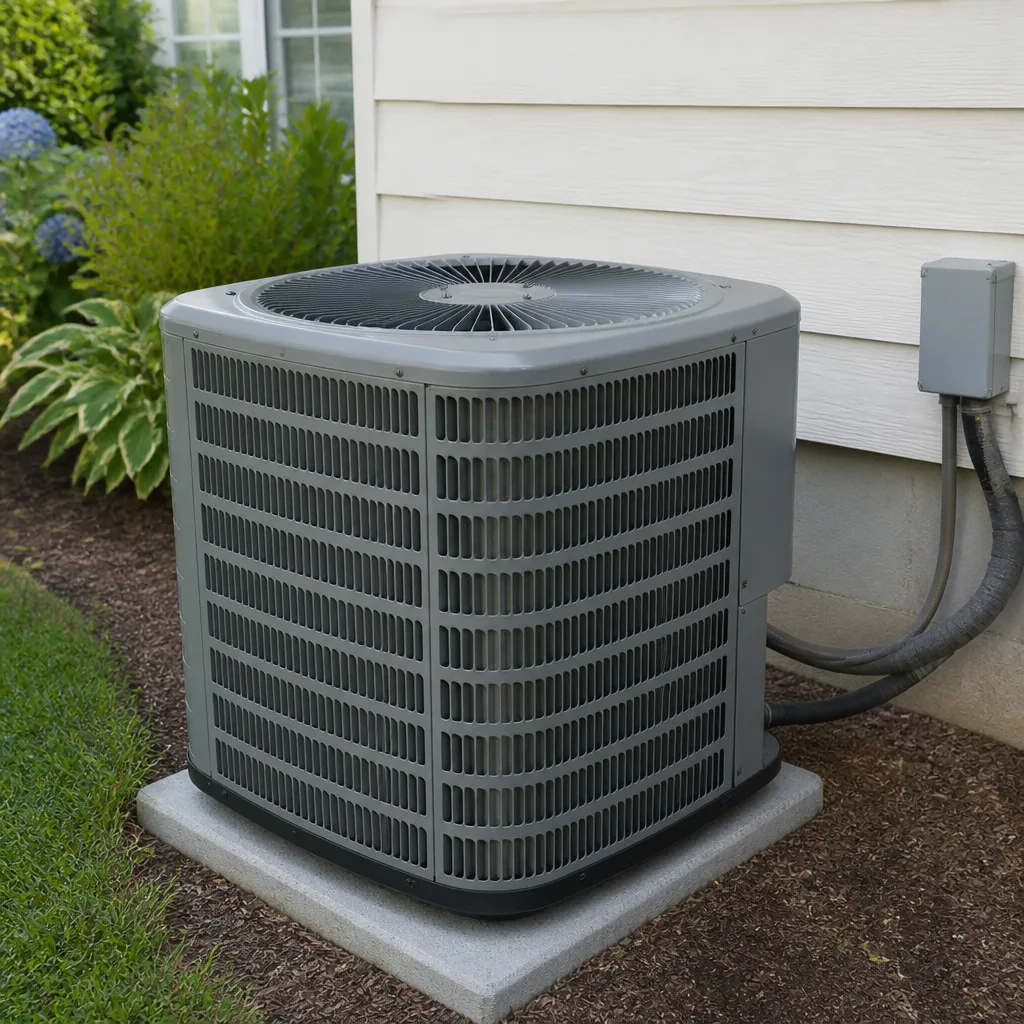 AC repair
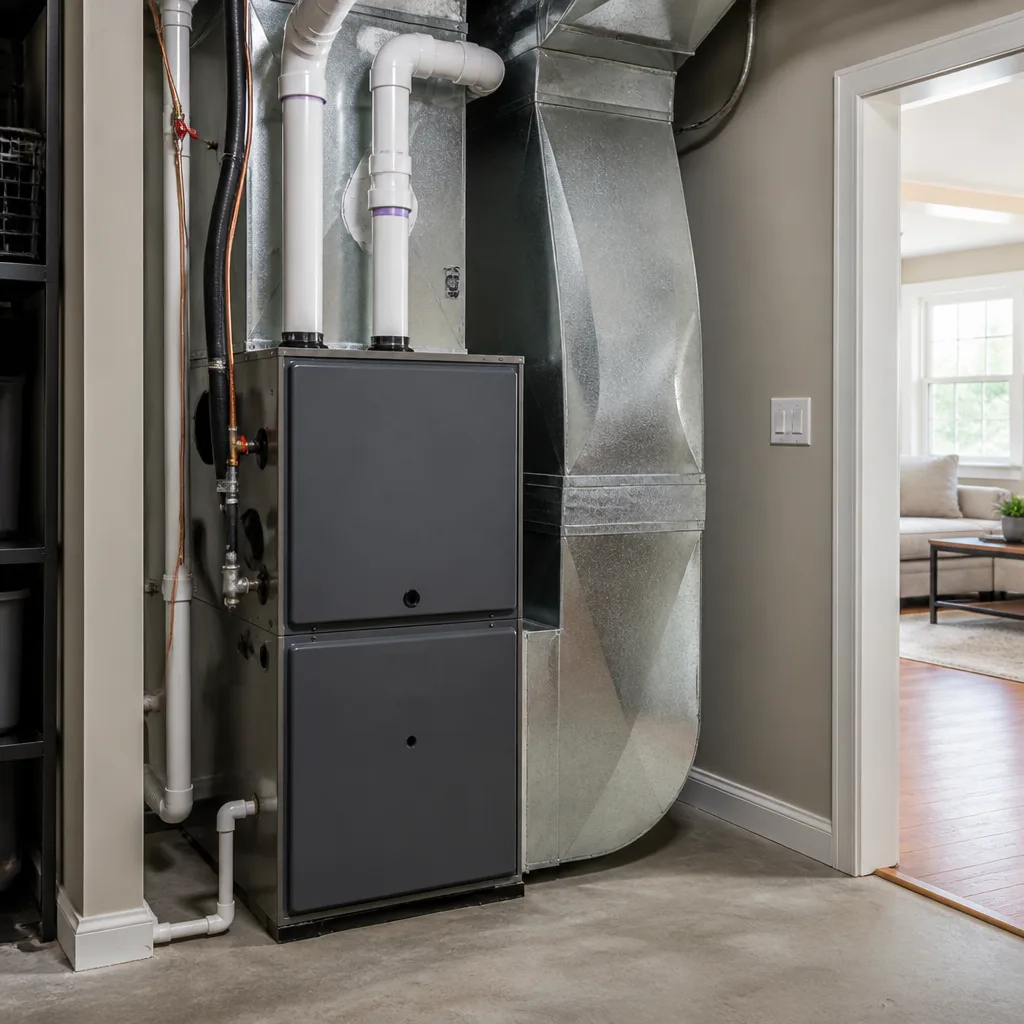 Furnace & heating
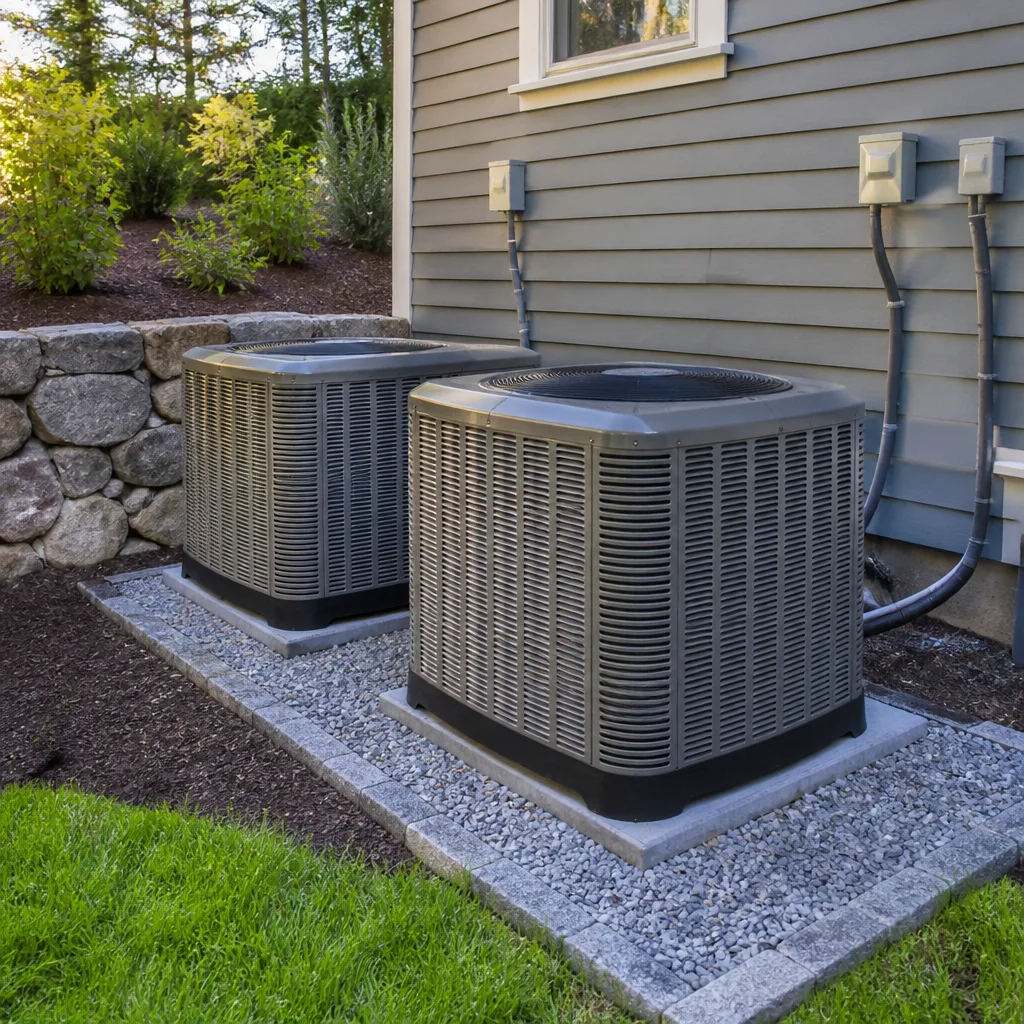 Heat pumps
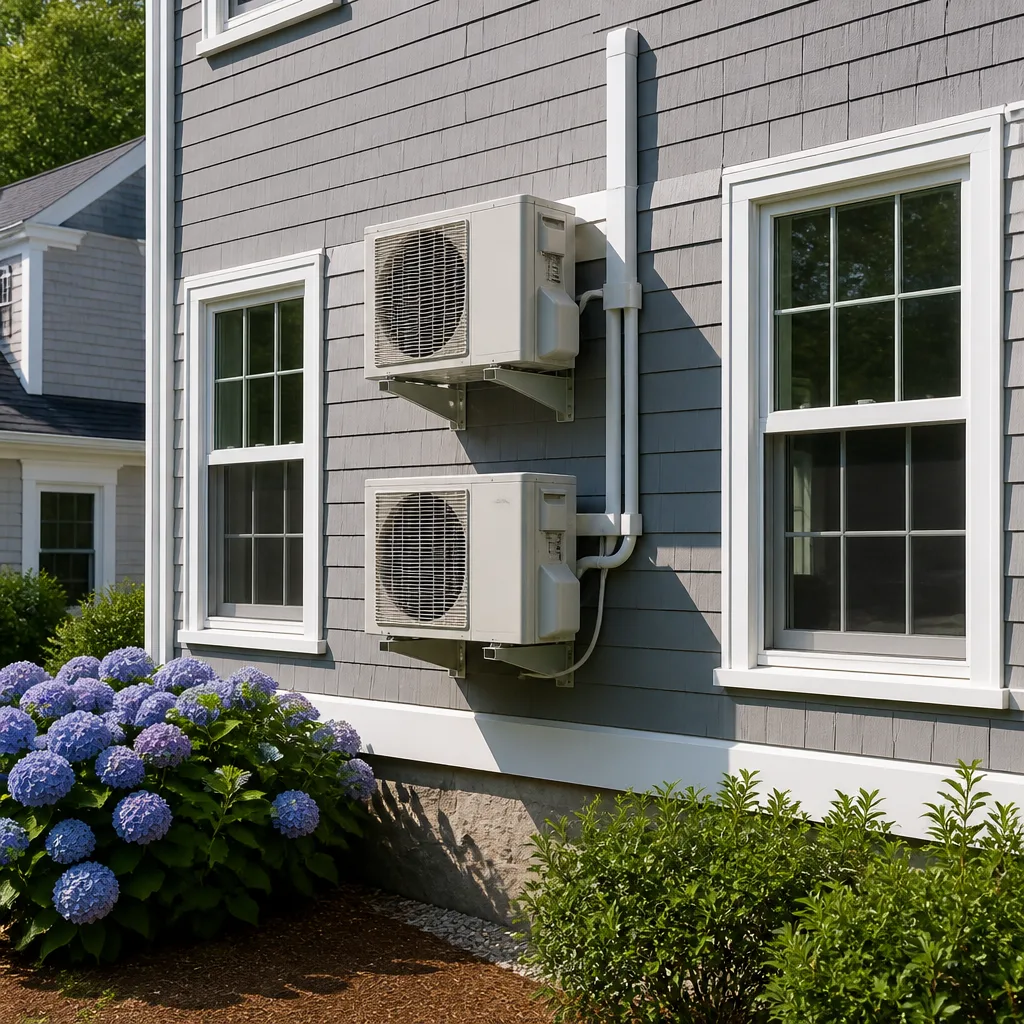 Ductless mini splits
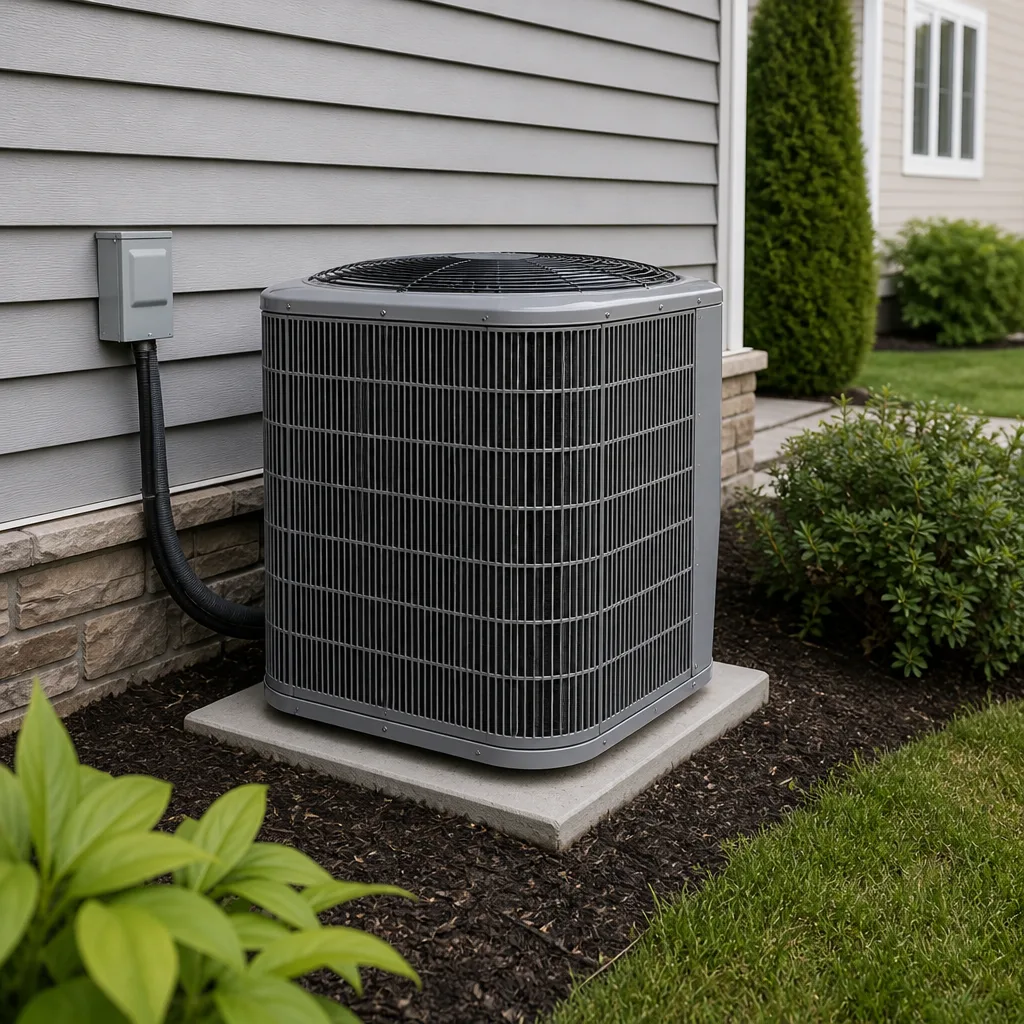 Carrier
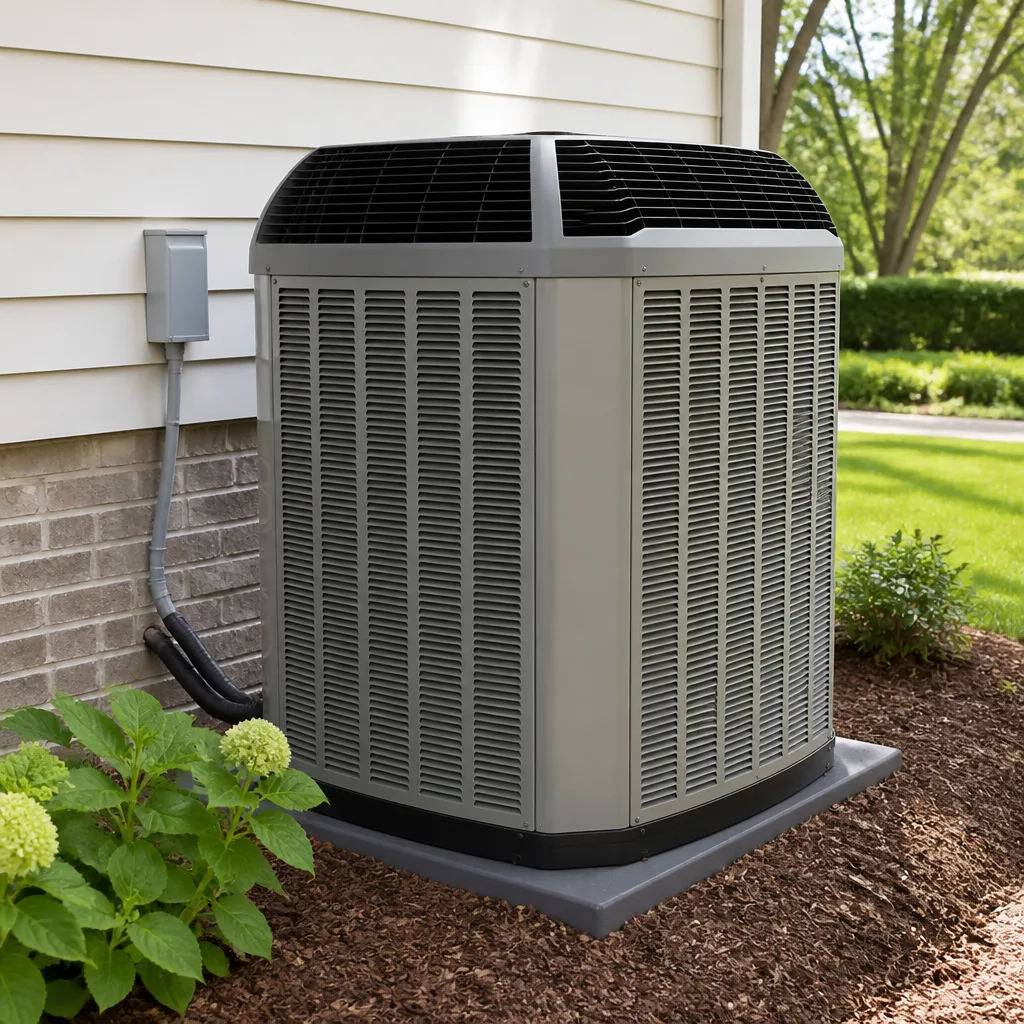 Trane
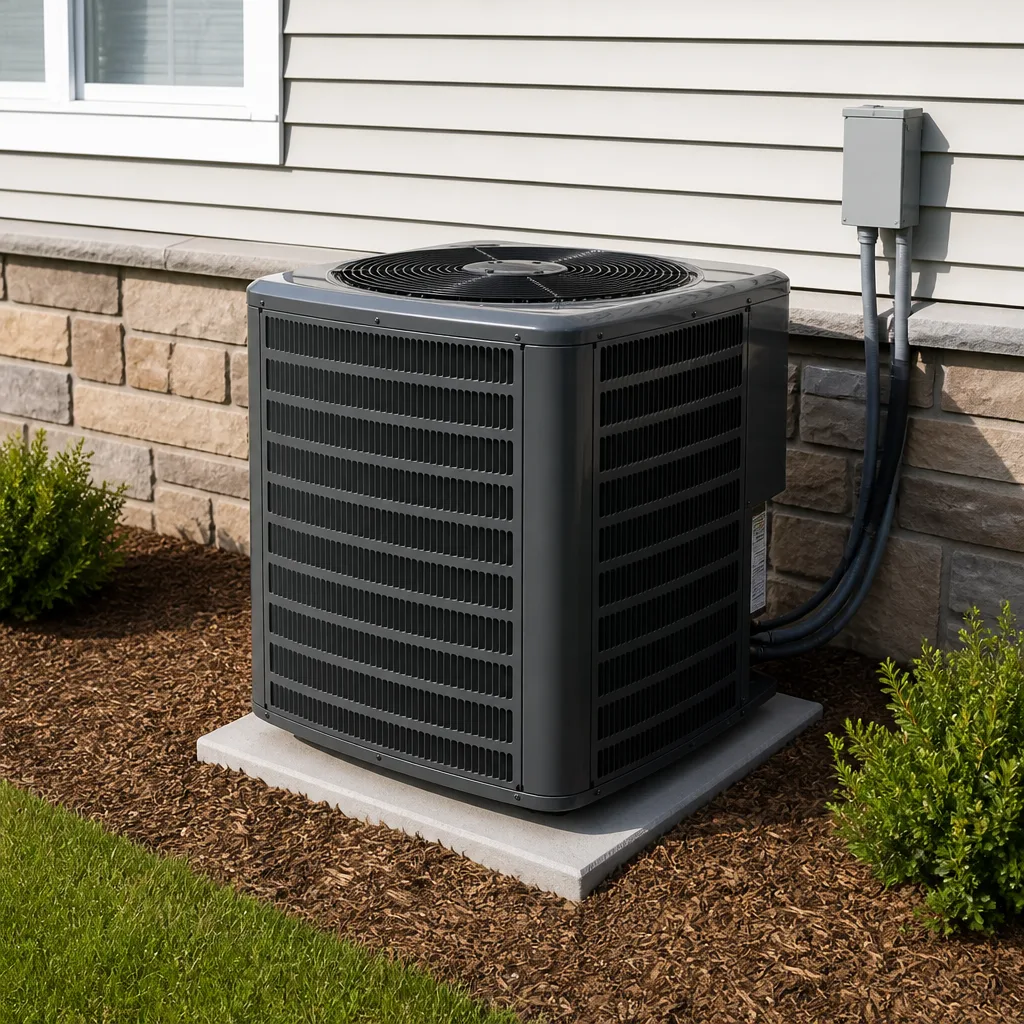 Goodman
Seasonal tune-up and full diagnostic on your Carrier, Trane, or Goodman system - readings shown to you before any repair is proposed
Diagnosis first, numbers second - you approve the repair price before a single part goes in.
Get your free estimateHVAC Cost Breakdown: The Enterprise Homeowner’s Reference for 2026
Here’s something worth sitting with before your next service call. A run capacitor is a small cylinder that costs roughly $12 to $40 at retail. In the Las Vegas metro, including Enterprise, that same capacitor installed is routinely quoted at $200 to $350. That gap isn’t automatically dishonest; diagnostic time, the part, labor, and the truck that brought it all cost real money. But a homeowner who has no idea what the part costs can’t separate a fair margin from padding. That’s what this guide fixes. We’re going to publish real 2026 cost ranges for the repairs and replacements Enterprise homeowners ask about most, and show you how to read a line-item quote so you can judge it before you sign anything.
Quick Answer
Most common HVAC repairs in Enterprise run $150 to $600 in 2026, with refrigerant recharge, blower motors, and control boards landing at the higher end. A full system replacement typically runs $6,500 to $14,000 depending on home size, SEER2 rating, and whether ductwork needs attention. The single biggest factor in what you pay isn’t the part – it’s whether you get a written fixed price before work starts, or a vague estimate that can drift upward once the job is open.
Styles & brands we work with
- AC repair
- Furnace & heating
- Heat pumps
- Ductless mini splits
- Carrier
- Trane
- Goodman
Table of Contents
- Component-by-Component Repair Costs in Enterprise
- What a Full System Replacement Costs in 2026
- How to Read an HVAC Quote Line by Line
- NV Energy Rebates in 2026 and How to Claim Them
- Fixed Price vs. “Subject to Change” – Why It Matters
- Why Enterprise’s Desert Climate Changes the Cost Math
- Common Mistakes to Avoid
- Frequently Asked Questions
Component-by-Component Repair Costs in Enterprise
When a technician opens your unit and names a failed part, you should be able to anchor that name to a price range. Here are the ten most common repairs we see across Enterprise, with installed costs that include the part and standard labor. These are 2026 dollars and reflect what the local market actually charges, not a national average.
- Capacitor: $200-$350 installed. The part itself is cheap; you’re paying for diagnosis and the knowledge of which one to swap.
- Contactor: $180-$320. The switch that sends power to the compressor and fan.
- Refrigerant recharge (R-410A): $350-$900, depending on how much is needed and whether a leak has to be found and sealed first. R-410A is being phased down under federal rules, so it’s climbing in price.
- R-32 refrigerant system top-off: $400-$1,000 on newer equipment.
- TXV valve (thermostatic expansion valve): $400-$800. This meters refrigerant into the coil and is labor-heavy to reach.
- Blower motor: $450-$900. A variable-speed motor sits at the top of that range.
- Control board: $500-$1,100. Boards are brand-specific and often the most expensive single part on a residential system.
- Condensate pump: $180-$350. Small part, real consequence – a failed pump in a Las Vegas attic can stain a ceiling fast.
- Igniter (furnace): $150-$300. Parts and labor included.
- Flame sensor cleaning or replacement: $120-$280.
If a quote lands far outside these ranges, ask what’s driving it. A control board on a Lennox or Trane variable-speed unit can legitimately cost more than on a Goodman single-stage system, and a technician who explains that is doing their job. A technician who won’t itemize is a different story.
What a Full System Replacement Costs in 2026
Replacement pricing in Enterprise splits into two questions: what the equipment and install cost, and what it costs to make the ducts actually work with that equipment. Homeowners who only price the first half often end up paying more later.
- Install-only, 2-ton, 14.3 SEER2 single-stage: $6,500-$8,500 for a typical Enterprise single-story home.
- Install-only, 3-ton, 16 SEER2 two-stage: $9,000-$12,000.
- Install-only, 4-5 ton, 18+ SEER2 variable-speed: $12,000-$16,000.
- Ductwork inspection and sealing: $600-$1,500, added when the existing ducts are leaking, undersized, or disconnected in the attic.
- Full duct replacement: $3,000-$6,000, usually only when flex duct has collapsed or been chewed through.
Enterprise homes built in the 1990s and early 2000s – a lot of the housing off Silverado Ranch and Bermuda Dunes – often have attic flex duct that’s reached the end of its life. That’s not a sales line. It’s the reality of ductwork sitting in an attic that hits 140 degrees every summer. Ask any contractor to inspect the ducts and show you what they find before quoting replacement work separately.
For a full explanation of the repair side, see our guide on AC Repair in Enterprise. For heating, our Furnace Repair in Enterprise page covers the parts and labor breakdown we see most often.
How to Read an HVAC Quote Line by Line
A quote should tell you what part is being replaced, what labor is included, and what the total is. Anything less and you’re guessing. Here’s a numbered approach we recommend for reading any quote you’re handed in Enterprise.
- Find the part by name and model number. “Capacitor” is a start. “40/5 MFD dual-run capacitor” is a quote you can compare.
- Look for a separate labor line. Standard diagnostic is $75-$150 and is often waived if you approve the repair. That’s reasonable; being charged twice for the same visit isn’t.
- Check for a trip or dispatch fee. Some companies charge one on top of the diagnostic. It’s not a scam, but it should be visible before they come out.
- Watch for line items that don’t tie to a part or a task. “System optimization,” “performance tune,” or “refrigerant conditioning” with no part or measurable action behind it is padding.
- Confirm the price is fixed in writing. If the quote says “subject to change” anywhere, treat it as a range, not a number.
- Ask for the guarantee in writing. What does it cover? For how long? A guarantee that only covers the part and not the labor is worth less than it sounds.
We put a written price in front of every Brandt HVAC Enterprise customer before any work begins, on every job, no exceptions. That’s the standard we’d hold any contractor to, and it’s the standard you should demand.
NV Energy Rebates in 2026 and How to Claim Them
NV Energy’s residential efficiency programs change year to year, and the exact dollar amount available to you depends on the equipment you install and the current program tier. In 2026, qualifying high-efficiency heat pumps and AC replacements in Enterprise can earn rebates in the range of a few hundred dollars to well over a thousand, with higher SEER2 equipment usually earning the larger share.
Here’s how to actually claim it, in order:
- Confirm the model number of the equipment being installed is on NV Energy’s current qualifying list before you sign.
- Ask the contractor for the AHRI certificate for the matched system. A mismatched coil and condenser won’t qualify.
- Keep your invoice, the model numbers, and the installation date.
- Submit the rebate application through NV Energy’s residential program after installation. Most programs have a filing window, so don’t sit on it.
- Confirm the rebate comes to you directly, not to the contractor, unless a financing arrangement was clearly explained and agreed to in writing.
Verification matters here: the technician who handles your replacement should know the qualifying list cold. When you’re comparing quotes, ask each contractor which specific NV Energy rebate tier your proposed system qualifies for. The one who can answer precisely is the one who’s done this before.
Fixed Price vs. “Subject to Change” – Why It Matters
A fixed price in writing means the number on the page is the number you pay. A quote “subject to change” is a conversation starter, not a commitment. On jobs that open walls or access difficult ductwork, that difference can be hundreds of dollars.
Here’s the plain version: a fixed price transfers the risk of surprise to the contractor. A subject-to-change clause keeps it on you. If a technician opens your attic, finds ductwork that wasn’t discussed, and the original quote now climbs by $800, the fixed-price customer was protected. The subject-to-change customer was not.
Any Brandt HVAC Enterprise repair comes with a written guarantee, and if the repair fails within the guarantee period, we return at no charge under the 365-Day Done Right Promise. That promise only works if the original price was fixed – so we fix it before we start.
Why Enterprise’s Desert Climate Changes the Cost Math
An HVAC system in Enterprise runs hard. Summer afternoons regularly push past 110 degrees, and the run-time difference between an Enterprise home and one in a mild climate is significant. That reality shapes which repairs happen most often and how often you’ll be paying for them.
Capacitors fail faster here – the heat inside an attic-mounted air handler is brutal on them, and we routinely see them fail in spring right as homeowners switch from heating to cooling. Refrigerant leaks get worse faster because the system runs longer, and condensate pumps see more duty than they would in a milder climate. A control board that lives through eight Enterprise summers has earned a retirement.
The practical takeaway: on a 2026 budget, plan for $300 to $700 a year in maintenance and minor repairs on an aging system, with the understanding that a unit past 12 years in this climate is a candidate for replacement sooner than the national averages suggest. Our AC Maintenance in Enterprise page walks through what a real tune-up includes and what it should cost.
Common Mistakes to Avoid
- Approving a repair without the part number. A capacitor is a $15 part installed. A quote that doesn’t name the specific part is a quote you can’t compare to anything.
- Treating the cheapest quote as the safest one. In Enterprise, quotes for identical work vary by as much as 60% – and the cheap end is often a quote that will grow once the work is open.
- Signing before the ducts get inspected. Buying a 16 SEER2 system and leaving leaking flex duct in a 140-degree attic can cost most of the efficiency you paid for.
- Letting the rebate disappear. The NV Energy rebate has a filing window. If you don’t keep the model numbers and invoice, you may miss it.
- Assuming a verbal guarantee. “We’ll take care of it” isn’t a guarantee. Ask what’s covered and for how long, in writing, before work starts.
- Opening the door to whoever shows up. Ask who is coming by name, ask for a photo, and require a photo ID badge at the door. A contractor that hesitates on that question is telling you something.
Brandt HVAC Enterprise is part of the Threshold Group family of home-service companies, established in 2003, and each location is independently owned and operated. The Threshold Verified standard background-checks and identity-verifies every technician, and we tell you who is coming by name and photo before the visit. If anyone arrives who you weren’t told to expect, that visit is on us. That’s not a marketing line; it’s the standard the Threshold Verified process exists to enforce.
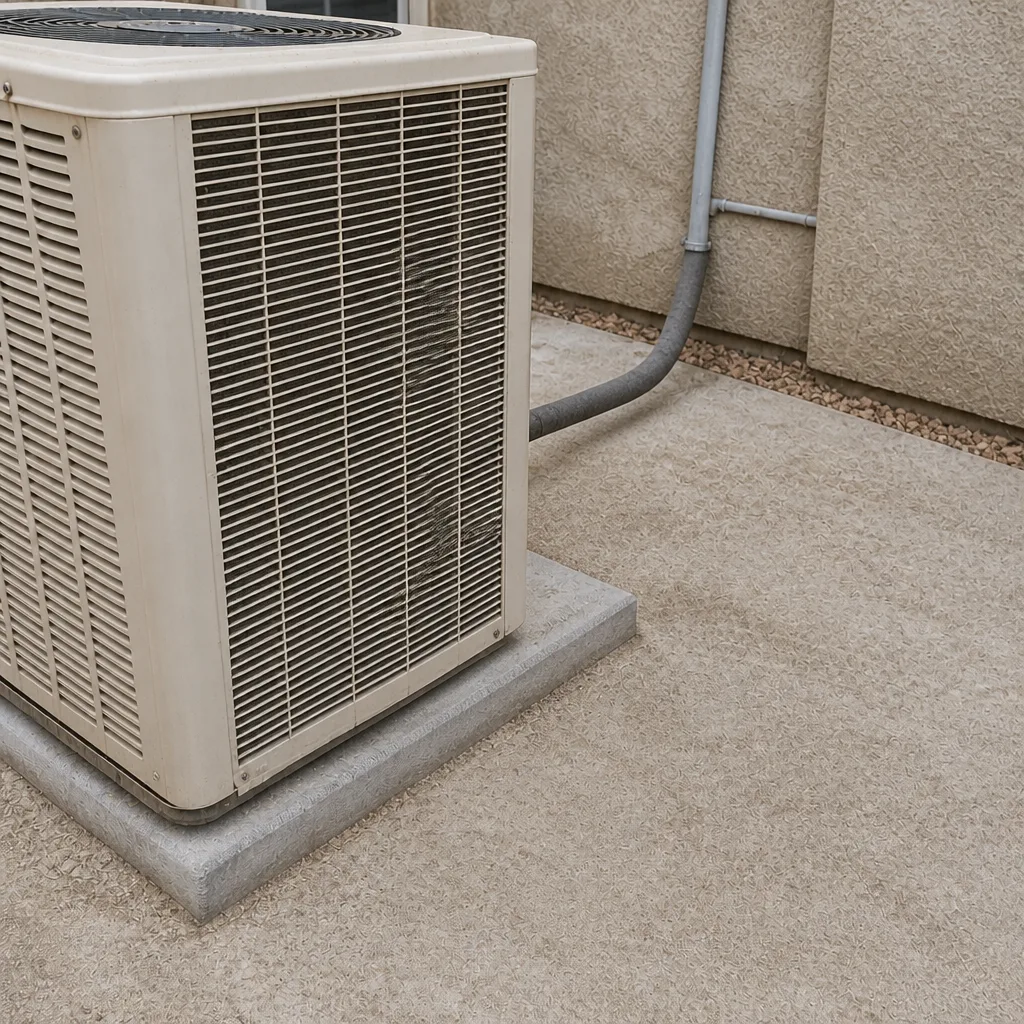
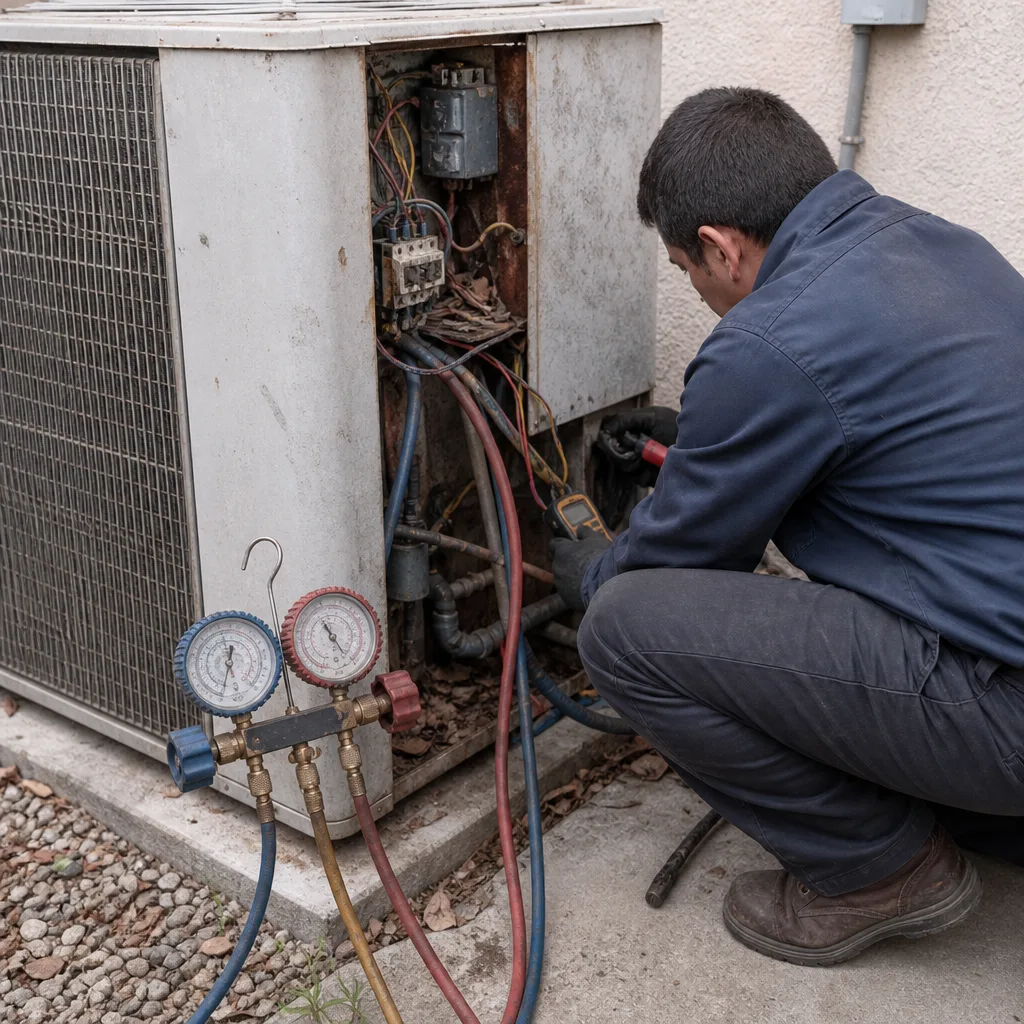
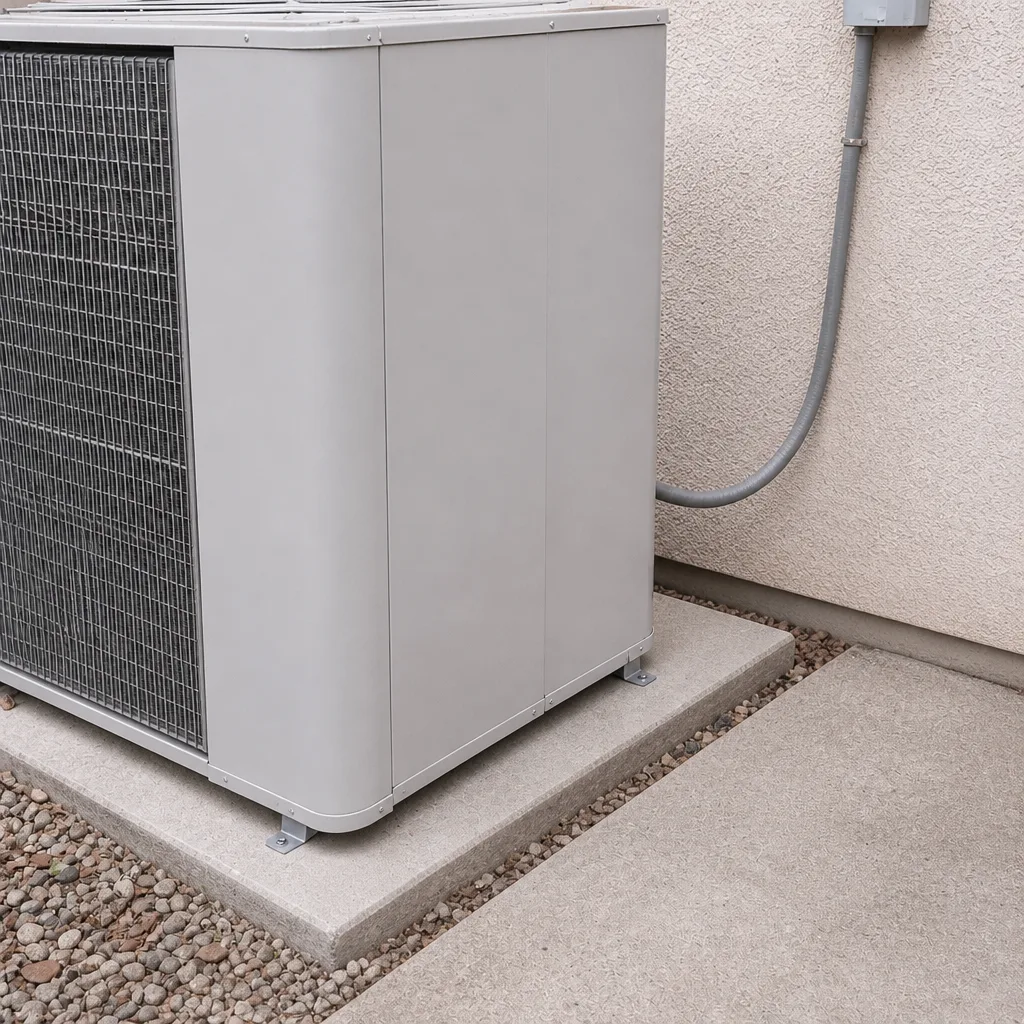
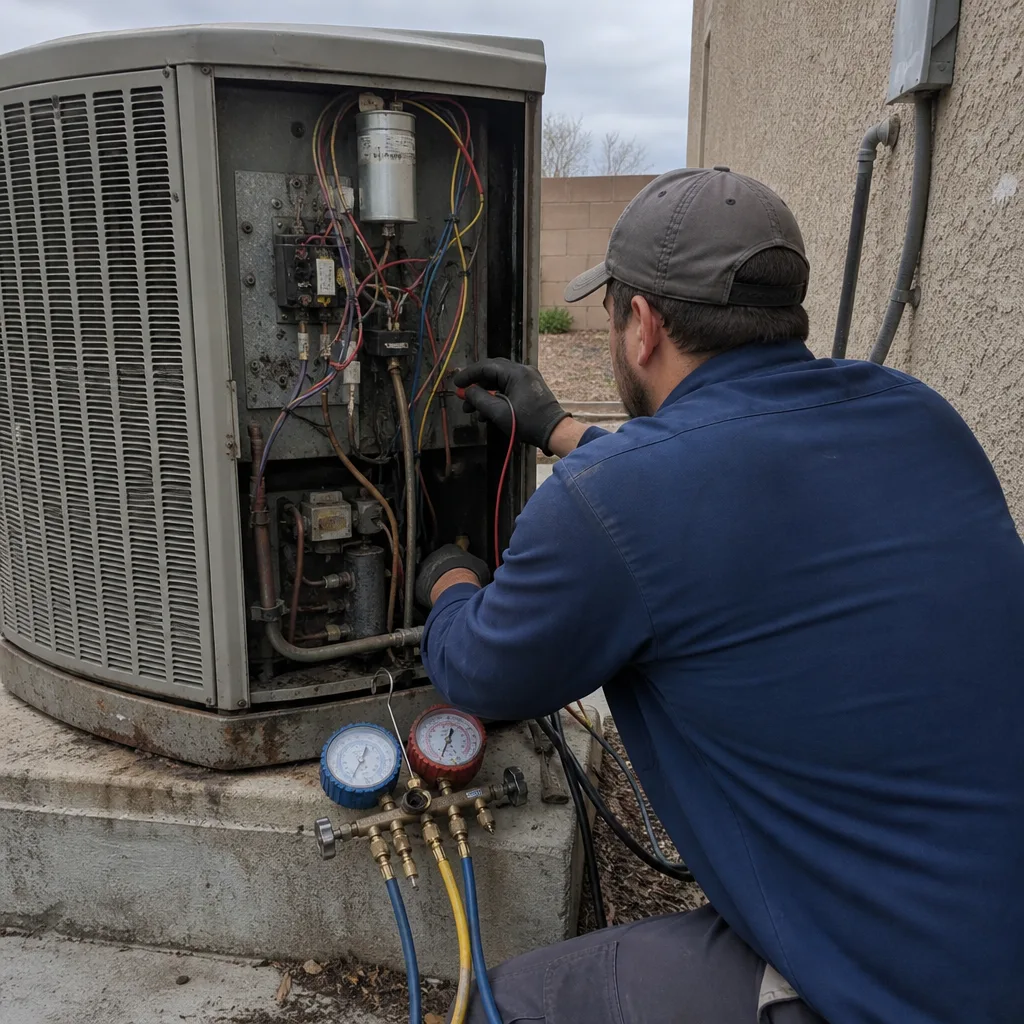
See the difference
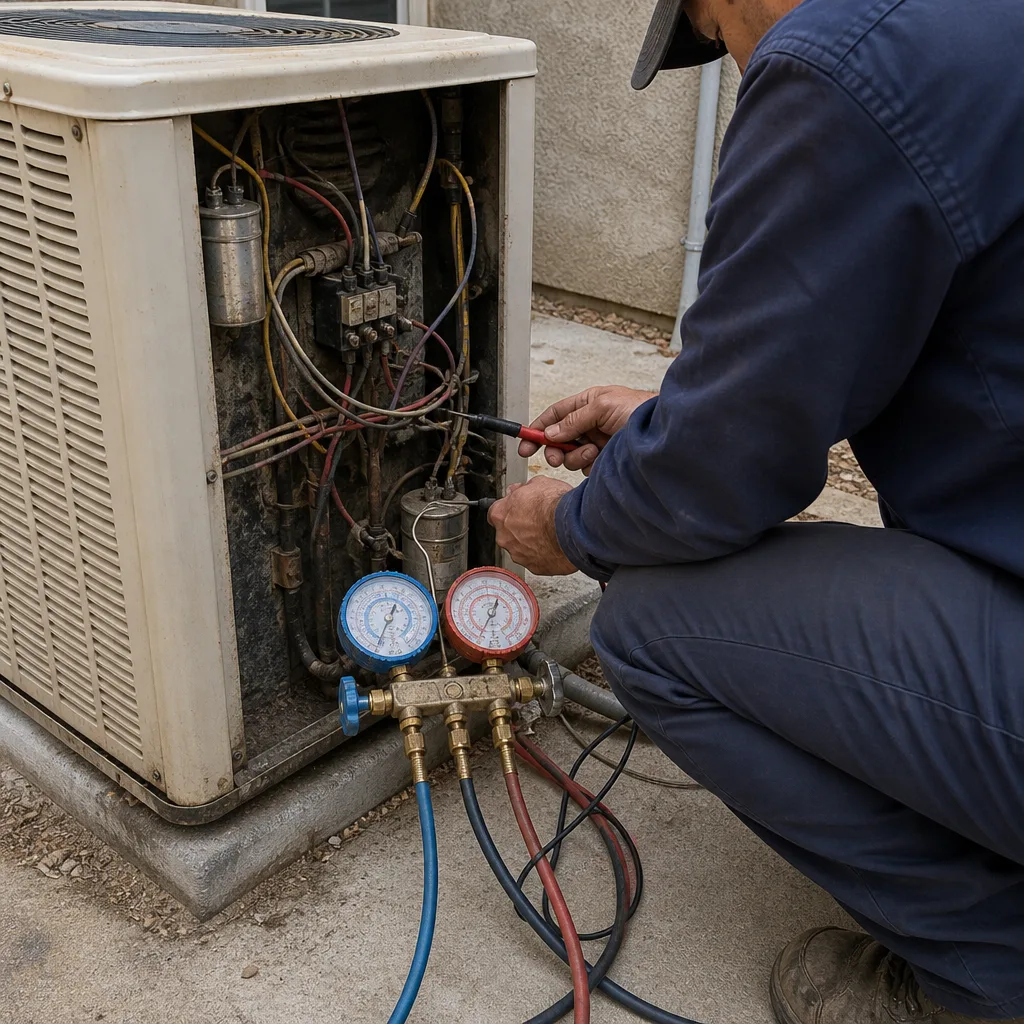 Before
 After
 Before
 After
 Before
 After
When to Call a Professional
Some HVAC work isn’t a cost decision; it’s a safety one. If your system is blowing warm air in July, tripping a breaker, or repeatedly icing the line set, those are signs a technician should see. If you smell gas near a furnace, hear a hard metal-on-metal noise from the compressor, or see scorched wiring at a disconnect, stop and call. High-voltage capacitors and compressor circuits hold a charge even after power is off, and attic-mounted equipment in Enterprise adds heat exposure to the risk list – this is not a weekend DIY category.
Brandt HVAC Enterprise offers free estimates in Enterprise, and our phones are answered by a live person 24 hours a day, 7 days a week – no voicemail, no callback queue. We service all major residential brands, including Lennox, Goodman, and Rheem. Call (844) 797-9490 for a free estimate. Our technicians have up to 23 years of experience, and every repair begins with a written price before anything is touched.
Frequently Asked Questions
Most capacitor replacements in Enterprise run $200 to $350 installed, including diagnosis and labor. The part itself is $12 to $40 at retail. Anything above $400 for a standard run capacitor warrants a question about what’s included.
Sometimes, yes. Contractors book fewer full replacements in January and February, so scheduling flexibility can translate to a modest price break on a full system. The rebate side is the bigger lever: qualifying equipment can earn a meaningful NV Energy rebate regardless of season. Call (844) 797-9490 for a written fixed price and we’ll tell you what your system qualifies for.
It means the contractor inspects the existing ducts before the new system goes in – looking for leaks, disconnected sections, crushed flex duct, and undersized returns – and quotes any remediation separately. Standard install-only pricing in Enterprise runs $6,500 to $16,000 depending on system size and SEER2; duct sealing adds $600 to $1,500, and full duct replacement can add $3,000 to $6,000.
Yes. Brandt HVAC Enterprise services all major residential HVAC brands, including Carrier, Trane, Lennox, Goodman, Rheem, York, Daikin, Bryant, and American Standard. The written price and the written guarantee apply no matter what’s in your mechanical closet.
If the repair is under $600 and the system is otherwise holding up, repair is usually the right call. Once a system is past 12 years in Enterprise’s climate and facing a repair over $1,000 – especially a control board or compressor – replacement deserves a serious look, and the NV Energy rebate can swing the math. Call (844) 797-9490 for a free estimate on both options before you decide.
A diagnostic fee covers the technician’s time finding the problem; a trip charge is a separate fee just for showing up. Standard diagnostic runs $75 to $150 and is often waived if you approve the repair. A trip charge on top of that isn’t a scam, but it should be disclosed before the technician is dispatched.
The Bottom Line
HVAC pricing in Enterprise varies by up to 60% for identical work, which means the only real protection a homeowner has is knowing the cost ranges before the quote arrives. Know what a capacitor, a control board, and a refrigerant recharge should cost. Demand a fixed price in writing. Demand the guarantee in writing, with what it covers and for how long. And demand to know exactly who is coming to your door. That’s the standard Brandt HVAC Enterprise holds every job to, and it’s the standard to hold any contractor to before you sign. For a broader look at what we do, start at the Brandt HVAC Enterprise home page, then call (844) 797-9490 for a free estimate.
Written by the team at Brandt HVAC Enterprise.